
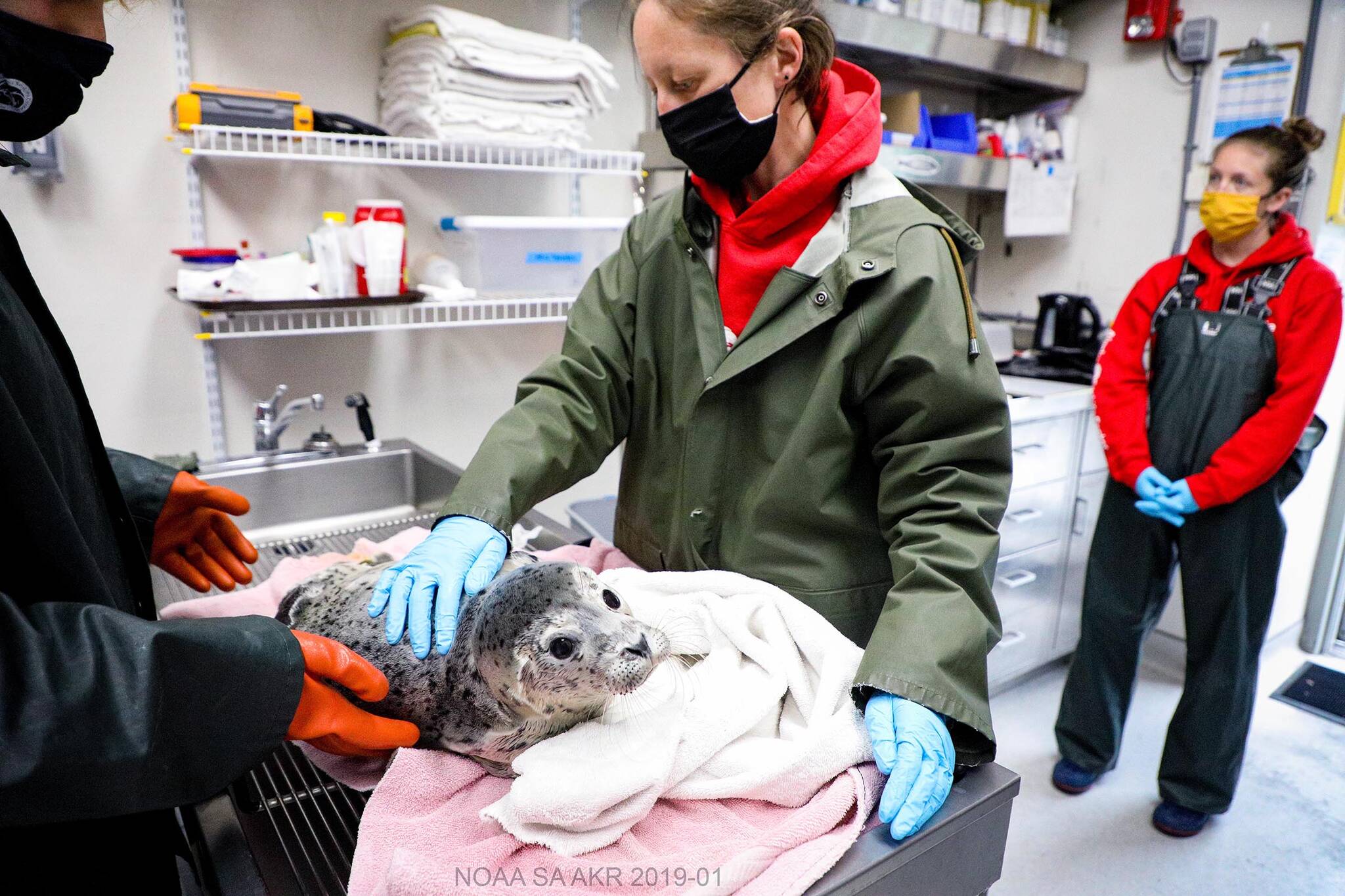
People in Southeast Alaska share a home with abundant wildlife — often glimpsing the animals surrounding us in the Tongass National Forest. Sometimes people and wildlife intersect for better or worse. This week, the Empire is featuring a multi-part series about the work of animal rescue groups that stand by to assist animals that need help.
In late June, officials at the Alaska SeaLife Center received a call about a harbor seal berthed on the beach near Auke Bay. The caller was concerned that the seal, which looked young, was sick or injured.
According to Jane Belovarac, wildlife response curator at the center, local contacts from the National Oceanic and Atmospheric Administration went out to the site and confirmed the seal was in trouble and a good candidate for rescue.
“They should look like fat, rolly-polly nuggets,” Belovarac told the Empire in a phone interview last month. This seal was quite thin and wildlife officials concluded that he had been separated from his mother as seals migrated into the area.
The seal was transferred to the SeaLife Center via Alaska Air Cargo later that month, rehabilitated over the summer and released back into the waters around Juneau on Sept. 6.
Named Spaetzle by staff at the center in keeping with the summer’s theme of pasta-inspired names, the seal pup benefited from an extensive rehabilitation that prepared him for life in the wild.
“He did pretty well,” Belovarac said, adding that the center typically receives one or two seals from Southeast Alaska each summer.
Belovarac said that wildlife rangers use strict criteria to ensure that a seal truly needs help before removing it from its natural habitat.
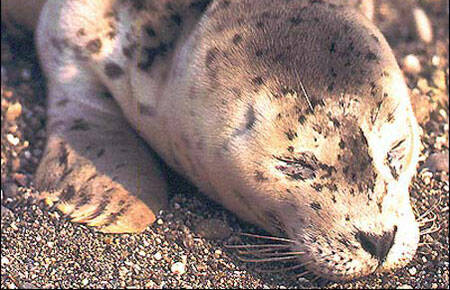
This picture from the Alaska Department of Fish and Game’s website shows a harbor seal pup, similar to one that was found near Auke Bay this summer and sent to the Alaska SeaLife Center near Seward for rehabilitation. (Download/ADF&G)
She said that clues like an attached umbilical cord or the appearance of dehydration, which includes missing wetness around the eyes, are important indicators that the seal pup is in trouble.
Officials encourage people who find animals that appear orphaned, sick or injured to call an agency for assistance rather than directly intervening. Often, animals that are collected by well-meaning people are euthanized.
[To the rescue: Animal ambassadors educate, recuperate]
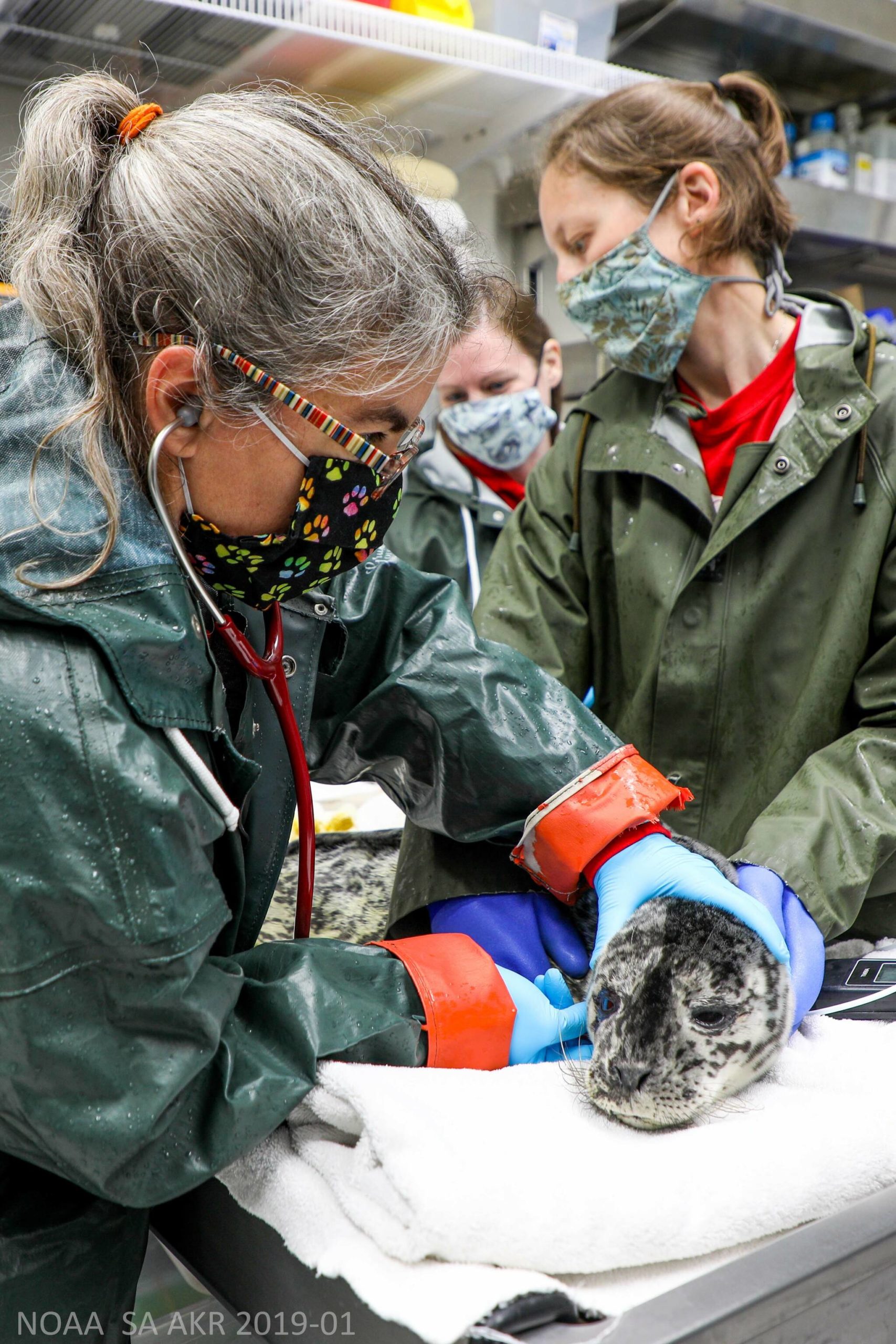
“We bring them in and start them on a formula,” Belovarac said. She explained that the formula replaces the fatty breast milk seals enjoy in the wild.
Next, workers at the SeaLife Center begin to introduce salmon and herring.
From there, the seal goes to “fish school,” so they can learn to hunt to live fish. As the animal gets older, they get introduced to other animals from the same region, Belovarac said.
In the wild, seal pups only stay with their mothers for a few months before they leave her and hunt by instinct. The average stay at the SeaLife Center is about three months, Belovarac said.
To leave the SeaLife Center, pups must be off all medications, healthy and weigh 16 to 18 kilograms (about 35-40 pounds). She said seals often arrive weighing less than 10 kilograms (22 pounds).
“They have to show that they can hunt,” she said, explaining that seals must demonstrate the ability to grab live fish and swallow them underwater to graduate from fish school.
Finding stability
The only marine animal rehabilitation center in Alaska, the SeaLife Center was built in 1998 and, according to its website, is also the state’s only aquarium.
The center takes in animals from throughout the 6,000 miles of coast throughout the state.
According to the center’s website, “the Alaska SeaLife Center lies at ‘Mile 0’ of the scenic Seward Highway on the shores of Resurrection Bay. Visitors have close encounters with puffins, octopus, harbor seals, sea lions, and other Alaska marine life while learning about the work our researchers conduct both in the field and in our laboratories.”
Although animals at the center for rehabilitation are not available for public display, visits to the other sections of the facility generate revenue that’s critical to funding operations.
In the spring and summer of 2020, SeaLife officials were worried about the center’s future.
“The pandemic affected us profoundly. We thought we would have to close. It really was scary,” Belovarac said. “We were making contingency plans and thought we’d have to close permanently.”
Belovarac explained that much of the center’s budget comes from ticket sales and with the prospect of no cruise ship passengers, the numbers looked grim.
“We put a plea out and we had some major fundraisers. It was humbling how people responded from corporations to kids sending in piggy banks,” she said.
[Fire department responds to small fire at Petco]
According to Belovarac, the center actually came out a little ahead thanks to the generosity of donors, visits from locals and the partial resumption of cruise ship travel in 2021.
“We survive on generosity,” she said. “We are a gem for the state of Alaska. We are unique in that we exclusively have animals from North Pacific and we do a lot of really cool things. We are small. But, we pack a punch.”
• Contact reporter Dana Zigmund at dana.zigmund@juneauempire.com or 907-308-4891.
