The opioid crisis costs Alaska more than $1B per year, and it’s going to keep being costly
Published 11:30 am Thursday, February 7, 2019
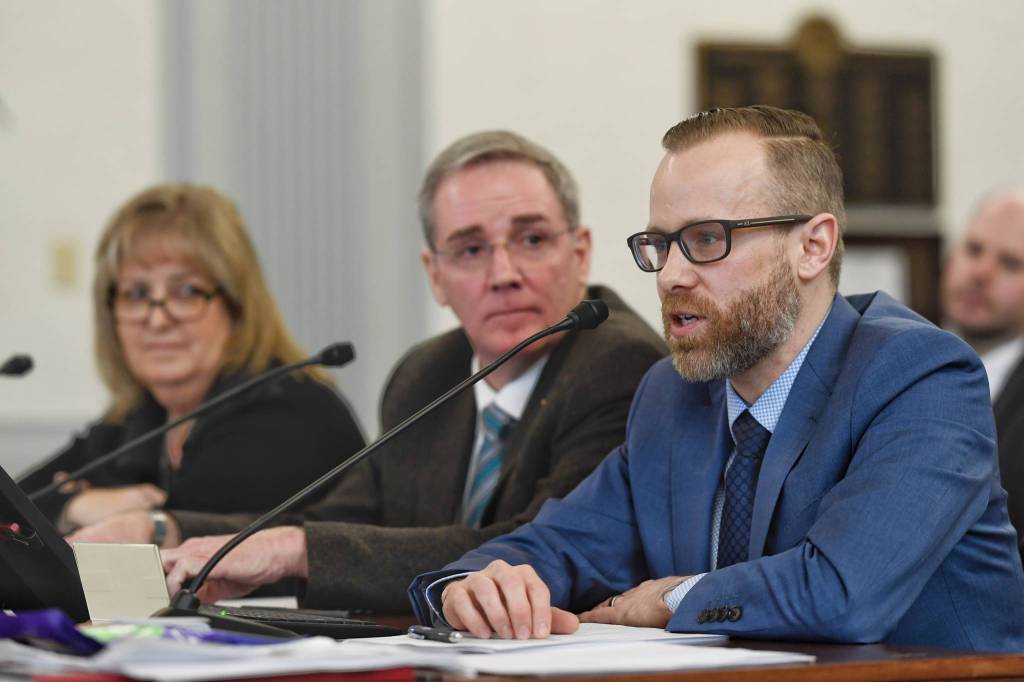
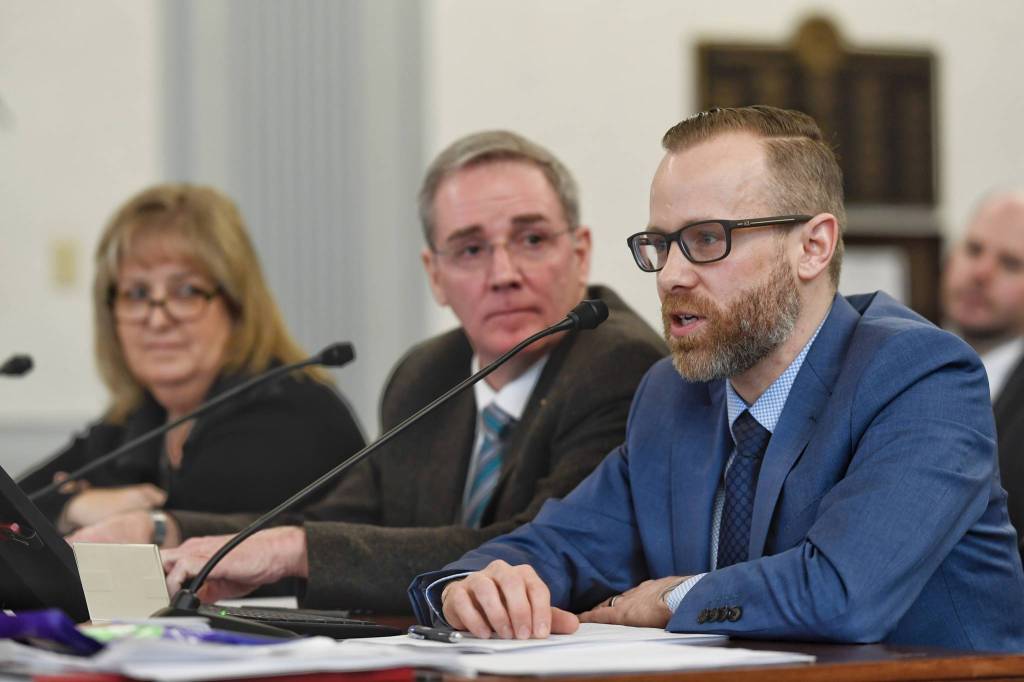


Senate Finance Committee meetings generally are heavy on numbers, but Co-Chair Sen. Natasha Von Imhof began Thursday morning’s meeting with a comment that went beyond statistics.
Von Imhof, a Republican from Anchorage, said she knows a family that lost a 42-year-old father of three to an accidental drug overdose recently.
“They’re planning his funeral now,” Von Imhof said, “so this is very real.”
For the next two hours, she and other senators listened to a presentation and asked questions about the costs of the opioid epidemic in Alaska. The main takeaways from experts at Thursday’s meeting was that this problem isn’t going away, and there isn’t an easy fix.
The overall economic impact of the opioid epidemic in Alaska, according to the McDowell Group, is about $1.2 billion per year.
The largest portion of that ($542 million), according to the 2017 McDowell study, is due to the “loss in productivity” due to drug use. The largest portion of that loss in productivity, $391 million, is due to premature death. Other major costs, according to the study, included traffic crashes ($396 million), criminal justice and protective services ($136 million), and health care ($134 million).
[State making progress in fight against opioid addiction]
The state’s opioid overdose death rate increased by 77 percent from 2010 to 2017, according to a State of Alaska Epidemiology Bulletin released in August 2018. From 2013-2017, the state’s opioid overdose death rate was 11.3 deaths per 100,000 people, according to the Department of Health and Social Services (DHSS).
Director of the DHSS Office of Substance Misuse Andy Jones — one of the presenters Thursday — has become one of the faces of the state’s response to the opioid epidemic, as he’s traveled all over the state leading informational sessions and gathering feedback. Sen. Bert Stedman, R-Sitka, asked Jones during Thursday’s meeting about whether he can make an estimate about what the economic impact might be in the next couple years.
Jones said it’s difficult to even make an educated guess.
“It’s a moving cycle,” Jones said. “If it’s not opioids, it’s going to be some other (drug).”
Department of Public Safety (DPS) Deputy Commissioner Michael Duxbury and Department of Corrections (DOC) Director of Health and Rehabilitation Laura Brooks were also presenting, and said it’s key for multiple state departments to collaborate in battling the epidemic.
Sen. Click Bishop, R-Fairbanks, asked Duxbury about committing more money to stopping the flow of drugs so the state could possibly save money on treatment by cutting down on the number of drugs available. Duxbury said it isn’t that easy.
“I think we could throw money at this problem at this point in our history and it wouldn’t necessarily solve the issue,” Duxbury said. “… We have to look at two things here. One is, you can’t arrest your way out of this and is also part of being compassionate toward people who have gotten into an addiction situation and need help.”
Duxbury, who was an Alaska State Trooper for 30 years before his recent appointment to deputy commissioner, said the estimated cost to the public from crime related to the opioid crisis is about $61 million per year.
Von Imhof read off statistics at the start of the meeting saying state agencies spent $70 million in 2018 on direct spending for opioid treatment. Of that, DHSS spent $60 million.
Meth enforcement still costly
Though the opioid epidemic is more of a talking point among legislators and state officials, methamphetamine continues to dwarf opioids in terms of how many incidents law enforcement officers respond to. In 2018, for example, Troopers responded to 1,904 incidents related to meth use compared to 746 incidents related to opioid usage.
The cost of responding to these 2018 incidents was nearly $840,000 for opioid response and more than $2.1 million for responding to meth incidents for DPS. Since 2010, DPS has spent more than $15 million on meth-related incidents.
• Contact reporter Alex McCarthy at 523-2271 or amccarthy@juneauempire.com. Follow him on Twitter at @akmccarthy.