
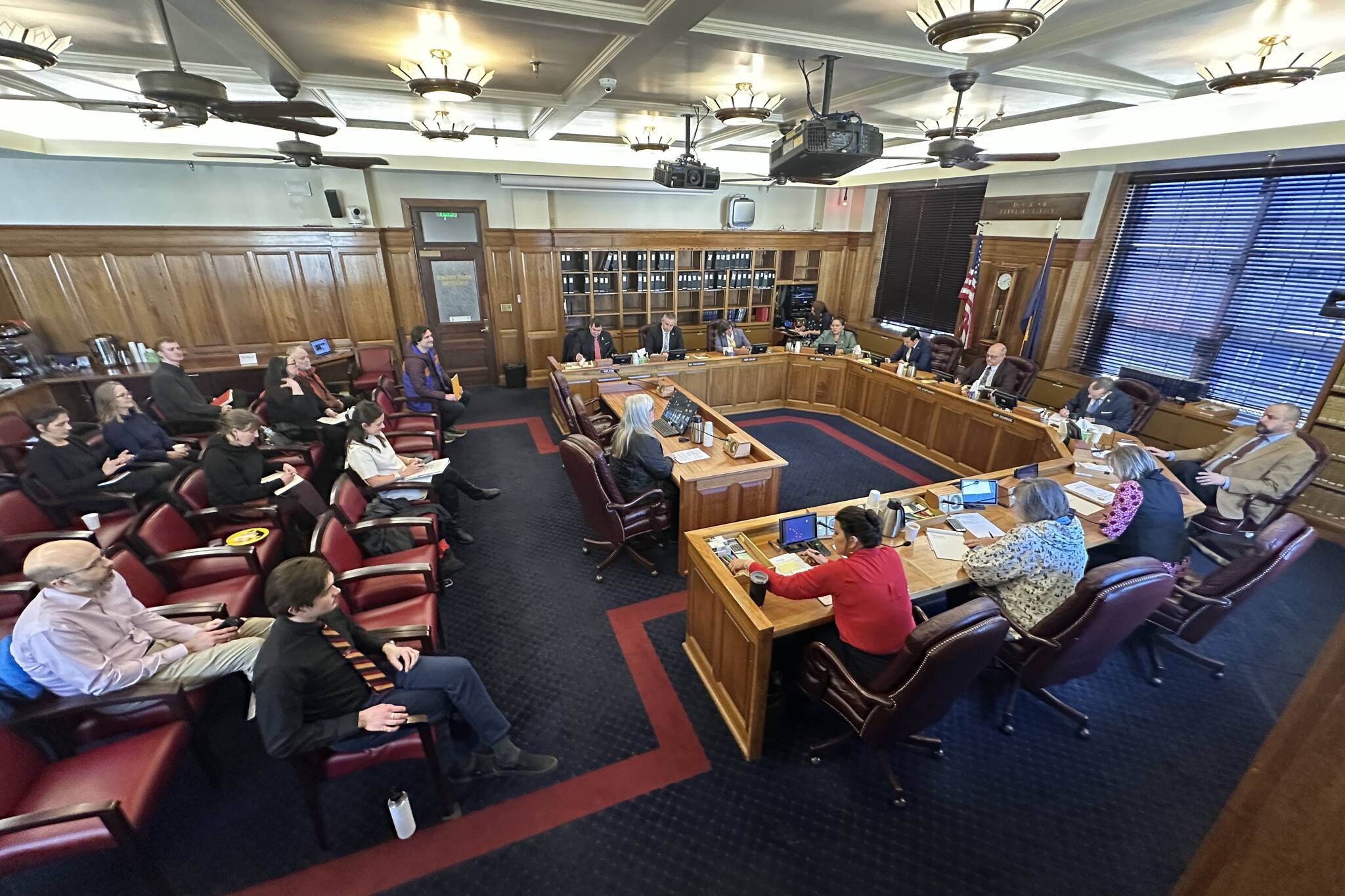
Thanks for a so-called “full” Permanent Fund dividend of about $3,800 was offered this week by numerous Alaskans during public testimony to the House Finance Committee about its proposed state budget for next year. But legislators know it’s a false amount since it would result in a roughly $2 billion deficit in the $14 billion spending plan.
So why is it in the committee’s draft budget?
“The full PFD is not going to remain in the next version of the budget,” Rep. Andy Josephson, an Anchorage Democrat who is one of the committee’s three co-chairs, said in an interview after public testimony on Friday. “It’s just that we were focused on some basic changes that were rather perfunctory in (our substitute for the governor’s proposal) and so we didn’t adopt every change we were going to make.”
When asked why such an obvious and prominent item wasn’t removed to avoid giving residents false hope about getting such a dividend, he said “I guess lesson learned — in the future we would do that.”
Public testimony on the draft budget concluded Friday, with the committee next scheduled to consider amendments before sending it to the floor for a vote. It will then be taken up by the state Senate, followed by members of both chambers working out a compromise spending plan for final approval by the end of the legislative session in May.
Republican Gov. Mike Dunleavy included the full PFD in his proposed budget unveiled in December and plenty of conservatives say they want to see that amount paid out by making big cuts to other state spending. But even a Republican minority member of the House Finance Committee laughed in surprise and disbelief when asked by a reporter about the Democratic-led majority including the full PFD in the budget draft.
“I hope that’s not true because we would need way more oil taxes,” Rep. Will Stapp, a Fairbanks Republican, said during a press availability Tuesday focusing mostly on an education bill. “Like we better not only take the per-barrel credit back, but you just tell Conoco to start mortgaging all the property and giving us money because that number, it would be massive.”
Most of the current talk among lawmakers at the Capitol is how to plug a gap of more than $600 million that would result from a PFD of about $1,400, based on a “75-25” formula used to pay dividends the past two years. That formula, which directs the larger percentage of available Permanent Fund earnings to state spending and smaller percentage to PFDs, is being targeted by Senate budget leaders in particular as they craft their version of a spending plan.
A “full” PFD of $3,776 would result in a deficit of $1.94 billion, according to a presentation made by the Legislative Finance Division to the House Finance Committee in March 5. Those numbers got bleaker by about $70 million on Wednesday when an updated state revenue forecast was released forecasting lower oil prices than predicted last fall.
The March 5 forecast includes a $1,000 increase in per-pupil education funding at a total cost of about $250 million — contained in a bill passed by the House this week — while a $680 increase favored by the Senate majority would cost about $175 million. Dunleavy has proposed an education package with no increase in the Base Student Allocation, but more than $180 million in additional targeted education spending.
Patching a $2 billion deficit would require eliminating the BSA entirely ($1.1 billion at the current statutory $5,960 level), the state Department of Corrections ($435 million), University of Alaska ($355 million) and the Department of Administration ($95 million).
Reducing the PFD to about $700 would be necessary to achieve a balanced budget with a $1,000 BSA increase, according to an updated budget scenario presented to the Senate Finance Committee on Thursday that reflects the new revenue forecast.
The state currently has about $2.8 billion in the Constitutional Budget Reserve that could be used to cover a shortfall in the budget. However it requires a three-fourths vote of both the House and Senate to tap the fund, meaning the majorities of both chambers would have to make concessions to the minority to get the necessary votes.
Furthermore, budget leaders in the majority have stated Alaska should have a minimum of $3 billion in the reserve fund as a contingency for crisis situations — and in any event heavy deficit spending can’t be sustained for long without depleting the fund.
Various proposals to raise additional revenue have circulated over the years, with members of the Senate majority currently pushing bills that would increase taxes on oil companies and out-of-state businesses doing online commerce in Alaska.
• Contact Mark Sabbatini at mark.sabbatini@juneauempire.com or (907) 957-2306.
