
By Sonia Nagorski
The current concentration of carbon dioxide in Earth’s atmosphere is higher than it’s been in at least 4 million years, but it’s certainly not the highest in Earth’s 4.5 billion year history. In fact, CO2 levels were often double current levels for much of the past 500 million years. As a result, our planet has experienced substantially warmer (and cooler) temperatures than what we are feeling now.
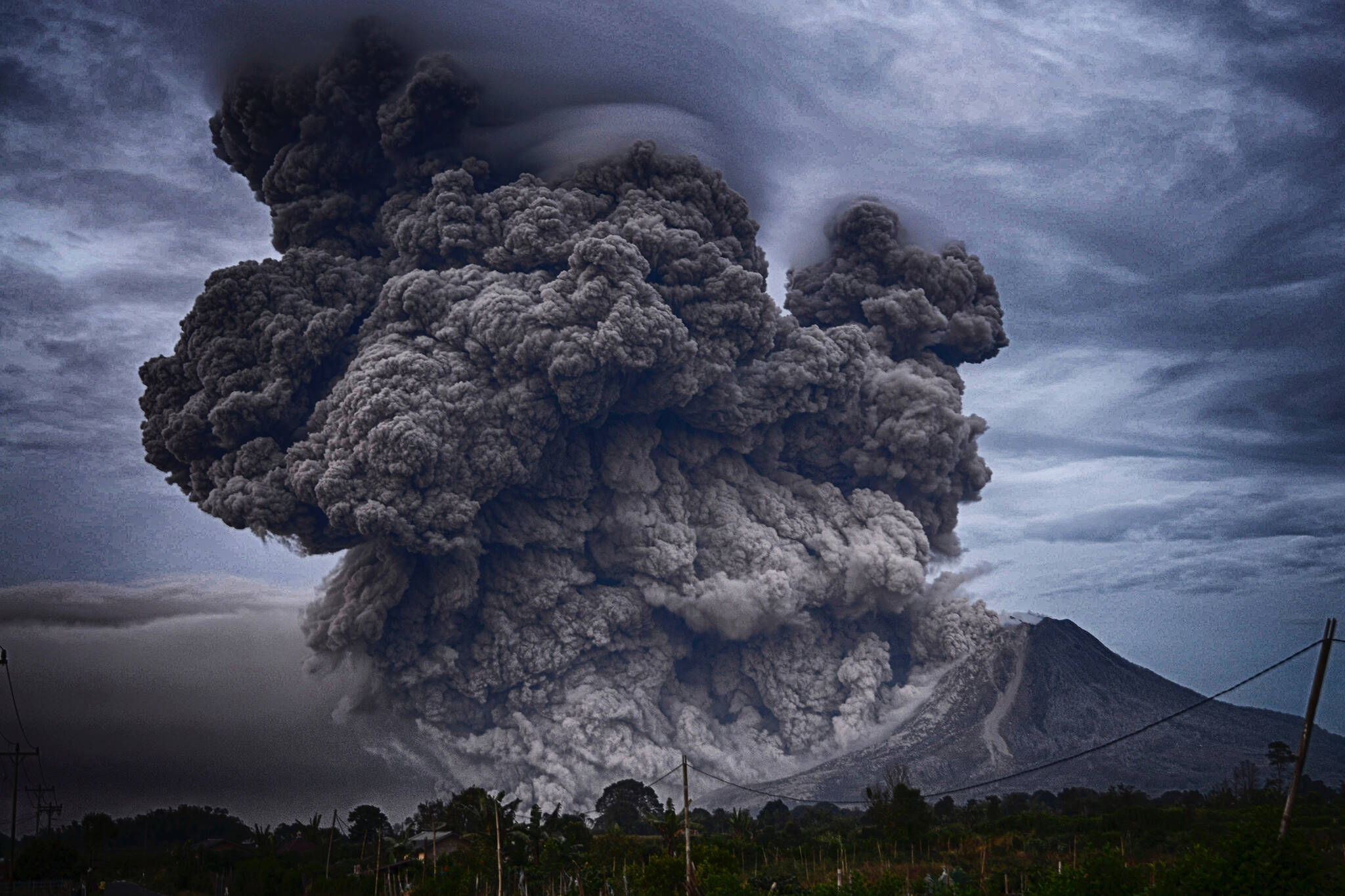
Before humans began burning fossil fuels prodigiously, volcanic eruptions were the main source of CO2 inputs to Earth’s atmosphere. Other factors that are important in regulating Earth’s climate over time include the strength of the sun’s radiation, continental weathering, our planet’s tilt, wobble, and orbital path in space, the configuration of the continents, and the rates of photosynthesis and organic carbon burial.
But prior natural fluctuations are not reason to dismiss our current rise in CO2 as just another blip in Earth’s ever-shifting climate. What is happening now is far from normal in both its cause and its speed, and we would be wise to look into the past to see what happened when other large shifts in CO2 emissions occurred.
Luckily, Earth scientists have provided us with a stunningly detailed record of our planet’s past conditions. Decoding Earth’s history via meticulous reading of the rock, chemical and fossil records, geologists see not only fascinating glimpses of past life and environments, but also some cautionary tales. Perhaps the greatest warning is that all of Earth’s largest mass extinction events were connected to rapid climate change — specifically to major disruptions in our planet’s carbon cycle.
Massive volcanic complexes called Large Igneous Provinces were major drivers of all of the “Big 5” mass extinction events, which occurred at the ends of the Ordovician, Devonian, Permian, Triassic and Cretaceous periods (between 444 and 66 million years ago). The effects of these eruptions included heat stress, ocean acidification, marine-oxygen depletion, sea-level change, nutrient-cycle disruption, acid rain, ozone damage, and metal toxicity. They show that alterations to Earth’s atmosphere can disrupt ecosystems and even lead to their collapse when climate-driven changes occur too quickly for species to adapt.
The largest mass extinction event was at the end of the Permian period, 252 million years ago. Known as The Great Dying, it occurred as a result of huge, million-year long volcanic outpourings in what is now Siberia. These were particularly destructive because en route to the surface, the magma struck extensive deposits of coal, natural gas, and oil, which ignited and sent carbon to the atmosphere in the form of CO2. The main releases happened in a geologically short amount of time (sound familiar?). During the span of “only” 60,000 years, 96% of marine species and 70% of terrestrial species went extinct.
Recent calculations indicate that the Siberian volcanoes were releasing up to 5 gigatons of CO2 per year. That pales in comparison to the 35 gigatons per year being emitted today. Comparisons with the Cretaceous and Triassic mass extinction events similarly show that we are pumping CO2 into the atmosphere and warming the world tens of times faster than did the ancient volcanoes.
Although our emissions haven’t been sustained long enough to match the total outputs of the largest historic volcanic provinces, the rate of increase of our current CO2 emissions is alarming and unprecedented in at least 66 million years. There is abundant evidence that modern climate change is now adding tremendous stress to ecosystems that are already suffering from overexploitation, habitat destruction, and pollution. The recent dieoffs of tens of thousands of seabirds in the Gulf of Alaska and the widespread bleaching of coral reefs in the tropics are clear examples of the destructive potential of global warming.
By looking into the geologic past, we can learn that our actions are more intense than those of the Earth’s vast volcanic outpourings in terms of our effectiveness in releasing CO2 into the atmosphere in a geologic instant.
That humans, who came onto the scene only in the last 0.00005% of Earth’s history, are now a geologic force more mighty than massive volcanoes is astounding. Fortunately, there’s another way that we outperform volcanoes: we have the ability to understand the science of our actions, foresee the consequences, and mobilize to change course while there’s still a little time to avoid another planetary disaster.
• Dr. Sonia Nagorski is an Associate Professor of Geology at the University of Alaska Southeast. “Sustainable Alaska” is a monthly column, appearing on the first Friday of every month and written by UAS Sustainability Committee members. The views expressed here do not necessarily represent the views of the University of Alaska Southeast.
