
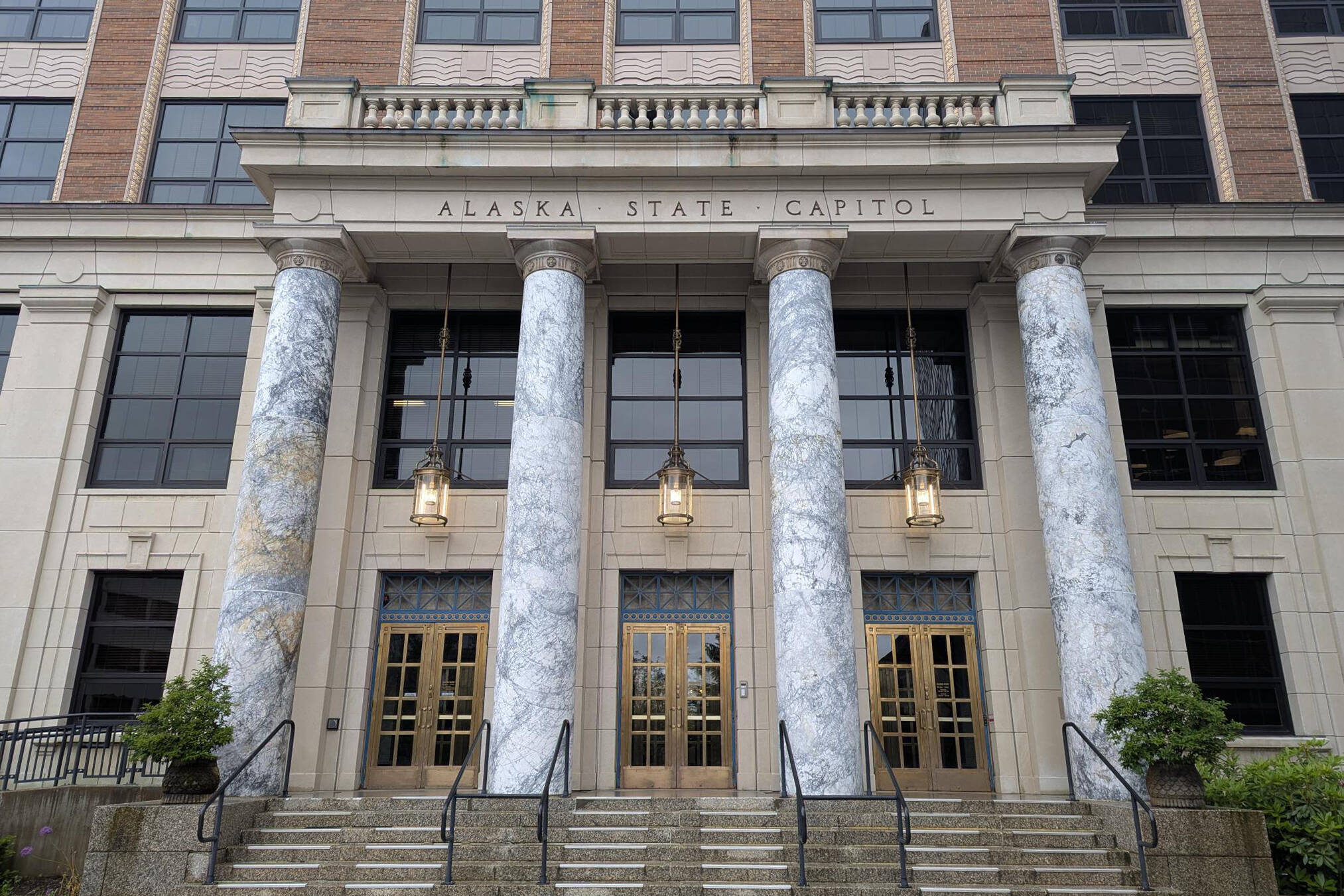
The legislators have left, but the special session of the Alaska State Legislature will continue through at least Aug. 19 as House and Senate majority leaders seek to prevent Gov. Mike Dunleavy from repeatedly ordering lawmakers back into session.
Ordinarily, the Alaska Constitution prohibits legislators from recessing — stopping business — for more than three days. Taking a break for longer than that requires the consent of both the House and the Senate.
On Saturday, after voting to override two of Alaska Gov. Mike Dunleavy’s vetoes, legislators passed Senate Concurrent Resolution 101, which would allow the Legislature to take a break for more than three days.
Immediately after the House’s vote on that resolution, Rep. Will Stapp, R-Fairbanks, called for “reconsideration” — a re-vote — on the issue.
He and all 18 other members of the House’s Republican minority caucus opposed the resolution and wanted to see lawmakers keep meeting in hopes that it would pressure them into discussing education policy changes that Dunleavy has proposed.
Ordinarily, reconsideration takes place on the next legislative day. But because lawmakers aren’t scheduled to meet again until the 19th, it becomes a moot point.
“It’s an interesting problem, right?” Stapp said on Monday. “The real key in the uniform rules (of the Legislature) is enforcement, and I guess the Senate could compel the House to come back, but they’re not going to.”
Special sessions run for 30 days unless ended early; lawmakers are currently adjourned until Aug. 19 and would have to meet at least once in order to keep the session moving.
Dunleavy told reporters in a news conference on Saturday that he called the special session for lawmakers to address his policy ideas for public education. Some of the governor’s ideas were discussed and voted down during the spring regular session. Dunleavy introduced three bills on Saturday related to tribal education compacting, teacher bonuses and education tax credits, that were referred to committees.
Members of the House and Senate majority caucuses, which control the legislative agenda, have said they aren’t interested in following the governor’s schedule and will consider education policy via an out-of-session task force that’s scheduled to begin meeting Aug. 25.
Most legislators have already left Juneau, and some are traveling to the annual summit of the National Conference of State Legislatures, taking place in Boston this week.
Any education legislation would be taken up in the next regular session, which begins in January, members of the majority caucuses said.
If legislators had adjourned the special session on Saturday after voting to override Dunleavy’s vetoes, the governor could have called for a new special session, bringing lawmakers right back into session.
Speaking on the House floor on Saturday, Rep. Kevin McCabe, R-Big Lake, said the purpose of SCR 101 is to prevent Dunleavy from doing just that.
“It’s a maneuver,” he said. “I get it. And it’s something that I would probably do, maybe, if I were sitting in your seat, Mr. Speaker. We all know how politics works. Unfortunately, those of us outside this room don’t know how politics works.”
• James Brooks is a longtime Alaska reporter, having previously worked at the Anchorage Daily News, Juneau Empire, Kodiak Mirror and Fairbanks Daily News-Miner. This article originally appeared online at alaskabeacon.com. Alaska Beacon, an affiliate of States Newsroom, is an independent, nonpartisan news organization focused on connecting Alaskans to their state government.
