
Tucked amongst the endless array of fog-coated islands that make up the Tongass National Forest, on the northwest edge of Kupreanof Island, is the small rural village of Kéex Kwáan (Kake). The city of Kake is home to 540 residents and rests upon lands that have been continually honored and loved by Tlingit caretakers for over 10,000 years.
Beyond the approximately 8-square-mile village, past 52 miles of logging roads, and across the Bohemia Range down into Portage Bay, sits an exciting promise. An old logging bunkhouse left unused and abandoned since the fall of the timber boom in the late 1990s is getting a much-needed facelift. Recently called for repurpose by the Organized Village of Kake, the building is currently being transferred over from the US Forest Service to the Tribe. The person initiating this project is Tribal Council President Joel Jackson. Jackson, whose father is Tlingit from Kéex Kwáan and mother Haida from Haida Gwaii, British Columbia, has been a resident of Kéex Kwáan his whole life. In order to fulfill his long-imagined vision of trauma healing for his community, Jackson will see this old Forest Service logging facility turned into a cultural healing treatment center. The center’s intention is to serve Jackson’s community members, along with all Southeast Alaska rural villages by reintroducing them to their identities, their histories and their land.
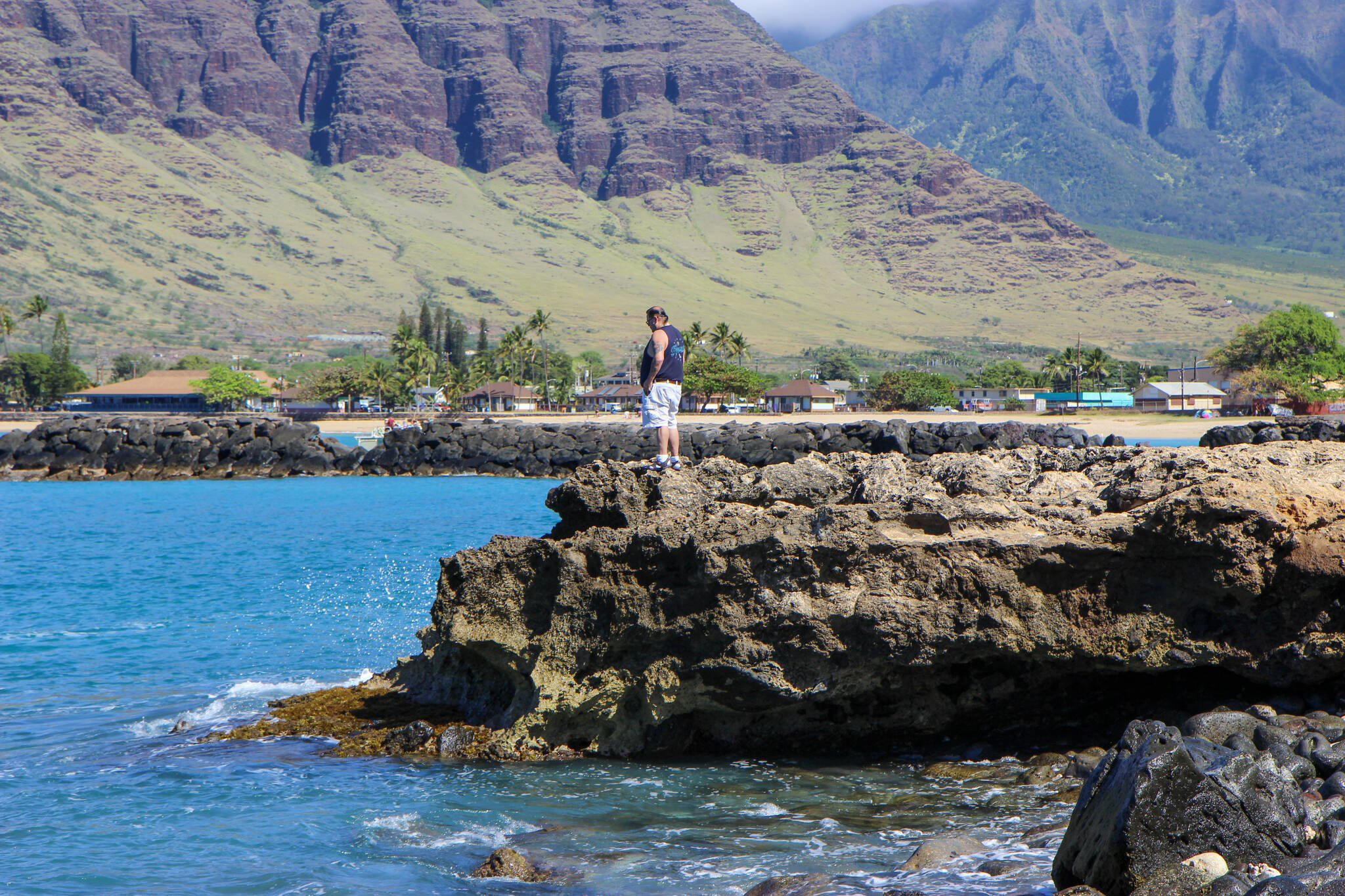
Natural Resources Coordinator for OVK, Justin McDonald, spends his time at Pokai Bay with the waters of the Waianae Coast. (Courtesy Photo / Lauren Tanel)
Indigenous caretakers have stewarded the lands in Southeast Alaska for time immemorial. However, colonization has left scars, and continues to harm many of the communities and lands of Southeast Alaska. Indigenous families have been threatened due to intergenerational trauma that is a result of the attempted erasure of their culture and language. Much of this harm manifests today in the form of substance use disorders and other such dependencies that have evolved as a trauma response. After battling this epidemic for too long, local leaders from Kéex Kwáan — led by Jackson — have started the fight for community healing, an intentional movement to address the trauma responses that can show up as addiction. The solution lies in the development of a cultural healing center. It is from this center, deep in the rainforest of Kupreanof Island, that Jackson has been inspired to reestablish the health of his community and his culture. Jackson emphasizes the need for community support and resiliency in order to establish a successful cultural healing treatment program:
“A lot of volunteers [are needed] to make things move forward, [our] work is built on trust.”
Jackson, and his fellow cultural healing advocates, envision a treatment program that intertwines clinical treatment with activities that reconnect participants to their traditional ways of life. Spiritual and cultural practices will be placed at the center of treatment programs. A forward-looking picture sees drum sessions and subsistence harvesting supporting counseling or dancing and processing traditional foods supplementing group therapies. The goal is that community members of Kéex can begin to find the roots of their trauma and work towards healing.
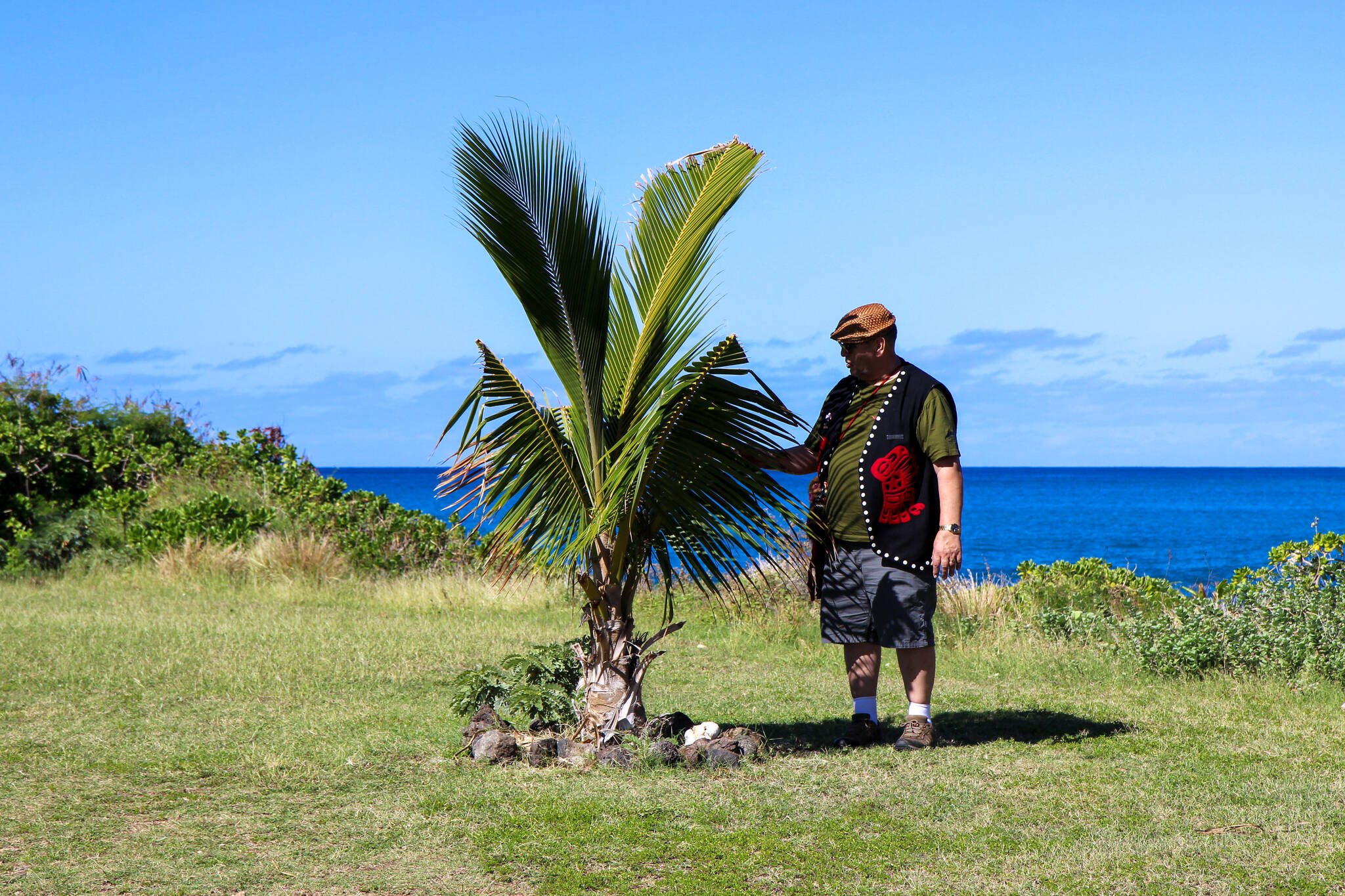
OVK Council Member Frank Hughes spends time appreciating this space at Pokai Bay. (Courtesy Photo / Lauren Tanel)
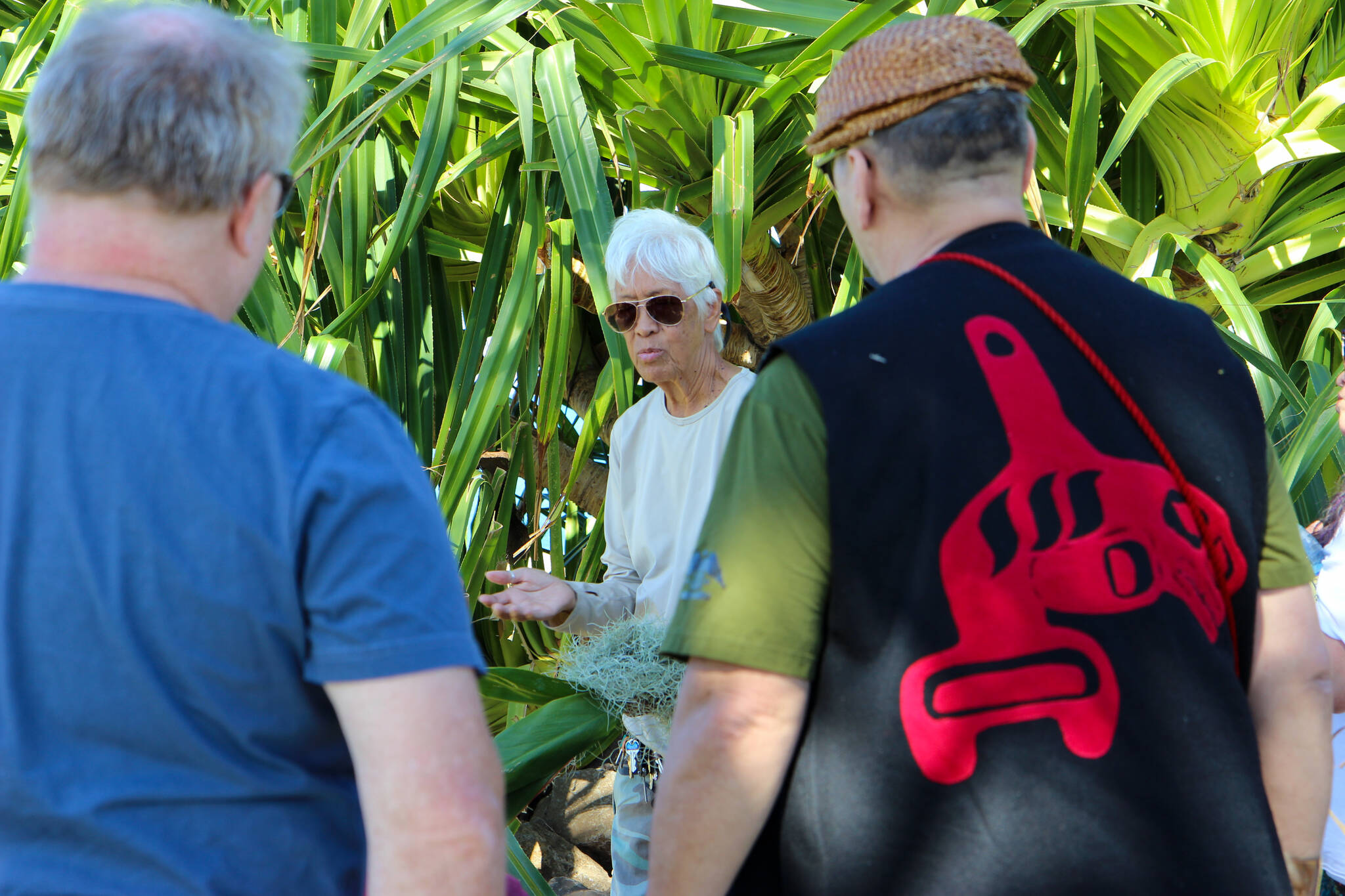
This innovative approach to trauma healing is not isolated to the people of Kéex Kwáan. Indigenous communities around the world are embarking on the same journey. In a revival of the Sustainable Southeast Partnership’s community exchange program (halted as a result of the COVID-19 pandemic), a few members of the Kake Cultural Healing Center Advisory Council traveled across the Pacific in late January to exchange stories and knowledge with Hawaiian relatives. Jackson, Executive Director at OVK Dawn Jackson, Frank Hughes, Justin McDonald and Simon Friday, along with partners from The Nature Conservancy, had the opportunity to meet members from Ho’omau Ke Ola on O’ahu. Collaboration flourished under a warm welcome from the tropical sun and open-armed community. Ho’omau Ke Ola Board President, Juanita Kawamoto, facilitated a visit to the program spaces, which have been helping folks who struggle with substance abuse and addiction to be reincorporated into their community through Native Hawaiian cultural practices for over 30 years. Dr. Lynette Cruz, a member of HKO’s Kupuna (elder) Council describes the tangible outcomes of deeply rooted trauma that HKO aims to address in its participants.
“It comes out in drug addiction, domestic violence, high prison population, etc. So, what is going on with us? Disconnection from culture and language.”
Along with many other traditional and spiritual programs, healing at Ho’omau Ke Ola includes caring for ancestral lands to engage in reciprocal relationship with it. Much of this stewardship has led to the reversal of colonial harms created by settler plantations on the land, including a return of natural waterways. When care and love is given back to the land through such stewardship, HKO participants receive care in return. Through sharing traditional meals, visiting culturally significant sites, and listening to kupuna (elders) play Hawaiian folk music on the ukulele, the representatives from Kéex Kwáan had lots to absorb about the experience of community growth through cultural revitalization. By spending four days visiting with Hawaiian leaders and sharing spaces filled with story, a collaborative relationship was built. The participants from Kéex Kwáan were able to share their lived experiences of how being Native in Alaska differs significantly from being Native in Hawai’i while identifying synergies. The movement toward community-saving initiatives, such as the treatment center and other Indigenous-led health care programs, is leading Native communities everywhere toward a reconnected and safe next generation.
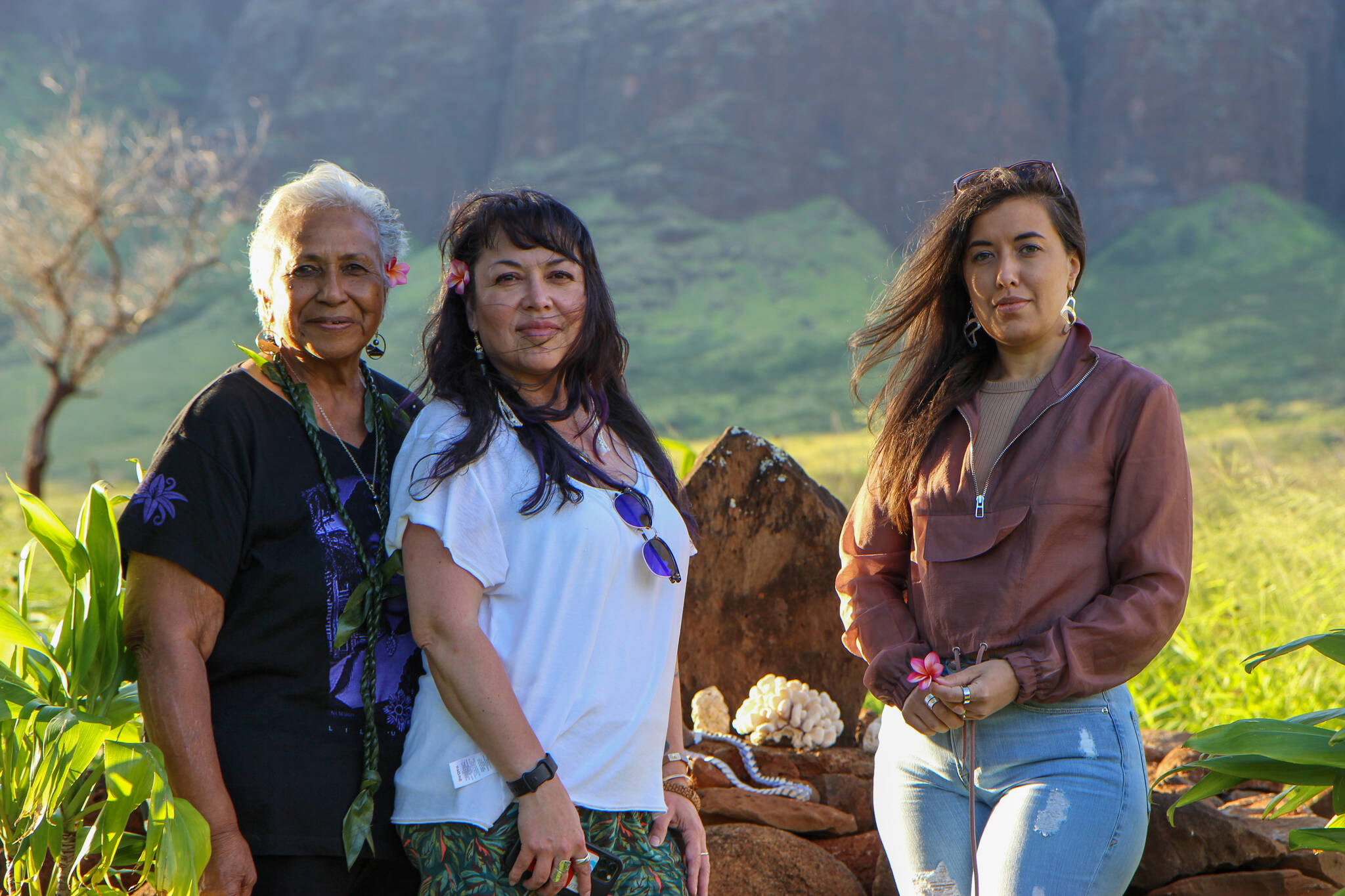
Georgie Navarro, HKO Board of Directors Vice-President, Dawn Jackson, and Crystal Nelson of The Nature Conservancy stand at the HKO farms, where the land care of their healing program takes place.
“For the amount of people that travel to Hawaii, [and] the amount of money made by tourism, none is made available to the first people of the islands. But the organizations we met with are working as hard as possible to help their people,” explains Jackson, while marveling at the successful outcomes of HKO’s participants, a majority of whom will not see relapse even under the pressure of such systemic ills experienced by Native Hawaiians.
For those members of the Kake Cultural Healing Center Advisory Council, this time on O’ahu was one of the first steps towards setting the foundation of their own cultural healing center. The trip reinforced a cross-Pacific branch into the network of Indigenous communities that are accomplishing similar work.
“Connecting across the Pacific the way our ancestors did is one more step on the path to remembering who we are. When we reconnect across the borders constructed by settlers, we become more whole, which is the definition of healing — to make whole again. When we’re able to remember our kinship to our lands, and to each other, these lands will be healthy. We will be healthy,” says Crystal Nelson, Tlingit, Community Development Specialist at The Nature Conservancy, and Regional Healing Catalyst for the Sustainable Southeast Partnership. Nelson specializes in cultural healing work and helped facilitate this trip to Hawai’i.
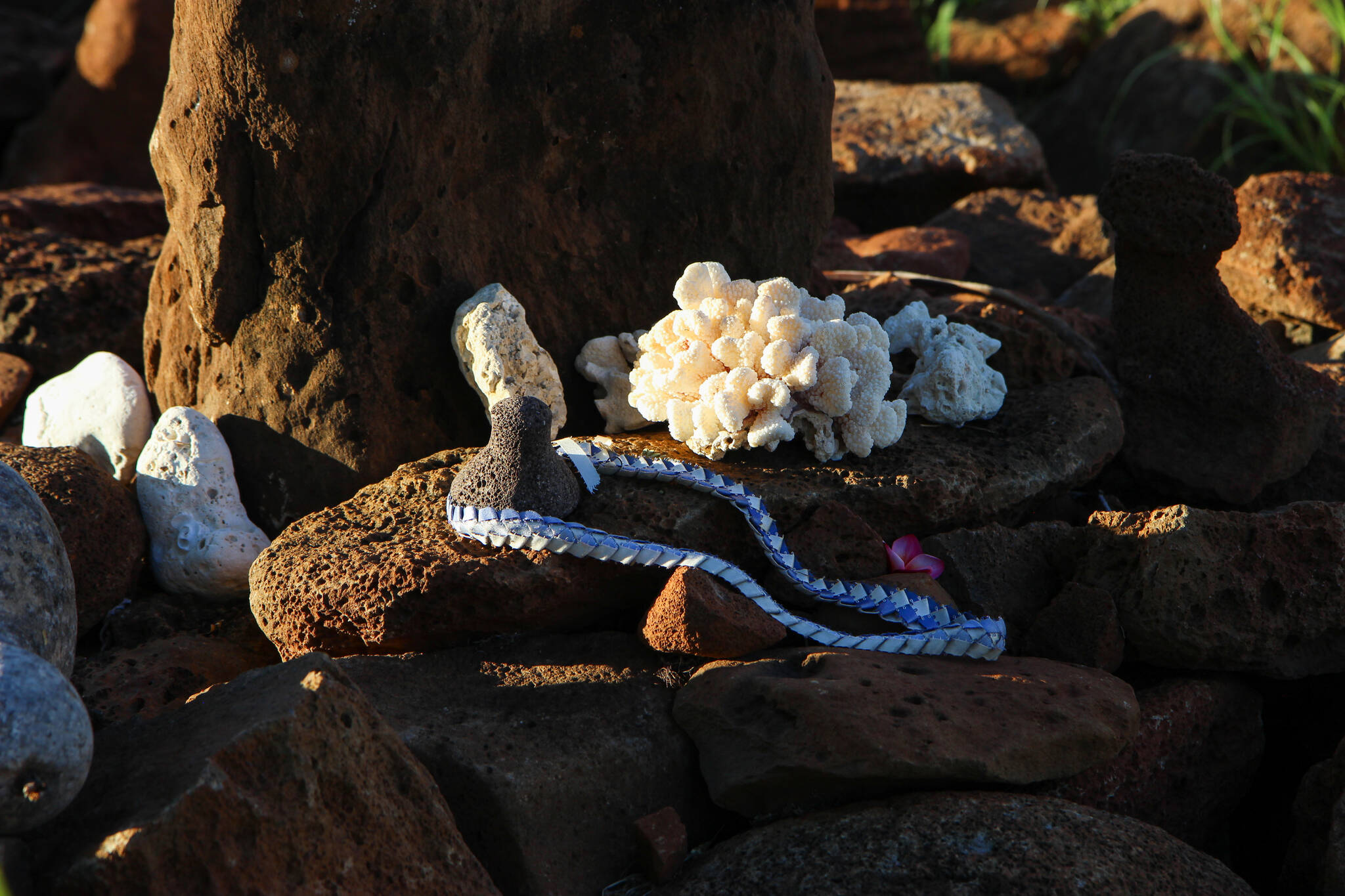
A collection of items dedicated to the ancestors of the lands that hold the HKO farms. (Courtesy Photo / Lauren Tanel)
Indigenous peoples are burdened with the visible effects of colonial harm on their families. Leaders such as those from Kéex Kwáan and Ho’omau Ke Ola, are developing systems necessary to combat intergenerational trauma. When spiritual and cultural practices are placed at the center, communities can identify the causes of their trauma and work towards true healing. Alongside the success of trauma-healing in local peoples, results will also show in the healing of their lands as well. Cruz beautifully illustrates the inherent interconnectedness of Indigenous sovereignty and the health of lands when she says,
“Healing communities does heal land, but maybe that’s backwards. It’s the land that takes precedence. She’s alive. A person. She’ll tell us what she needs. We deliver. She’s happy. We can see it because she thrives. That’s a high, all by itself. It makes us feel powerful. When we feel powerful, we do it again elsewhere and again and again. And we get others to do it, too… Next thing you know, there’s a bunch of folks helping each other doing similar work and the community heals. So ground up. Aina first. Everything else follows. And it feels good.”
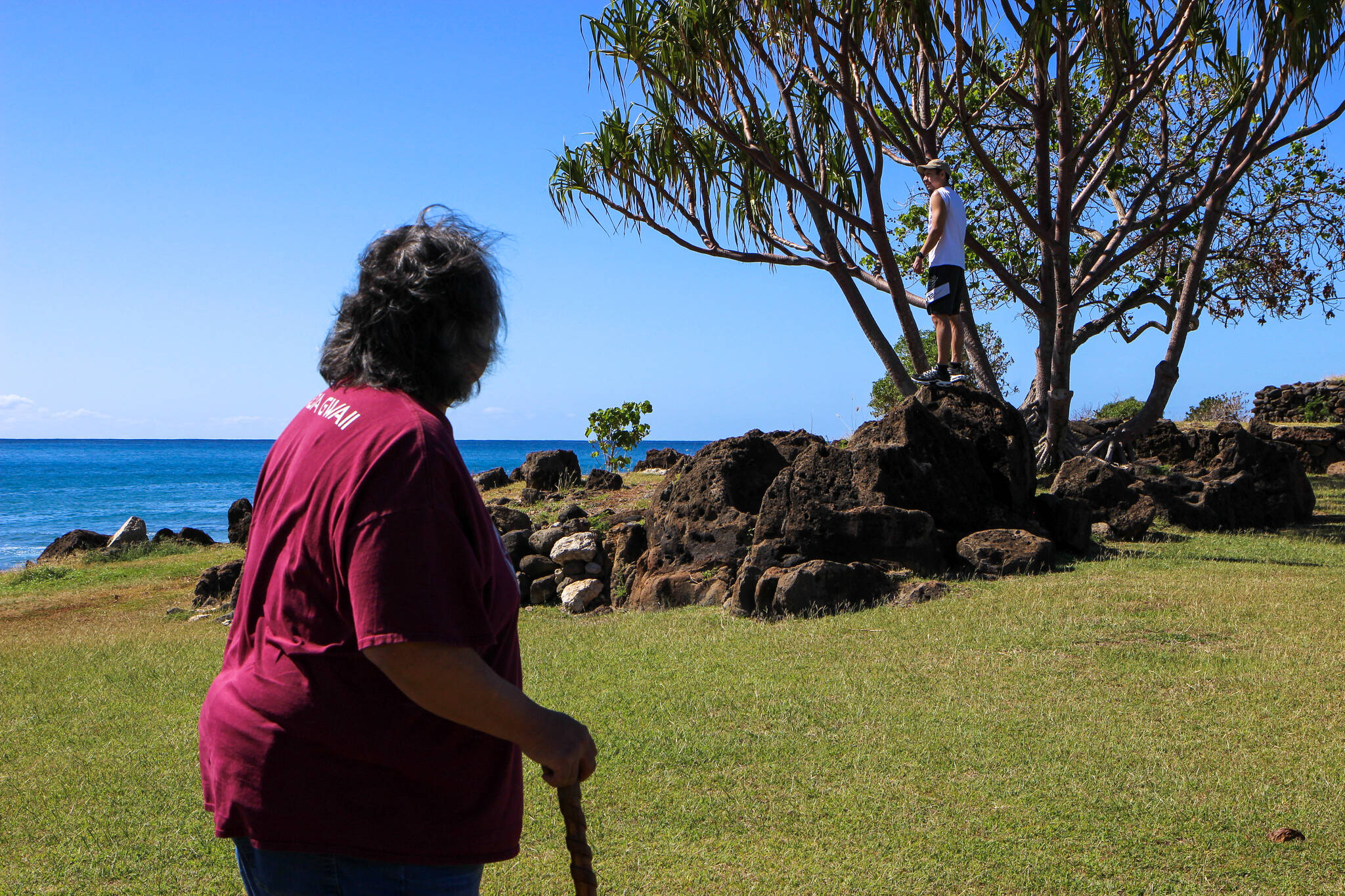
Members of the Kake Cultural Healing Center Advisory Council visit Pokai Bay on the Waianae Coast of O’ahu. This photo features Joel Jackson (foreground) and Simon Friday (background). (Courtesy Photo / Lauren Tanel)
Reconnection to healthy relationships with family, self, and culture naturally produces the autonomy to steward lands in the same way that has been done from time immemorial. The necessary integration of people and lands to achieve cultural healing allows communities such as those in Hawai’i and Kéex to take steps towards Indigenous autonomy. Addiction is just one trauma response experienced at high rates by Native communities. Cultural treatment centers are just one way to address those trauma responses and the colonial systems that produce them. However, the knowledge that goes into addressing addiction can be applied to all realms of community healing. The need for reconnection to culture is what brought the Organized Village of Kake and Ho’omau Ke Ola together. It is a need that will continue to connect communities and identify solutions that heal both peoples and lands collectively.
• Lauren Tanel is an Alaska Fellow at The Nature Conservancy. She lives and works in Dzantik’i Héeni (Juneau) on A’akw Kwáan, bordering T’aaḵu Kwáan, ancestral lands. Her family lives on Miwok territory in the San Francisco Bay Area, where she was raised. After finishing her studies in environmental justice and Indigenous land management practices, she moved to Alaska to get involved in this community-led work under the mentorship of Crystal Nelson (Tlingit) and the broader Sustainable Southeast Partnership network. The Sustainable Southeast Partnership is a dynamic collective uniting diverse skills and perspectives to strengthen cultural, ecological, and economic resilience across Southeast Alaska. It envisions self-determined and connected communities where Southeast Indigenous values continue to inspire society, shape our relationships, and ensure that each generation thrives on healthy lands and waters. SSP shares stories that inspire and better connect our unique, isolated communities. SSP can be found online at sustainablesoutheast.net. Resilient Peoples & Place appears monthly in the Capital City Weekly.
