
Southeast Alaska is on a hot streak.
Starting March 17, one or more locations in the region have seen record high temperatures for 16 days in a row, according to National Weather Service statistics. All told, there were 26 sites in Southeast that experienced record highs in March.
NWS Meteorologist Rick Fritsch said the streak is unlike anything he’s seen in his 13 years in Southeast.
“I, like everyone else, was basking in a wonderful warm March,” Fritsch said, “but it does have consequences.”
The warm theme from the last half of March has continued across the SE panhandle, as more record highs are tied or exceeded. Making this the 16th straight day it has happened. Some sites that reached that level today are Gustavus, Juneau, Klawock, Skagway, and Yakutat. #akwx— NWS Juneau (@NWSJuneau) April 2, 2019
As of Tuesday evening, it wasn’t yet clear whether any Southeast communities had set heat records Tuesday to stretch the streak to 17 days.
Along with the heat, many areas in Southeast are experiencing an extended drought. Juneau experienced its 19th driest March on record, following up on more than a year of low precipitation. At the Juneau International Airport — which usually sees about a foot of snow in March — only 0.3 inches fell.
Fritsch pointed to Mount McGinnis, which usually still is fully snow capped at this point in the year. Bare patches are already visible. For the season, 52 inches of snow have fallen at the airport, and a NWS dispatch stated it’s “almost certain” that the snow season will finish well short of its usual average of 86.7 inches.
[Third graders organize climate march]
Preventing fires
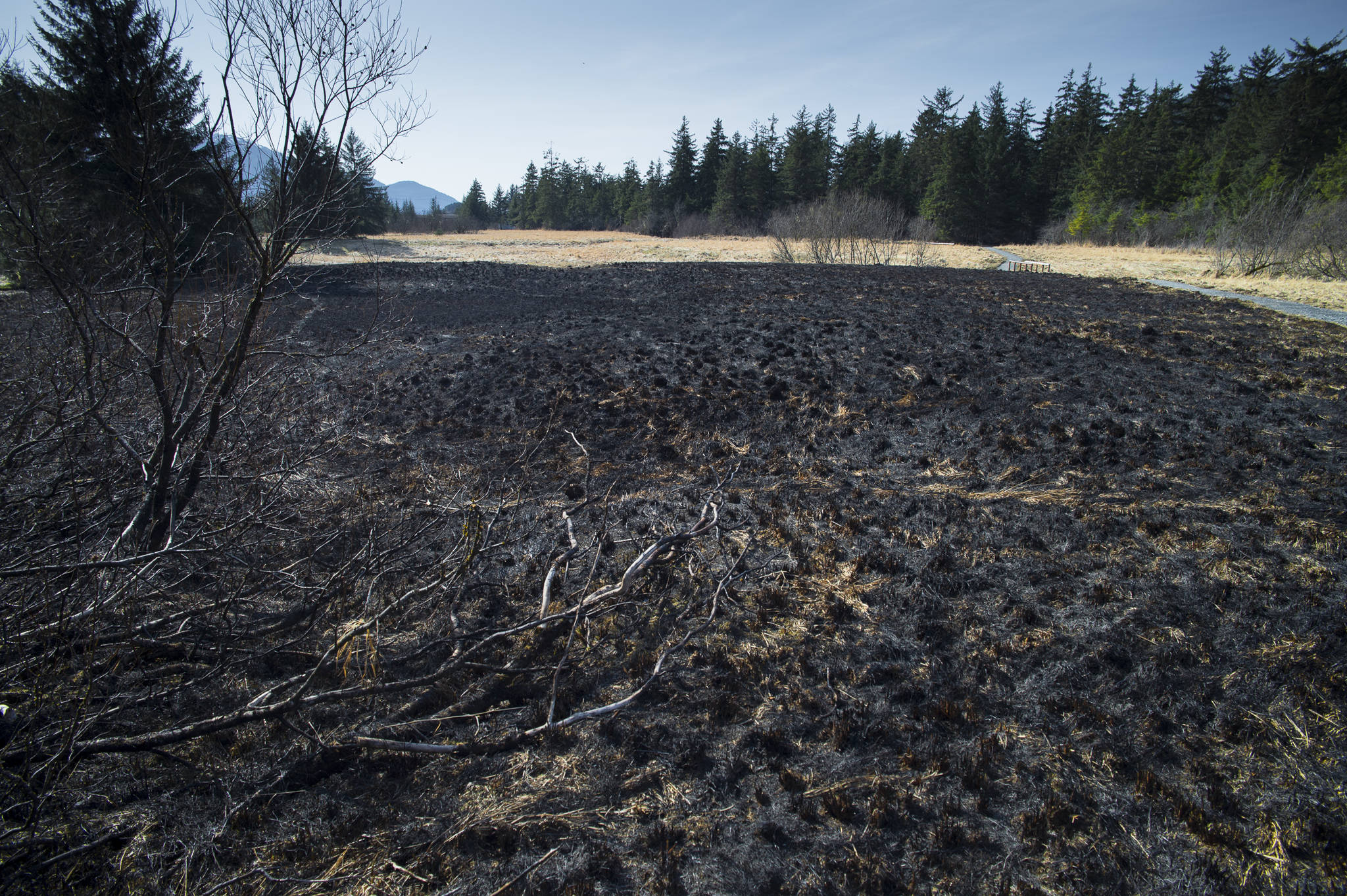
One of the most obvious consequences of lower precipitation is the higher risk of fire. There have been three confirmed brush fires in the past week, Capital City Fire/Rescue Assistant Chief Ed Quinto said.
The three have happened near Auke Lake, Out the Road and near Gruening Park Apartments, Quinto said, and have all been stopped before they caused damage to any buildings or property.
“People definitely need to start paying attention to what they’re doing out there, especially next to dry brush,” Quinto said.
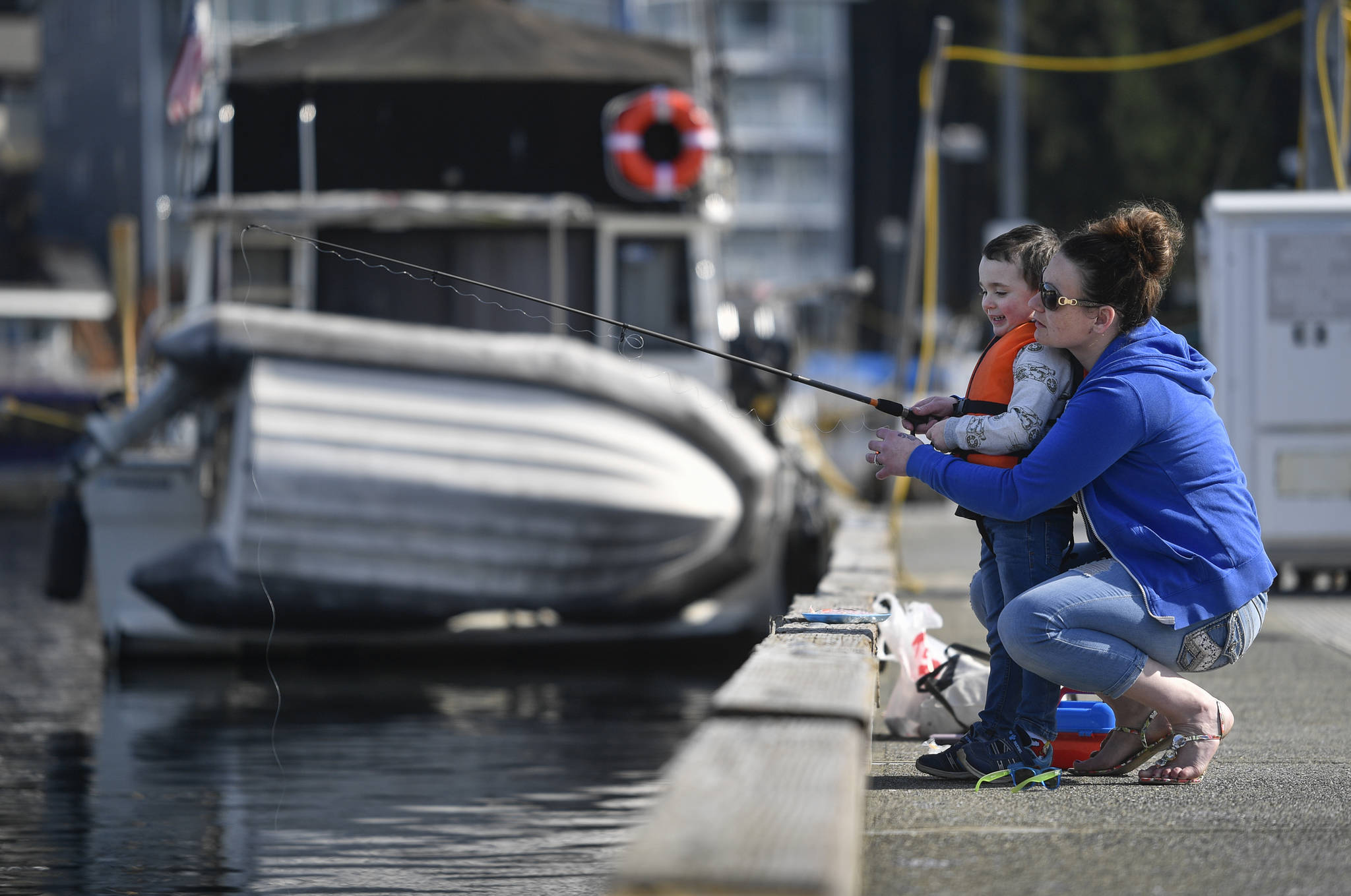
Taylor Kesterson fishes with her son, Malakai, 5, at the Don D. Statter Memorial Boat Harbor in Auke Bay on Tuesday, April 2, 2019. Kesterson said she fished from the dock as a child and wanted her son to have the same experience. (Michael Penn | Juneau Empire)
If people are going to burn their trash, Quinto said, he had a few tips. Make sure you have an extinguishing method such as a garden hose or a shovel. Keep the fire under 10 feet in diameter and make sure not to have a fire when the wind is stronger than 15 miles per hour, Quinto advised. He also said to stay with the fire and not letting it burn alone.
There’s still a burn ban in effect from Lemon Creek out into the Mendenhall Valley, Quinto said, until May 1.
Quinto said he’s not too worried about trees catching fire, but Fritsch said conditions will likely continue to be dry on the forest floor.
“I’m not predicting any forest fires or anything like that,” Fritsch said, “but certainly the forest floor is going to be drier to start with.”
[Warmer temperatures could cost Alaska up to $700 million]
April outlook
April is historically Juneau’s driest month, Fritsch said. The capital city gets an average of 2.94 inches of precipitation in April per year, and Fritsch said NWS predicts this month will yield right around that amount.
The month began with a bit of good news, even if it’s just in the short term. Alaska Electric Light and Power announced Monday that after months of disconnecting some of its customers due to low water levels, there’s enough hydropower to reconnect them. Water levels have returned to normal, in part because of melting snow, according to the announcement.
“Lake levels have improved but we wouldn’t say that lake levels are high — rather they have improved enough to bring back our interruptible customers,” AEL&P Vice President and Director of Consumer Affairs Deb Driscoll said in an email Tuesday.
These customers, known as “interruptible” customers, include Greens Creek Mine, Princess Cruise Lines and customers with multiple heating systems. When AEL&P has surplus power, it sells power to these customers, which reduces the rates that normal customers pay.
For the first time in five years, AEL&P disconnected these customers in December. Rates for residential customers have been higher as a result, and should drop back to normal soon.
According to Monday’s announcement, the utility is going to start with the customers who have dual heating systems, connect Greens Creek later this month and connect cruise ships when they arrive at the end of the month.
It’s not clear whether water levels are expected to remain high for the summer or if this is just a temporary rise due to melting snow.
There’s a strong chance April will also be hotter than normal, Fritsch said. He made clear that the forecast doesn’t necessarily say it will be much warmer than normal, only that it will be warmer than normal. Whether that means half a degree or 10 degrees warmer than average is unknown.
For this week, NWS forecasts clouds, fairly high chances of precipitation and somewhat colder temperatures.
• Contact reporter Alex McCarthy at amccarthy@juneauempire.com. Follow him on Twitter at @akmccarthy.
