
It’s a little after 9 a.m. on a Sunday in October and Meta Mesdag is in an open-air skiff traveling at 27 knots toward the Salty Lady Seafood Co. farm. It’s 34 degrees and gray with favorable sea conditions.
Her sons, Emmett, 16, and Kai, 13, helped her load the boat and are laid out in the bow, just out of the wind for the 30-minute ride.
Alaska provides the natural conditions that are right for growing oysters, aside from one small detail. But what sets aside a small farm like hers — five parcels that comprise an acre near Southern Lynn Canal — is the care of the oysters, said Mesdag.
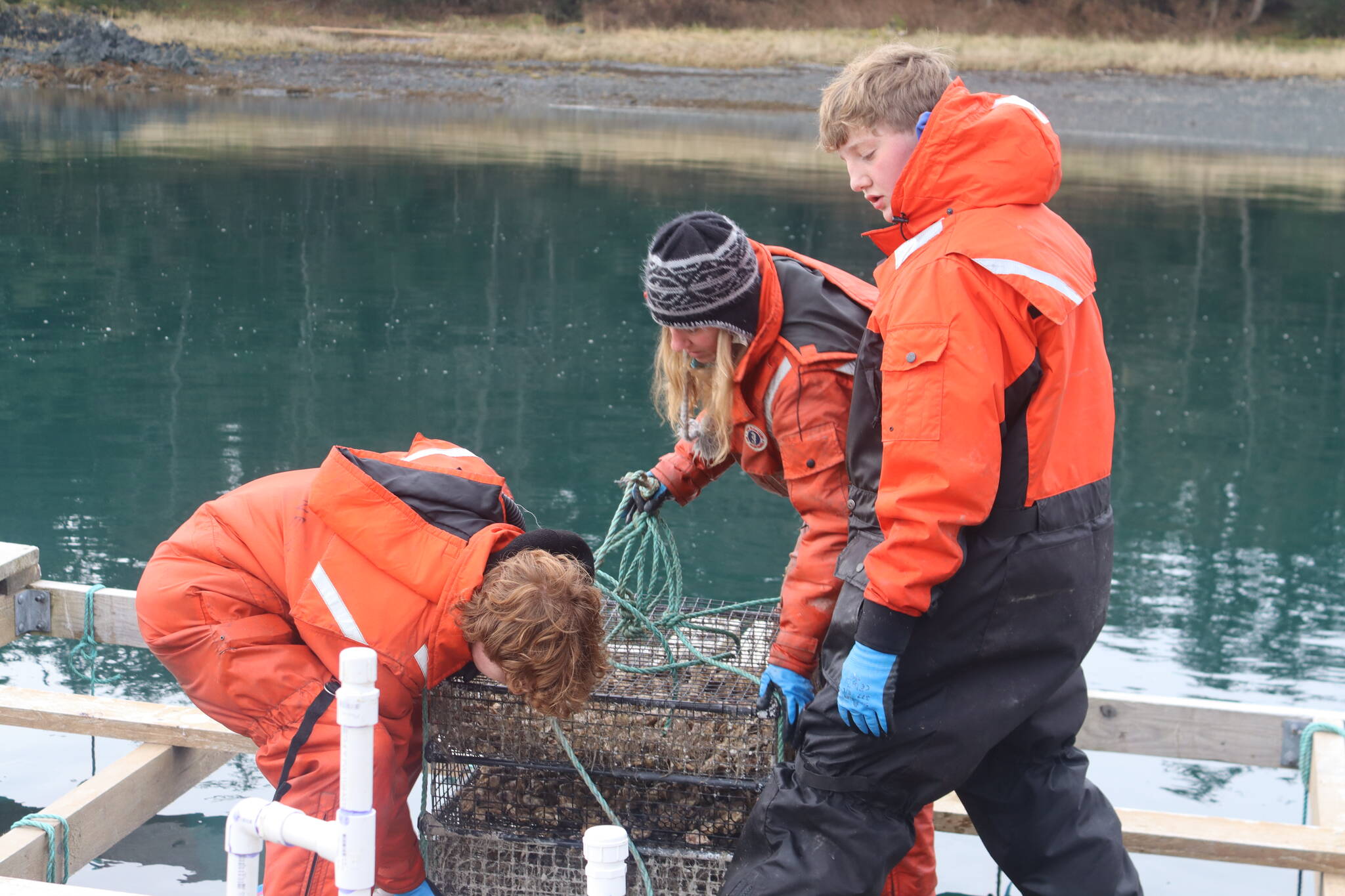
When Mesdag and her sons get to the farm, a large partially covered floating platform with adjacent smaller platforms, and long rows of oyster bags floating in the water, they get right to work.
The first step is pulling bags of oysters out of the water and into the skiff and then onto the platform. There they sort the oysters, which will be moved to other areas of the farm. One of the last things will be moving harvested oysters to the skiff before they head back.
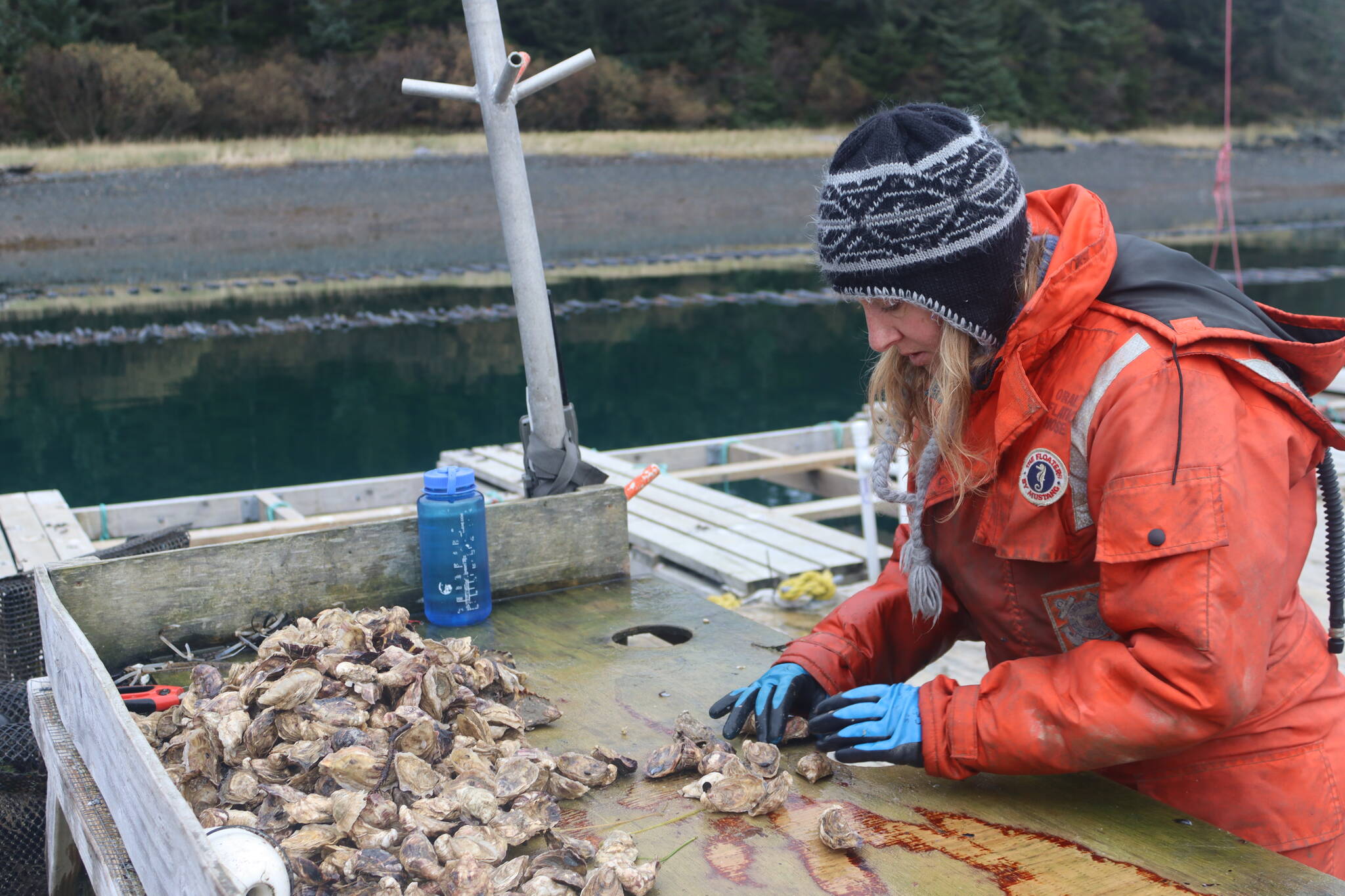
Meta Mesdag, who founded Salty Lady Seafood Co. in 2018, sorts oysters during a Sunday in October. They specialize in petite oysters because the market trend is toward smaller, dense oysters “with a sweet flavor and a clean finish.” (Meredith Jordan/ Juneau Empire)
Shifting the oysters to areas with slightly different conditions helps to hasten their growth. One of the middle stages is moving the oysters lower in the water where there is more phytoplankton to feed upon, explains Emmett, a sophomore at Juneau-Douglas High School: Yadaa.at Kalé. About 40%t of the work amounts to cleaning, he said.
A later stage puts the oysters in a place that helps smooth the shell, said Kai, 13, an eighth grader at Dzantik’i Henni Middle School. He hoists and empties the heavy oyster bags onto the table to be sorted, where Mesdag rapidly sorts them. Then he loads them back into new bags as instructed.
The three of them move steadily to get it all done. There are also some winterizing tasks, like detaching a pump so it can go to storage, out of the elements, until spring.
Not all Pacific oysters are the same, explains Mesdag, who founded the business in 2018. The merroir — the local care and conditions — determine the flavor of the oyster.
While the Pacific oyster can grow “as big as a shoe, the market from west coast to east coast favors smaller, dense oysters with a sweet flavor and a clean finish,” she said. “That’s why we make sweet, petite oysters.”
Not that there aren’t larger oysters in the mix at the farm. In the middle of the sorting process they uncover one big oyster they have seen before. They had nicknamed it Bartholomew or Winston the last time it turned up, and can’t remember which.
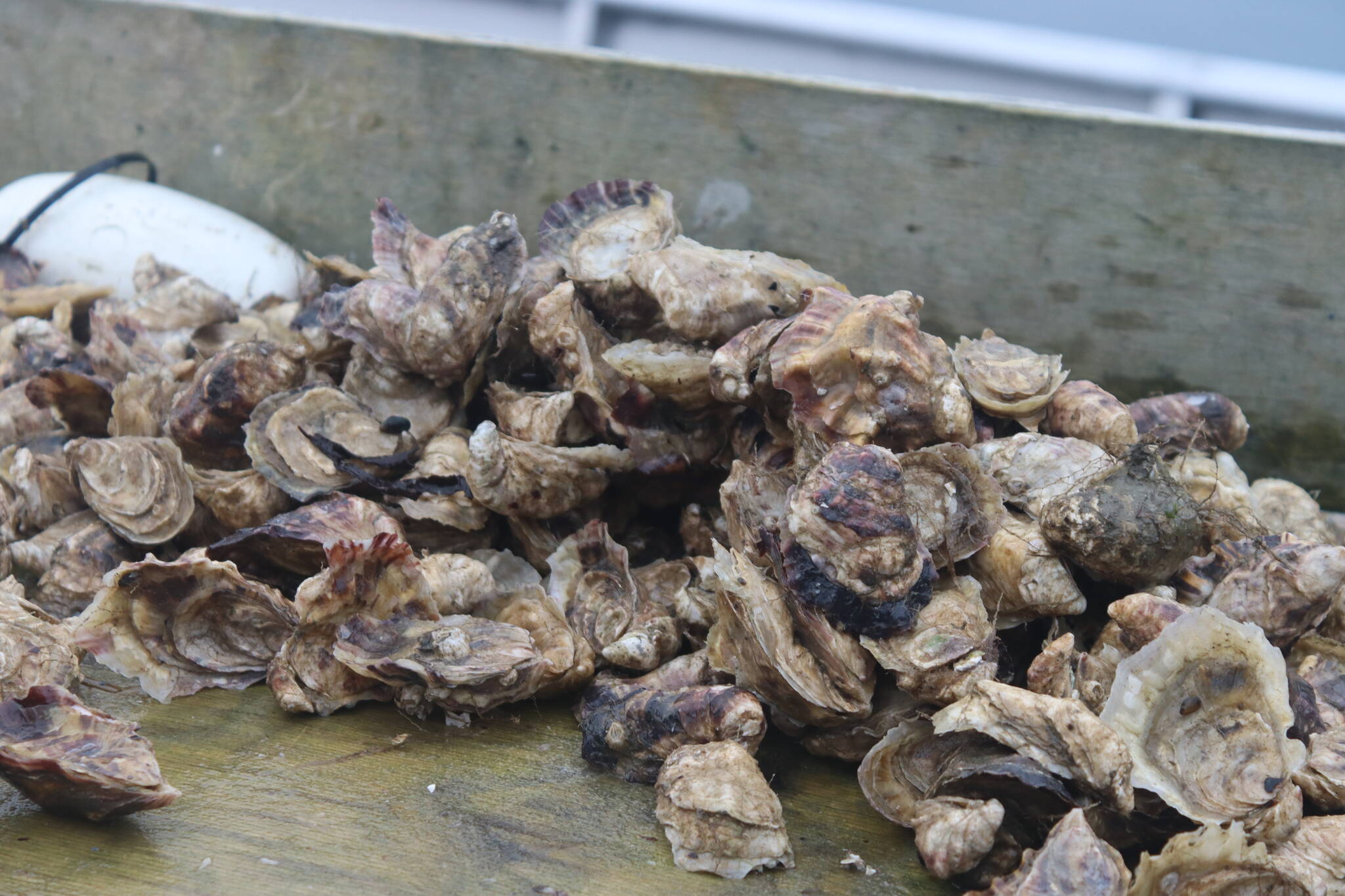
There are more than a million oysters in varying stages of development at the Salty Lady Seafood Co. farm. Meta Mesdag, who owns the company, said having a small farm allows for special care and attention to the shellfish, and ultimately, a tastier oyster. (Meredith Jordan/ Juneau Empire)
Some of the shifting of the bags is to increase efficiency for later visits. Mesdag will be at the farm every week this fall and winter. That’s different from a typical season, which has most of the harvesting, if not all, happening in summer months.
A harmful algae bloom shut down the Salty Lady for half of the 20-week oyster season so the oysters couldn’t be harvested.
“We went a couple of years with no harmful algae. And then all of a sudden, this year, we’re seeing it again,” Mesdag said. The blooms, in high enough concentration, can make shellfish toxic to humans, even fatal. So it is closely monitored through regular tests, hence the shutdown.
She was already facing increased costs for nearly everything, as with most businesses.
Mesdag alerted her customers to the issue and helped them source replacement product so they wouldn’t be without. When Salty Lady was able to harvest again, most of the customers returned, just not her largest customer.
“It’s not enough income this year to cover my costs,” said Mesdag, estimating she’s down about 75% from a year ago. By continuing to harvest through the winter she can recoup some of those losses. She’s re-opened sales on the website and word is getting out.
She said she is fortunate because on some of the trips to the farm she will be accompanied by a graduate student. That’s part of a project with the University of Alaska partially funded by a grant.
Mesdag is confident the long-term future is bright for Salty Lady, and for the shellfish industry in Alaska. She is most proud of the operation being a family farm. Mesdag’s husband, Alec Mesdag, is at home and on the phone as they work, testing the security cameras on site from afar. He is key to the success of Salty Lady, she said.
He also gets credit for alerting her to the possibilities of mariculture. She was running a photography business and wanted to do something else that could include her family and asked what he thought.
He was serving on the board of Southeast Conference at the time, and a true believer in the potential of oyster farming to be a successful business, as well as the associated economic development opportunities.
The market box, filled with between 50 and 60 pounds of oysters, is loaded onto the skiff toward the end of the visit to the farm.
Later, Meta and daughter Wren, 9, will deliver oysters around Juneau. “From our farm to the table in three hours,” she said.
Some of Salty Lady’s winter customers include Hangar on the Wharf, Island Pub in Douglas, Jerry’s Meats & Seafood, Super Bear IGA at Mendenhall Mall, and private buyers who purchase from the website.
“The general proximity to Juneau is a big win for marketing and delivery,” said Eric Wyatt, co-owner of Blue Star Oyster Co., whose nursery supplies Salty Lady with oyster starts. Mesdag does “a great job,” he said.
Salty Lady also ships orders out of town, including to Fairbanks and Portland.
Creating an oyster of “unparalleled quality” is a lot of work, but it’s worth the effort, insists Mesdaq.
The Salty Lady oyster is “hands down, the best oyster, anywhere,” she said.
• Contact Meredith Jordan at meredith.jordan@juneauempire.com or (907) 615-3190.
