
By Bjorn Dihle
In 2019, a young fisherman was walking through a boatyard in Naknek, Bristol Bay, when he bumped into a brown bear feeding from a dumpster. It was night, when, bears are most active and bold — especially around human activity. The man ran and, moments later, was knocked down by the bear. Though the bear bit his calf, the man fought back and managed to break free. The bear nipped him one last time on the butt before he was able to climb to safety on his father’s boat. The Alaska Department of Fish and Game and Alaska State Wildlife Troopers were notified, and two juvenile bears were killed near the location of the attack.
Living with bears isn’t easy but, for folks in Bristol Bay and the Alaska Peninsula, it’s a fact of everyday life. The biggest problem communities face, according to Dillingham’s Animal Control Officer Dan Boyd — and as the above story highlights — is poorly stored garbage. A bear that becomes habituated to eating trash is much more likely to lose its fear of people than a “wild” bear.
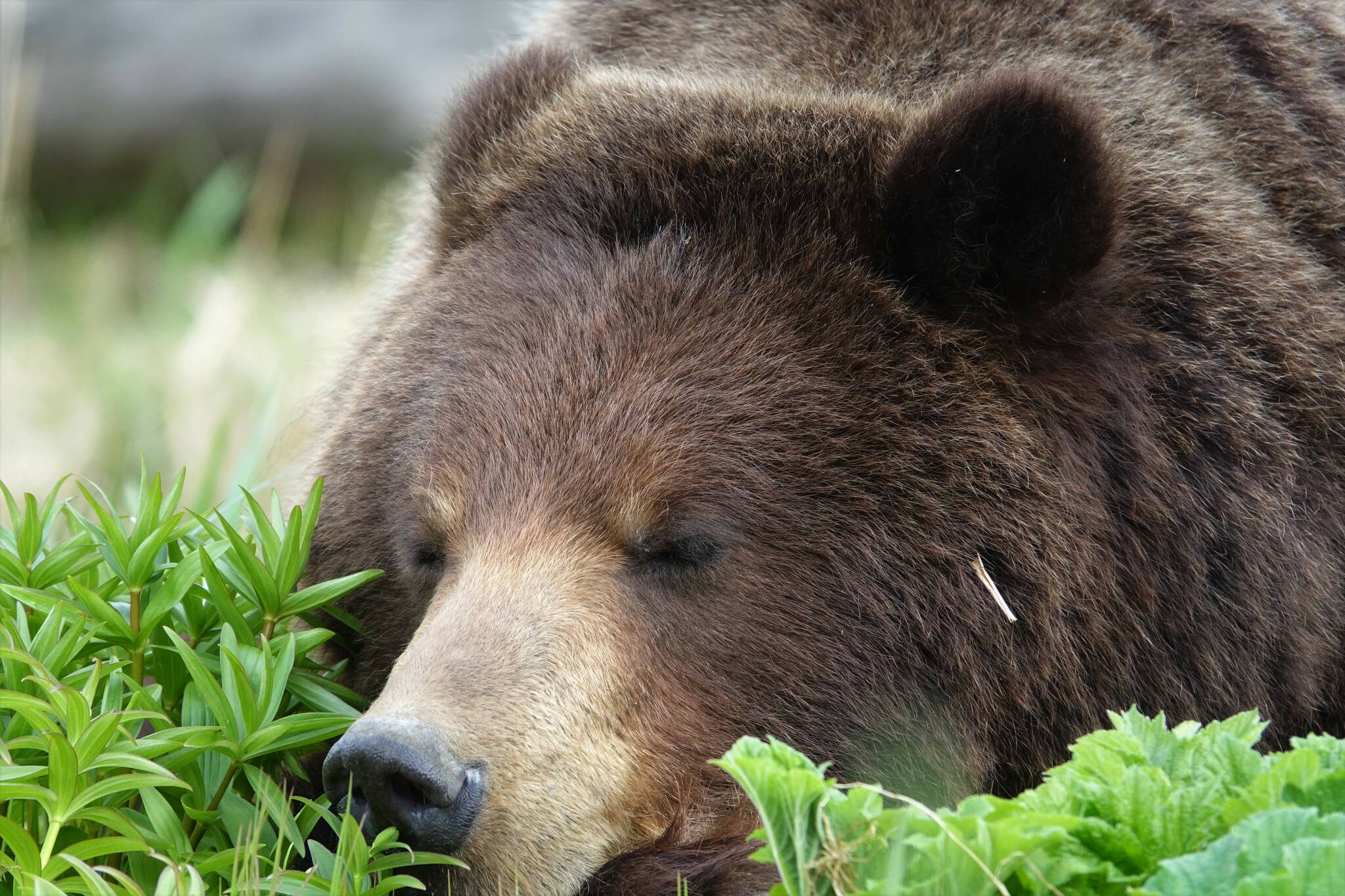
The population of Bristol Bay and Alaska Peninsula makes up about one third of Alaska’s entire brown bear population, which the Alaska Department of Fish and Game estimates to be around 30,000. The east side of Bristol Bay butts up against world renowned bear-viewing mecca Katmai National Park, which has an estimated 2,220 brown bears. Unit 9, which encompasses most of Bristol Bay and the Alaska Peninsula outside of Katmai, which juts out to the southwest, has an estimated 6,000-6,800 bears. The northwest portion of Bristol Bay is encompassed by the Togiak Wildlife Refuge. Bears here are not as plentiful, nor do they grow as large. A population estimate for the Togiak refuge and some nearby areas put the brown bear population between 642 and 928.

The handsome, brave and mysterious Drew Hamilton at one with the bears of Katmai. (Courtesy Photo / Drew Hamilton)
One September, when I was in King Salmon, the proprietor of the Antlers Inn warned me to not walk the nearby street at night. Bears, she said, use it every night coming to and from the river. I ran into a number of parties from around the world who had traveled to the small Bristol Bay community to see and photograph bears. Just a short floatplane flight from King Salmon is Brooks Camp and the famed Brooks Falls, the most visited bear viewing area in Alaska. Brooks Camp is managed by a team of park rangers who make sure bears and people coexist as peacefully and respectfully as possible. It is incredibly rare, despite bears and people often being in close proximity, for contact between bear and person to be made at Brooks Camp. One of the key factors for Brooks Camp’s success avoiding negative interactions between bears and people is that human food and garbage is kept on lockdown.
Brooks Falls also acts as the setting for the international celebrated Fat Bear Week, where people get to tune in virtually to Brooks Falls, judge which individual bear is the “portly patriarch of paunch” or “king of the capacious creatures of Katmai” — i.e. fattest — and cast their vote online. The competition has become increasingly popular and provides a way to educate people on the natural history of Katmai bears, the value of salmon and the interconnectedness of the ecosystem. A University of Alaska study put bear viewing in Southcentral Alaska, which includes Katmai as well as other portions of Cook Inlet, as annually generating around $35 million.
On that same trip, I also struck up a conversation with a hunting guide. When I asked him about what his season was looking like he said, “Bears, bears and more bears.”

A brown bear eagerly heads to a creek after the first schools of salmon of the year arrive to spawn. (Courtesy Photo / Bjorn Dihle)
Bristol Bay and the Alaska Peninsula are famous for having some of the largest brown bears in the world and is a trophy hunting mecca. Historically in Unit 9, trophy brown bear hunts are held in alternating spring and fall seasons. Spring hunting seasons are in even years and fall seasons are in odd years. Statistics on the spring season show that it brings between 600 to 700 hunters and generates around $10 million. Hunts vary in price, but commonly go for $30 to $35k.
The Bristol Bay fishery supports 15,000 jobs and annually brings in $2 billion—not to mention that salmon provides invaluable sustenance and cultural benefits to the 7,500 people who live in the region. There’s also a direct correlation between Bristol Bay’s incredible run of salmon—a record breaking 66 million sockeye returned in 2021 and the Alaska Department of Fish and Game’s forecast for 2022’s return is an unbelievable 75.27 million sockeye—and the region’s incredible population of brown bears. Many of Bristol Bay and Alaska Peninsula bears are comparable in size to the brown bears of the Kodiak Archipelago. A big male may weigh over 1,000 pounds in the fall, having gained around a third of what it weighed when it emerged from its den in the spring, and stand 9 feet tall on its hind legs.

Roughly a third of Alaska’s 30,000 brown bears live in Bristol Bay and the Alaska Peninsula. (Courtesy Photo / Bjorn Dihle)
It’s one thing to encounter brown bears when you venture out into wild country. It’s another thing to have them prowling the streets at night. Dan Boyd points out living with bears has been a fact of life in the region forever. He reiterated that improperly stored and disposed of garbage is the biggest problem with bears coming into Dillingham and other rural communities. In 1997, after an article about a woman selling bear tours at Dillingham’s landfill drew attention, biologists conducted a study that identified 70 different brown bears feeding there that summer. Between four and 33 bears were seen feeding there each night. An electric fence and incinerator to burn garbage was brought in, which did wonders getting the bears out of the landfill. And despite all the bears, Boyd couldn’t think of a single attack in Dillingham. This both a testament to how much brown bears go out of their way to avoid conflict and how much salmon and other wild food there is surrounding Dillingham.
The prediction of another record-breaking sockeye return to Bristol Bay for 2022 should be a mega-boon for people and bears. This place of salmon, people and brown bears is something to cherish and protect. Bear man Drew Hamilton, who has been guiding viewing and photography trips in Bristol Bay and the Alaska Peninsula for two decades, aptly calls Bristol Bay “the overlap in ecology and economy that will protect, support and sustain Alaskans in the future, just as it has done for tens of thousands of years — as long as we don’t mess it up.”
• Pride of Bristol Bay is a free column written by Bjorn Dihle and provided by its namesake, a fisherman direct seafood marketer that specializes in delivering the highest quality of sustainably caught wild salmon from Bristol Bay to your doorstep.
