
By Vivian Faith Prescott
For the Capital City Weekly
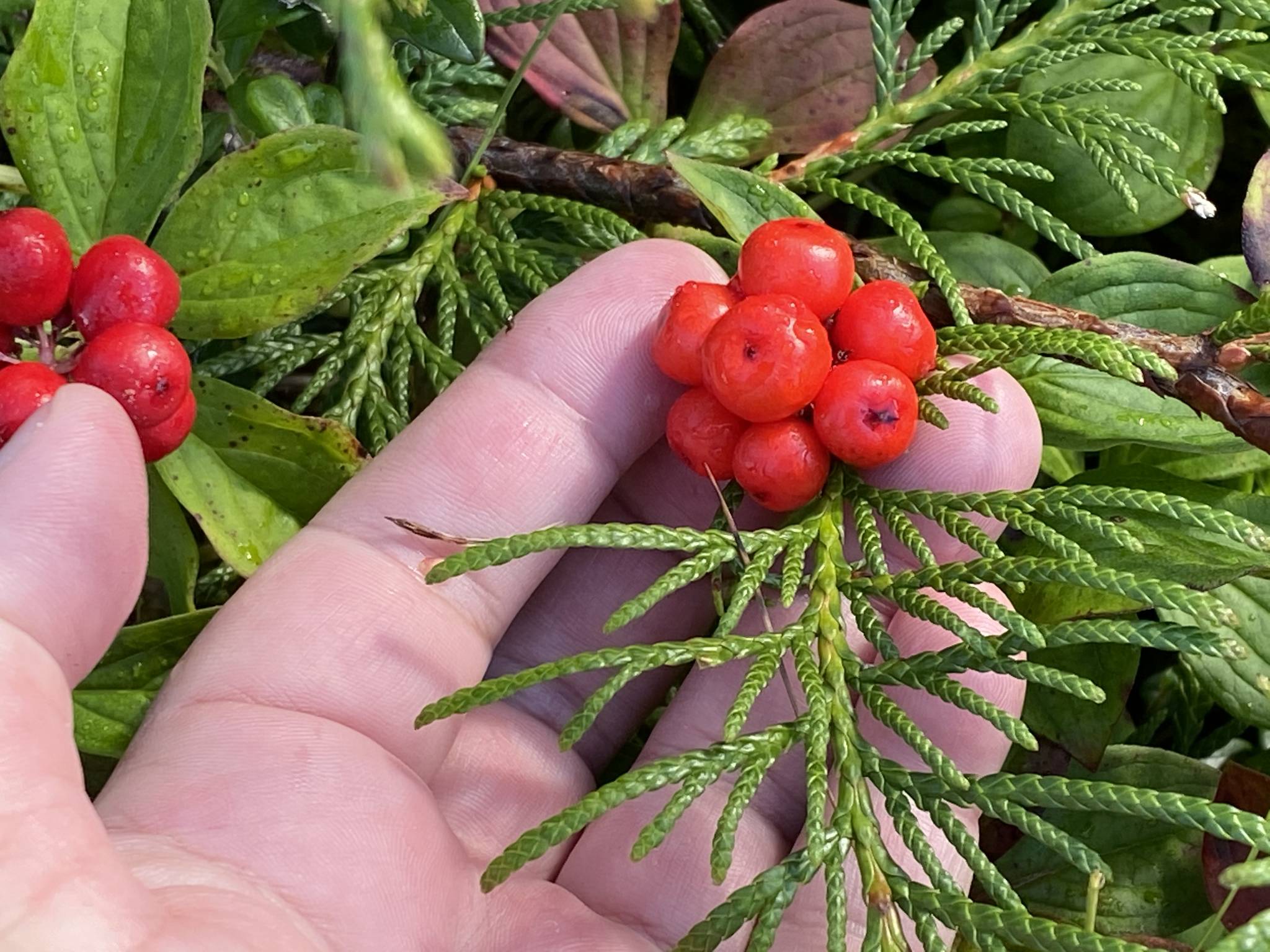
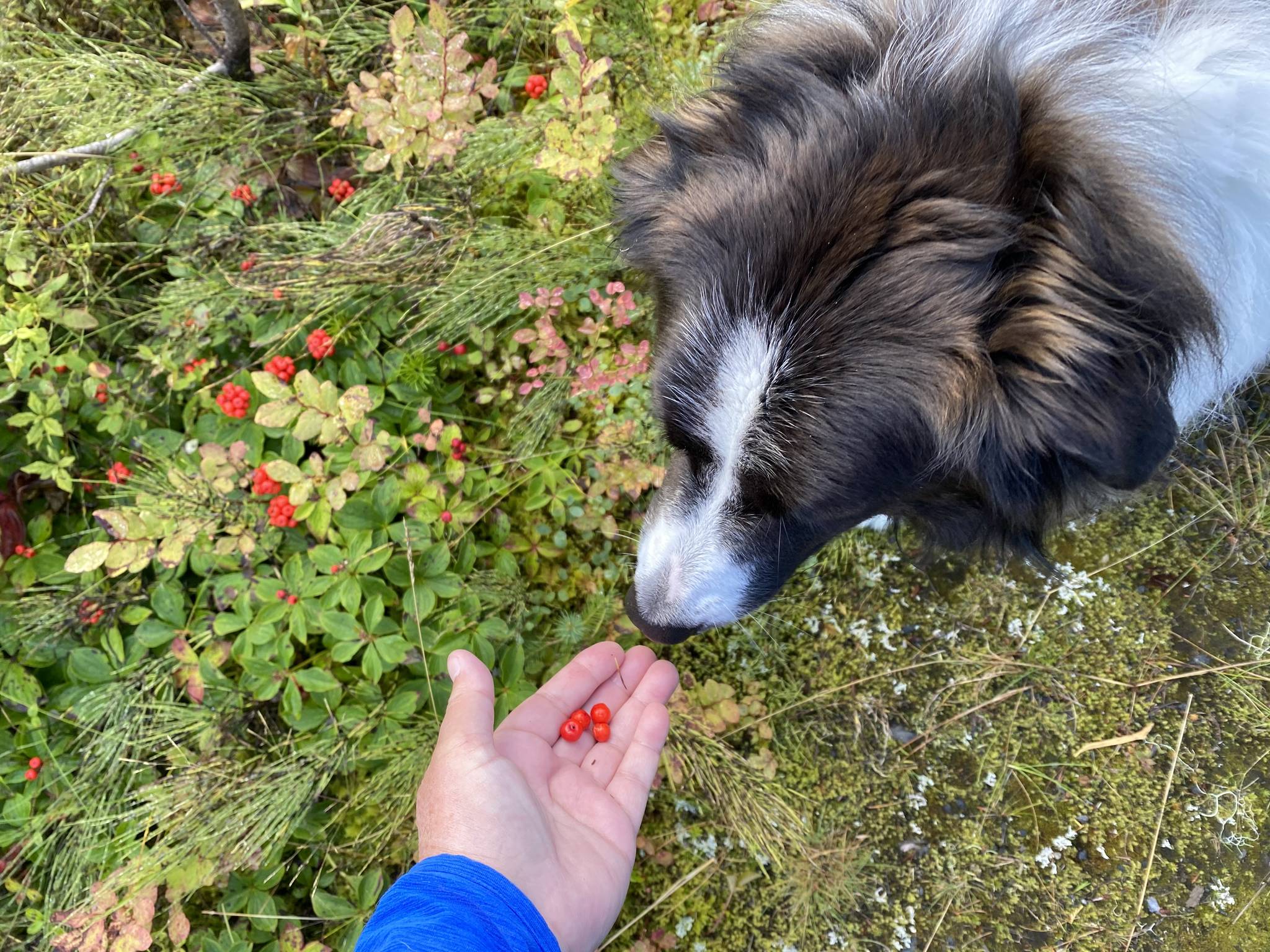
Bright red berries dot the roadside and we pull off on a small turn-out and park. My dad and I, and my dog, Kéet, survey our surroundings: bull pine and spruce draped with moss, a soggy muskeg and reddish-orange berries contrasting with green leaves. I call them bunchberries, Cornus unalaschkensis, and in the Lingít language: k’eikaxétl’k. They’re one of my favorite fall berries.
I’ve come here to a special spot on the island to pick bunchberries and reflect on how to chant their song. With an handful of other students from around the world, I’m taking a yoiking class from Sámi instructors Elin Kaven and Jungle Svonni from Sapmi in Norway.
Yoik is the Sámi way of chanting, which is somewhere between singing and throat singing.
I’ve been practicing traditional and contemporary yoiks for a couple months. I even practiced an old reindeer herding yoik. My instructors want us to compose or sing our first yoik. They said we should pick something we love when we’re ready. I love bunchberries so maybe I can “fetch” their yoik.
I sit down on the ground surrounded by berries. Kéet sniffs the area. My dad walks the road edge scoping out more berry patches. The surrounding carpet of bunchberries reminds me of a fairyland, which is fitting because my ancestors leaned to yoik from the fairy people.Yoik uses thetongue and the sounds are produced farther back in the throat. The word for our chanting practice is Yoik in English and in Scandinavian languages it’s spelled Joik.
[Planet Alaska: The lungs of the island]
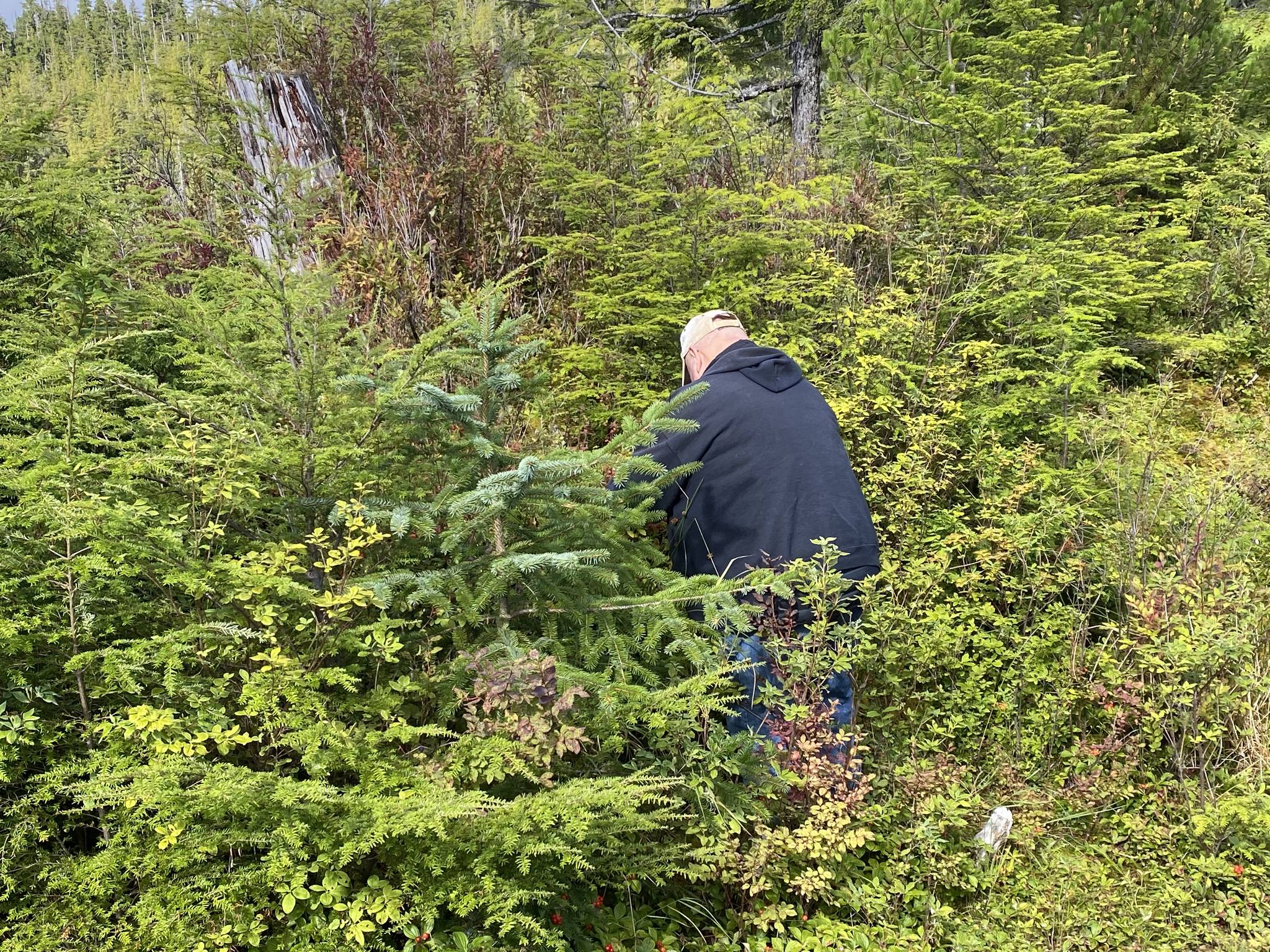
My dad walks back toward me gesturing with his cane. He’s spotted a big patch down an embankment. I plunk a handful of berries into the bucket.
“Didn’t we call these snake berries?” I ask my dad. “Or soapberries?
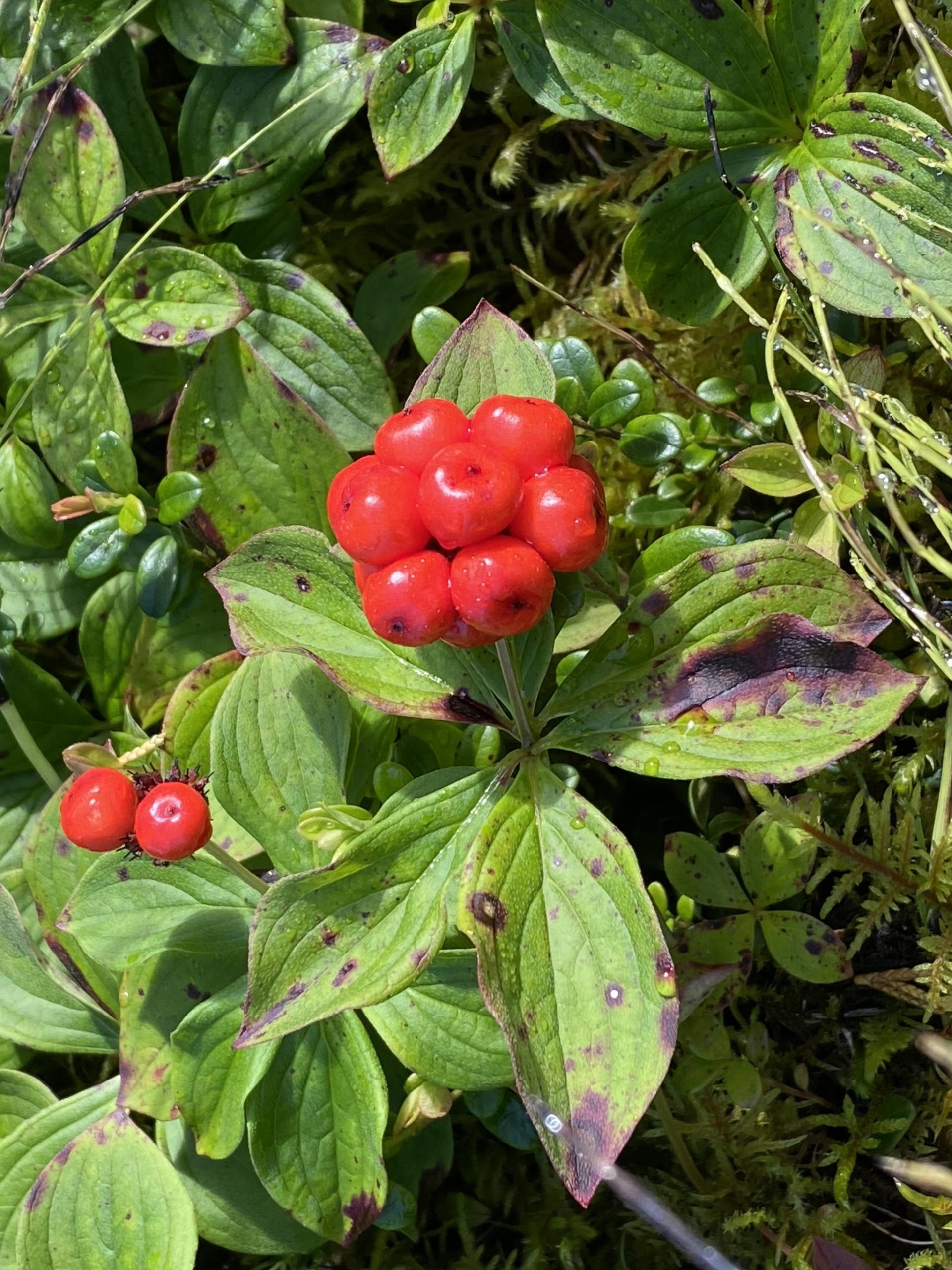
Cornus unalaschkensis are often confused with Cornus canadensis and from what I’m learning one is a species from the East Coast and the other, unalaschkensis, is on the West Coast, ranging from Alaska, Washington, Oregon and California, to the far north including the Canadian arctic and Greenland. There are a few other differences. Supposedly it’s easier to tell the difference when they’re flowering as unalaschkensis has a slight purple tinge to the petals and canadensis has green tinge to the petals. They both flower in the late spring and early summer. Bunchberry flowers look like one flower, but really it’s a cluster of tiny flowers, surrounded by white petals. They’re paler red-orange at first and eventually turn bright red.
“Bunchberries,” my dad says. “Yes, and snake berries, soap berries.”
I’d heard those names as a kid, but I’m pretty sure we were mixed up. Bunchberries have a foamy and tasty pulp inside with a crunchy seed. I like the foamy texture and the seed. Some people assume they’re poisonous or don’t care for the taste, but they’re one of my favorite berries and also a favorite food for songbirds and birds migrating south for the winter. People use the leaves for deer calls and there are medicinal uses also.
I stand up and walk toward the location my dad spotted and make my way down the embankment. Kéet scampers downhill to join me, and my dad heads to the other side of the road to inspect the groundcover for berries.
This place, the same spot where I harvest hanging moss, has always made me feel like I should be singing something and I never knew why. Sámi chanting, or yoiking, has its origins in nature, giving a voice to and honoring it. As I’m learning, there’s a difference between a song as we understand it and a yoik. A song is about something or someone and a yoik is that something. A yoik is the energy or essence of that thing. So a bunchberry yoik is about bunchberries, but is bunchberries.
I pick a few berries and taste them. Bunchberries are also called dwarf dogwood, trailing dogwood, coastal bunchberry, western bunchberry or Alaskan bunchberry. I lean against the dirt embankment and pick easily since you can grab more than one berry at a time. Bunchberry plants grow from a few inches to about 8 inches tall. They’re a favorite with photographers. In spring and summertime white blossoms carpet roadsides, forest floors, and rim muskegs. Then, later, bright red berries contrast with vibrant green leaves, resembling festive winter holiday decorations. In the fall, the leaves turn a beautiful purple. Yes, they’re photogenic, but what I like best is you can still find bunchberries to eat in October. They’re a beautiful way to bid goodbye to the berry season.
As I pick, I start to sing, making small upbeat sounds. I use the northern Sámi sounds, called syllables, because my family came from that region. Sounds, not words, are the most important tool for yoikers. Yoiks are natural part of everyday life, like picking berries and petting the dog. Yoiks are often impulsive and arise when the spirit of nature moves the chanter. They’re used in storytelling, lullabies, memorials or rituals, and are chanted for relatives and friends, for children, or at special sites or events.
I pick the berries on the hillside then turn and make way toward an old stump where more berries cascade like jewels. Bunchberries love the rain forest and thrive on decaying material like stumps. The old stump is like a grandmother, with grandchildren berries surrounding her. She nurtures them. That would be a good sense of the yoik. Now, I consider if I should fetch a yoik from the berries themselves, the old stump, or the berry picking event? You use a low tone like na or te to fetch the yoik from the Earth. I’m probably going about this song practice the wrong way, though, because the yoik comes to you. Yoiks are already in everything. A yoik has no beginning and no ending. And we “fetch” a yoik when we want to hear it.
Between my dad and I we fill half a bucket full of bunchberries. It’s almost time to go. Now, what to do with them when we get home? I can make jam or jelly, muffins, perhaps. Some people mix them with other berries because they have a lot of pectin. Maybe I’ll just eat them and sing them. I’m thinking about what I’ve been learning in the yoik class. If you start with yoiking something you love, and are familiar with, you’ll have a deeper understanding. So I love bunchberries and, like a yoik, learning more about both is fascinating and good for the spirit.
Whether the yoik is an animal, place, nature, person, event or ritual, all yoiks evoke the characteristics, energy and personality of what is yoiked. Nature yoiks capture the energy of golden devil’s club leaves and the splash of a November storm against my seawall. So what’s the characteristic of a bunchberry? My instructors said we should pretend to be what we’re yoiking. I have to pretend to be a bunch berry. Bunchberries evoke my childhood. Bunchberries provide energy for humans and birds. To compose a yoik for a thing, we use our hand to find the notes in the shape of the thing you want to yoik. A cluster of happy red round berries might resemble shorter notes bunched together: Na la-lo la-lo ng, la-lo la-lo ng. I can see the bunchberries in my yoik and feel it in my feet. Before I climb out of the muskeg and up onto the road, I grab a few more bunchberries and put them in my mouth. Na la-lo la-lo ng, la-lo la-lo, ng, la-lo la-lo ng, la-lo la-lo ng.
This is the beginning of a bunchberry yoik and perhaps it was already there waiting for me, bright and tasty.
• Wrangell writer and artist Vivian Faith Prescott writes “Planet Alaska: Sharing our Stories” with her daughter, Vivian Mork Yéilk’. It appears twice per month in the Capital City Weekly.
