
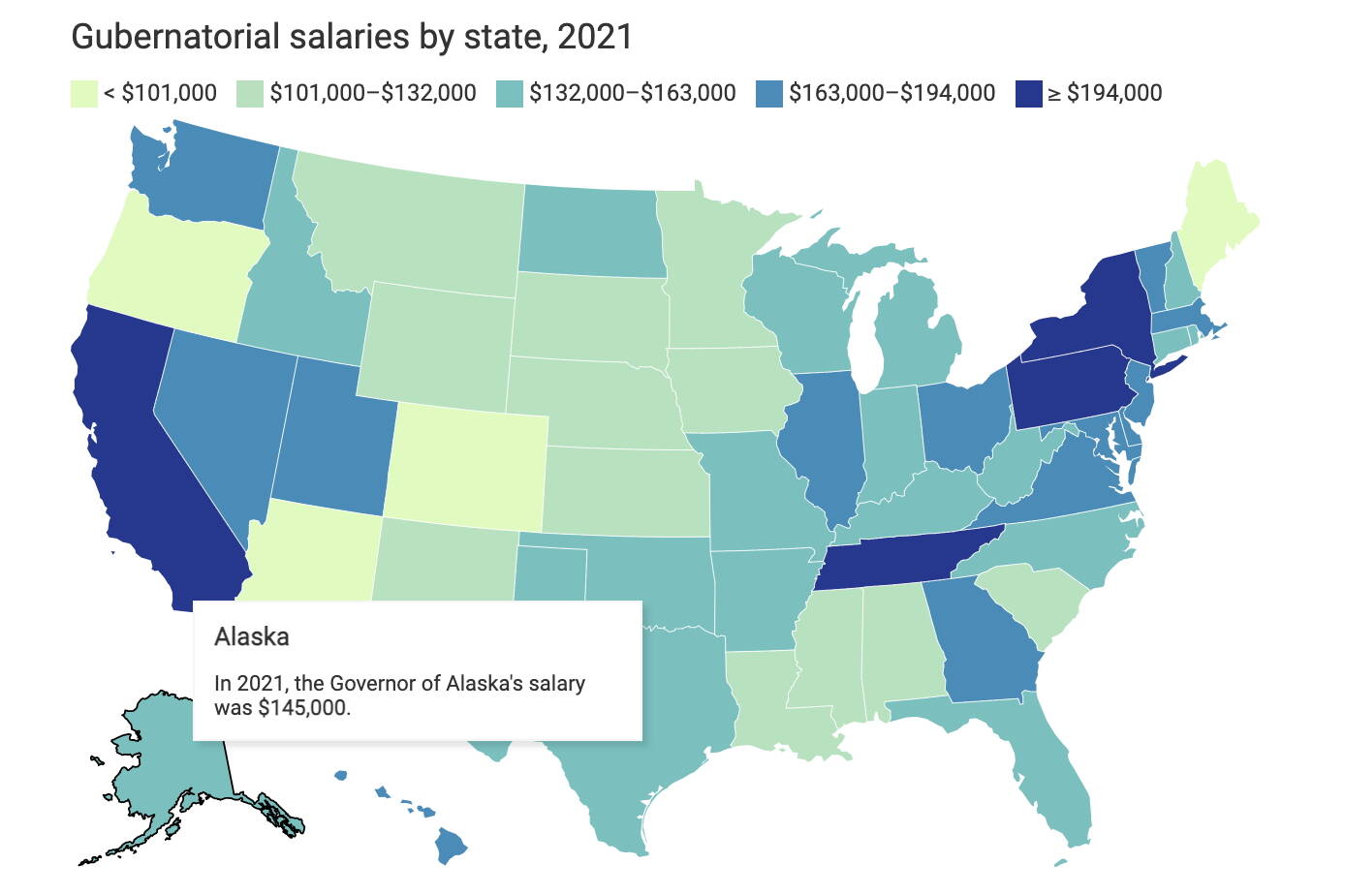
A pay raise for the governor, lieutenant governor and heads of state agencies was unanimously rejected Monday by the Alaska State Senate — who like their House colleagues have gotten the same pay since 2010 — with legislative leaders stating they are also considering nixing a commission established in 2008 that makes executive branch salary recommendations.
The Alaska State Officers Compensation Commission in January unanimously recommended a 2% increase for each year since the last salary increases in 2011 due to inflation. That would result in the governor earning about $176,000 instead of $145,000, lieutenant governor $140,000 instead of $125,000 and department heads an average of $168,000 instead of about $141,000.
The governor’s current salary is far from lavish compared to other states, or even other Alaska public employees. Gov. Mike Dunleavy’s current salary of $145,000 ranked 28th among states in 2021, and during fiscal 2022 his salary ranked 862nd among state employees (below the manager of the Bethel airport), according to the Alaska Beacon. The increase to $176,000 would rank 10th among states, with New York topping the list at $225,000.
The commission’s proposed increases automatically take effect in July unless the Legislature intervenes. State Sen. Bert Stedman, a Sitka Republican, lead the effort to do that during Monday’s floor session when he said a more comprehensive look at the state’s compensation system is needed.
“We need to attract smart, dedicated and motivated leaders for the state of Alaska to move our state forward in an expedited fashion, and this report as presented did not do that,” he said. “Also, this is a piecemeal solution. We need a more comprehensive solution to fix these problems. It runs throughout the organization in this state. We’re working on that issue through many avenues in the (Senate) Finance Committee trying to solve that problem.”
The vote to reject the recommended increases was 19-0, with state Sen. Robert Myers, a North Pole Republican, an excused absence.
House Speaker Cathy Tilton, a Wasilla Republican, told the Anchorage Daily News the House is also likely to reject the commissioner’s recommendation.
Grant Robinson, deputy press secretary for the governor, stated in an email interview after the Senate’s vote “the governor welcomes discussion with legislators and other stakeholders to improve the state’s ability to hire the workforce it needs” — without specifically expressing an opinion about the salary increase rejection.
“Alaska depends on qualified and committed public servants leading the agencies that impact every Alaskan,” Robinson stated. “The commission’s report applies to commissioners, and the office of governor and lieutenant governor. The people who thrive in public leadership roles are not motivated merely to make money, but to make a difference. Governor Dunleavy’s administration is committed to recruiting and retaining qualified public employees from entry level jobs to executive leadership.”
Legislators have previously expressed frustration with the purportedly nonpartisan commission, whose five members are appointed by the governor, including last year when it recommended cutting legislators’ per diem to $100 instead of $307 per day, and setting salaries at $64,000 instead of $50,400 as partial compensation. Legislators, who would have lost an average of about $11,000 a year with the change, quickly voted it down.
The commission, which issues recommendations either every year or every two years, in 2021 recommended increases in executive branch salaries, but the governor declined an increase and the Legislature rejected the other increases. In the commission’s report issued this January, it stated “no recommendations are being submitted for the (Legislature) as the commission believes further discussion is necessary.”
Whether the commission needs to exist at all is now being discussed by some legislative leaders.
Senate President Gary Stevens, a Kodiak Republican, said the State Officers Compensation Commission has failed in its duty to meaningfully debate pay for legislators.
“I think we just need to give up on that commission,” Stevens said. He asserted “they have never done their job or looked at things seriously.”
• Contact reporter Mark Sabbatini at mark.sabbatini@juneauempire.com
