
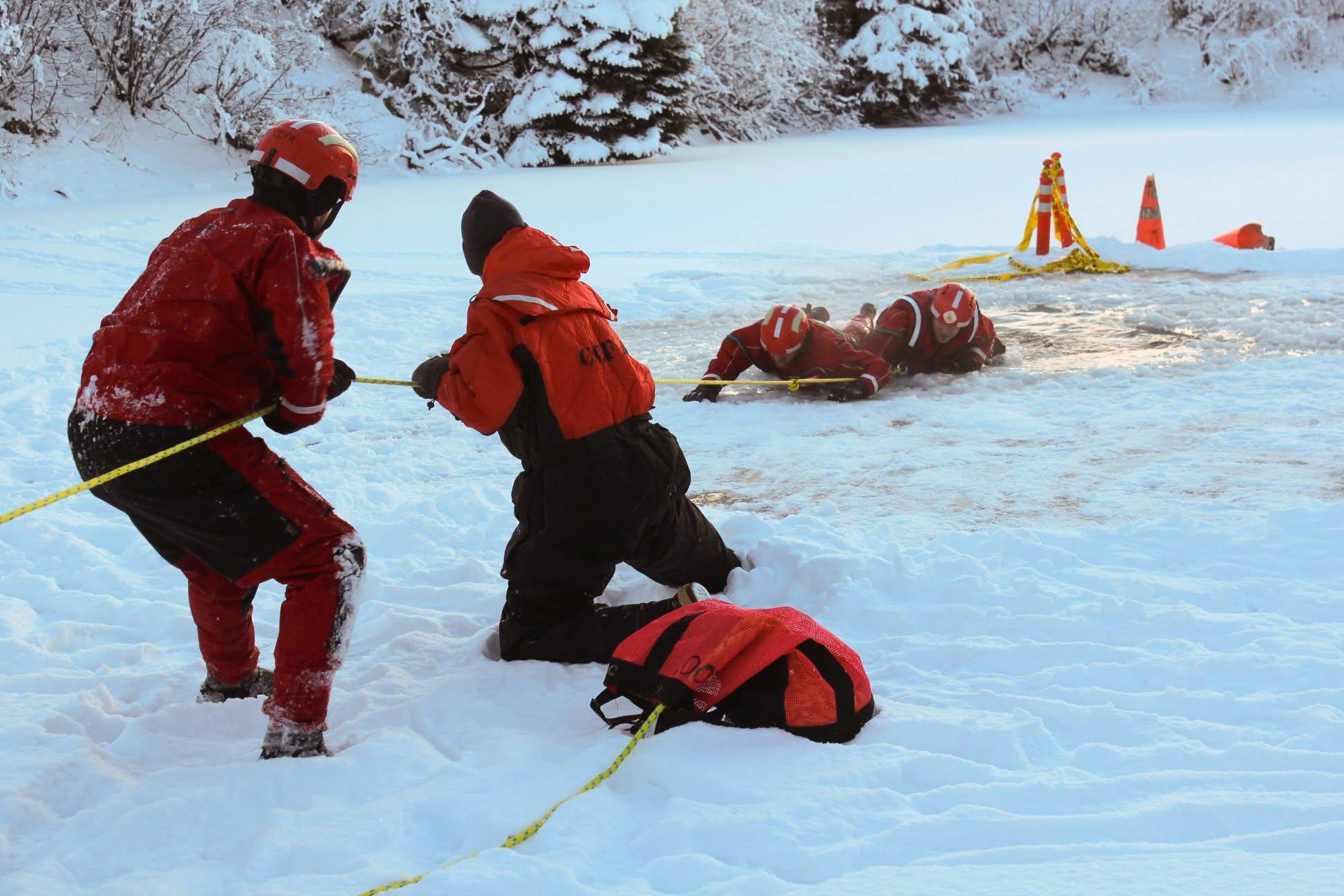
Capitol City Fire/Rescue responded to its first ice-fall rescue of the season on Tuesday at Mendenhall Lake.
Fire Chief Richard Etheridge says CCFR typically receives four or five calls each winter for people who break through the ice. They see many more incidents posted online by people who self-rescue without calling 911.
CCFR says there is no time during the winter when they can say the lake is safe to step onto, as they receive reports of fall throughs winter-long. Fire Chief Rich Etheridge says that anywhere around Nugget Falls and the face of the glacier is the most dangerous place to walk or skate.
“Anywhere that you’re around an iceberg, or the face of the glacier, or anywhere that the water is moving, is going to have a thin spot,” Etheridge said “The ice is a heat sink, so it absorbs the sunshine and melts around it, and create soft spots, and the currents keep the water from freezing solid.”
Mendenhall Glacier has receded dramatically over the past couple of years. For the first time in its recorded history, the glacier has receded from the lake. That development has reduced some risk for stepping on the ice: when the glacier touched the lake, it created waves that fractured the ice.
Skaters have also taken to Twin Lakes with this week’s single-digit temperatures. Etheridge says Twin Lakes tends to be safer than Mendenhall because it has less water movement, freezes more solidly, and is more visible — which means bystanders are more likely to notice someone in distress.
Volunteer groups such as Hidden Juneau History have drilled the ice on Mendenhall Lake to determine its thickness, helping people make their own decisions about venturing out.
The National Weather Service Alaska shared minimum ice-thickness guidelines: ice less than 2 inches thick should not be stepped upon, 4 inches may support walking, 5 inches may support small groups, and at 12 inches, ice may support medium-sized trucks.
If you witness someone fall through the ice, CCFR recommends calling 911 immediately. It typically takes 20 to 25 minutes for rescuers to reach someone on the lake. If you attempt to assist, stay at least 20 feet back and throw a rope. If you must approach the hole, belly-crawl to distribute your weight across the ice.
The New York Times reported on how to survive on falling through ice. Gordon Giesbrecht, who studies the physiology of being cold, said to remember the 1:10:1 ratio: ‘‘One minute to get control of your breathing. Ten minutes of meaningful movement. One hour before you become unconscious.’’
