
“Buttercups”—the name conjures up an image of lots of bright yellow flowers, which we enjoyed recently in Cowee Meadows and which brighten the roadsides. But, for some, the name is a reminder of a plant that becomes a nuisance in a well-maintained (typically non-native) garden or yard, because some species can develop extensive underground rhizomes and root systems that are hard to eliminate. Buttercups belong to the genus Ranunculus (meaning ‘little frog’ in Latin), encompassing at least ten native species, in the taxonomic family Ranunculaceae. The family includes several other locally occurring genera, such as Cooley buttercup (Kumlienia), monkshood (Aconitum), marsh marigold (Caltha), meadow rue (Thalictrum), columbine (Aquilegia), anemones (Anemone), baneberry (Actaea), and goldthread (Coptis). Warning: Most (possibly all) members the buttercup family are poisonous to vertebrates that ingest any part of the plant (although sometimes cooking renders the poison harmless to humans), and in some cases juices from the leaves and stem can cause skin irritations (although there are some medicinal uses also).
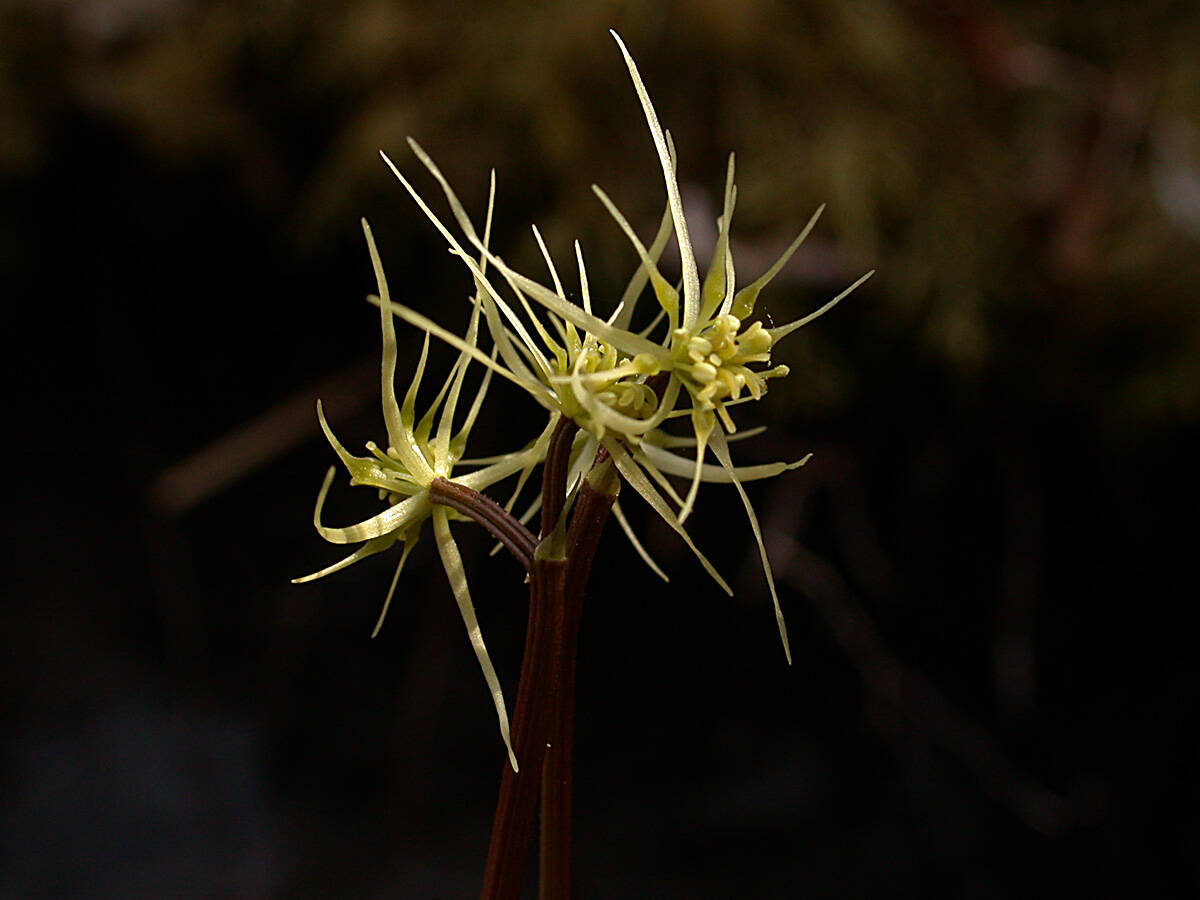
The inconspicuous flower of fern-leaf goldthread has narrow, greenish sepals and petals (with nectar). (Courtesy Photo / Bob Armstrong)
For now, however, let’s ignore the down-side and look on the bright side—think about the flowers. Within this family there is a considerable variety of flower shape, color, and gender arrangement. Members of most of the genera (Ranunculus, Kumlienia, Caltha, Anemone) that we observe here typically have sizable, open, nectar-bearing flowers that are available to a variety of insect visitors, including bees, flies, and beetles.
However, some species have large colorful flowers that are pollinated by bees: There’s monkshood with its hooded purple flower that is first male and then female; what appear to be petals are really sepals, and the true petals, sexual parts, and nectar (not poisonous, at least to bees) are hidden under the hood that needs to be opened by a visiting bee. And there’s columbine with its dangling red (and yellow) bisexual flowers and nectaries (again, not poisonous) held deep in the long upright spurs. Members of two genera have inflorescences of multiple small white flowers. Baneberry flowers have no nectar and may lose their small white petals early in flowering; they display their conspicuous white stamens to attract small insects as pollinators. The local species of meadowrue exists as separate sexes; the many small, clustered flowers have no petals, just little sepals; females display their pale stigmas while males display dangling stamens with purple anthers, convenient for its pollination by wind (although other species in the genus may be insect-pollinated).
Then there are the goldthreads (Coptis), characterized by golden rhizomes (underground stems) that allow clonal spreading. Of the fifteen or so species in the genus, we have two species here. When I came to Juneau, over thirty years ago, I did research on birds, primarily. But I soon got interested in the local plants, most of which were new to me. One forest species that drew my interest was fern-leaf goldthread (C. asplenifolia), which has reflexed, long and skinny, greenish sepals and narrow, greenish nectar-bearing petals. Two or three flowers are borne on a tall stem. I eventually did a small study (with a colleague) on some aspects of its flowering. We found that this species has variable sex expression, flowering commonly as males, but also as hermaphrodites. Individual plants often change sex expression between years; those that produced fruit in one year were usually male or sterile the next year, suggesting that the cost of making fruit often limits the ability to invest in fruit again the following year. The most common flower visitors were dance flies.
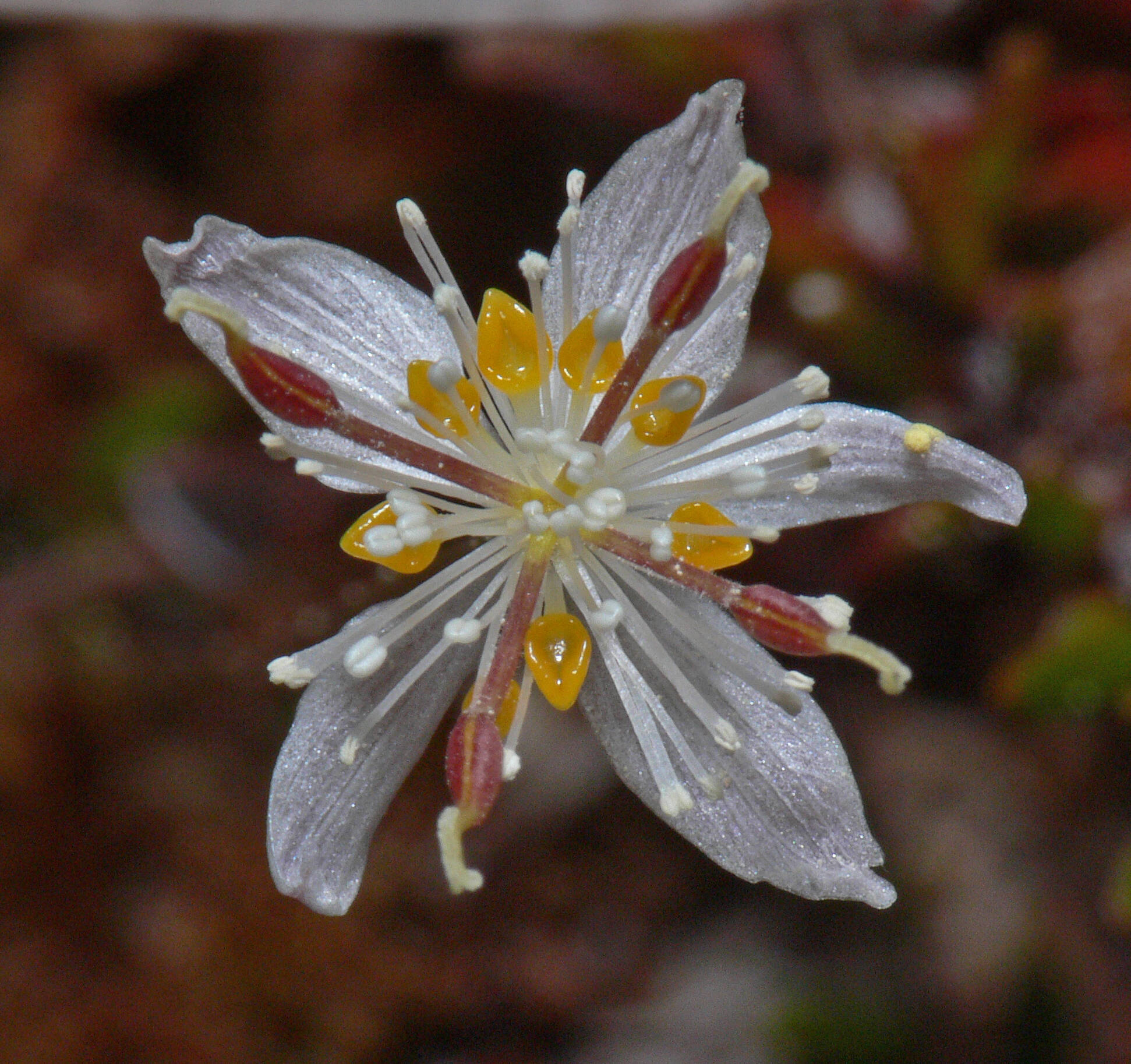
The showy flower of three-leaf goldthread has white sepals and golden, nectar-bearing petals.(Courtesy Photo / Bob Armstrong)
Some years later, I began to notice its congener, three-leaf goldthread (C. trifolia), which lives in muskegs. The solitary flower looks nothing like the other local Coptis: The sepals are large, white, and look like petals, but the real petals are small, golden, nectar-bearing ‘trumpets’ in the middle of the flower, along with the stamens. The flowers are visited by small insects.
The flowers of these two species (and others in this genus) look so different that one has to wonder why they are put in the same genus, although DNA markers confirm the relationship.
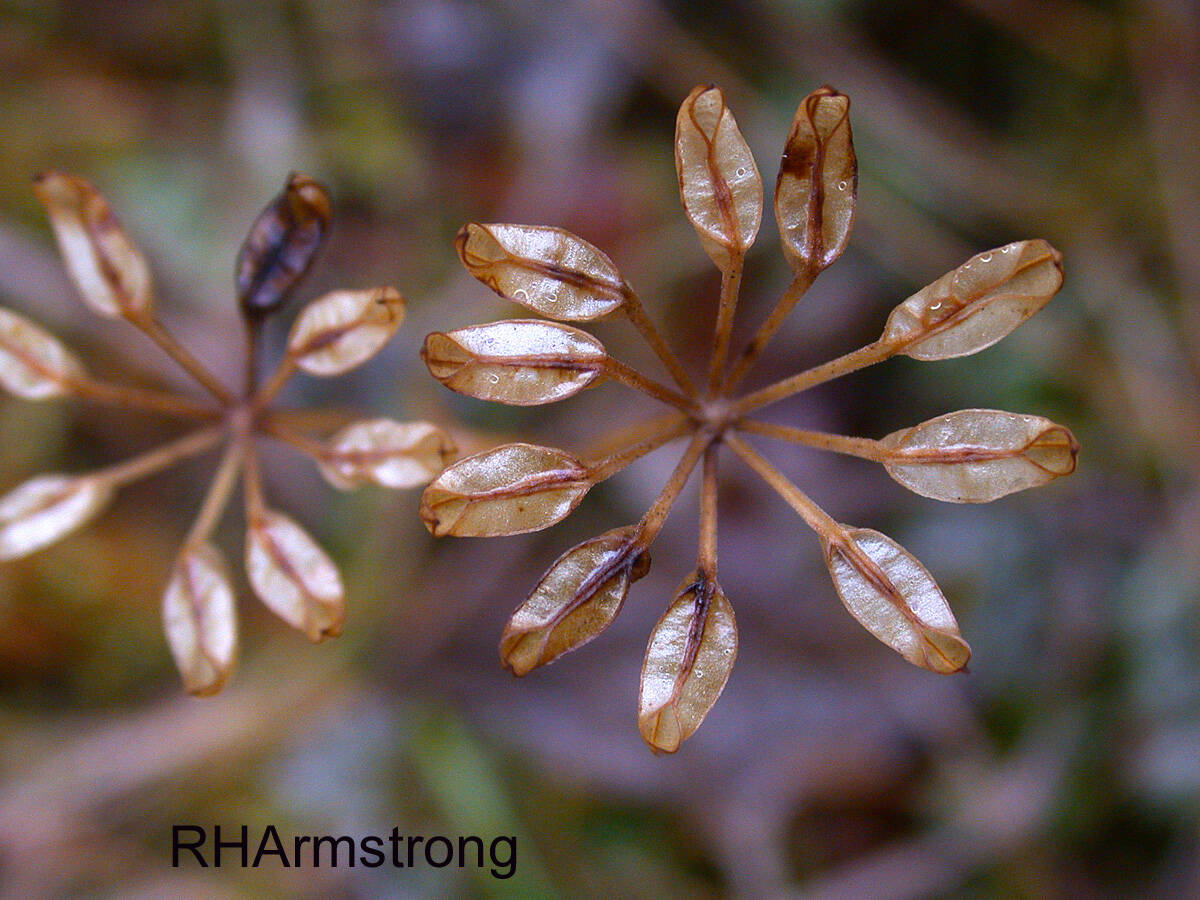
And if you look at the fruiting structures, you can see why. All goldthread species make a whorl of seed-bearing follicles on fairly long stem. Our local three-leaf goldthread produces a smaller, more delicate whorl than fern-leaf goldthread, but the resemblance is clear. Each follicle in the whorl has an opening through which the seeds can be dispersed when the follicle is disturbed by a passing animal, raindrops, or falling vegetation.
• Mary F. Willson is a retired professor of ecology. “On the Trails” appears every Wednesday in the Juneau Empire.
