
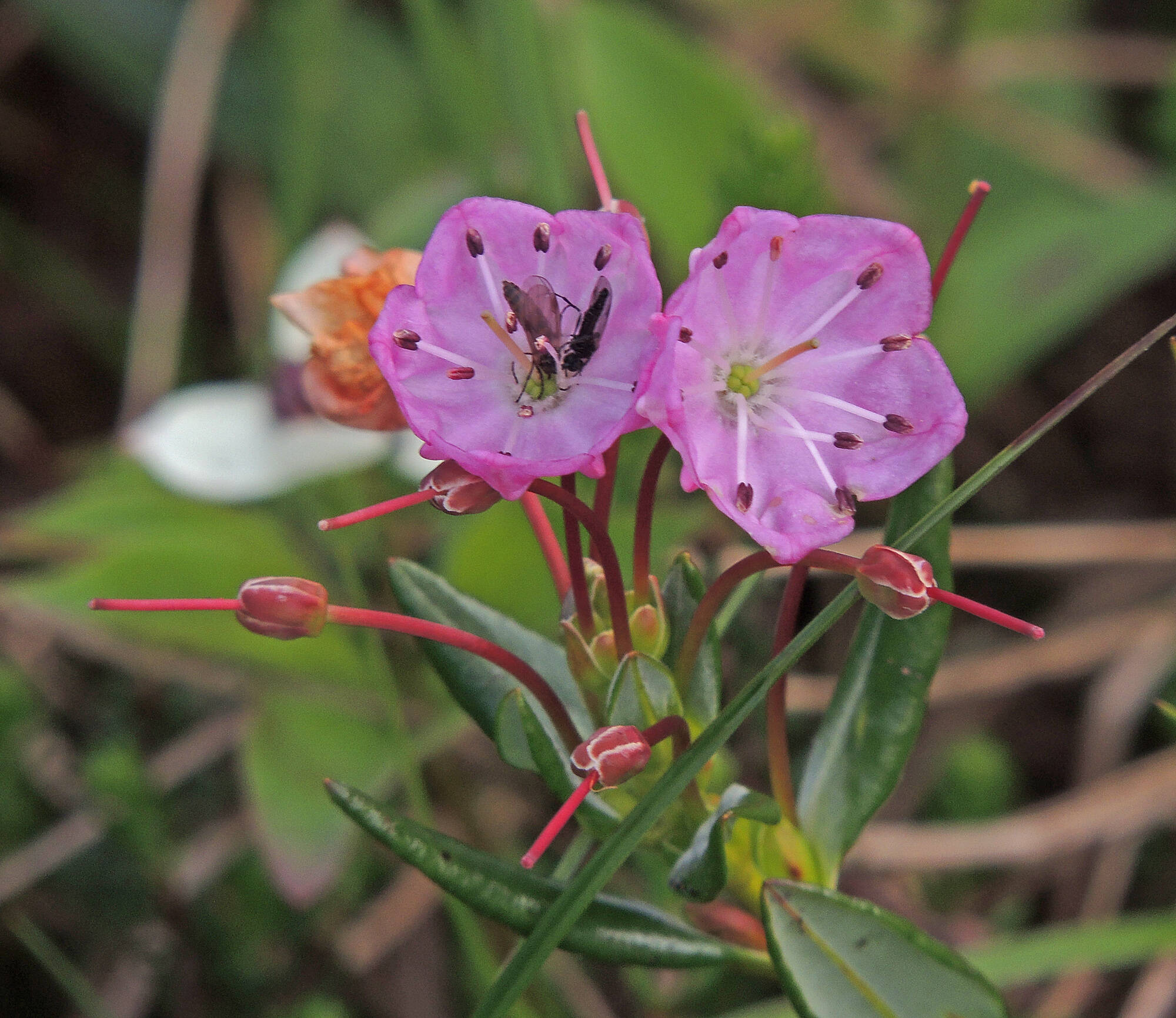
Five decades ago, some well-known ecologists looked around and noted that their terrestrial world was very green. Why didn’t herbivores demolish the greenery? The observers suggested that predators limited herbivore populations to low enough levels that the vegetation continued to thrive. That suggestion led, of course, to years of counter-suggestions and dispute.
Although such discussions seldom end altogether, some answers have emerged. Do predators limit their vegetation-eating prey populations? Sometimes. But another kind of answer has greater explanatory power: the plants defend themselves against herbivore assaults — so the terrestrial world is still green. The idea of plant defense took hold and now the information about those defenses would fill an encyclopedia of many volumes.
The space for my essays is far less than that (thank goodness!), so here I can only present some overview and examples.
— Some plants enlist the aid of protective animals. Acacias and peonies offer nectar rewards and, in the case of acacias, housing to certain ants, which patrol the plant, attacking browsing mammals (goats, giraffes). Mammal browsing in some acacias induces greater development of hollow thorns that house protective ants.
Other plants emit airborne molecules that attract predators of herbivorous insects; for example, aphid damage stimulates soybean plants to emit certain volatile chemicals that attract syrphid flies, which lay eggs on the plant and their larvae eat aphids.
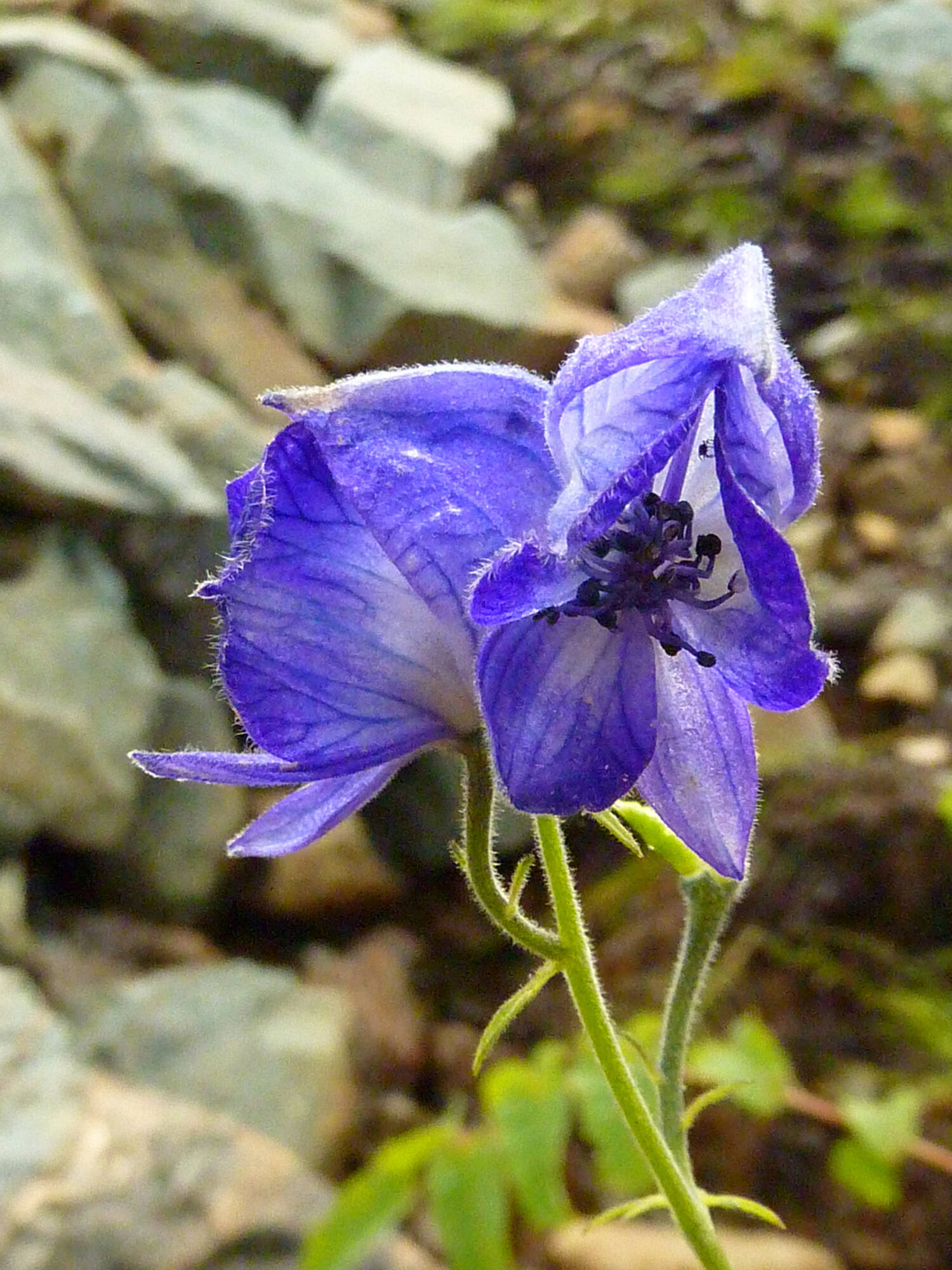
Monkshood (Aconitum) plants are highly toxic to mammals but several kinds of insects feed on them regularly (Courtesy Photo / KM Hocker)
— Many grasses just keep growing if they’ve been cropped short by sheep (or a lawn mower), replacing tissues that were lost.
— Thorns, spines, prickles, and hair-like trichomes on green plant parts deter some herbivores; e.g. thin, spiky thorns on some acacias reduce browsing by large mammals and spines on some nightshade plants impede the movement and feeding of the tobacco hornworm. Nettles have trichomes, which can prevent insect eggs from sticking, impede insect movement, and deter browsing by mammals; one species adds a little sting when a trichome is broken. On cacti, spines may deter most mammals from munching, but dense spines on some cacti have additional functions of reducing evaporative water loss and providing shade and winter insulation. On stems, spiky protrusions may protect against some climbing leaf-eaters. Porcupines don’t seem to be deterred by raspberry thorns, but what about those wicked spines on devil’s club? Maybe some invertebrates (slugs, for instance) are deterred?
— Hard, tough, leathery leaves can be difficult to handle by chewing insects (although there can also be other evolutionary advantages, such as reducing water loss).
—Conifers and many broad-leaved trees produce resins, sticky material loaded with chemicals, providing both a physical and a chemical barrier. They commonly function in defense against insects such as bark beetles, deterring the initial attack, preventing entry of pathogens, and helping heal the wounds. High levels of resin in ponderosa pines also appear to reduce foraging by Abert’s squirrel, whose winter diet is mainly the inner bark from particular trees with low levels of resin. Ponderosa pine resin may also reduce infections of dwarf mistletoe.
— Latex is sticky and can coagulate around a wound, inhibiting pathogen entry; it also carries defensive chemicals. It’s common in the milkweeds.
— Chemical defenses are numerous and diverse—many different kinds of chemicals are used in defense but, for simplicity, let’s not deal here with the chemical details but rather focus on the biological effects. Tannins can bind proteins; some reduce digestibility of vegetative material, with negative effects on health and reproduction for vertebrates. However, habitual eaters of tannin-containing food, such as moose, have evolved means of counteracting the tannins. In insects, tannins apparently don’t bind protein but have other effects, such as deterrence or toxicity.
Some chemicals are toxic to consumers. For example, wintercress and its relatives contain types of toxin that defend against rust fungi or (depending on wintercress genotype) deter feeding by some insects. Geranium petals contain a certain amino acid that paralyzes Japanese beetles, making them vulnerable to their predators for several hours. Some plants produce juvenile hormones, which inhibit metamorphosis in insects, so they can’t mature. Nicotine in tobacco plants is toxic to mammals and insects that feed on those plants, causing digestive upsets, convulsions, difficulty walking, and other negative effects in mammals, and it can be lethal to insects. Particular chemicals in milkweed plants are toxic to some herbivorous insects. But in other milkweed-feeders, the toxins are sequestered in the body; they are distasteful (at least) and potentially toxic to the herbivorous insects’ predators; these herbivores bear warning coloration, which their predators learn to avoid.
Adding even more complexity: some plants can warn their neighbors, transmitting signals through root contact or even mycorrhizal fungal connections. Sometimes the warnings are airborne: The leaves of bullhorn acacia have distasteful chemicals; if nevertheless damaged by a browsing herbivore, the leaves send a volatile signal to others, sometimes miles away, inducing production of the distasteful chemical there.
Plants have been very inventive, evolving an immense array of defenses. Some things to remember: Some chemical defenses and some structural defenses are not built-in but induced by the activity of herbivores. Characteristics related to defense against herbivores may also have other functions. Bear in mind that no defense is likely to be perfect and there are likely to be some consumers that are not affected. In fact, there are some good stories of co-evolution in these interactions: if some insect is resistant to a plant’s defense and feeds on it, that sets up natural selection for better defense, and that in turn leads to selection for better resistance, and thence to still better defenses and then better resistance and onward…
• Mary F. Willson is a retired professor of ecology. “On the Trails” appears every Wednesday in the Juneau Empire.
