
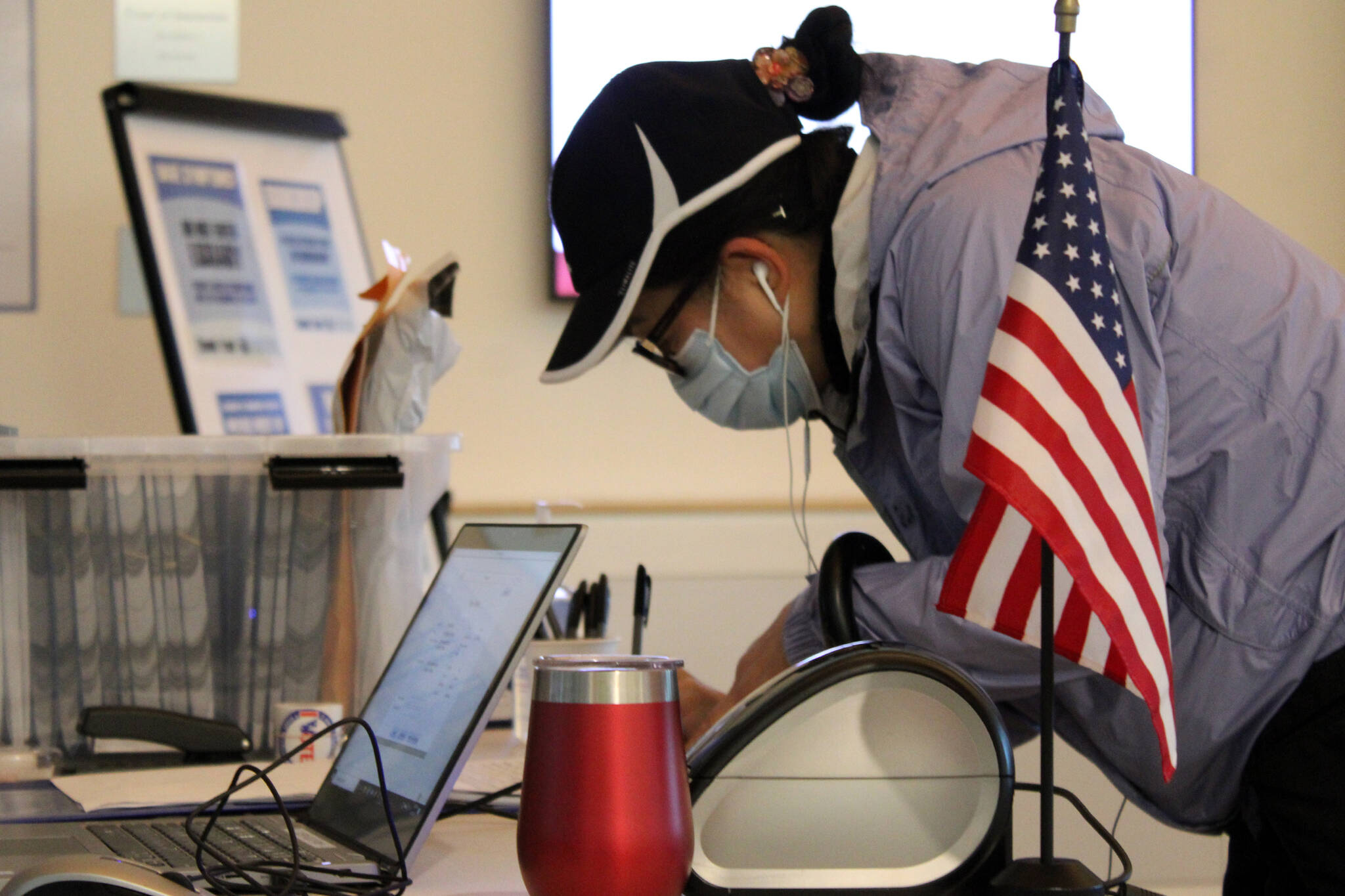
The State of Alaska should start preparing for another election under pandemic conditions, Lt. Gov. Kevin Meyer said Thursday in an interview with the University of Southern California’s Election Cybersecurity Initiative.
Meyer heads the Alaska Division of Elections and is responsible for overseeing the state voting process and was interviewed as part of the USC program’s ongoing regional workshops.
Typically, Meyer said in a pre-recorded interview with Adam Clayton Powell III, executive director of the initiative, Alaska’s biggest issue to conducting an election over so vast an area, but with the COVID-19 pandemic made that process more complicated.
“I think we need to be prepared to have elections again during a pandemic, it’s still with us,” Meyer said. “We’re going to start planning now to get all the necessary safety equipment in place.”
The entirety of Meyer’s interview wasn’t played at during Thursday conference, though Powell said the conversation would be posted online later. Not discussed in the portion of the interview played Thursday was the Alaska Division of Elections data breach that occurred in 2020.
In December 2020, DOE announced 113,000 potential voters’ personal information such as birth dates and license numbers were exposed in a data breach. That breach did not impact the outcome of the 2020 election, DOE said at the time, and the state is currently offering free creditor monitoring services to affected Alaskans.
The event was held the same day federal authorities announced charges against two Iranian nationals for interference and voter intimidation in the 2020 election. Many of the charges against the two men were typical of foreign governments trying to interfere with U.S. elections, said Clifford Neuman, a cyber security expert at USC.
Campaign interference is often thought of as manipulating vote tallies, Neuman said, but other forms including preventing or discouraging voting and creating mistrust in the outcome. According to the Associated Press, the Iranian nationals are charged with disseminated carefully curated messages for members of both political parties.
That included messages that purported to be from a far-right group, the Proud Boys, that threatened Democratic voters with physical harm if they didn’t change their party affiliation and vote for Trump, AP reported. To Republican officials and people associated with the Trump campaign, the indictment says, the hackers crafted Facebook messages that falsely claimed that Democrats were planning to commit voter fraud.
AP reported a manufactured video spread through social media platforms purported to show an individual hacking into state voting websites and registering fraudulent absentee ballots. Those kinds of tactics are meant to create distrust in election systems and the outcome of the election.
“An adversary doens’t need to change the outcome,” Neuman said. “The goal of that was clearly to create distrust in the outcome.”
[Feds promote Arctic energy innovation]
The slogan of the USC series is “Our Candidate is Democracy,” and speakers repeatedly stressed the importance of cultivating trust in democratic institutions, regardless of political party.
“We’re all in this one together to protect Democracy,” said Republican political consultant Mike Murphy, who worked on Jeb Bush’s presidential campaign.
The best defense against cyber security threats, according to Neuman, was vigilance and several layers of protection. For the average citizen that meant being wary of unfamiliar emails and not re-using passwords. Large organizations, including governments, can similarly deploy multiple layers of cybersecurity protection to their voting systems.
“We’re taking advantage of everything (the Cybersecurity and Infrastructure Security Agency) has to offer,” Meyer said in his interview. “We know this happens in every election. It’s probably going to get worse, we just need to be prepared.”
• Contact reporter Peter Segall at psegall@juneauempire.com. Follow him on Twitter at @SegallJnuEmpire.
