Lower revenue forecast increases budget woes for state lawmakers
Published 9:30 pm Monday, March 20, 2023

Alaska’s got a lot less money than expected a few months ago, as a spring revenue forecast released Tuesday predicting average oil prices of $85.25 for the fiscal year ending July 1 and $73 for next year means lawmakers are facing huge deficits and huge questions about downsizing Permanent Fund Dividends as they craft a budget during the coming weeks.
The lower forecast by the Alaska Department of Revenue means there is a deficit of about $220 million in this year’s budget and $917 million in the budget Gov. Mike Dunleavy is proposing for next year. Lawmakers said Wednesday they intend to address at least this year’s gap by tapping into the roughly $2.5 billion Constitutional Budget Reserve, which requires a three-fourths vote of the Legislature, so that among other things emergency supplemental funds to help resolve a food stamp backlog crisis are not held up.
[PFD application deadline is approaching]
But the governor and legislative leaders agreed Tuesday that coming up with a spending plan for next year and beyond will be a far more complex series of negotiations.
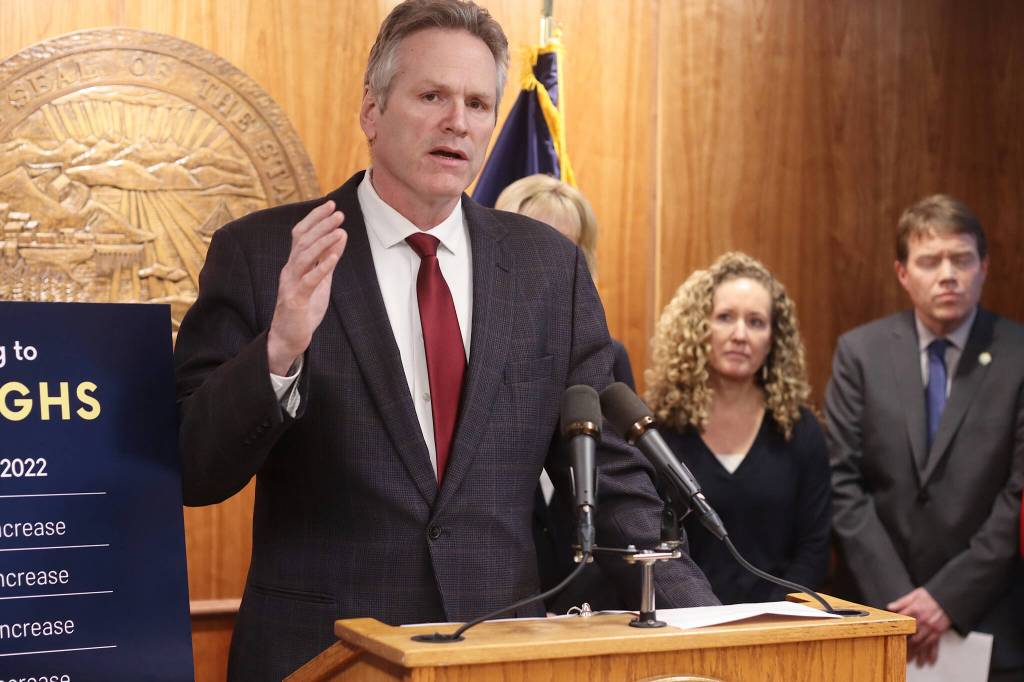
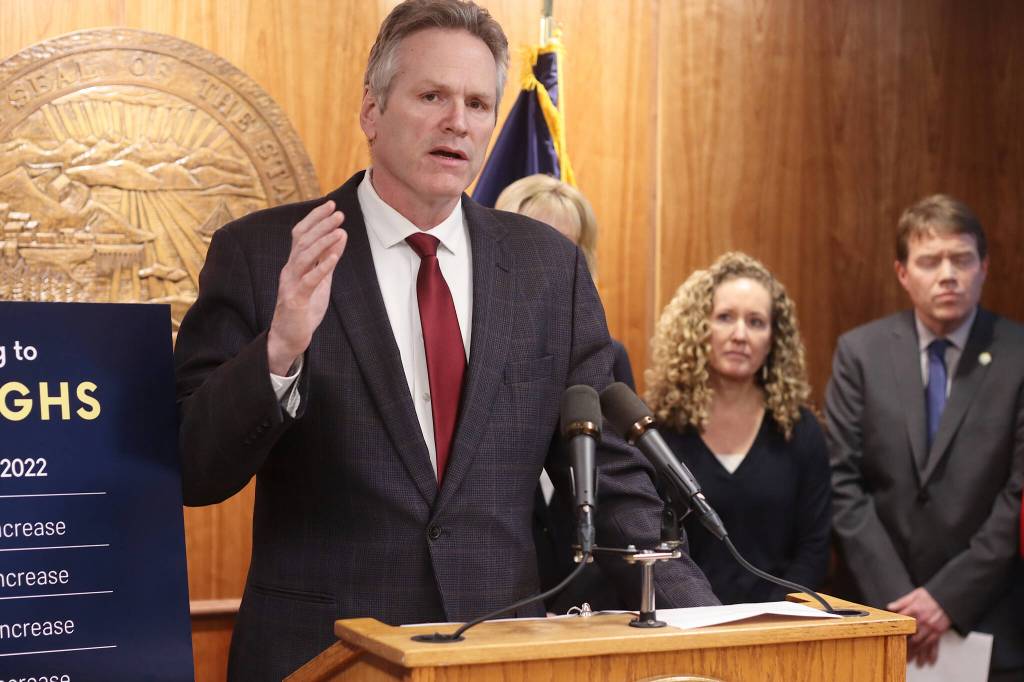
“The real process of hammering out this budget begins now,” Dunleavy said during a press conference in Anchorage as the revenue forecast was released. “Again, we’re all going to have to come together. It’s a very diverse Legislature.”
Members of both the House and Senate finance committees are scheduled to discuss the revenue forecast with officials from the revenue department during hearings on Wednesday.
A year ago, following Russia’s invasion of Ukraine, the revenue department estimated prices would average $101 during the current fiscal year. Prices of $88.45 for the current year and $81 next year were predicted by revenue officials when the legislative session began in mid-January.
The lower-than-forecast prices are do to ongoing uncertainty in global markets due to events ranging from the ongoing Ukraine war to the recent failure of a U.S. bank that is causing concerns about a possible large-scale economic downturn, Adam Crum, commissioner of the revenue department, said during Tuesday’s press conference.
The size of the deficit in Dunleavy’s budget is due largely to a Permanent Fund dividend calculated according to the 1982 statutory formula, which at present would exceed $3,000 (but below the $3,860 dividend he estimated in December based on the fall revenue forecast).
The Republican-led state House, which adopted its version of next year’s budget on Monday, is facing a far lower deficit by using a different formula that would divide Permanent Fund earnings equally between state spending and dividends (a so-called “50-50 plan”) resulting in a PFD of about $2,700. Leaders with the state Senate’s bipartisan majority, however, said Tuesday the 50-50 split may still not be sufficient for a balanced budget and are discussing a 75-25 split that would result in a dividend of about $1,300.
There are also vast differences in major spending priorities of the governor and legislative majorities, such as whether to raise the per-student education funding formula. Dunleavy proposed no increase, while the Senate majority that’s been the most active hearing the issue is seeking a $1,000 increase in the current $5,960 allocation.
While oil revenue and Permanent Fund earnings account for most of the state’s general fund revenue, discussions about other sources such as a broad-based tax have been discussed for years. Dunleavy and legislative leaders offered a collective “all options open” response when asked what additional revenue sources might receive consideration this session.
Dunleavy used Tuesday’s revenue forecast to again pitch his plan to enter carbon credit markets, which he claims could earn $900 million or more a year. House and Senate legislative leaders, speaking during press conferences on Tuesday, said that while they are encouraged so far about the longer-term potential of carbon, any revenue from it is likely at least a few years away.
• Contact reporter Mark Sabbatini at mark.sabbatini@juneauempire.com