Legislature running out of time as big budget differences persist
Published 9:30 pm Wednesday, May 10, 2023

This article has been updated to correct a reference to the Senate majority. The House majority is backing a so-called “50-50” Permanent Fund dividend plan.
Strategic maneuverings for the final days of the scheduled legislative session — and possibly beyond — are in full swing at the Alaska State Capitol as the Senate unveiled a new proposed budget late Thursday afternoon that includes $40 million to cover the anticipated costs of a state government shutdown starting July 1.
House and Senate leaders pointed fingers at each other for delays in the budget process that will now almost certainly require procedural steps beyond the usual process in order for the full Legislature to pass a spending plan by midnight next Wednesday, which is the 121-day constitutional limit for the annual session. Both sides said they’re trying to meet frequently to resolve their differences, but talk is increasingly referring to the possibility of a special session.
“I’m not real optimistic that we can get something done by 121 days,” House Speaker Cathy Tilton, a Wasilla Republican, said Thursday evening between meetings with her majority caucus and then the Senate’s leadership.
Senate leaders, during a news conference Thursday afternoon, emphasized their latest budget proposal stands firm to their goal of not incurring a deficit, increasing education funding, funding a key range of capital improvement projects and providing what they call a reasonable PFD.
“We’re trying to avoid sending out pink slips and trying to avoid a government shutdown,” said Senate President Gary Stevens, a Kodiak Republican. “The Senate budget is balanced, there is a surplus there. And we will continue to work with the House to negotiate the final budget and with every intention of concluding by May 17.”
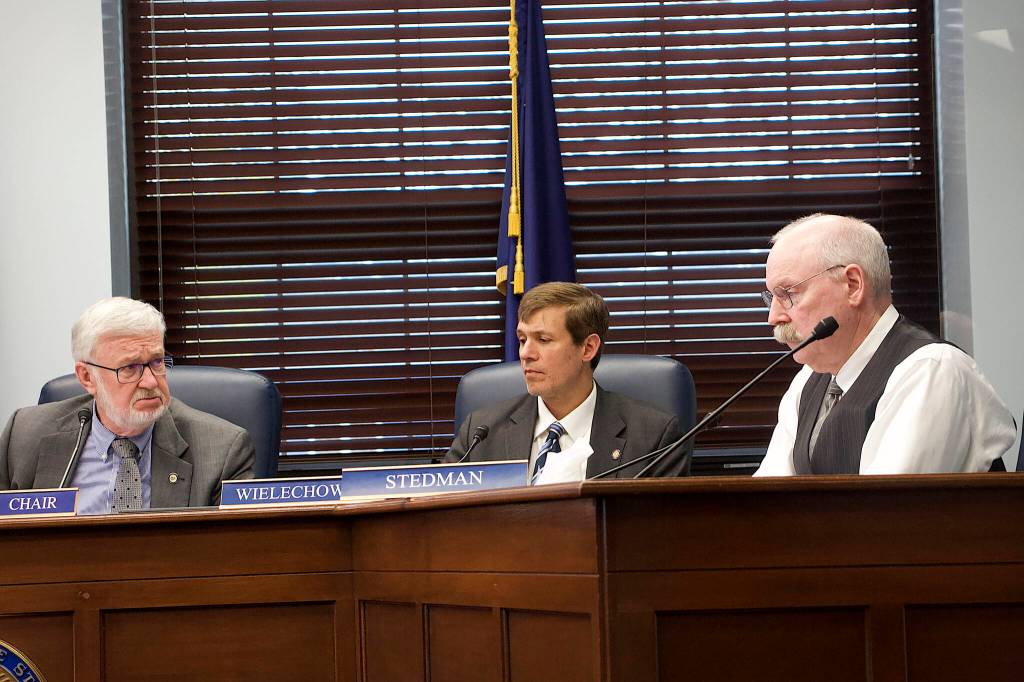
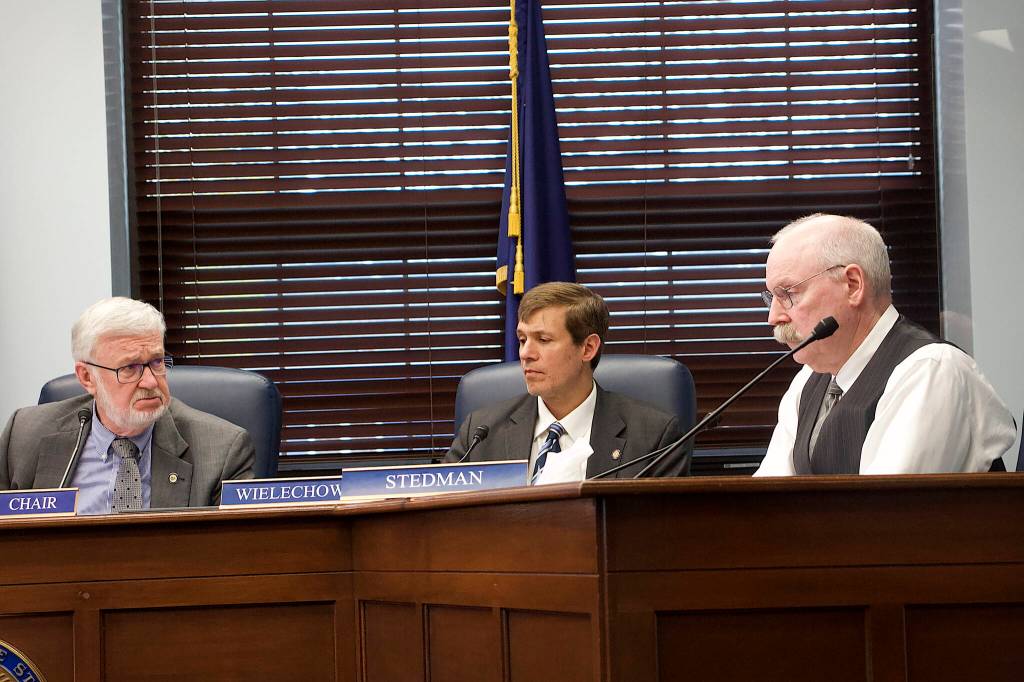
The Senate’s new spending plan includes the $40 million for a government shutdown, which could occur under a few scenarios, said state Sen. Bert Stedman, a Sitka Republican who co-chairs the Senate Finance Committee. Those include a failure to resolve differences even if one or more special sessions is called before July 1, not having enough votes to pass an “effective date” clause that means the bill would then take effect 90 days after passage, or if Gov. Mike Dunleavy’s administration pursued legal challenges to aspects of the Legislature’s spending plan.
“It’s expensive brinkmanship and we’re not interested in playing that, quite frankly,” Stedman said of the shutdown funding.
The revised Senate bill also purportedly seeks to resolve the most notable remaining difference – an estimate $1,300 Permanent Fund dividend from the Senate verses about $2,700 from the House — by providing a sliding-scale “energy relief payment” if oil prices average at least $10 higher a barrel than the $73 forecast for the coming fiscal year. The payments would make up the gap between the Senate and House PFDs if oil prices averaged $105 a barrel — which would require a major shift in global markets.
But the payments would therefore be made next year. The House majority reaffirmed its commitment to the larger dividend this year on Wednesday when the House Ways and Means passed out a bill that would establish the calculation for such dividends in statute, which was a modification to a Senate bill implementing the lower dividends. While the bill itself doesn’t affect this year’s PFD, the differing versions reflect the philosophy each chamber has incorporated into their budgets.
The House majority is backing a so-called “50-50” plan that divided spendable Permanent Fund earnings evenly between state spending and dividends, but also results in a budget deficit of about $600 million under the aspects of the spending plan both chambers essentially agree on. The Senate is favoring a “75-25” plan that allocates the smaller percentage to dividends, which they say saves the state nearly $900 million, and thus allows for both a small surplus and the ability to meet goals such as a larger number of capital improvement projects.
An ever-increasing challenge during the final days is the shrinking timeline to complete the parliamentary actions necessary to pass the budget. The operating budget remains in the Senate Finance Committee a week after it was scheduled to be sent to the floor for a vote, which Stedman said is due to an inability to reach an agreement with the House on the capital projects bill. The newest Senate budget plan combines both budgets into one omnibus bill.
Tilton, in turn, said the delays in the Senate’s scheduled announced weeks ago are what’s making adjourning by next Wednesday a dubious prospect.
Stedman said there’s too few days remaining for the “normal” budget process where a conference committee of House and Senate members draft a compromise bill that resolves differences between spending plans passed by each chamber. That means such compromises will have to occur quickly and likely behind closed doors before the Senate votes on its version of a budget, which the House would then need to cast a concurrence vote on before the scheduled adjournment at midnight next Wednesday.
Tilton said a conference committee isn’t impossible, but seems highly improbable during the days remaining, and the odds for a majority of House members agreeing to pass the Senate’s budget bill also don’t appear strong.
“At this point concurrence is unlikely,” she said. “But we’ll see.”
• Contact Mark Sabbatini at mark.sabbatini@juneauempire.com.