Lawsuit pits role of Legislature against power of governor
Published 1:30 pm Tuesday, May 28, 2019
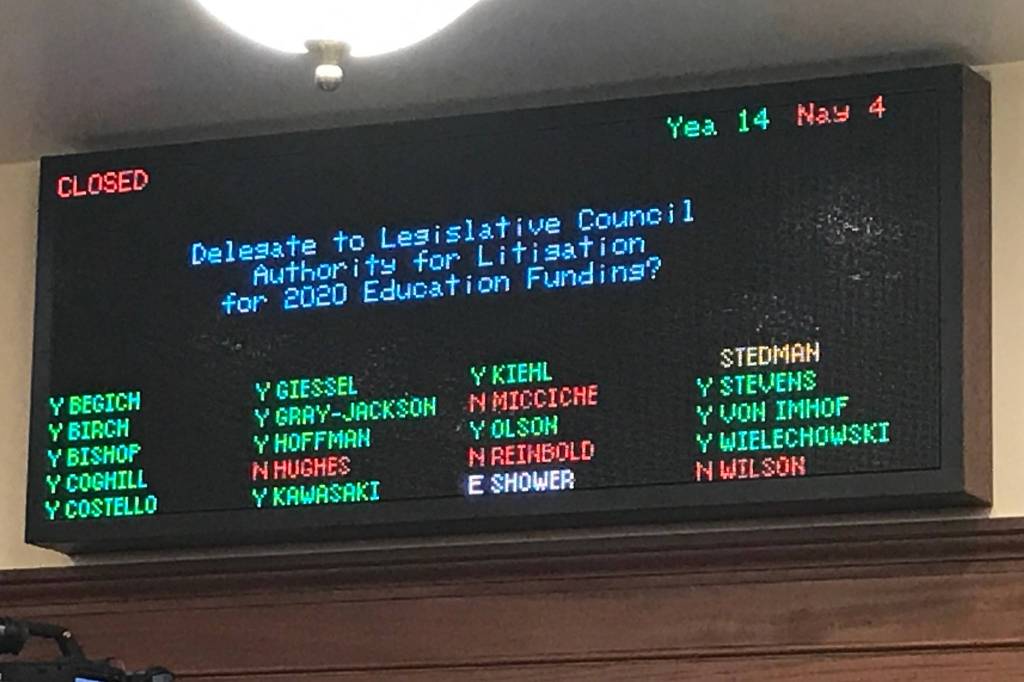


The Alaska Legislature is preparing to sue the governor.
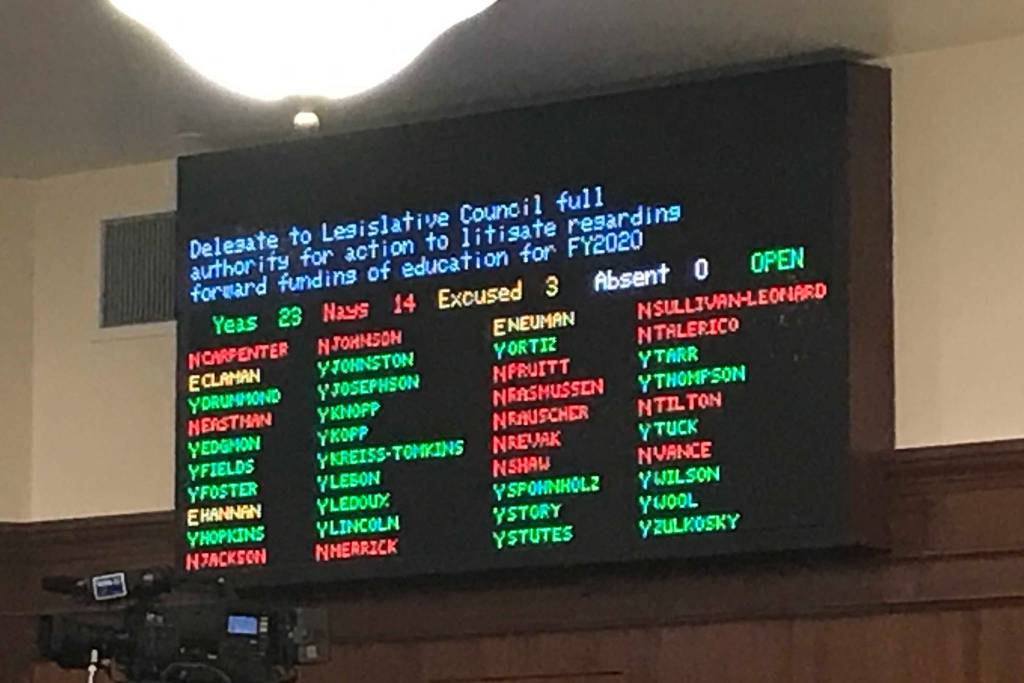
Both the House and Senate voted Tuesday to authorize the Alaska Legislative Council to sue Gov. Mike Dunleavy’s administration if the administration refuses to provide funding for public schools that last year’s Legislature guaranteed. The showdown has been simmering for most of this year’s legislative session, overshadowed by huge proposed budget cuts, wildly differing views on the Permanent Fund Dividend and clashes over crime legislation.
The suit — which has not been filed — has already posed questions to lawmakers and the governor of how the Legislature and governor work together to create the budget, and who has the upper hand in the process.
Last year’s Legislature approved guaranteeing funding for public schools for the fiscal year starting July 1, 2019, in an effort to provide schools with financial stability so they wouldn’t have to issue layoffs. The Department of Law reviewed the bill and did not identify a constitutional issue, according to a Department of Law memo dated May 1, 2018.
“Although not common, it is permissible for the Legislature to include in a budget bill appropriations for future fiscal years,” the memo, written by then-Attorney General Jahna Lindemuth. “These appropriations do not bind a future Legislature because a future Legislature can always amend, reappropriate, or repeal the future appropriations.”
DV.load(“https://www.documentcloud.org/documents/6055245-SB-1001-Dept-of-Law-Response-to-SFIN-With-HB-287.js”, {
responsive: true,
container: “#DV-viewer-6055245-SB-1001-Dept-of-Law-Response-to-SFIN-With-HB-287”
});
Bill Review (PDF)
Bill Review (Text)
Alaska Attorney General Kevin Clarkson has issued a letter in April and a formal opinion earlier this month expressing that he believes forward funding is unconstitutional because he sees this as a current Legislature making decisions for a future Legislature, though that’s not how his successor saw it.
Clarkson’s opinion, filed May 8, was also focused on preserving the power of the governor, especially when it comes to a line-item veto. He wrote that forward funding not only ties the hands of lawmakers, but also of the governor’s.
Clarkson cited multiple court cases that accentuate the power of Alaska’s executive branch. In 1977’s Thomas v. Rosen, Clarkson cited, the Alaska Supreme Court ruled that the governor’s veto power was guaranteed by the drafters of the state’s constitution because they wanted a governor to have “a strong control on the purse strings of the state.”
DV.load(“https://www.documentcloud.org/documents/6055111-5-8-19-Formal-AG-Opinion-Re-Education-Funding.js”, {
responsive: true,
container: “#DV-viewer-6055111-5-8-19-Formal-AG-Opinion-Re-Education-Funding”
});
5 8 19 Formal AG Opinion Re Education Funding (PDF)
5 8 19 Formal AG Opinion Re Education Funding (Text)
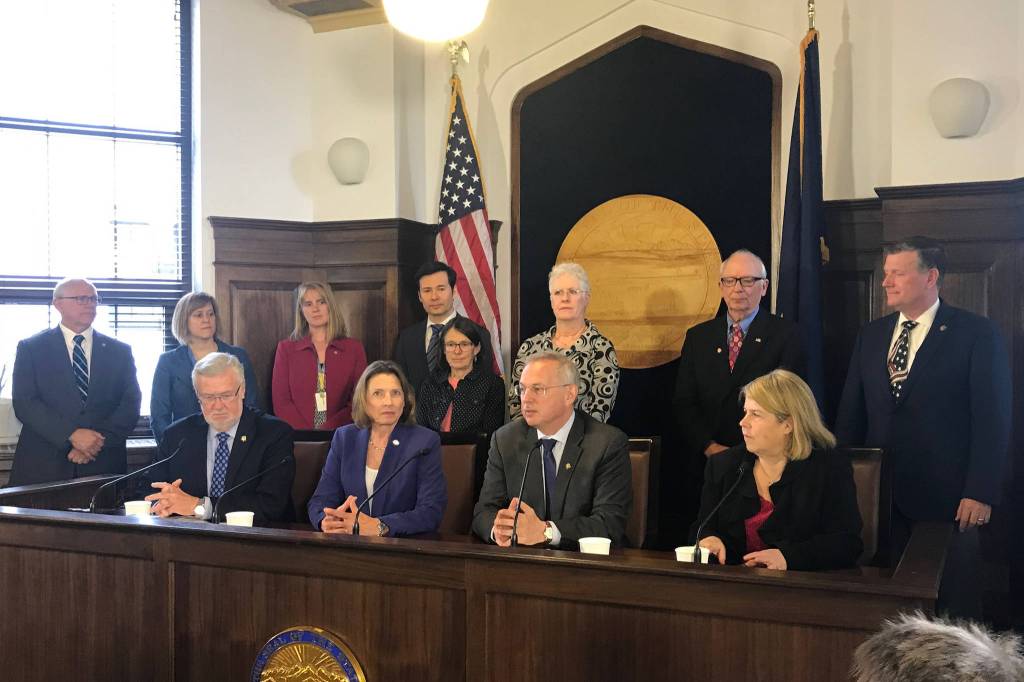
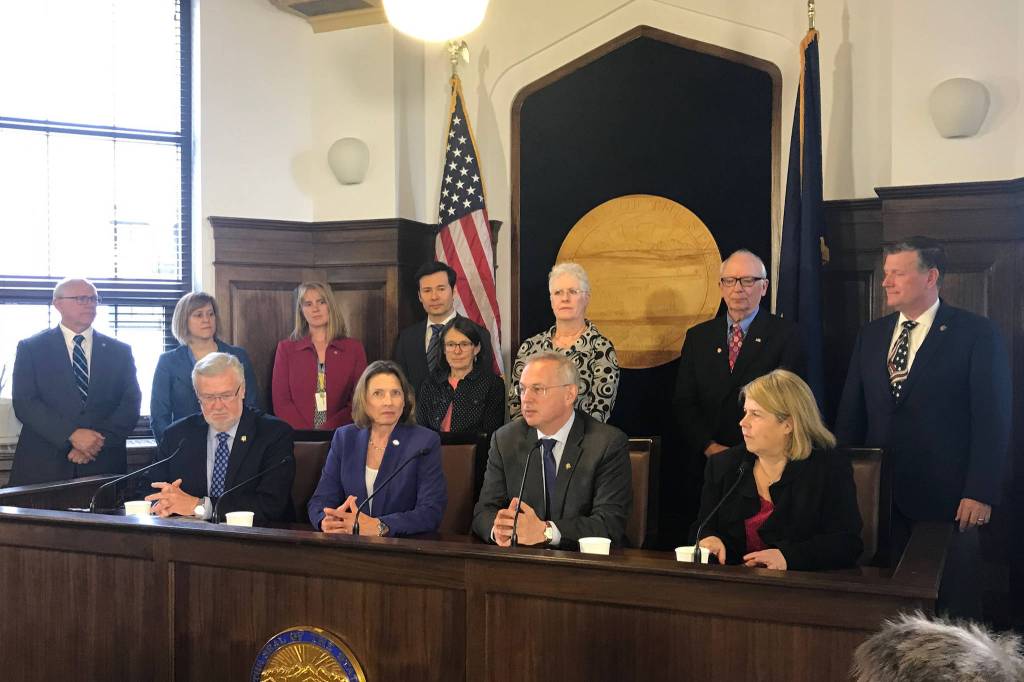
Sen. Gary Stevens, R-Kodiak, is the chair of the Legislative Council and said in a press conference Tuesday that he believes the main issue here is about the separation of powers.
“It’s crucial to me, having been in the Legislature 19 years, that we not give away, willy-nilly, the authority and the responsibility of the Legislature,” Stevens said. “It is our responsibility to pass budgets, it is our responsibility to pass laws. It is the governor’s responsibility, the administration’s responsibility to execute those laws that we pass and those budgets that we pass.”
[Here’s what crime bill means for Dunleavy’s ‘war on criminals’]
Legislators and Dunleavy both said in press conferences Tuesday that funding for schools this year is still likely to come through, as they believe a court would figure out a way to issue a ruling that would allow schools to be funded even during a lawsuit. Dunleavy said that he could withhold the extra $30 million that last year’s Legislature approved, in effect spurring the Legislature to file the suit.
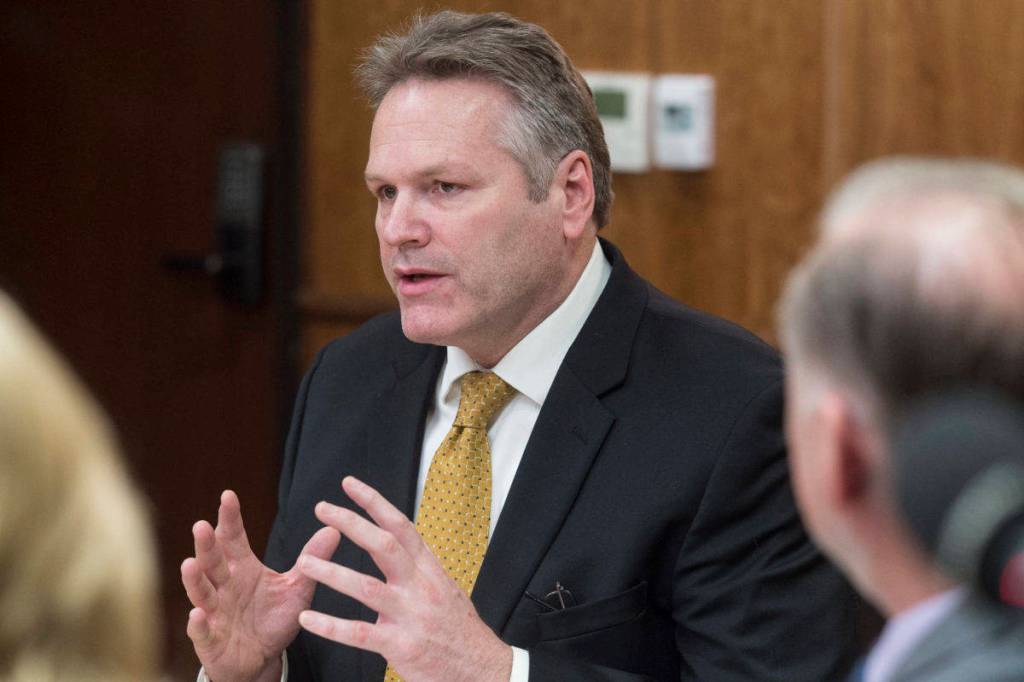
“We’d just like to get that off the table and then clarify, potentially holding back on some of the funding, the $30 million just to initiate a suit,” Dunleavy said, “almost a friendly suit, just so we can get clarification when we’re moving forward on things.”
This would be the second time in five years that the Alaska Legislature sued a sitting governor. In 2015, the Legislature filed a lawsuit against then-Gov. Bill Walker, asserting that his expansion of Medicaid was unconstitutional. A judge threw that lawsuit out, saying the administration was within the law in expanding Medicaid because it followed the federal text of the Affordable Care Act allowing for the expansion of Medicaid.
Legislators voted to spend as much as $450,000 from the state’s budget to pursue that lawsuit, according to reports at the time. Current lawmakers did not discuss cost estimates Tuesday.
The decision to prepare for the lawsuit passed the House 23-14, and passed the Senate 14-4. House Minority Leader Lance Pruitt spoke against it on the floor, asserting that he thought pursuing this would be a waste of money.
This will give final resolution between two branches of government over the forward funding of education. We want to give certainty to school districts and prevent unnecessary teacher layoff notices. #akleg https://t.co/u1THgxpGXI
— Rep. Chris Tuck (@RepChrisTuck) May 28, 2019
Dunleavy said Tuesday that he won’t veto education funding, and said he just wants to establish the groundwork for whether a Legislature can guarantee funding in future years and how far in advance the Legislature can guarantee funding. Dunleavy rattled off a list of questions during Tuesday’s press conference, asking where this stops if a Legislature can fund something a year of time.
“If you can fund in the manner that the Legislature’s claiming it can fund,” Dunleavy said, “why not fund everything that way?”
• Contact reporter Alex McCarthy at amccarthy@juneauempire.com. Follow him on Twitter at @akmccarthy.