
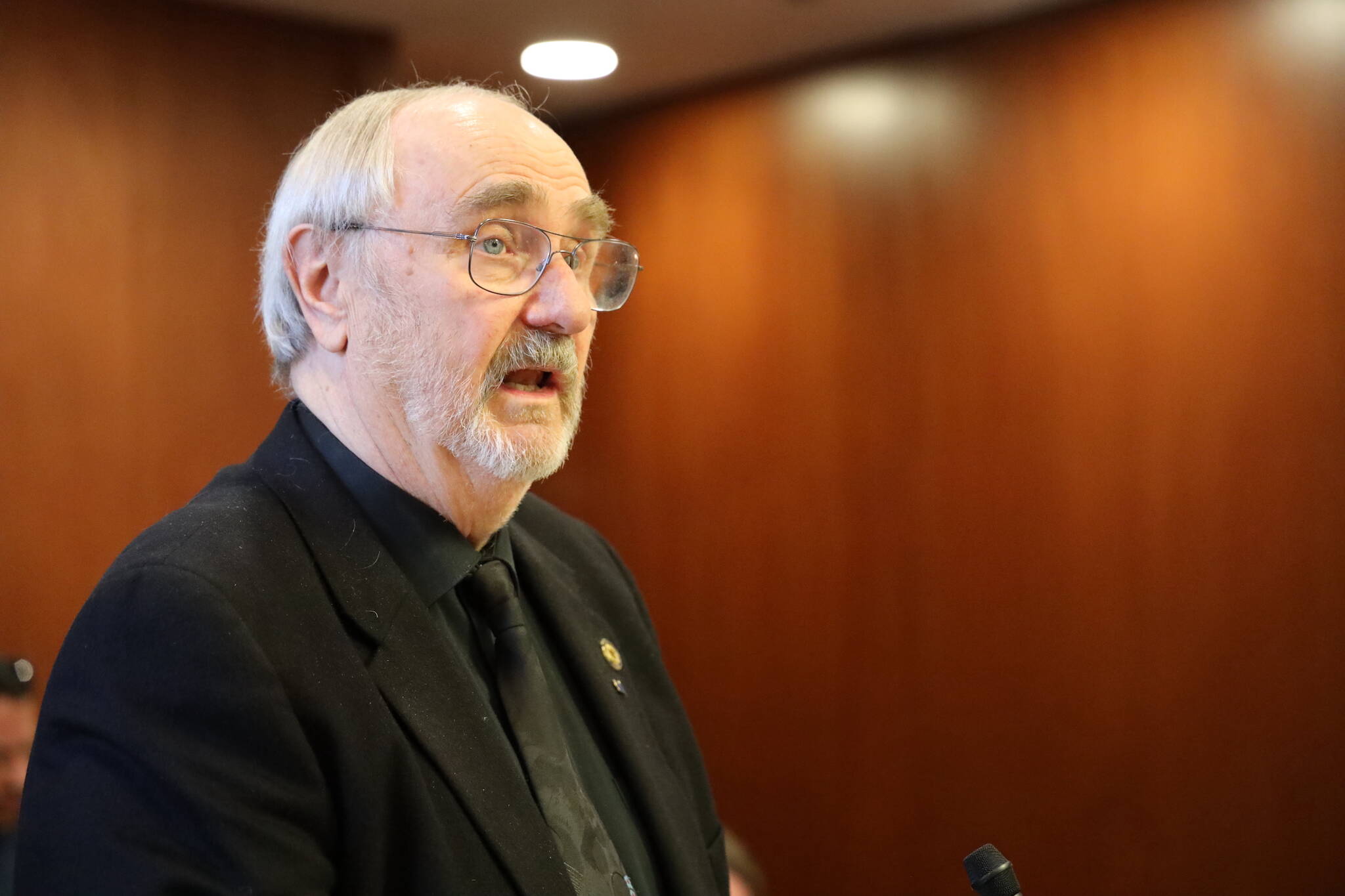
The Alaska House of Representatives passed a bill to reject the 67% pay raise slated for legislators and around a 20% raise for the governor and his commissioners despite knowing their efforts are too late to stop the increases from going into effect.
“At this point, I think this bill might just be a statement,” said Rep. Craig Johnson, an Anchorage Republican and sponsor of the bill, before the bill passed in a 29-11 vote Tuesday afternoon.
House Bill 135 was originally introduced in mid-March, brought forth by a handful of legislators from the House in light of the abrupt pay hike OK’d on March 15 during a 15-minute meeting of the five members of the Alaska State Officers Compensation Commission.
All five members were only days into their positions when the vote was taken after all previous commissioners either resigned or were replaced by Gov. Mike Dunleavy.
HB135 had the potential to block those salary increases from happening, but from the start, it faced a handful of hurdles, most prominently a lack of support for the legislation from the Senate.
[Capitol Live: Updates from the last day of session]
Monday was the deadline for legislators to pass a bill blocking the pay raise, however, the day came and went without the bill moving forward with a final vote.
Another bill, House Bill 140, was also introduced to make changes to how Alaska State Officers Compensation Commission operates and how increases are voted on in the future. It also failed to advance.
HB135’s inability to stop the pay increase didn’t stop more than a dozen House Representatives from speaking their opinion of the pay increase and the action taken by the Alaska State Officers Compensation Commission.
Rep. Zack Fields, an Anchorage Democrat, was among the handful of legislators who voted against the bill. He expressed his “unpopular position” to support the pay increase, saying “you get what you pay for” when it comes to growing and retaining “intelligent and effective” policymakers in Alaska. He said the current “uncompetitive” salaries mean policy and lawmakers often must take pay cuts to serve, and it can stop people with children from running.
“Right now noncompetitive salary means we are asking policy and lawmakers to take huge pay cuts to serve. That may be the sacrifice that very wealthy people or people without children or retired people can afford to make,” he said. “But if you have kids and you’re not affluent then what we’re saying to a potential elected office holder is ‘Sorry you got to pit your kid’s economic security against the privilege and opportunity to serve.’”
Multiple legislators rebuffed his argument.
Rep. Julie Coulombe, an Anchorage Republican, said both the increase and the actions taken by the Alaska State Officers Compensation Commission were not “transparent” and eroded public trust.
“I can’t even imagine what working-class people are thinking — for us to come here, knowing what the pay was when we signed up, and to complain about how hard it is, I can tell you constituents don’t want to hear that,” she said.
Rep. Donna Mear, an Anchorage Democrat, agreed and said she was “beyond frustrated with the process and the outcome” of both the Alaska State Officers Compensation Commission and the legislative body.
“This is not how we should be operating, this is not the outcome we should be having, this body as I am seeing as a freshman, is operating far more in the interest of the members than it should — it should be operating far more in the interests of Alaskans,” she said.
The pay raises for the governor and his commissioners are set to go into effect on July 1.
The governor’s salary will increase from the current $145,000 per year to $176,000, based on a 2% annual increase since the last raise in 2011. Similar increases will raise the lieutenant governor’s salary to about $140,000 and department commissioners — whose last increase was in 2015 — to $168,000.
Legislators, whose $50,400 salary has remained the same since 2010, will get a raise to $84,000 beginning January of next year — assuming Dunleavy takes the required actions to enact them. Legislators also get $307 in untaxed per diem while in session — except for Juneau’s three members who get none — which totals slightly more than $37,000 during a 121-day session.
• Contact reporter Clarise Larson at clarise.larson@juneauempire.com or (651)-528-1807.
