
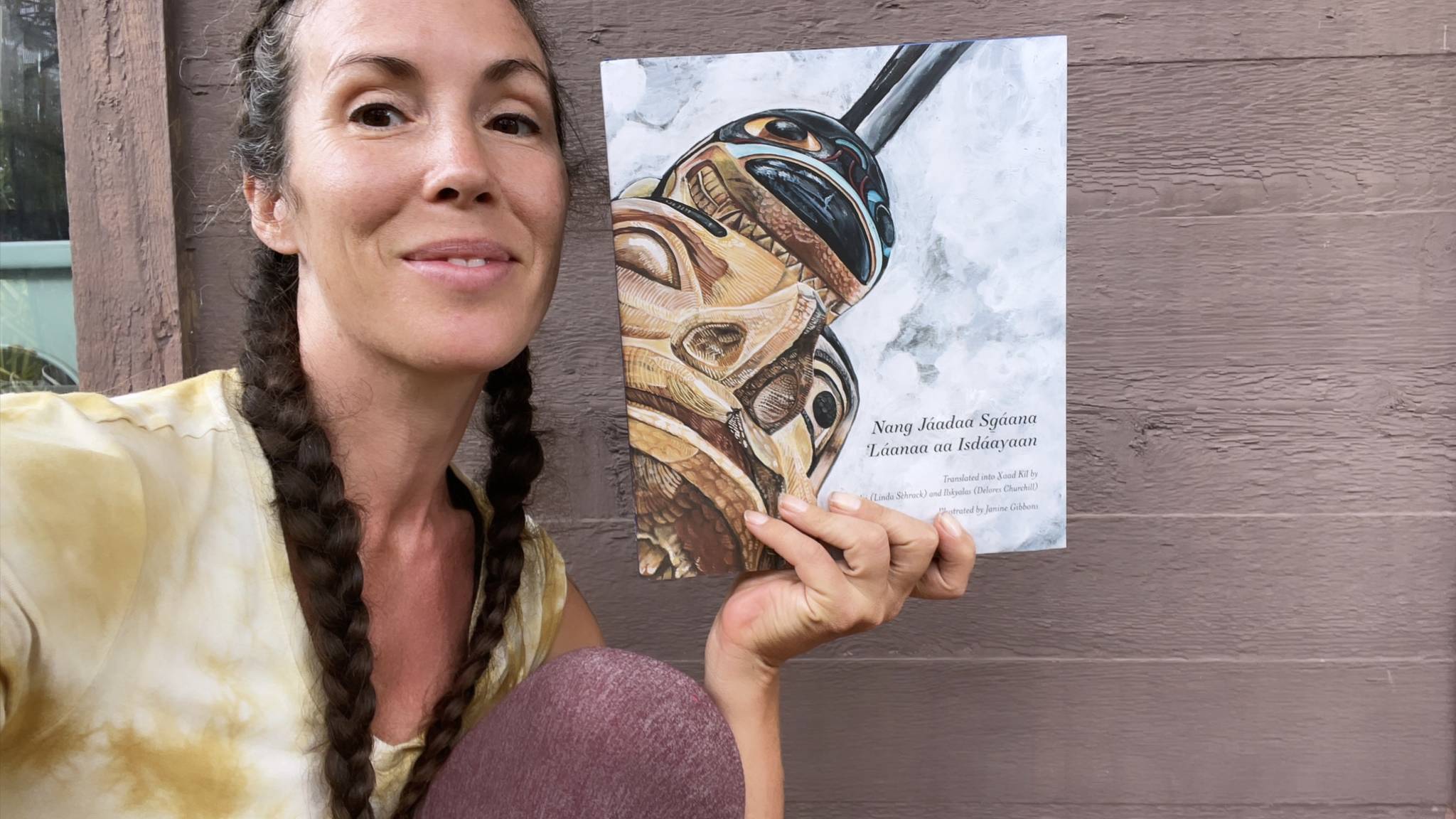
Sealaska Heritage Institute has released the first children’s book in the Haida language Xaad Kíl through its Baby Raven Reads program.
“Nang Jáadaa Sgáana ‘Láanaa aa Isdáayaan,” or “The Woman Carried Away by Killer Whales,” is a story carried down through generations orally and published through the work of team of artists and linguists.
“It’s the first book I ever illustrated, and now it’s the first children’s book in the Haida language,” said Haida illustrator Janine Gibbons in a phone interview. “I had to stretch my mind. How am I going to represent this? And how am I going to represent this accurately?”
The book’s art, painted by Gibbons, was originally created for the Tlingit version of the story. With interest in a Haida translation of the traditional story, Skíl Jáadei Linda Schrack and Ilskyalas Delores Churchill worked together to translate it to Xaad Kíl.
[US to review dark history of Indigenous boarding schools]
“I am forever grateful for her. ‘Láa an sáa Hl gudánggang. (I hold her in high esteem),” Schrack said in a news release.
Schrack also narrated a spoken version of the story for SHI’s Youtube to accompany readers, so they may hear the language spoken, said X̱aad Kíl and Sm’alagyax̱ language coordinator Susie Edwardson in a phone interview.
“These books will be good to see the language and listen to it,” Edwardson said. “A lot of the learners will be parents practicing the language while reading to their children.”
SHI has gone back and narrated the text for all of their Baby Raven Reads books, Edwardson said.
“It’s so powerful. I cried the first time I heard it,” Gibbons said. “When you look at the audio with the text, you’ll see how the illustrations and the audio and the text all match.”
Gibbons painted the original illustrations based on her experiences in Southeast Alaska, based off photos and the land of the Haida people and their forebears.
“You will understand that the language is fully just an extension of the land, and that’s how I illustrated the story,” Gibbons said. “The images tell the story without the words, too.”
Gibbons said the book is particularly important now, as more Indigenous cultures work to connect their people with their roots.
“I’m excited for people to be opening the door of more knowledge,” Gibbons said. “It’s a great format for other Native cultures to see this is how you can do books. SHI is on the forefront of this.”
The project was funded by the U.S. Department of Education’s Alaska Native Education Program Grant, Gibbons said. While lack of further funds from this grant precluded the program from planning for any more Haida books immediately, Edwardson said, the future is bright.
“SHI has intentions for future grants to create more language resources,” Edwardson said.
The growing resources to help Alaska Native children and adults — and anyone interested in learning more — has shown great strides in just a few years, Gibbons said.
“All these kids are getting the best books out there to learn part of their heritage. In the four years, five years, it’s been phenomenal,” Gibbons said. “You can definitely see a difference in the kids in their sense of self and their cultural heritage.”
The book is available now for purchase on the SHI website at https://sealaska-heritage-store.myshopify.com/collections/books-publications/baby-raven-reads.
• Contact reporter Michael S. Lockett at (757) 621-1197 or mlockett@juneauempire.com.
The Baby Raven Reads program is a Sealaska Heritage Institute program dedicated to providing reading resources in Alaska Native languages for young readers. Ben Hohenstatt / Juneau Empire
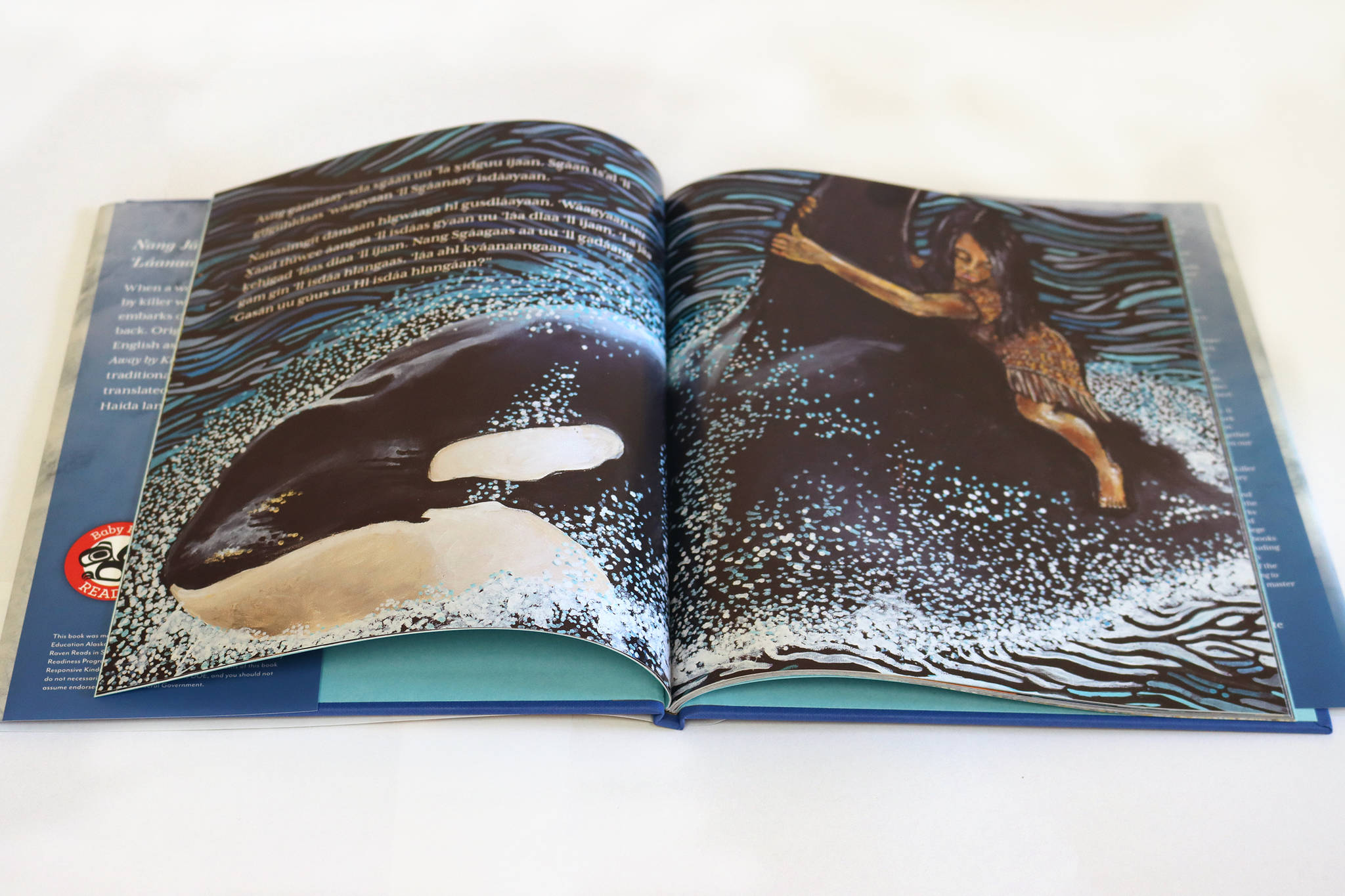
The Sealaska Heritage Institute has released its first children’s book in the Haida language Xaad Kíl, a translation of the traditional story “The Woman Carried Away by Killer Whales,” through its Baby Raven Reads program. (Ben Hohenstatt / Juneau Empire)
