
By Mary F. Willson
For the Juneau Empire
This essay is not for the ultra-fastidious reader; it deals with things we commonly think of as disgusting and repulsive. But if you are not so dainty or are at least curious, read on. Those icky things can be very interesting and useful biologically, sometimes in surprising ways, and here are some examples.
Consider mucus, for instance. We know it as a slimy lining of digestive, respiratory, and uro-genital tracts, where it lubricates and sometimes traps foreign particles. But other creatures use it in very special ways. Slugs (terrestrial molluscs) are slimy, which makes them hard for a predator to grab, and the slime underneath their bodies helps them climb up to reach food above the ground surface.
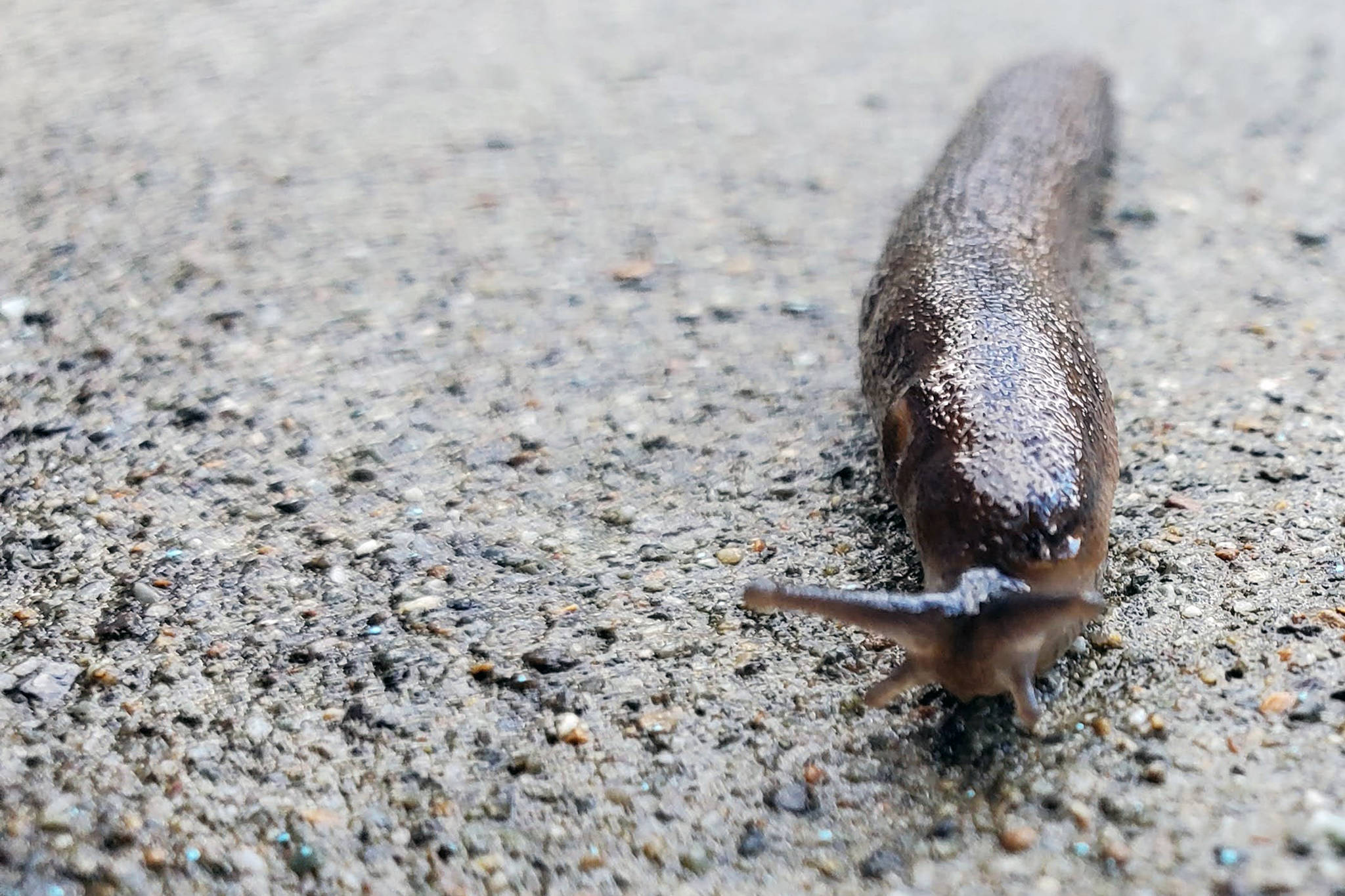
Ben Hohenstatt / Juneau Empire Slugs, like this one seen in the Mendenhall Valley on Aug. 14, 2020, produce mucus. The slimy stuff may not be appealing, but it is useful.
Parrotfish secrete mucus from a gland under the operculum; this protects a sleeping fish from night-time parasites and predators, perhaps by concealing its smell. Fishes are generally coated with a thin layer of mucus, letting them slide easily through the water and out of the clutches of some would-be predators. Hagfish, however, take slime production to a new level: when attacked by a predator, a hagfish generates tremendous amounts of mucus from its skin, all along the whole length of its long, narrow body. All that mucus can clog the gills of an attacking fish or simply let the hagfish slip out of the predator’s hold. To rid itself of all that slime, a hagfish can tie itself into an overhand knot and slide in and out of the knot.
Perhaps the most captivating use of mucus is seen in the small, pelagic tunicates called larvaceans. Tunicates are the nearest relatives of animals with backbones. Larvaceans secrete lots of mucus from their heads, somehow creating an elaborate, almost transparent ‘house’ much larger than themselves. A larvacean’s tail beats back and forth, creating a water current that the complex structure of the ‘house’ channels toward the critter’s mouth, where more mucus filters out particles that are too large, leaving the microscopic plankton for larvaceans to eat. When the ‘house’ gets torn or clogged up, larvaceans have to replace it, sometimes several times a day—a metabolically expensive business.
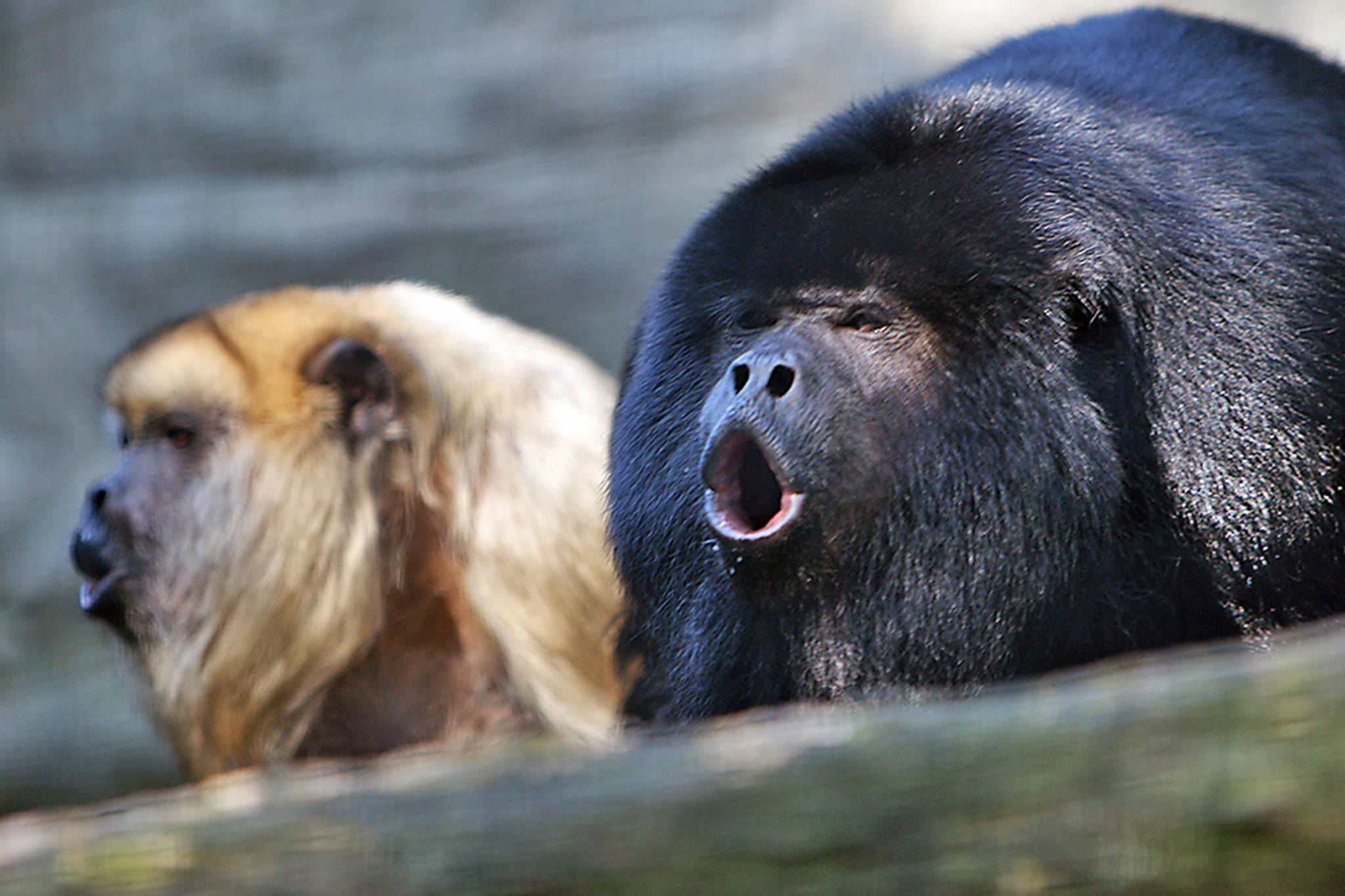
Excretions from animal digestive processes have found many different uses, as markers, weapons, and food, for example. We’ve all seen dogs urinating by a tree or fence post, a sign to be read by other dogs; a secondary use is by butterflies that may gather to sip up the mineral- and nitrogen-rich fluid, a behavior known as ‘puddling’. Howler monkeys protest intruders by making a great racket and pelting the intruders with feces. Rabbits and some rodents, including beavers, re-ingest their own feces; bacteria in the large intestine break down large molecules such as cellulose into more digestible form, but nutrients are not absorbed well there. Absorption takes place mostly in the small intestine. So, to get the additional nutrients to the small intestine and receive benefit from them, the fecal material, with those bacterial products, must be eaten — effective recycling.
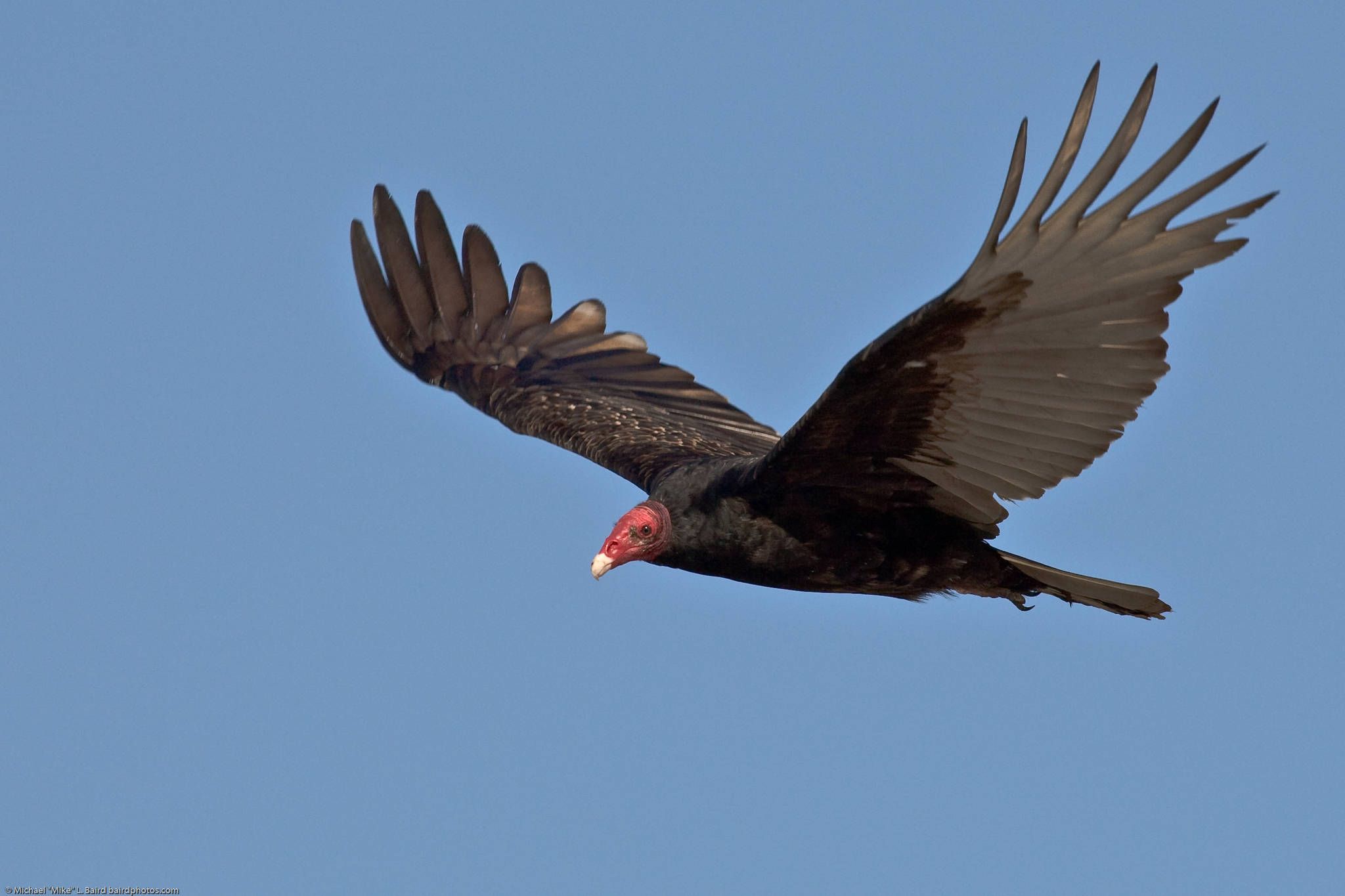
Courtesy Photo / Michael “Mike” L. Baird A turkey vulture flies near Morro Strand State Beach, Morro Bay, Calif., in March 2008. In birds and terrestrial reptiles, the waste products of kidneys are combined with feces before being excreted. Turkey vultures can release this fluid material so that it runs down their legs; as it evaporates, it cools the bird in hot weather.
In birds and terrestrial reptiles, the waste products of kidneys are combined with feces before being excreted. Turkey vultures can release this fluid material so that it runs down their legs; as it evaporates, it cools the bird in hot weather. It can also kill bacteria that might lurk on the birds’ legs after they stand around on rotting carcasses while scavenging the meat. Garter snakes may deter would-be predators by excreting digestive products, along with a stinky substance from anal glands.
[On the Trails: Meet these noise-making critters]
Humans, of course, use the dung of herbivores as fertilizer and in making adobe bricks; dried dung can be used as fuel. There are flies and fungi that make a living on dung. Most scarab beetles do too; some of these dung beetles make a ball of dung and roll it to a place where they bury it and lay eggs on it, ready food for larvae. Those dung-ball rolling beetles were incorporated into ancient Egyptian mythology. More recently and practically, they have been introduced to the Americas and other places to limit dung accumulation where domestic animals are kept.
Dung is also a vehicle for seed dispersal. Many plants make edible fruits that are eaten by birds or mammals. These consumers later excrete the seeds along with the dung-fertilizer, often at some distance from the fruiting parent plant. My hiking friends like to laugh at me, as I habitually dissect bear scat on the trail to see what seeds the bears were carrying. A bear scat well loaded with seeds is a bonanza for seed-eating birds and rodents that aren’t too finicky. Those foragers also scatter the uneaten seeds as they dig through the pile; if the scattered seeds germinate, there is less competition among the seedlings than in the original dung pile.
There’s more, of course, but these examples provide a little taste of a neglected topic.
• Mary F. Willson is a retired professor of ecology.“On The Trails” is a weekly column that appears every Wednesday.
