Former basketball pro embarks on 1,500-mile bike ride for mental health

Former basketball pro embarks on 1,500-mile bike ride for mental health

Mental health for Black and Indigenous men is staggeringly inadequate, he says

In a year rife with people demonstrating much more vocal activism over social and human rights issues, at least one Alaska man will be putting his money where his mouth is — over 1,500 miles of riding.

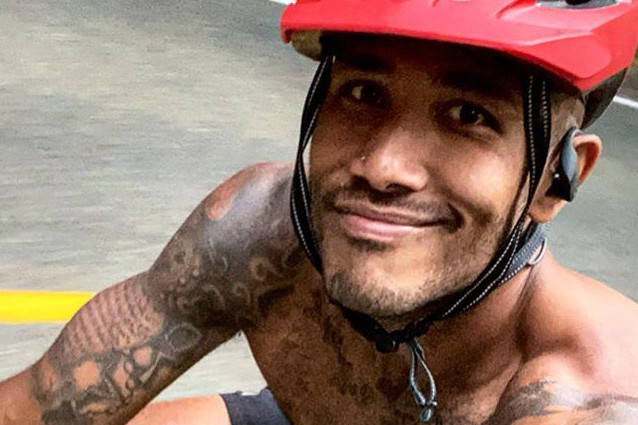
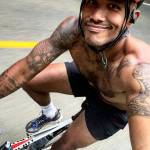
Damen Bell-Holter, a former professional basketball player originally from Hydaburg, will be riding with others from Bellingham, Washington, to San Diego over more than a month to raise money and awareness for inadequacies in mental health care for Black and Indigenous men, which Bell-Holter can speak to as someone who is both Black and Haida.

“We need to create more resources for boys. We need to have those conversations,” Bell-Holter said in a phone interview. “The big picture is that the $100,000 we’re going after will be dispersed among 20 communities. That $5,000 isn’t going to save the day, but it’ll create those conversations. It’s going to put the responsibility on those tribes and communities to say, they did something, now we have to support it and create safe spaces for the men in their community.”

Break the (Bi)Cycle is a movement started by former professional basketball player Damen Bell-Holter to raise money and awareness about the dearth of mental health care for Black and Indigenous men. Bell-Holter will ride from Bellingham, Wash., to San Diego, Calif., more than 1,500 miles, while visiting tribes and documenting the trip. (Courtesy Image / Break the (Bi)Cycle)                                Break the (Bi)Cycle is a movement started by former professional basketball player Damen Bell-Holter to raise money and awareness about the dearth of mental health care for Black and Indigenous men. Bell-Holter will ride from Bellingham, Wash., to San Diego, Calif., more than 1,500 miles, while visiting tribes and documenting the trip. (Courtesy Image / Break the (Bi)Cycle)

Break the (Bi)Cycle is a movement started by former professional basketball player Damen Bell-Holter to raise money and awareness about the dearth of mental health care for Black and Indigenous men. Bell-Holter will ride from Bellingham, Wash., to San Diego, Calif., more than 1,500 miles, while visiting tribes and documenting the trip. (Courtesy Image / Break the (Bi)Cycle) Break the (Bi)Cycle is a movement started by former professional basketball player Damen Bell-Holter to raise money and awareness about the dearth of mental health care for Black and Indigenous men. Bell-Holter will ride from Bellingham, Wash., to San Diego, Calif., more than 1,500 miles, while visiting tribes and documenting the trip. (Courtesy Image / Break the (Bi)Cycle)

His group is called ‘Break the (Bi)Cycle,” a reference to the self-fueling nature of violence. The ride’s goal is to raise money to help different tribes buy bikes for the boys and men of those tribes to get out on the road, where they can use the sport as a form of therapy.

[School repairs get priority in bond package]

“The big picture is, we want to make bicycling more accessible to underrepresented spaces,” Bell-Holter said. “Biking is kind of an expensive sport. It’s sparked a lot of cool local initiatives, which is what I wanted.”

The ride is being sponsored logistically and financially by organizations including GCI, Patagonia, and the Southeast Alaska Regional Health Consortium. Bike shops, including Cycle Alaska Juneau and The Bicycle Shop in Anchorage, also helped outfit members of the group for the ride.

“It literally just started from me identifying cycling as one of my avenues of therapy,” Bell-Holter said. “When COVID started, I went on the road and found a bike. I saw that other men, men of color particularly, wanted to participate.”

Bell-Holter said he’d seen similar campaigns, but the topic is one he’s long held close, speaking and raising awareness of across Alaska and elsewhere. There’s a large gap in the availability and effectiveness of mental health care for Black and Indigenous men, especially in Alaska, Bell-Holter said, resulting in intergenerational trauma that can lead to some of the highest rates of death by suicide and substance misuse in the country.

“I’ve been bouncing my head off the wall about this for a few years. There’s so much violence and abuse in Alaska. What does prevention look like,” Bell-Holter said. “There’s a lot of trauma that outside people don’t understand. Non-Native and non-Indigenous people don’t understand there’s a lot of intergenerational trauma that’s not visible from the outside.”

Former basketball pro embarks on 1,500-mile bike ride for mental health

Stepping off on Aug. 30, Bell-Holter, along with more than half a dozen other men, intend to ride the route from Bellingham south to San Diego over the course of a month, stopping at various tribes on the way down the coast. Others will join for parts of the ride, including Nick Hanson, of American Ninja Warrior fame.

“I’m gonna go for a week. A lot of influential athletes in the state of Alaska are involved,” Hanson said in a phone interview. “The guys we’re putting together are ex-University of Alaska Anchorage basketball athletes, ex-cross country runners. Most of them are in our little pickup basketball crew that we’ve been playing with for years.”

Raising awareness is nothing new for Hanson either, who often speaks out supporting suicide risk and prevention awareness.

“He (Bell-Holter) reached out to me to see if I wanted to take part. With my platform on American Ninja Warrior, I’ve talked about suicide prevention for the last six years,” Hanson said. “I can’t even explain it. It’s gonna be such a good thing. We’re not just going to be going, we’re going to be stopping with various tribes and indigenous people along the way.”

Want to help or follow along?

People can follow the journey on the Break the (Bi)Cycle’s Instagram page, and donate to the nonprofit’s financial goal on their GoFundMe page.

• Contact reporter Michael S. Lockett at 757-621-1197 or mlockett@juneauempire.com.
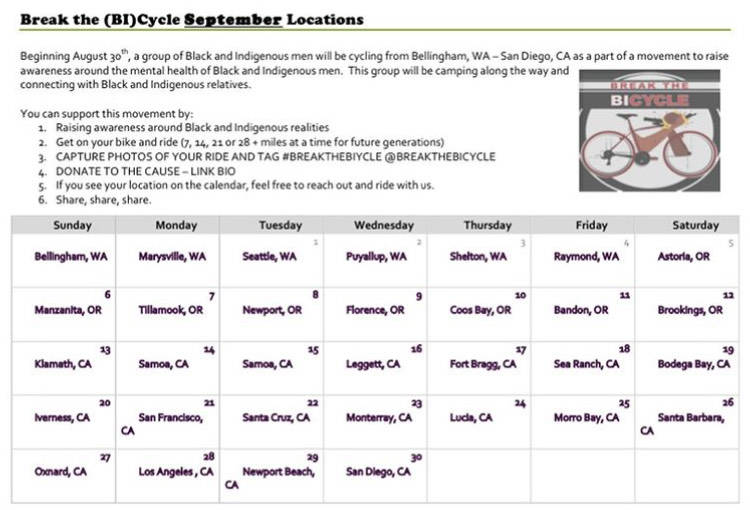
The agenda of the trip for Break the (Bi)Cycle. (Courtesy Image / Break the (Bi)Cycle)

The agenda of the trip for Break the (Bi)Cycle. (Courtesy Image / Break the (Bi)Cycle)

More in News

The northern lights are seen from the North Douglas launch ramp late Monday, Jan. 19. A magnetic storm caused unusually bright northern lights Monday evening and into Tuesday morning. (Chloe Anderson/Juneau Empire)
Rare geomagnetic storm causes powerful aurora display in Juneau

The northern lights were on full display Monday evening.

teaser
Juneau activists ask Murkowski to take action against ICE

A small group of protesters attended a rally and discussion on Wednesday.

Cars pass down Egan Drive near the Fred Meyer intersection Thursday morning. (Clarise Larson / Juneau Empire file photo)
Safety changes planned for Fred Meyer intersection

DOTPF meeting set for Feb. 18 changes to Egan Drive and Yandukin intersection.

Herbert River and Herbert Glacier are pictured on Nov. 16, 2025. (Mari Kanagy / Juneau Empire)
Forest Service drops Herbert Glacier cabin plans, proposes trail reroute and scenic overlook instead

The Tongass National Forest has proposed shelving long-discussed plans to build a… Continue reading

A tsunami is not expected after a 4.4-magnitude earthquake northwest of Anchorage Wednesday, Feb. 4, 2026. (U.S. Geological Survey)
No tsunami expected after 4.4-magnitude earthquake in Alaska

U.S. Geological Survey says 179 people reported feeling the earthquake.

ORCA Adaptive Snowsports Program staff member Izzy Barnwell shows a man how to use the bi-ski. (SAIL courtesy photo)
Adaptive snow sports demo slides to Eaglecrest

Southeast Alaska Independent Living will be hosting Learn to Adapt Day on Feb. 21.

Cars drive aboard the Alaska Marine Highway System ferry Hubbard on June 25, 2023, in Haines. (Photo by James Brooks)
Alaska’s ferry system could run out of funding this summer due to ‘federal chaos problem’

A shift in state funding could help, but a big gap likely remains unless a key federal grant is issued.

Photo by James Brooks/Alaska Beacon
U.S. Sen. Dan Sullivan stands with acting Coast Guard Commandant Adm. Kevin Lunday during the after the commissioning ceremony for the Coast Guard icebreaker Storis on Sunday, Aug. 10, 2025, in Juneau, Alaska.
Coast Guard’s new Juneau base may not be complete until 2029, commandant says

Top Coast Guard officer says he is considering whether to base four new icebreakers in Alaska.

Students from the Tlingit Culture Language and Literacy program at Harborview Elementary School dance in front of elders during a program meeting in 2023. (Clarise Larson / Juneau Empire file photo)
Sealaska adds more free Tlingit language courses

The new course is one of many Tlingit language courses offered for free throughout the community.

Most Read