
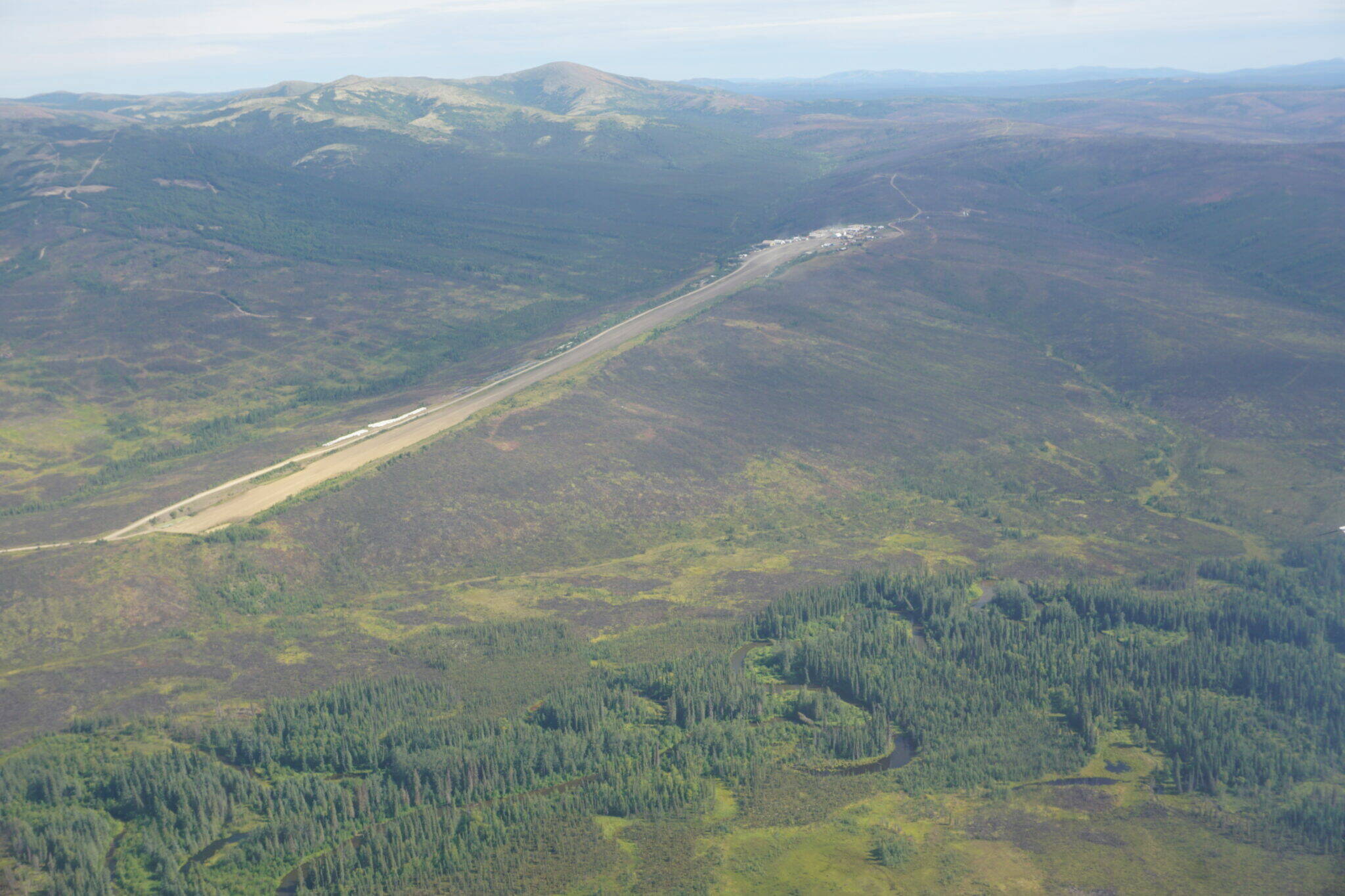
Opponents of the planned Donlin Gold mine in Western Alaska won a key victory on Monday when a federal judge ruled that regulators who granted a permit needed to build the project failed to properly consider the risks of a catastrophic release of mine waste.
U.S. District Court Judge Sharon Gleason agreed with tribal government plaintiffs that argued the environmental study that led to federal permitting for the Donlin mine illegally omitted analysis of the impacts of a major tailings dam failure.
“I think it’s a major victory for the tribes and for the region,” said Hannah Foster, an attorney from the environmental organization Earthjustice, which is representing tribal governments fighting against the mine.
At issue was the environmental impact statement on which the U.S. Army Corps of Engineers relied when it issued a key permit in 2018 for construction of the gold mine, which would be one of the biggest in the world.
The environmental impact statement should have fully analyzed the possibility of a breach in the 471-foot-tall dam planned to hold hundreds of millions of tons of tailings, which are the crushed pieces of rock leftover after minerals have been extracted.
The environmental impact statement listed the risk of a catastrophic failure was 0.5% per year, or 2% over 20 years. But the Corps failed to consider the outcome of such a spill, an omission that Gleason said violated the National Environmental Policy Act and the Alaska National Interest Lands Conservation Act.
“To borrow an analogy from Plaintiffs and to put these numbers into perspective, these same odds for the risk of an airplane crash would likely deter nearly anyone from flying. Because a tailings spill larger than .5% of the total tailings volume is reasonably foreseeable, the (final environmental impact statement) should have considered a larger spill,” Gleason said in her ruling.
Gleason’s ruling stopped short of striking down the permit entirely, which is what the plaintiffs had requested. Instead, she gave both sides the opportunity to argue further about how the response to deficiencies in the environmental impact statement should be carried out.
Representatives of the six tribal governments that sued to overturn the Corps permit welcomed the court ruling, even though it was only a partial victory.
“The threat of the Donlin Gold Mine has loomed for many years now, posing unacceptable risks to the health of our lands, waters, fish, wildlife and our people. We are relieved and happy that the judge is requiring a harder look at the mine’s impacts, and the risk of a tailings failure,” Walter Jim, chair of Orutsararmiut Native Council, said in a statement.
“Our primary concern all along has been the Kuskokwim River, which has sustained our customary and traditional practices for generations. We are grateful the courts are recognizing the importance of this sustainable resource we have always relied on and that must be protected by law,” Boris Epchook, president of the Organized Village of Kwethluk, said in the statement.
The other tribal plaintiffs are the Tuluksak Native Council, the Native Village of Eek, Chevak Traditional Council and the Native Village of Kwigillingok.
Gleason’s ruling granted some victories to the federal regulators and, by extension, the mine’s developers. She rejected plaintiff claims that the permit issued by the Corps and a permit issued by the U.S. Bureau of Land Management failed to properly consider the mine’s impact on the health of the region’s people or the way mine-related barge traffic might affect water quality and fish in the Kuskokwim River.
The Donlin Gold project is owned jointly by Barrick Gold US Inc. and NovaGold Resources Alaska Inc. The mine site is on land owned by the Kuskokwim Corp., the local village Native corporation, and would develop mineral resources owned by Calista Corp., the regional Native corporation for the Yukon-Kuskokwim area of Alaska.
The mine has been controversial in that mostly Yup’ik region, with supporters touting its economic potential and opponents citing possible damages to the Kuskokwim River region and its salmon and other resources on which people depend for food and culture.
In a statement, Donlin Gold LLC defended the planning process and the permits that stemmed from it.
“Donlin Gold is committed to developing the Donlin Gold Project in a responsible manner that is protective of the environment and the subsistence lifestyle of the Yukon-Kuskokwim region,” Interim General Manager Enric Fernandez said in the statement. “We are currently reviewing the court’s decision and exploring our options.”
The statement, which highlighted the mixed nature of Gleason’s ruling, defended the planning process and Donlin Gold’s tailings-dam design.
“We believe the release scenario analyzed in the Environmental Impact Statement (“EIS”) was appropriate based on the specific facts of the Donlin Gold Tailings Storage Facility. We lost on a narrow issue, whereby the Alaska District Court determined that a larger tailings spill should have been considered,” Fernandez said in the statement.
There are other legal challenges to the mine that are pending in the Alaska court system. Those lawsuits seek to overturn some state permits for the mine. A hearing in one of those cases was held in Anchorage on Aug. 30.
• Yereth Rosen came to Alaska in 1987 to work for the Anchorage Times. She has reported for Reuters, for the Alaska Dispatch News, for Arctic Today and for other organizations. She covers environmental issues, energy, climate change, natural resources, economic and business news, health, science and Arctic concerns. This article originally appeared online at alaskabeacon.com. Alaska Beacon, an affiliate of States Newsroom, is an independent, nonpartisan news organization focused on connecting Alaskans to their state government.
