City officials confident 70% vaccination goal within reach
Published 10:30 pm Monday, July 5, 2021
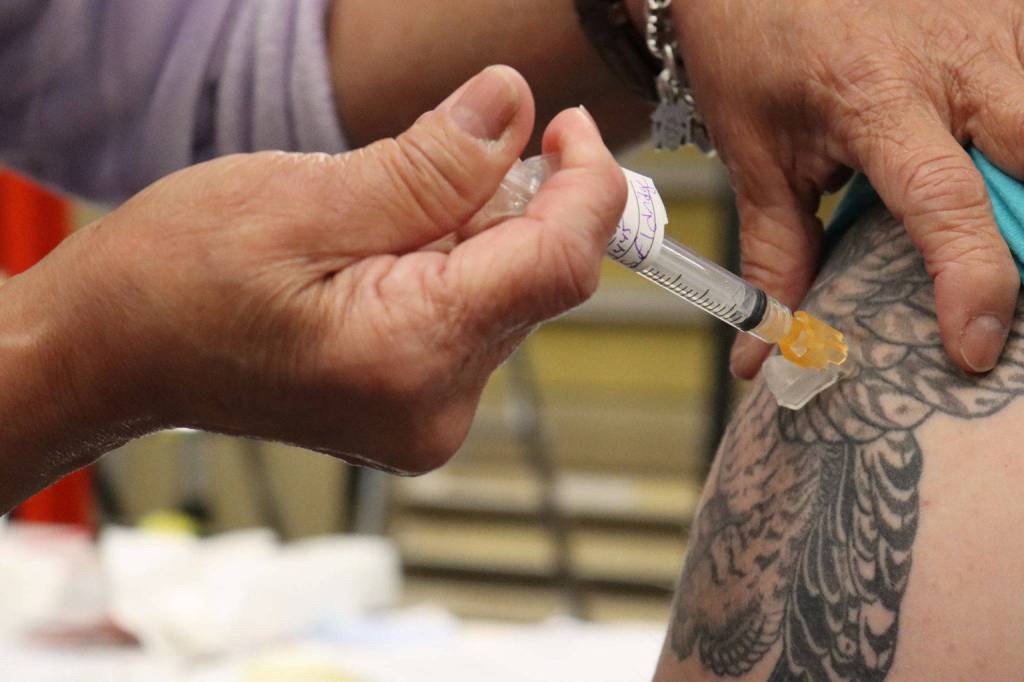
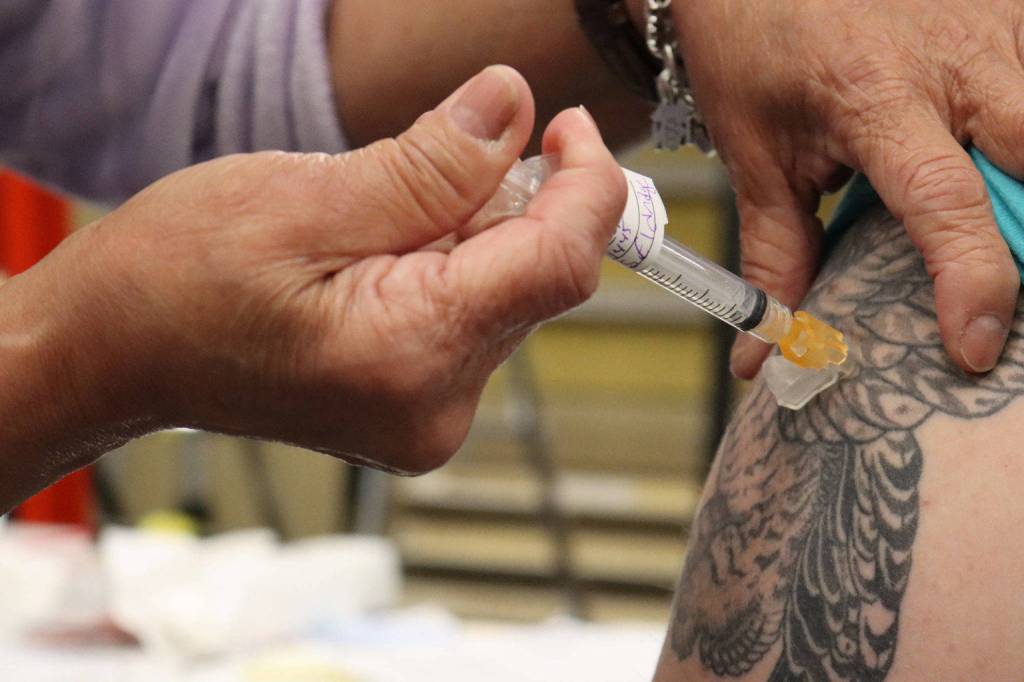
State data show COVID-19 numbers increasing statewide and in some regions of Alaska, but officials in Juneau are confident at the city’s vaccination rates and containment ability. Roughly 63% of Juneau’s residents have completed their vaccine series according to City and Borough of Juneau data, and City Manager Mila Cosgrove said clinics are seeing about 200 new people receiving vaccines a week.
“At a high level, we are seeing cases diminish,” Cosgrove said at a community update Tuesday. “For the most part, our case levels have remained relatively low.”
Health officials have detected all four COVID-19 variants including the Delta variant in Juneau, said April Rezendes, public health nurse with the city, but the vaccines from Pfizer, Moderna and Johnson & Johnson have shown to be effective at mitigating the effects of variants.
A small number of vaccinated people have tested positive for COVID-19, Rezendes said, but they were either asymptomatic or mildly symptomatic and not spreading the disease as much as an unvaccinated person might. Unvaccinated people are still being asked to wear masks in public settings, and Cosgrove noted the city had set up free, regular testing for unvaccinated people working in tourism or other industries that have contact with the public.
President Joe Biden set a goal in May to have 70% of the U.S. adults fully vaccinated by July 4, but few states have yet to clear that benchmark. According to the federal Centers for Disease Control and Prevention, 58.3% of the U.S. population over 18 was fully vaccinated as of July 6, and 67.1% of U.S. adults having received one dose.
According to city data, 63.4% of Juneau’s total population are vaccinated and 67.3% have received at least one dose. Cosgrove said in an email she’s confident the city will reach the 70% goal, and if vaccination rates continue at current rates that should happen by the end of July.
A number of cities including Juneau have strong efforts to vaccinate their populations and have begun offering incentives to attract residents who haven’t yet received a vaccine. The Greater Juneau Chamber of Commerce recently offered a $1,000 cash drawing and the city’s Zach Gordon Youth Center partnered with Southeast Alaska Regional Health Consortium’s Front Street Clinic to host a barbecue on July 1, and offer the single-injection Johnson & Johnson vaccine to people 12 and older.
[Juneau’s institutions look back on a year of COVID]
According to state Department of Health and Social Services data, 42% of Alaskans of all ages are fully vaccinated, and 46% have at least one dose. Alaska’s current alert level for COVID-19 is currently “low,” but state data show numbers trending upward almost reaching the threshold to raise the alert to Intermediate.
The state assigns its alert level based on the average number of case per 100,000 people over a 14-day period. On Tuesday the statewide average was 4.82, just shy of the five per 100,000 raising the alert level to Intermediate. The state’s alert levels don’t come with any restrictions but do have various guidelines suggested by DHSS. The state’s projected epidemic curve remains low but does show a slight increase of 1.15% after a steady decline.
Juneau’s average daily rate Tuesday was 1.0 per 100,000 with a downward projected epidemic curve of -3.75%, according to DHSS. There were four new cases, CBJ reported, for a total of nine active cases.
The city has its own risk levels which unlike the state’s, break into subcategories and do come with restrictions at certain levels. Currently the city’s risk level is 1b – minimal, one level above the city’s lowest risk level. At the lower levels, restrictions like masking and social distancing are recommendations but become requirements if the risk level reaches High.
At the community update, Cosgrove noted that private businesses can still require patrons to wear masks and take other precautions.
“As private businesses that is quite within their rights,” Cosgrove said. “Respectfully, if a business is asking you to mask up and you want to do business there, that is the neighborly thing to do.”
• Contact reporter Peter Segall at psegall@juneauempire.com. Follow him on Twitter at @SegallJnuEmpire.