
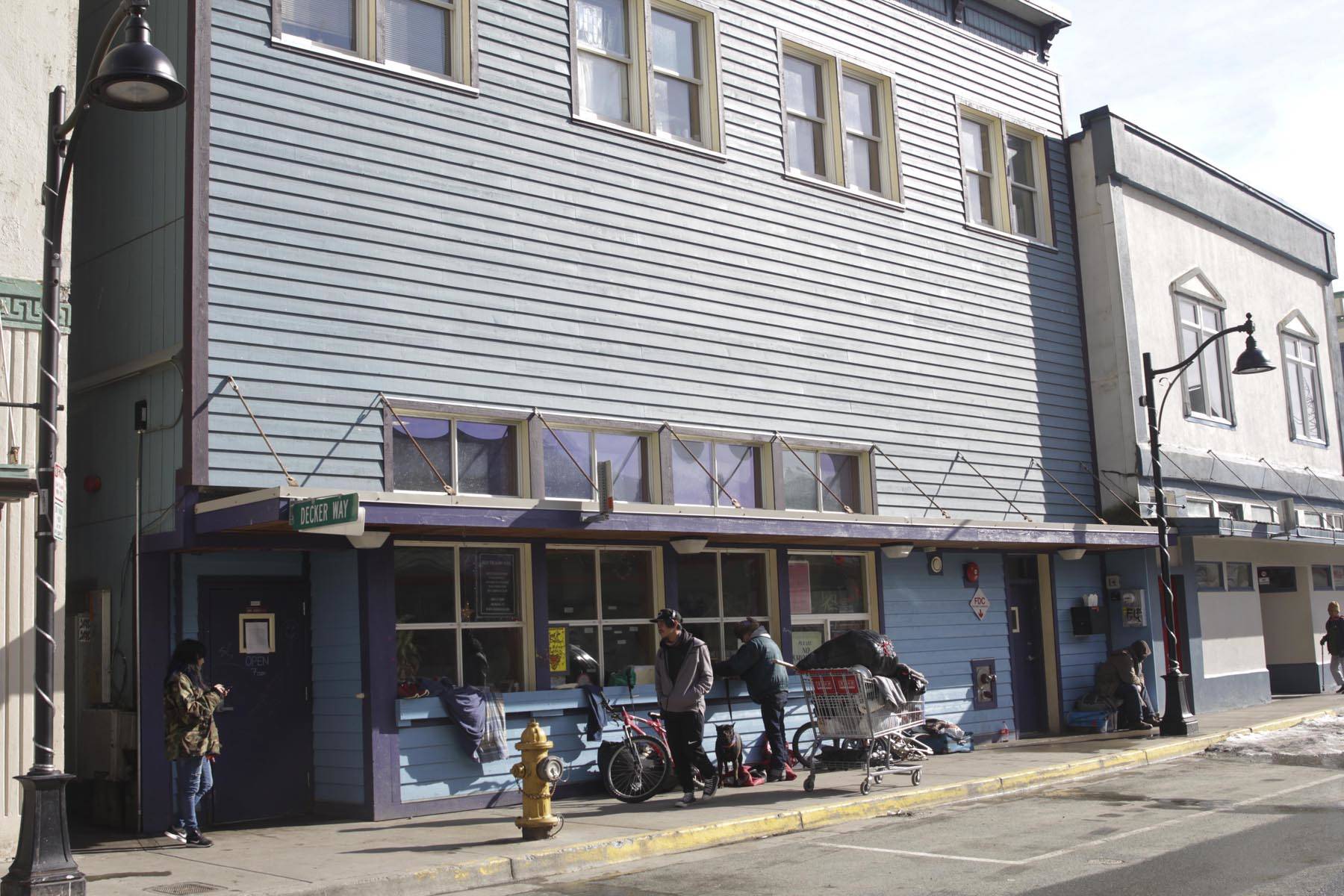
Living in tightly packed shelters, with less access to medicine and protection, Juneau residents experiencing homelessness are some of the most vulnerable members of the population to COVID-19.
“It was really critically clear that we need to have no more than 18 people at the Glory Hall two days ago,” said Mariya Lovishchuk, the executive director of the Glory Hall, during a meeting with health, public housing and nonprofit shelter officials. “If we have an outbreak, it will completely overwhelm our system. We don’t have a ton of time to figure this out.”
Shelters and charitable organizations such as St. Vincent de Paul Society and AWARE are looking to rapidly develop their capability to support their guests as the coronavirus spreads
“When starting to look at solutions for moving forward, we’re looking at around 90 folks in shelter beds plus folks in unsheltered circumstances that we won’t know of,” said City and Borough of Juneau housing manager Scott Ciambor. “There are a lot of other vulnerable people in the population. But with the right resources, this is manageable.”
Many issues stem from lack of resources in the shelters such as thermometers or a set criteria for evaluating possible coronavirus cases. The shelters also tend to be close-quarters affairs, where the spread of an aerosolized virus could be rapid. But the group is acting rapidly to set up firebreaks before an outbreak.
“I would like to nip this in the bud as quick as possible. I would like to have a team go to those four facilities today or tomorrow morning,” Ciambor said. “The emergency planning folks and the shelter operators have to be on the same page.”
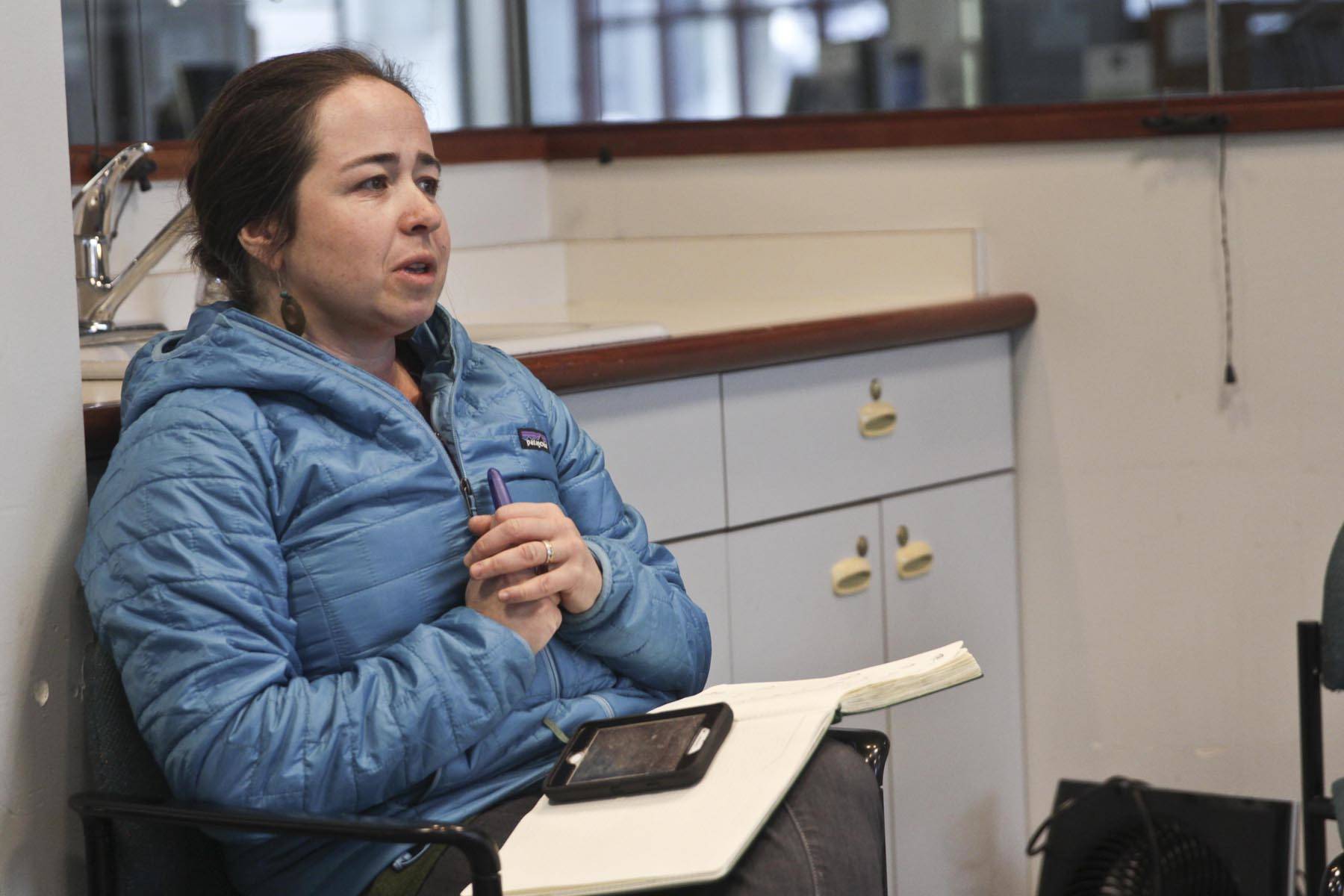
Mariya Lovishchuk, executive director of the Glory Hall, asks a question during a meeting to discuss Juneau’s plan for preventing the spread of the coronavirus among Juneau citizens experiencing homelessness on March 18, 2020. (Michael S. Lockett | Juneau Empire)
Stopping the outbreak before it starts
For many shelters like the Glory Hall, this is going to require a drastic change in the standard operating procedures.
“I think the only thing we can think of to do is to close our day room during the day and give out meals to go, breakfast, lunch and dinner,” Lovishchuk said. “I think our plan tomorrow is to close the day room, get rid of all the furniture and make duct tape squares on the floor so people sit six feet apart.”
Procedures for testing, transport and quarantines will also need to be worked out. Many raised concerns about individuals with behavioral or substance abuse issues, that, unsupervised, may lead them to inadvertently break quarantine. CBJ community development specialist Irene Gallion estimated that the total number of individuals who might require the assistance of these programs ranged from roughly 150 to 175, including people living out of shelters and couch surfing with others.
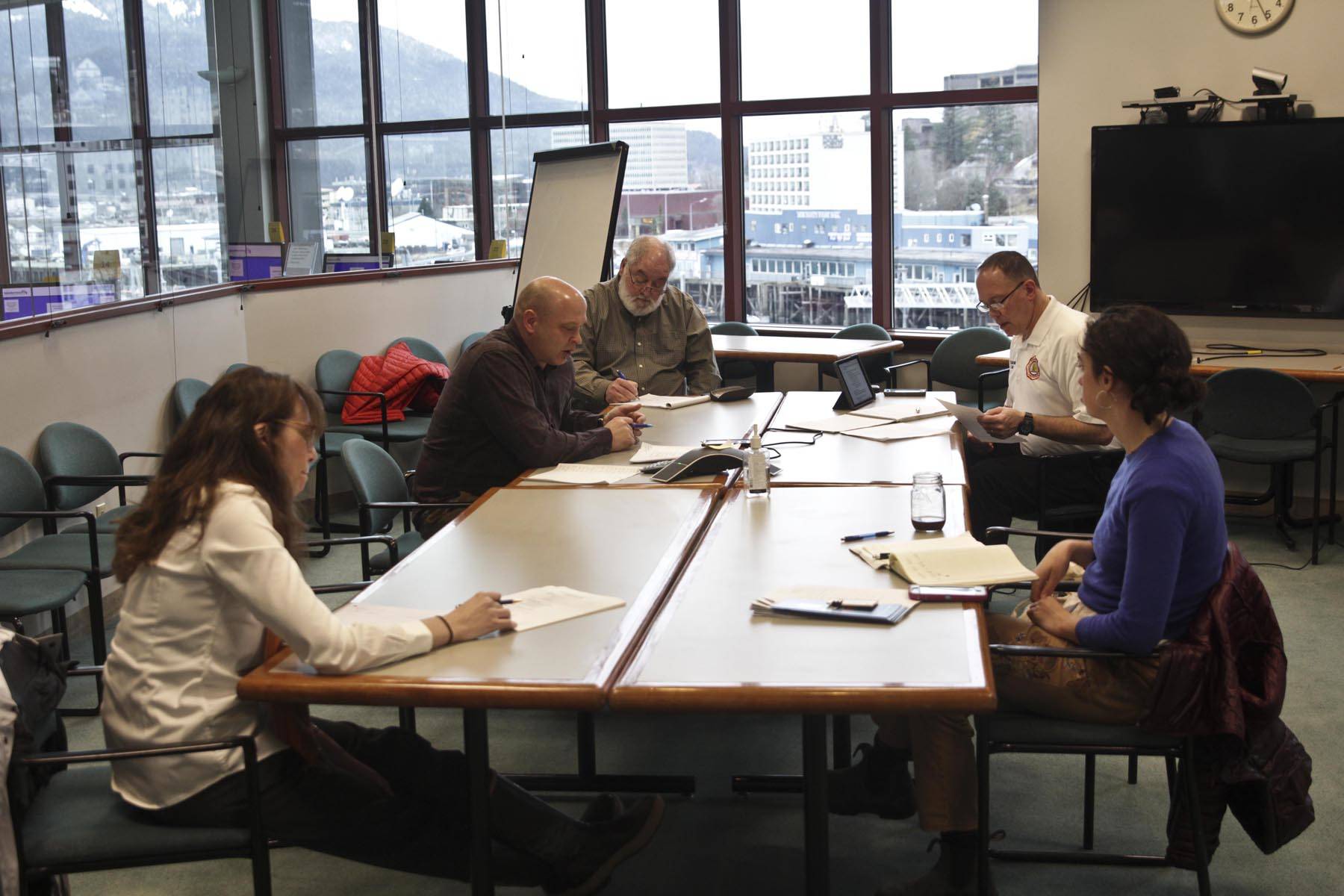
Government officials from the City and Borough of Juneau, medical professionals, and personnel from various shelters and nonprofits meet to discuss Juneau’s plan for preventing the spread of the coronavirus among Juneau citizens experiencing homelessness on March 18, 2020. (Michael S. Lockett | Juneau Empire)
“There’s a little concern about how we’re going to mandate isolation,” said Jeanette Lacey, case manager at Bartlett Regional Hospital. “People we have put in isolation have not remained in isolation.”
A rapid increase in cases may require Juneau to press-gang structures like Centennial Hall or the Juneau Arts and Culture Center in service as temporary isolation wards. Other structures are also being evaluated as possible emergency shelters by officials. Officials are also working out best practices for transporting people, both for testing and to isolation.
“If they’re not sick, but they meet the criteria, transport will be provided. We will transport to the place of isolation. If they’re short of breath, if they’re having trouble breathing, call 911, and call for an ambulance,” said Joe Mischler, whose position as the head of the Juneau Community Assistance Response and Emergency Services program makes him an ideal liaison with the shelters, which often interface with CARES.
“Within next week, we hope to have the ability to go perform tests remotely,” Mischler said. “We hate to use the ER as a dumping ground.”

Scott Ciambor, chief housing officer for the City and Borough of Juneau, speaks during a meeting to discuss Juneau’s plan for preventing the spread of the coronavirus among Juneau citizens experiencing homelessness on March 18, 2020. (Michael S. Lockett | Juneau Empire)
Limited resources
Mischler also said that emergency services hope to have opened up the bottleneck of test kits as soon as possible, to keep testing away from the emergency room, where it ties up dedicated personnel and increases risk of transmission.
“Right now, we have a very limited number of tests in the city,” Mischler said. “We’re hoping to change that in the next two weeks.”
The dearth of test kits in the U.S., especially compared to other countries such as South Korea, has been widely criticized as a sign of the government’s unpreparedness to deal with the epidemic. The tardiness of the response at many levels has been an issue for some.
“I think we don’t have enough time to plan,” Lovishchuk said. “This is real and this is in our shelters right now.”
The declaration of a state of emergency will free up resources to support expanded operations distributed throughout the community, many hope. Mischler said he also hopes that people will not panic and waste hospital workers’ time and resources.
“We’re working real hard on not bombarding the ER with people who aren’t sick, what we called ‘the worried well,’” Mischler said. “There’s a limited number of tests. Without the symptoms and the criteria, we’re not going to test them.”
• Contact reporter Michael S. Lockett at 757.621.1197 or mlockett@juneauempire.com.
