
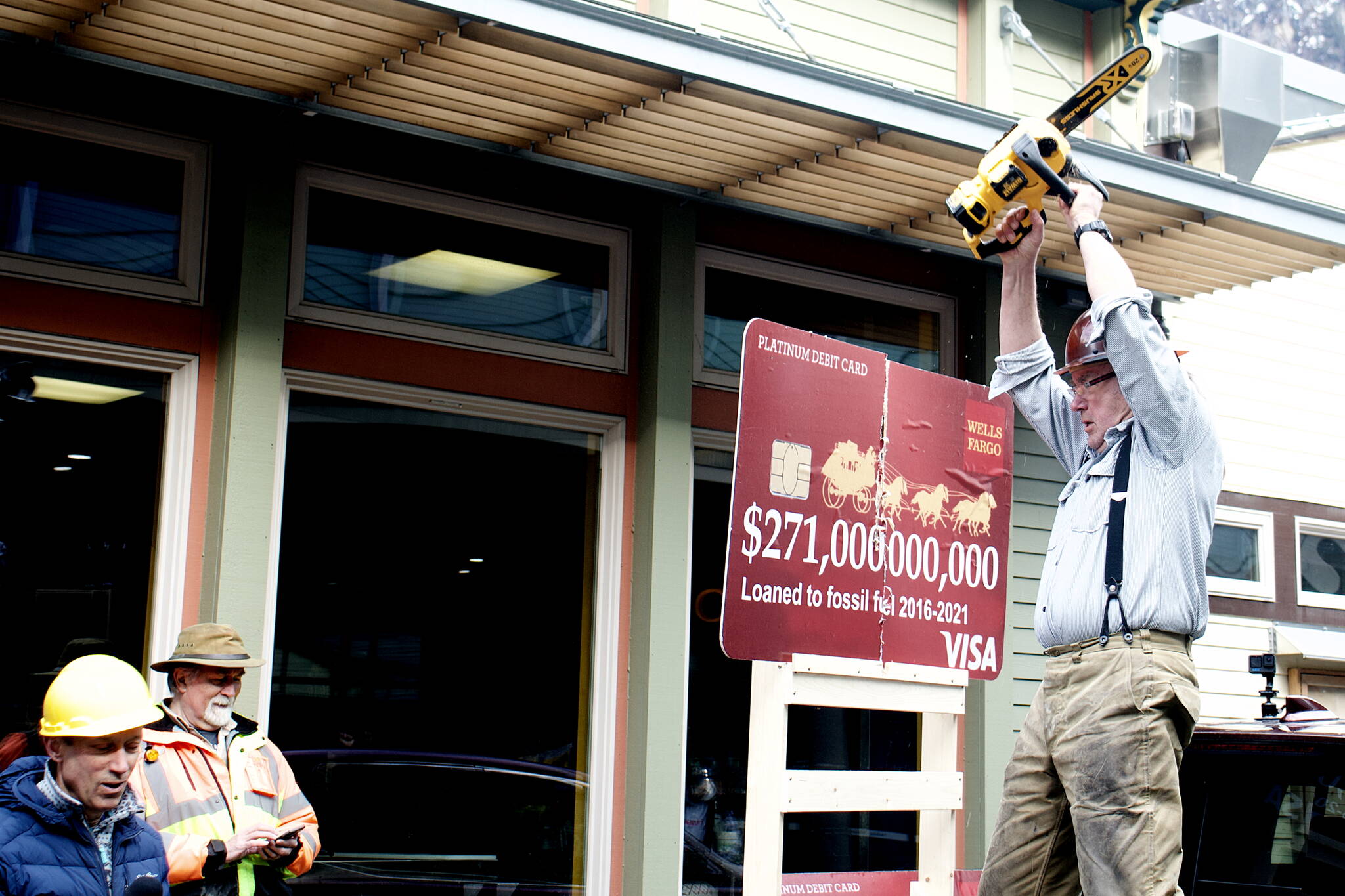
About 25 protesters declared themselves on the cutting edge of climate change activism Tuesday by cutting up three giant symbolic credit cards representing banks in Juneau they say are large funders of fossil fuel projects.
“Cut it out or we’ll cut it up” was the call-and-response chant of the organizers and protesters who gathered in front of the Wells Fargo branch in downtown Juneau at noon. Waving signs, playing Alaska Native drums and singing satirical lyrics before the cutting up of each card during the 30-minute protest, several speakers also talked about the local and broader impacts they’re seeing in recent years due to climate change.
“We have no more cultural security,” said Kashudoha Wanda Culp, a Hoonah resident and Tlingit activist.
Industrial activity — including 240 cruise ships visiting the 800-resident community least year — is robbing the area of traditional key assets such as clean water and habitats, she said.
The protest happened a day after the Intergovernmental Panel on Climate Change, which got alarming “final warning” global headlines with the issuance of the final part of its latest assessment report and was part of a nationwide annual event highlighting the role banks play by financing fossil fuel projects. The local event was organized by 350Juneau – Climate Action for Alaska, which has called for similar actions by banks at previous protests.
“These banks have moved in our direction,” said Doug Woodby, a 350Juneau member, citing pledges by some financial institutions to invest more in renewable resources and reduce their carbon footprints.
However, a news release from the protesters also claims that while many U.S. banks are making zero-carbon pledges by 2050, they do not have meaningful implementation policies. The release asserts four banks — Wells Fargo, JP Morgan Chase, Citi and Bank of America — provided more than one-fourth of the $4.6 trillion in financing by 60 banks for such projects between 2016 and 2021.
Questions about the protesters’ claims submitted to a national Wells Fargo spokesperson did not receive a reply Tuesday.
The protest coincides with recent Alaska headlines related to climate change issues, including the recent approval of the Willow oil field project opponents call a “climate bomb” whose emissions during its 30-year lifespan will be equal to 1.7 million passenger cars. On the conservation side, Alaska’s lawmakers are also debating proposals by Gov. Mike Dunleavy to fund a significant portion of its budget by entering the carbon credits market, which among other things could collect “offset” payments from polluters in exchange for leaving vast amounts of forest unharvested.
Woodby said that while some carbon market projects are proving beneficial, many of the large-scale ones are questionable in terms of positive results and he questions if Dunleavy’s plans to leave forests primarily in Alaska’s interior untouched will notably reduce emissions.
“Our boreal forests have forest fires frequently, which suggests they’ll burn before the hundred years are up,” Woodby said.
The new IPCC report, the sixth since it was established in 1988, has been published in multiple parts since August of 2021. It asserts temperatures are now 1.1 degree Celsius (2 degrees Fahrenheit) above pre-industrial levels and global greenhouse gas emissions will have to drop 60% by 2035 in order to prevent the 1.5C-degree level of warming that will cause irrevocable catastrophic damage.
But the report — which took hundreds of scientists worldwide eight years to complete — also states such damage is already occurring in the form of extreme storms, drought, wildfires and other impacts. A typhoon that devastated western Alaska last fall, for instance, is attributed by many scientists to climate change, as are crisis-level declines in many of the state’s fisheries.
Tuesday’s protest also comes in the wake of the recent collapse of Silicon Valley Bank, the second-largest bank failure in U.S. history, which organizers invoked as part of their cause.
“In light of the recent upheavals in the banking sector and the greater concentration of deposits in the large Wall Street banks, more than ever we need to demand that these banks use their power and funds responsibly,” stated a news release from 350Juneau. “The banks must manage both financial risks and climate risks; indeed climate risks are financial risks. We need safe and secure banking on a safe planet.”
The protest also coincided with a flurry of industrial activity a couple of blocks away at the Alaska State Capitol, including the release of the spring revenue forecast that is largely dependent on oil prices and production. A trio of officials leaving the building in the direction of the protesters as they gathered a few minutes before noon referred to opponents of drilling projects such as Willow with phrases like “extortion racket.”
Woodby acknowledged it may be tough to sway such policymakers.
“We are in a very red state,” he said “It’s very hard to move the needle in a red state, but we’re going to keep trying.”
But organizers did their best to ensure their destructive protest activities weren’t subject to attacks of hypocrisy from fossil fuel supporters.
“These (credit cards) are recycled from previous events and we’re using an electric chain saw,” Woodby said.
• Contact reporter Mark Sabbatini at mark.sabbatini@juneauempire.com.
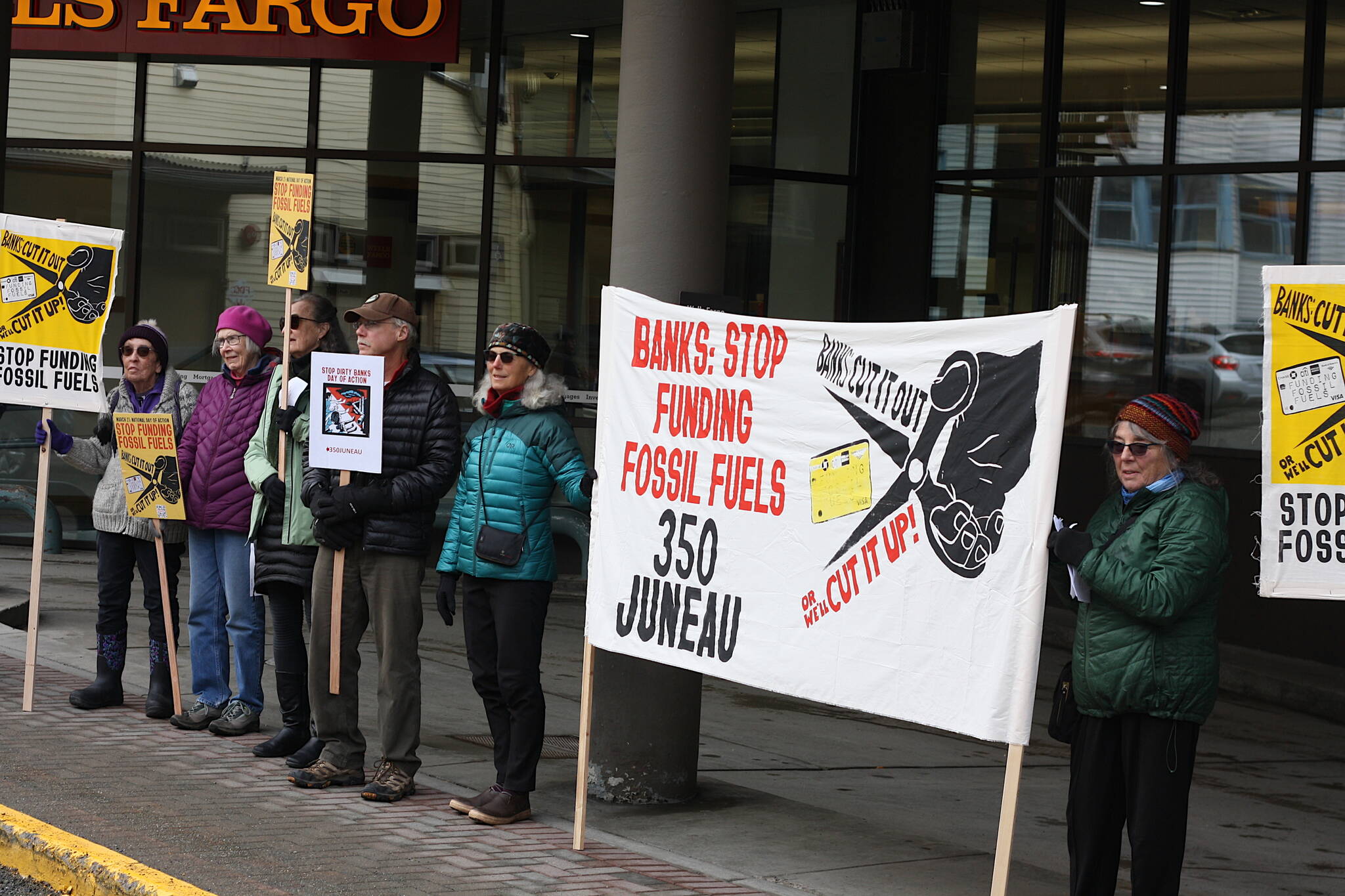
About 25 protesters gather outside the Wells Fargo branch in downtown Juneau at midday Tuesday, calling upon banks to halt financing of fossil fuel development projects. (Mark Sabbatini / Juneau Empire)
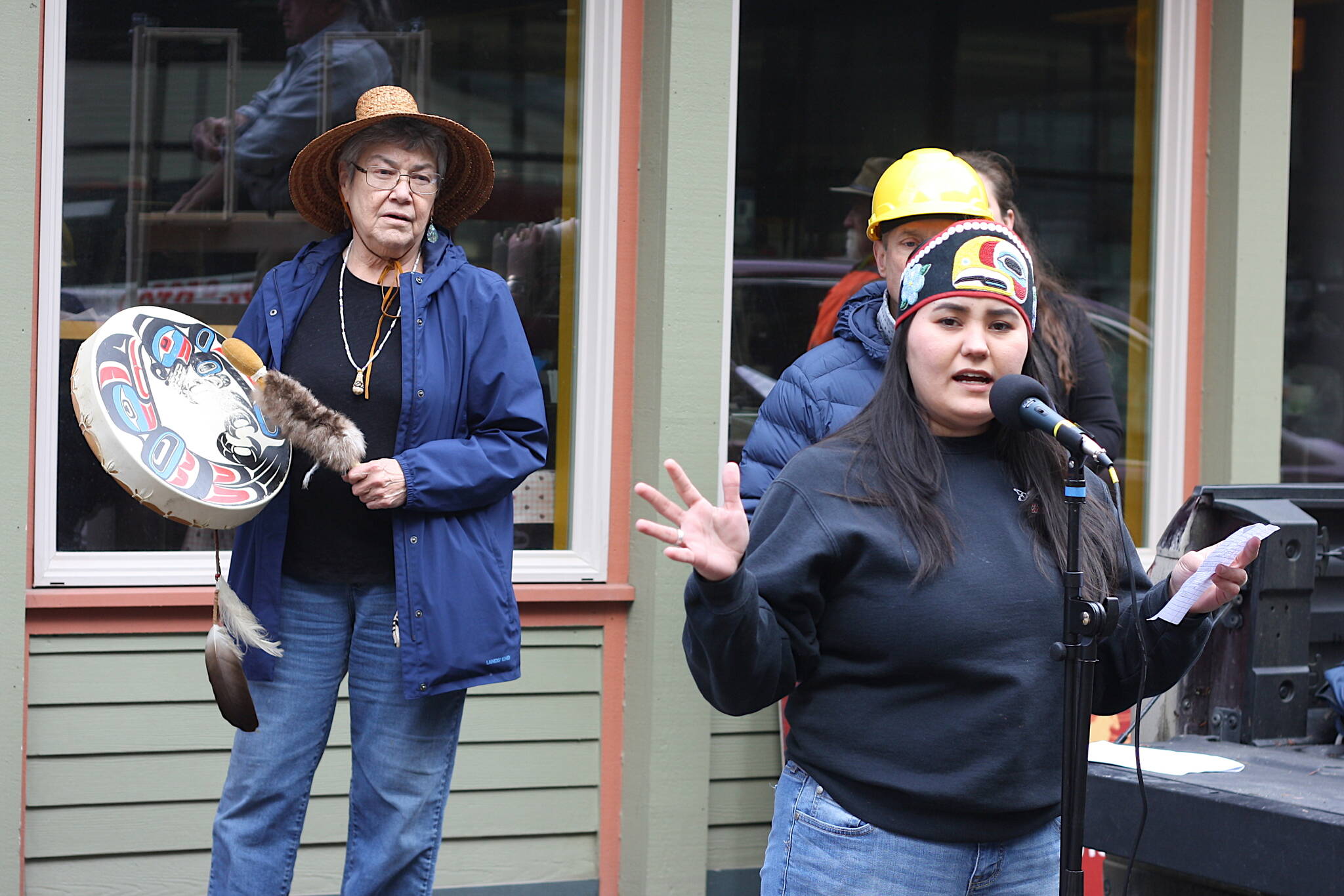
Rebekah Contreras, right, and Kashudoha Wanda Culp, both Hoonah residents, talk about the impacts of cruise ship tourism and other activities that are having climate and environmental impacts in their community during a climate change protest in downtown Juneau at midday Tuesday. (Mark Sabbatini / Juneau Empire)
