
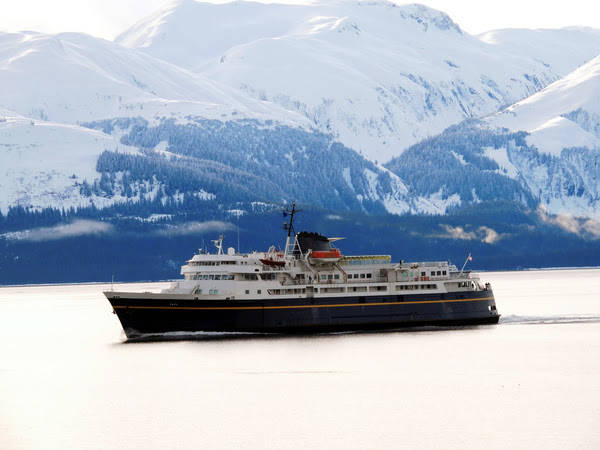
For the first time in six years, the Alaska Legislature has put a portion of the state’s budget, including funding for the Alaska Marine Highway System, on the fast track.
The Alaska House of Representatives may vote on House Bill 321, a $60 million appropriation bill to tide over several state agencies until the start of the state’s fiscal year on July 1. Fast-track budget bills are a way for lawmakers to push widely agreed, time-sensitive priorities, but they haven’t been as frequent since voters demanded lawmakers abide by a 90-day legislative session.
The Legislature always passes a supplemental budget intended to cope with differences between the budget passed the previous year and the reality on the ground. If the state spends more on wildfires, for example, it will need more money to cover those expenses.
A fast-track supplemental budget is intended to address needs that can’t wait until the normal supplemental budget passes.
“The fast-track is for stuff we need to get on the street before the end of session,” said Rep. Les Gara, D-Anchorage and vice chairman of the House Finance Committee.
This year, the bill includes $21 million for the Alaska Department of Corrections and $24 million for the Alaska Marine Highway System Fund.
Last year, lawmakers expected to use the Marine Highway fund to pay for the operations of the state ferry system, but that fund had been emptied by a previous legislative action and money that had been expected to refill it wasn’t available because Medicaid expenses were higher than expected.
Without that money, the state’s ferry system would all but shut down in April. That earned it a spot on the fast-track supplemental budget.
With the Department of Corrections, lawmakers expected the passage of a criminal justice reform bill would mean fewer people in prison, and thus lower expenses. That was true, but not to the degree that had been forecast. Instead of 1,250 fewer prisoners, there were 530 fewer. That meant the state closed only one prison instead of two.
The fast-track bill will spend $10.5 million on prison operations and another $10.3 million on prisoner health care costs (many of Alaska’s prisoners are addicted to drugs or alcohol and have chronic health care problems).
Another item in the bill is $5 million for investment management fees at the Alaska Permanent Fund Corporation. The funding is necessary because the fund’s value has increased so much that it requires more hands to manage. There’s also $454,000 for public defenders; that money is necessary to speed criminal cases through the court system.
The bill includes about $85 million in new spending but also includes more than $25 million in new revenue, leading to the $60 million total budget impact. Because HB 321 is a supplemental spending bill, it does not boost this year’s deficit; its spending shows up in the budget passed last year.
Speaking to reporters Tuesday morning, Rep. Paul Seaton, R-Homer and co-chairman of the House Finance Committee, said each of the items in the fast-track budget have been approved by the chairs of the House and Senate finance committees. Senate Finance Committee staff confirmed Seaton’s assertion.
If approved by the House, HB 321 will go to the Senate for consideration. If approved there, it will go to Gov. Bill Walker.
Lawmakers in both the House and the Senate have said they intend to complete a state budget in the first 90 days of the legislative session, and Seaton said the fast-track budget will help make that happen by reducing the number of items to be considered toward the end.
“It’s just a way of addressing them faster,” Seaton said.
• Contact reporter James Brooks at jbrooks@juneauempire.com or call 523-2258.
