
To address a surge in mental health problems among young Alaskans, the Alaska Senate is considering whether to allow 16- and 17-year-olds to seek therapy without their parents’ permission.
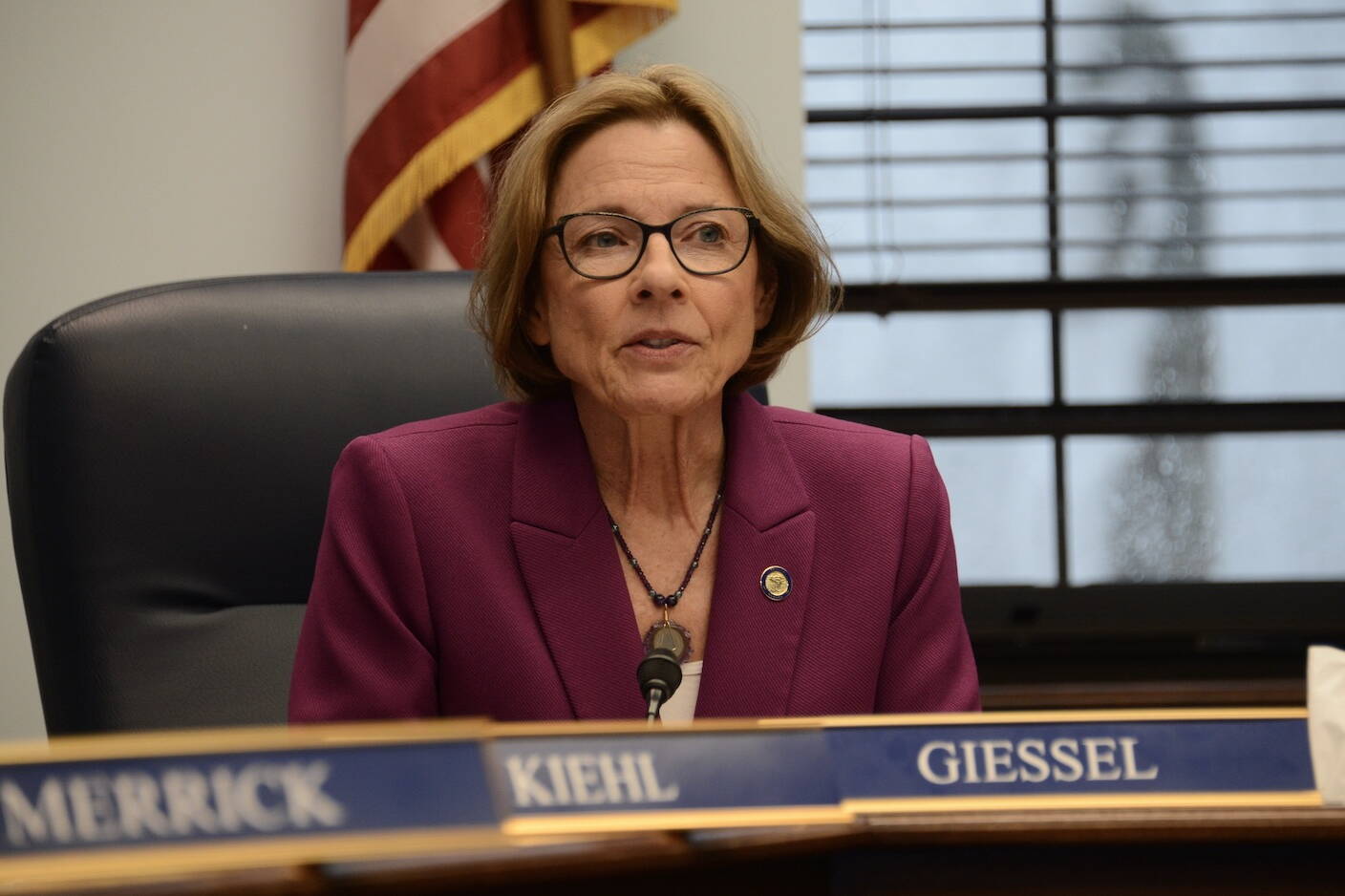
On Wednesday, the Senate is scheduled to vote on Senate Bill 240, a proposal introduced by Gov. Mike Dunleavy and amended by Senate Majority Leader Cathy Giessel, R-Anchorage.
Giessel’s amendment, adopted by a 3-2 vote in the Senate Health and Social Services Committee last month, would lower to 16 years old the age at which teens can get therapy — but not medication — without permission from an adult.
Thirty-three states allow residents younger than 18 to independently obtain mental health care, and four states — California, Illinois, Maryland and Nevada — allow it as young as 12.
“In real life, I’m an advanced nurse practitioner,” Giessel told members of the committee in March. “I volunteer in schools, in school-based clinics. In that venue, I screen for behavioral and mental health issues … It is astonishing to me the things that our young people today are having to deal with.”
Nationwide, surveys have found a surge in the number of teenagers and young adults experiencing mental health problems. A 2021 national survey by the Centers for Disease Control and Prevention — the latest available — found 42% of high school students “experienced persistent feelings of sadness or hopelessness,” almost double the figure from 10 years before.
More than one in five high school students said they considered attempting suicide.
Speaking about Alaska’s leading causes of death in 2022, state health data experts wrote, “Intentional Self-Harm (Suicide) was the LCOD for teens and young adults aged 15-24 years.”
Sen. Löki Tobin, D-Anchorage, said she supports the bill.
“We have heard from many of our students about the crisis they are experiencing, and that crisis stems from a lack of support for mental health services,” she said on Monday.
Giessel said that in her work at school-based clinics, she frequently hears requests from students for mental health care, but when they learn that they need a parent’s permission, “Commonly, the child’s face falls.”
Often, they’re being cared for by a grandparent, or a single parent working multiple jobs, Giessel said, and that permission never comes.
Over the past two years, Giessel said, she’s frequently heard from behavioral health organizations.
“Every one of those organizations, every one, has agreed that we need to lower the age of consent so that a 16-year-old would be able to say that yes, I need help, and I am consenting to those services,” she said.
Trevor Storrs, president and CEO of the Alaska Children’s Trust, is one of those organizations.
“We do support it. We support the concept, whether it goes with this bill or not,” Storrs said.
“We see this amendment strengthening behavioral health. We have heard from providers and parents and most specifically, youth, that one of the barriers accessing and asking for help is first having to go through parents.”
Not everyone likes the idea of lowering the age to independently receive therapy.
After Giessel’s amendment was adopted in committee, the Matanuska-Susitna Borough School District School Board passed a resolution opposing it.
The Mat-Su Frontiersman newspaper, which covered the local debate, reported that school board members were concerned about whether the idea sets a precedent for school districts offering services without parents’ approval.
“I’m glad this is being looked at, but the family and parents need to be involved,” said Sen. Mike Shower, R-Wasilla, speaking on Monday.
Giessel’s amendment does require some parental involvement: The bill says that after a teenager starts therapy, the behavioral or mental health professional “shall contact the minor’s parents and offer to provide services to the family,” unless doing so would clearly be harmful to the teenager.
The bill also forbids medication without parental approval and doesn’t apply to hospital treatment, only outpatient care.
Those clauses didn’t assuage all critics.
Sen. Shelley Hughes, R-Palmer, asked the Senate on Monday to consider a different version of the bill, one without Giessel’s amendment, but that failed on a 13-7 vote, setting up the amended proposal for a final Senate vote on Wednesday, and a successful vote would send the bill to the House for further work.
The bill doesn’t deal with other problems, including payment for services that teens might request. SB 240 was originally written to allow school districts to bill Medicaid if they treat a Medicaid-eligible student, but the state Department of Health said it believes that billing wouldn’t be possible without parental consent.
That suggests a student operating without that consent might have to navigate health care billing on their own, but the situation regarding payment is evolving and might change, a Giessel aide said.
• James Brooks is a longtime Alaska reporter, having previously worked at the Anchorage Daily News, Juneau Empire, Kodiak Mirror and Fairbanks Daily News-Miner. This article originally appeared online at alaskabeacon.com. Alaska Beacon, an affiliate of States Newsroom, is an independent, nonpartisan news organization focused on connecting Alaskans to their state government.
