
One winter day not long ago, a reporter from the Sacramento Bee called. She had read a story I wrote about life at 40 below in Fairbanks.
Meteorologists in the Sacramento office of the National Weather Service office had forecast a drop to 25 degrees in central California; people were concerned about their pipes freezing and fruit trees getting nipped.
“I want to talk with somebody who knows what it’s like to be really cold,” she said.
The reporter was intrigued when she heard about how we in Fairbanks plug in our cars to keep the battery warm and the oil liquid enough to allow the pistons to move. She gasped when she heard that our period of darkness was 18 hours. At the end of the call, she was fascinated that nearly 100,000 people live in such a place.
“People live there because they have high-paying jobs, like on the pipeline, right?”
“Yeah,” I said. “But people live here because it’s where they want to live, too.”
She went silent on the other end. Maybe she couldn’t comprehend. I sometimes wonder why tropical creatures live here myself. Especially now, in mid-December. We seem to have used up all our light.
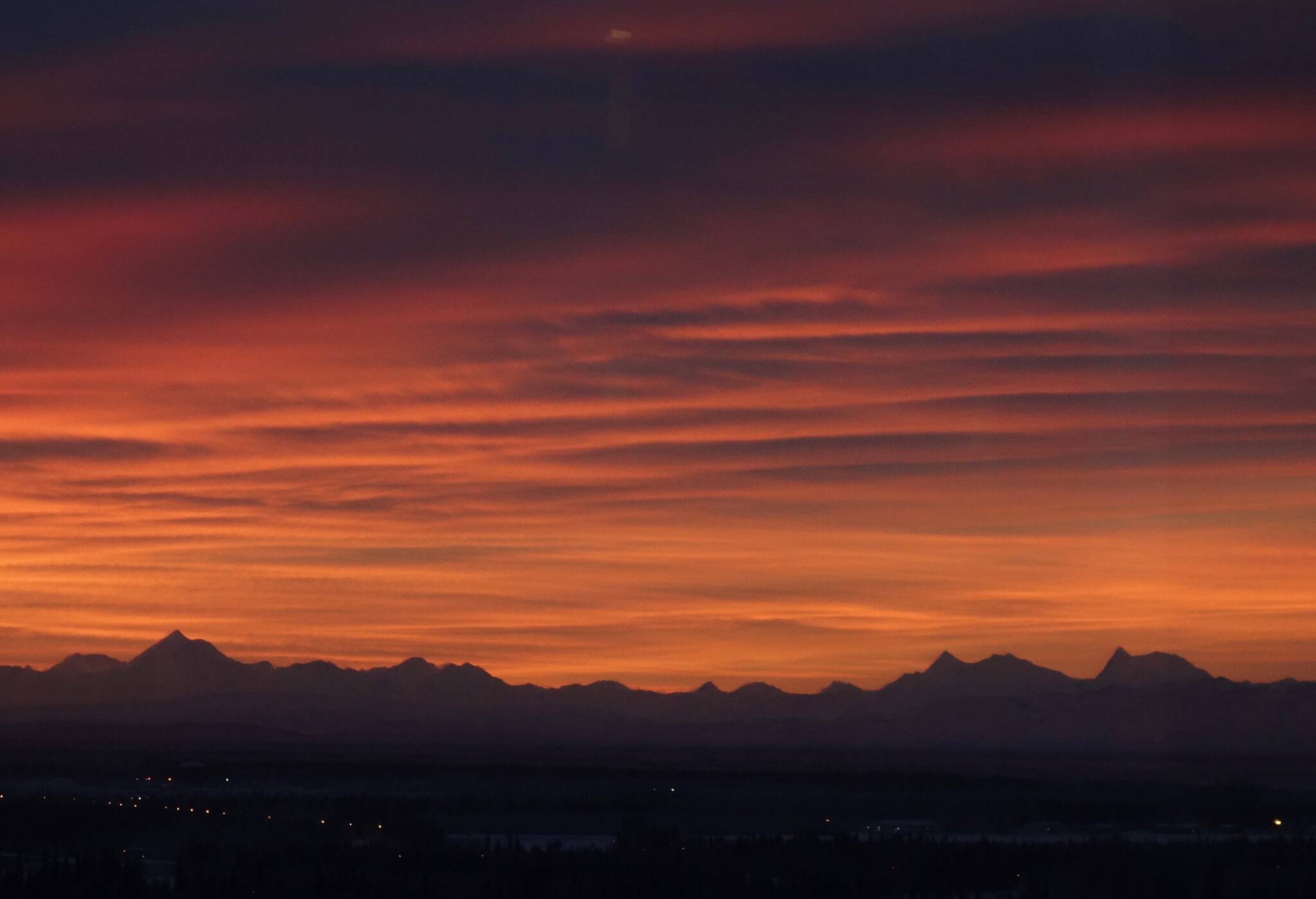
True, we never totally run out of the possibility of direct sunlight at this sub-Arctic location, 125 miles south of the Arctic Circle. That is unlike America’s farthest-north town of Utqiagvik, where the sun set Nov. 18 and won’t rise until Jan. 23. But you’d still better walk your dog by 3 p.m. here if you don’t want to use a headlamp.
Fairbanks solar panels, most of them covered with snow, are now not receiving the slightest tickle from the sun, which arcs just two fingers above the Alaska Range at solar noon. In fact, by 8:30 a.m. on Dec. 1, Tucson had received as much solar energy as Fairbanks will for the entire month, according to climatologist Brian Brettschneider.
We had a surplus of that energy last June, when we received more sunshine in one day than Tucson did in two. But the gradual tilt of the Earth away from the sun helped us squander six minutes of light each day by September. That has trickled to a four-minute daily loss by mid-December.
Here we now slowly spin, starved for vitamin D (which our skin magically converts from sunlight) and awaiting another turn.
That turn is winter solstice. In Alaska, we will nod farthest from the sun at the instant of 12:47 p.m. on Dec. 21.
Even then, we are not out of the shadowy boreal forest. On Dec. 22, we gain just 10 seconds of light. It will take until the spring equinox, March 20, 2023, until we equal Tucson and Sacramento in potential hours of daylight. From there, we will race ahead until summer solstice on June 21, when we will be unable to stay awake long enough to avoid squandering our riches.
• Since the late 1970s, the University of Alaska Fairbanks’ Geophysical Institute has provided this column free in cooperation with the UAF research community. Ned Rozell ned.rozell@alaska.edu is a science writer for the Geophysical Institute.
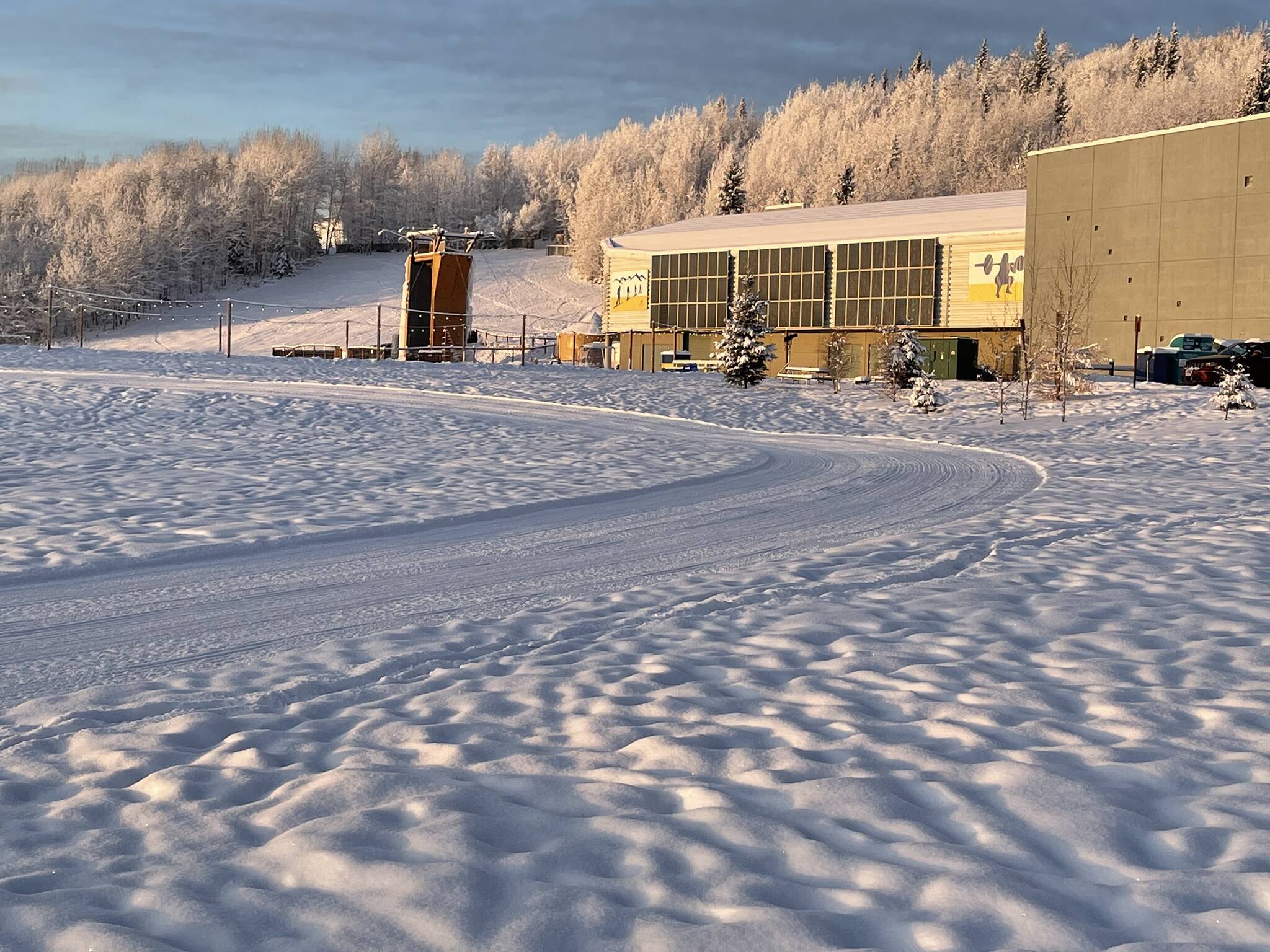
Courtesy Photo / Ned Rozell December sunshine lights a freshly groomed cross-country ski trail and the Student Recreation Center at the University of Alaska Fairbanks.
