
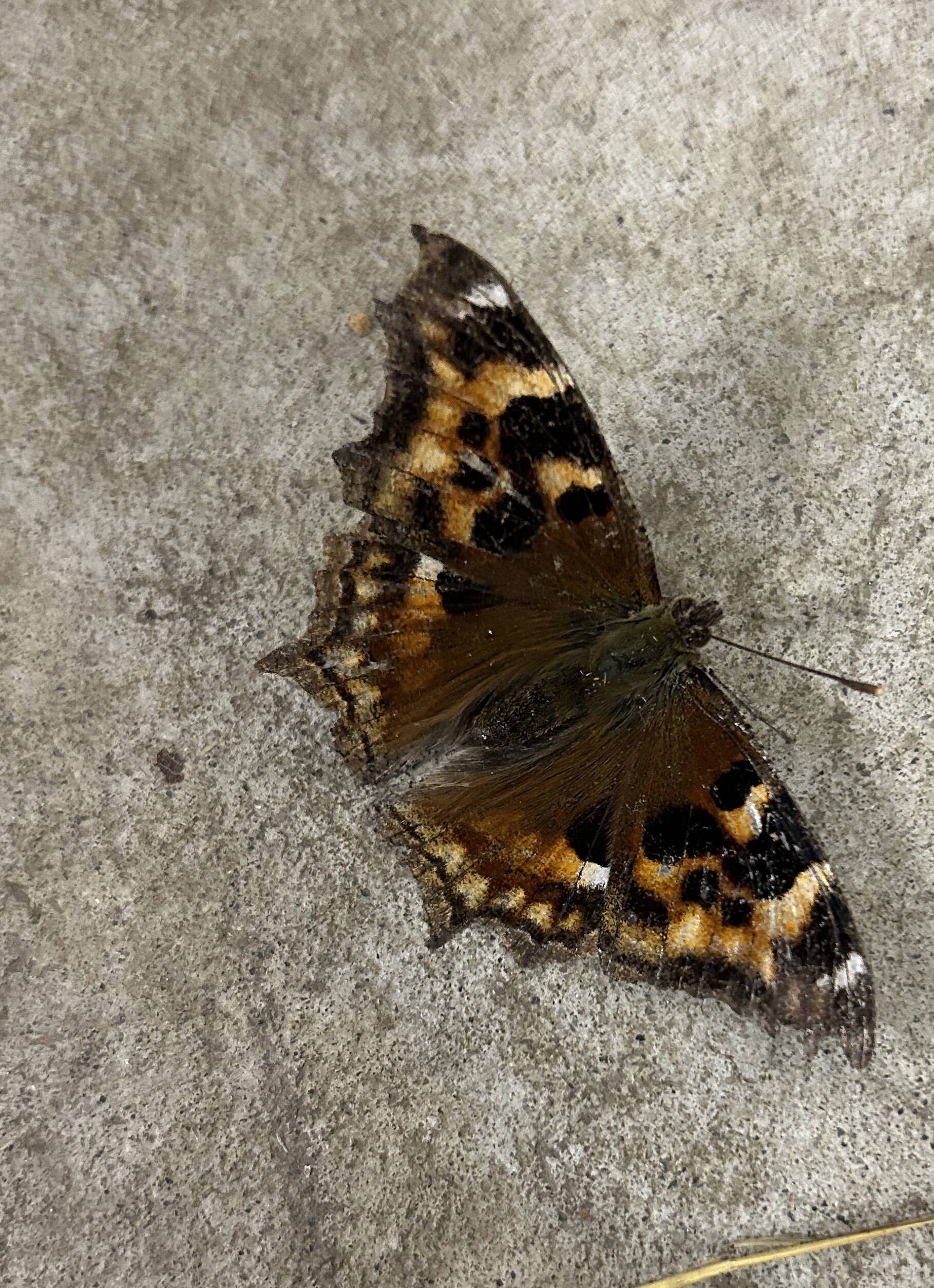
Rod Boyce of Two Rivers, Alaska, reports that he has noticed — at a time when the outside air’s temperature has not been above freezing since October — three butterflies living in his heated garage.
Though we in middle Alaska will be thinking a lot about insects in a few months, mosquitoes and their kin are far from our consciousness in midwinter. That is unless you are Derek Sikes, professor of entomology and curator of insects at the University of Alaska Museum of the North.
Sikes knows that we Alaskans — and everybody else who chooses to live indoors — are never alone. Mites and bedbugs and spiders are companions in our homes and workplaces.
On this very subject, Sikes and UAF undergraduate student Kyle Callegari wrote a paper in which they documented 77 types of insects and arachnids (a class including spiders) people found living inside the museum over the last few decades.
One of the most common creatures surviving uninvited (but also doing no harm) is a transparent booklouse the size of a pencil tip. The booklouse, which has not been found outdoors in Alaska, feeds on teensy bits of mold that forms on formerly living things, including food.
As we heat and cool buildings to our narrow range of comfort, insects and arachnids are there with us. Some, like certain species of cockroach, no longer live outside at all.
Insects have been with us as long as we have been around. Researchers found remains of head lice in an archaeological Yup’ik site in Nunalleq, in southwestern Alaska.
“Given that humans have been living in Alaska longer than any other region of North America,” Sikes wrote in the museum paper, “some of these populations of (human-dependent insects) may be the oldest on the continent.”
And it’s not only our buildings that are rich with insects. Sikes points out that your eyebrows are a jungle, home to normally harmless mites now feeding on natural oils and dead skin.
Back to Rod Boyce’s garage butterflies. They are Compton tortoiseshells the size of his palm. The conspicuous insects overwintered as adults (not as caterpillars) in a warm space they sought out in the fall. Their bodies probably reached a temperature warm enough to fool them into thinking spring had arrived.
The Compton tortoiseshell seems to be a recent arrival in Interior Alaska. Fairbanks entomologist Jim Kruse preserved a Compton tortoiseshell he found at the Bonanza Creek Experimental Forest south of Fairbanks in 2002.
After “hotfooting” it out there, Alaska’s butterfly expert the late Ken Philip was surprised to see dozens of them there the next summer. Prior to that trip, he had never seen one in the Interior.
“It’s a very strange feeling to see a large butterfly we’ve never seen before, and for it to be so common,” Philip said then.
Many Compton tortoiseshell adults are overwintering outside right now, waiting for the heat of springtime to liberate them. The far-north record for the species in Alaska was one found flying within a cabin near Fort Yukon, Sikes said. He saw one in Galena a few years back, so they seem to be spreading their wings throughout middle Alaska.
Is the Compton tortoiseshell a species that moved north because of a warming climate, or is its appearance due to something else?
“This species, like a few other butterflies, sometimes has population ‘eruptions’ in which a massive number move together,” Sikes said about the Compton tortoiseshell. “These have the potential to establish a breeding population, which apparently happened in Bonanza Creek and has since spread.”
• Since the late 1970s, the University of Alaska Fairbanks’ Geophysical Institute has provided this column free in cooperation with the UAF research community. Ned Rozell ned.rozell@alaska.edu is a science writer for the Geophysical Institute.
