
Glaciers worldwide are withering. Half of them will disappear by the end of this century, and much of the lost ice will vanish from mountains in Alaska, scientists say.
Authors of a recent cover story in the journal Science used high-performance computers to predict the fate of 215,547 glaciers on Earth. They excluded the great ice sheets of Greenland and Antarctica.
Their conclusions: Goodbye to Bird, Crow, Daisy, Dogshead, Polychrome, Prospect, Red, Rex, Shakespeare and Spoon glaciers by the year 2100. If not earlier.
True, most of us won’t be here in 77 years either, but warmer air temperatures will probably erase those Alaska glaciers and a few dozen more — including an Anchorage water source named Eklutna Glacier — before then.
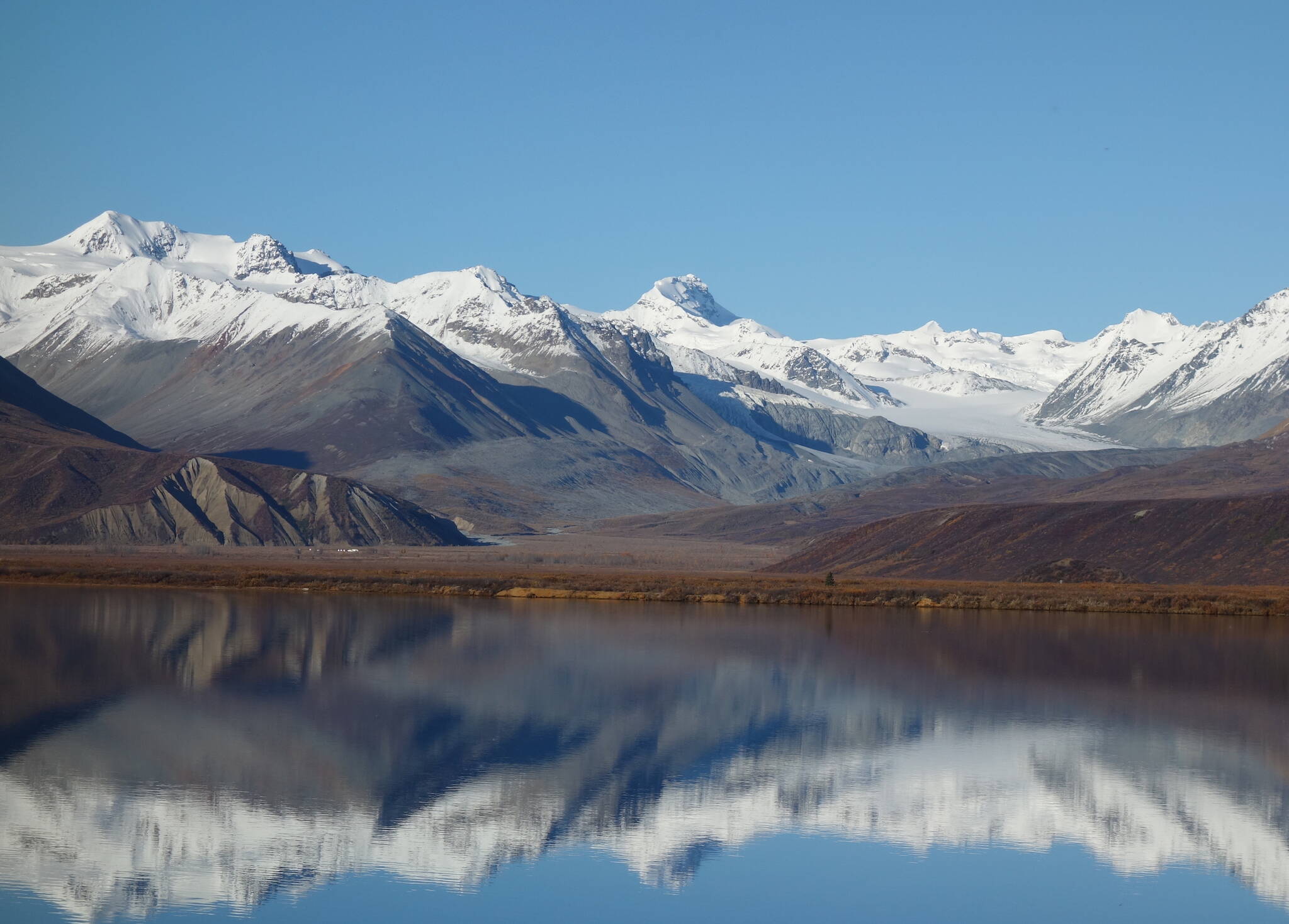
Gulkana Glacier, here seen from Summit Lake off the Richardson Highway, is shrinking back into the mountains of the Alaska Range. (Courtesy Photo / Ned Rozell)
UAF Geophysical Institute scientists including David Rounce (now at Carnegie Mellon University in Pittsburgh) and Regine Hock are the lead authors on the study.
Using supercomputers at UAF, they forecast the future of the world’s glaciers under a few different warming scenarios, each of which humanity is currently speeding past.
“Even under the very optimistic scenario corresponding to the goal of the Paris agreement, about half of the glaciers are expected to be lost by the end of the century,” Hock said.
In their data-set, the scientists looked at glaciers all over the world, in regions they called Arctic Canada North, Central Asia, and Russian Arctic, among a dozen others. Alaska is one of the places with the most ice to lose. Alaska’s glaciers have already shrunk in elevation three feet each year during the past two decades.
Alaska glaciers are huge contributors to global ice loss because there are so many of them, and a lot of them are huge. Many Alaska glaciers are also at low elevations where gravity conveyor-belts their ice into the melting zone.
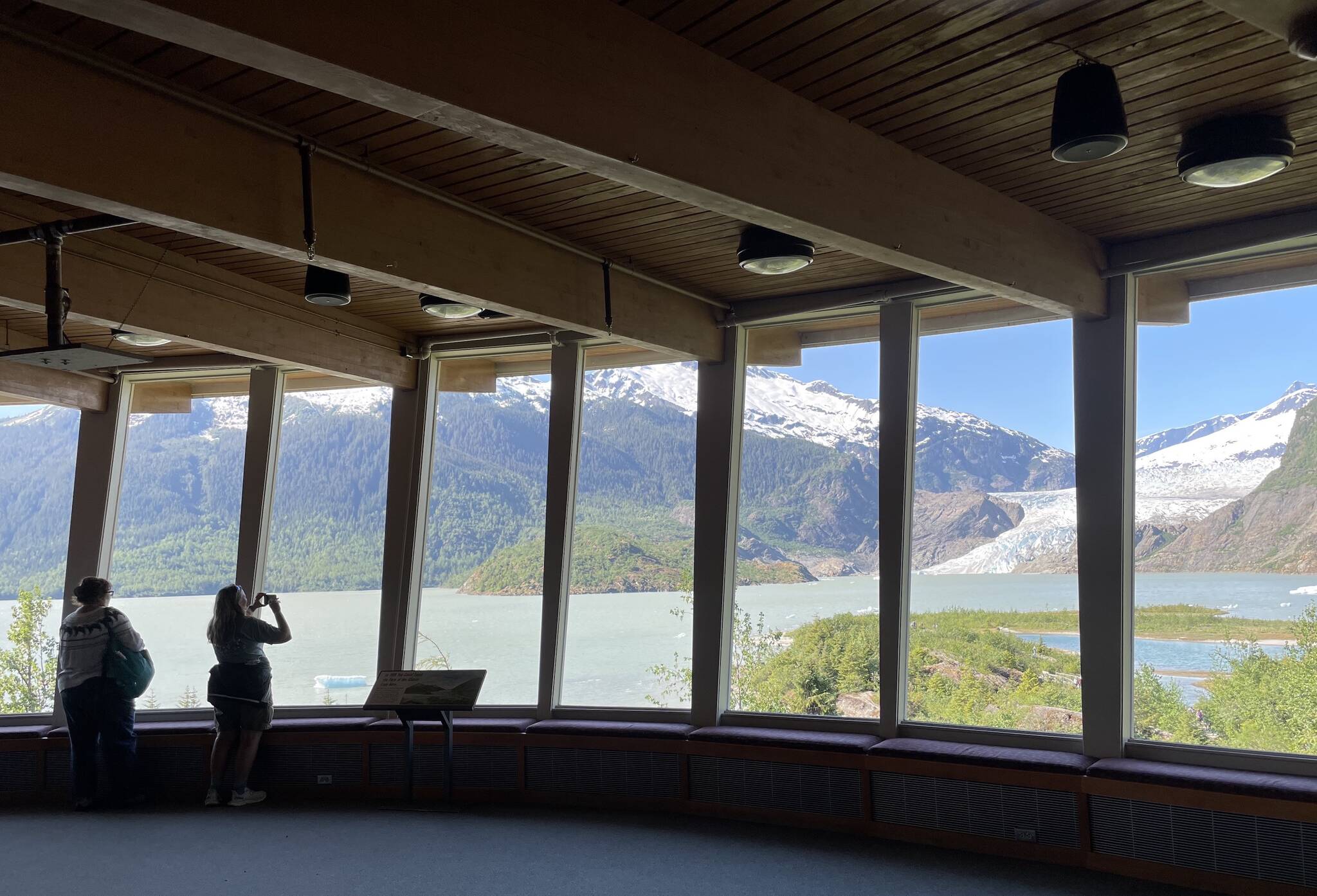
If the planet’s temperatures continue on this trajectory, favorite roadside glaciers will slip out of sight. This will likely play out in most Alaska glacier-towns, including Juneau, by the end of the century.
“Mendenhall Glacier may not disappear completely, but it will certainly retreat so much that it won´t be visible from the visitor center, even for the (most optimistic) scenario,” Hock said.
Aside from aesthetics, why does the disappearance of glacier ice matter? Hock said that all that fresh water now dumping into the Gulf of Alaska will affect ocean circulation and ecosystems.
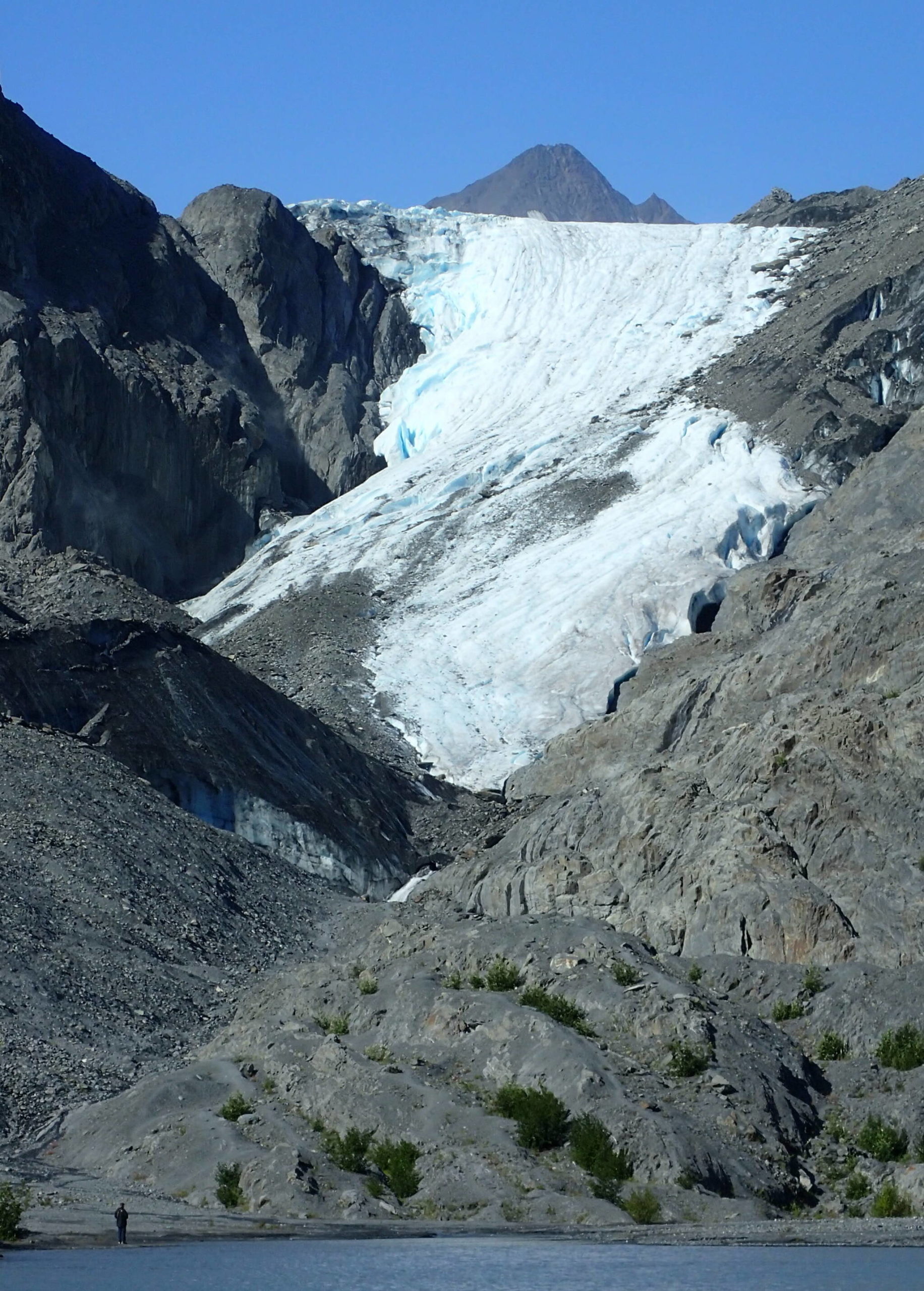
A visitor stands on the shore of a lake near Worthington Glacier, which is accessible by the Richardson Highway not far from Valdez. (Courtesy Photo / Ned Rozell)
Also, worldwide seas could rise half a foot from the loss of glacier ice by 2100.
Rounce compiled a list of more than 200 named Alaska glaciers that will be gone by the end of the century if the planet’s average yearly temperature rises 4 degrees C from what it was before the Industrial Revolution. That’s a lot of goodbyes.
•Since the late 1970s, the University of Alaska Fairbanks’ Geophysical Institute has provided this column free in cooperation with the UAF research community. Ned Rozell ned.rozell@alaska.edu is a science writer for the Geophysical Institute.
