
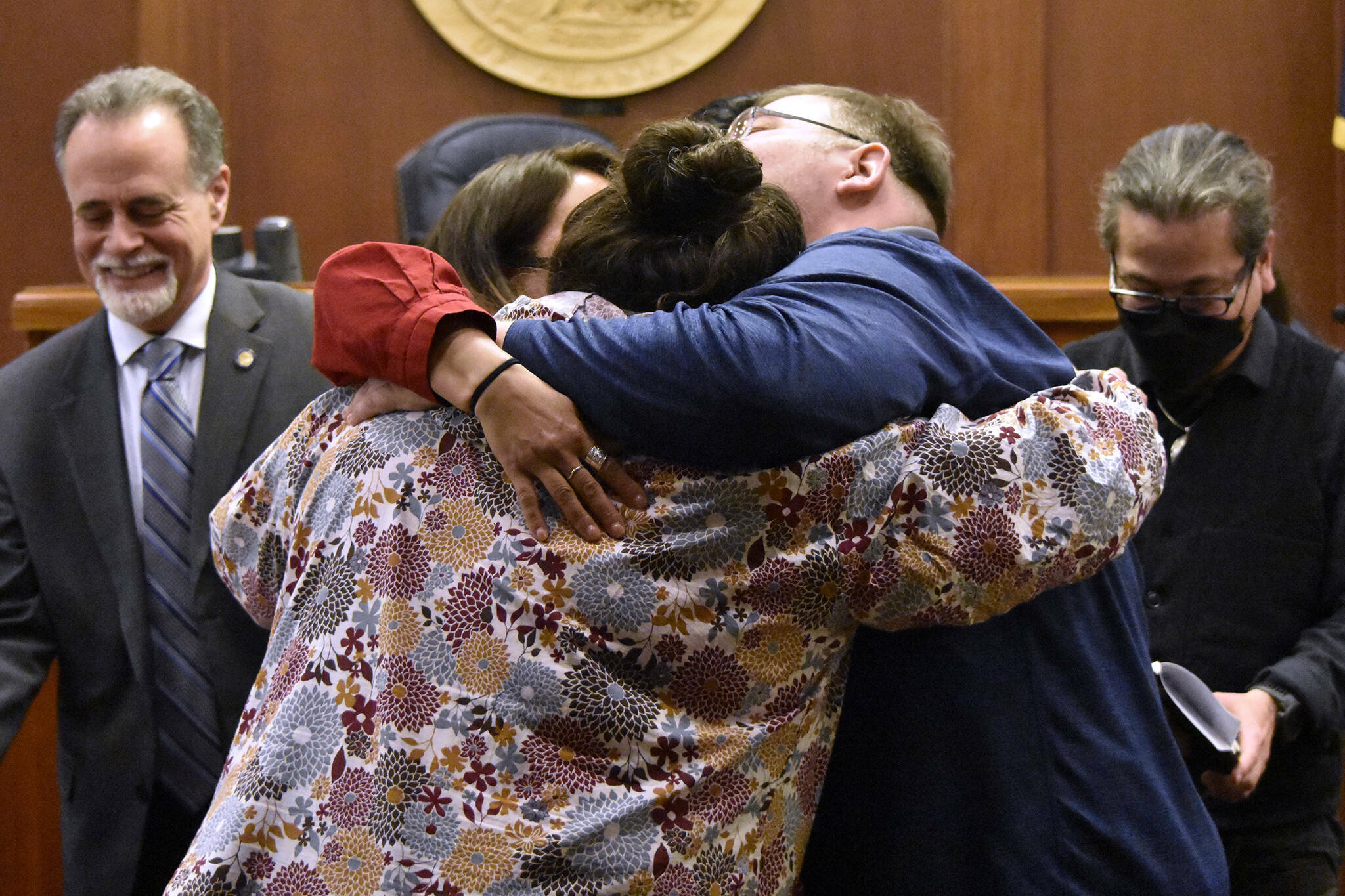
Alaska’s 229 federally recognized tribes will get a long-sought victory when a bill giving them state recognition is signed Thursday by Gov. Mike Dunleavy. But since Alaska Native leaders acknowledge the bill is essentially a symbolic gesture that doesn’t affect tribes’ legal relations with the state, what substantial differences do they envision in the future?
Some of the answers will likely come during the signing ceremony Alaska Native Heritage Center in Anchorage that is scheduled to last four hours – far longer than a typical bill signing — and be livestreamed by the Alaska Federation of Natives. Up to 200 tribal leaders and members, plus state lawmakers and other dignitaries are scheduled to attend, and the latter part of the event will feature Native leaders at the forefront of the recognition battle discussing its implications for individual tribes.
“It’s up to each tribe to determine what level they want to work with the state,” said ‘Wáahlaal Gidáak Barbara Blake, a Juneau Assembly member and one of the leaders of recent tribal recognition efforts, who plans to be at the ceremony.
News releases and other public statements in the days leading up to the bill signing refer to politically appealing concepts such as “a new era in Alaska state-tribal relations. And it is indeed is a political victory for Alaska Native lawmakers sponsoring the bill and similar efforts they say have been ongoing for decades, as well as for a governor facing a reelection campaign whose relations with Natives has been contentious at times.
While embracing government gestures of goodwill haven’t always worked out historically for Natives, in this case the optimism stems from the tone that would have been set if Dunleavy did not signed the bill.
“If the governor decides to veto this bill, he’s sending a very clear message to our Native peoples and communities: I do not support you,” said Richard Chalyee Éesh Peterson, president of the Central Council of the Tlingit & Haida Indian Tribes of Alaska, said in June.
The most obvious immediate impact is the signing of HB123, introduced in 2021 by Rep. Tiffany Zulkosky, D-Bethel, and passed during the final days of the 2022 legislative session, means a tribal recognition initiative will not appear on the November general election ballot. The initiative was launched when the bill’s future was in doubt and far beyond the necessary signatures to qualify for the ballot were turned in in January.
The state Department of Law declared in June the bill passed by the Alaska Legislature was similar enough to the initiative to legally remove it from the ballot. There are, however, some differences including a provision in the initiative that applies state recognition to all federally recognized tribes, while the bill limits it to in-state tribes.
That could become an issue in singular matters such as those involving the Indian Child Welfare Act if, say, a legal issue arose involving a Navajo child brought to Alaska by Native parents since the state would not recognize the Lower 48 tribe, Blake said.
But she said the overall significance of state recognition is Alaska tribes provide services for almost all of the state’s major cities as well as smaller individual communities and villages, and frequently there have been inconsistent and adversarial relationships between different tribes and governing administrations.
Blake has previously noted the state challenges tribes over jurisdictional disputes more than any other state in the U.S., generally losing and costing both sides money. Administration officials, for instance, in 2019 denied government-to-government consulting processes with two tribes regarding mining permits, stating such interactions are a federal process not applicable to the state.
“He would be going against his own law” filing lawsuits in such cases once the bill is signed, Blake said, “In lawsuits the states said tribes don’t qualify as sovereign…the state of Alaska cannot bring that same challenge if they agree in law tribes exist.”
In terms of consistency, Blake cited a tribal advisory council created in 2016 by former Gov. Bill Walker that was discontinued under Dunleavy.
“I know that other tribes have asked him to move that forward,” she said.
• Contact Mark Sabbatini at mark.sabbatini@juneauempire.com.
