
With the Alaska Marine Highway System in dire straights, Gov. Mike Dunleavy announced in January the formation of an AMHS Reshaping Work Group to come up with a long-term plan for a sustainable ferry system.
The governor’s administrative order creating the group called for two members of the Legislature, representatives from the Marine Transportation Advisory Board, Aviation Advisory Board, Roads and Highways Advisory Board, a representative from one of the three maritime unions who work on the ferries, and three members of the general public.
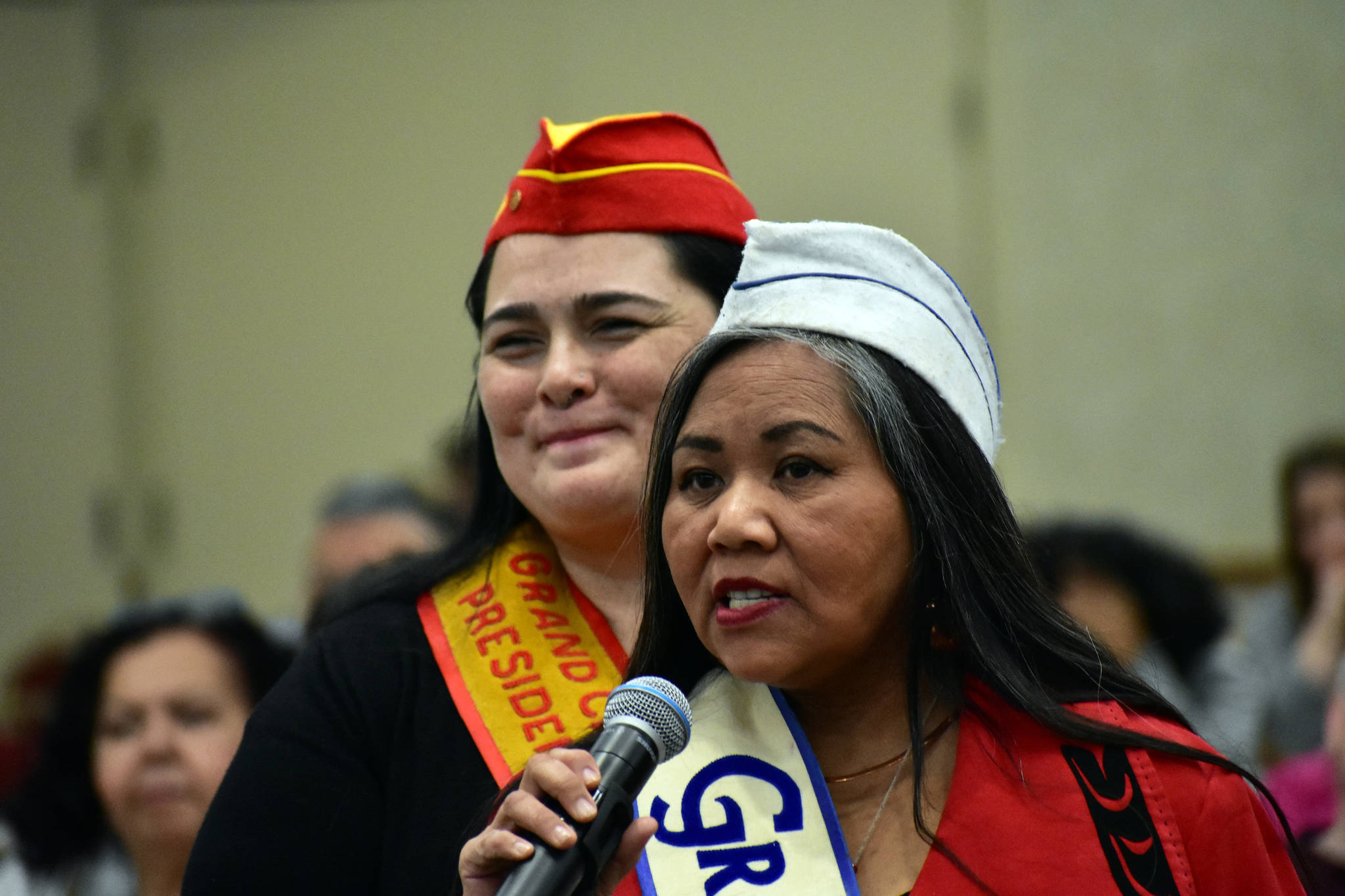
When members of the Alaska Native Brotherhood and Alaska Native Sisterhood heard about the work group, the thought they should have a seat at the table as well. As people who have lived in Alaska for thousands of years and who have traditionally used the state’s waterways for a number reasons, the cuts to AMHS are of significant importance to Alaska Native communities, ANS Grand President Paulette Moreno said.
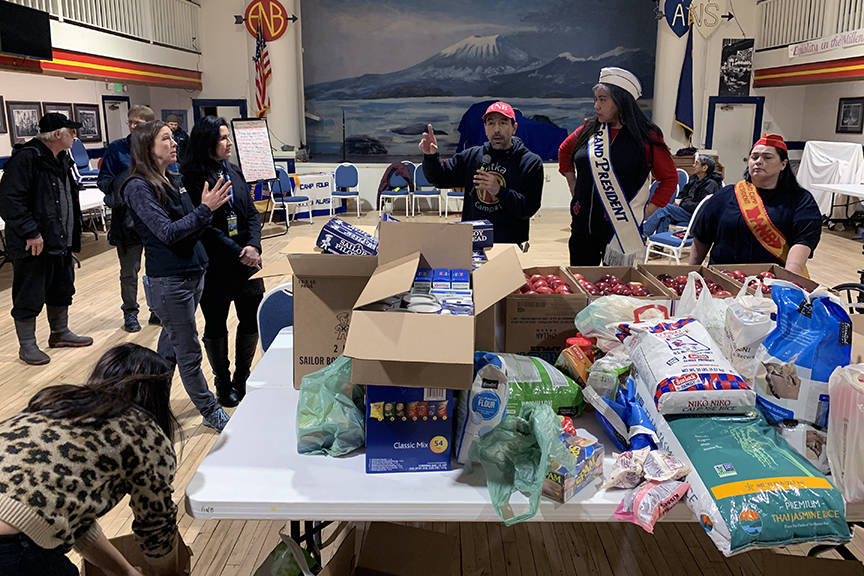
Donated food collected by community volunteers in Sitka being prepared for shipment to communities affected by lack of ferry service. (Courtesy photo | Cyndi Reeves)
“I understand the numbers and I know they’re working through the numbers,” Moreno said. “But there also is an effect on our cultural activities, on our spiritual strength, because of the decreases in ferry service.”
[Gov’s chief of staff says getting ferries back in service is a top priority]
For many communities in Southeast Alaska, the ferry system is the main link to the outside world. Travel by seaplane or private vessel is available, but is often too expensive and weather can keep planes grounded.
“Many of the towns and villages have a high percentage of Alaska Natives who live in their communities and use the ferry system as a vehicle to go to Koo.eex (memorial ceremonies), to go to ceremonies, to have that spiritual connection clan to clan, from people to people,” Moreno said. “That balance and those relationships are something that we value highly.”
A letter was sent to the Department of Transportation and the governor’s office on Tuesday, Feb. 18, requesting two seats on the work group be reserved for members of ANS/ANB. But by that time appointments to the work group had already been made and were announced at a press conference the next day.
“I just saw the letter yesterday. This group was put together weeks ago,” said John MacKinnon, Department of Transportation and Public Facilities Commission, when asked about the letter at the press conference. MacKinnon said the work group was meant to be balanced and include people from around the state.
“I’m just hearing about the letter now,” Dunleavy said at the same press conference. “Whatever it is, it’s not a snub to any group or any particular folks or location.”
He said that with nine members the group was already large enough and that as groups grow they tend to lose their effectiveness.
“We’re trying to get something that’s actually going to produce a product the state can get around and support going forward,” Dunleavy said.
Dunleavy spokesperson Jeff Turner said any future involvement by ANS/ANB would be up to Vice Adm. Tom Barrett whom the governor named as chair of the work group. Barrett could not immediately be reached for comment.
Moreno expressed her disappointment no seats would be allocated to her organization, and said she believed Alaska Natives should still be included as the process moves forward.
“We know what it feels like as a people when decisions are made for us,” Moreno said. “If you’re not invited to dinner, you’re probably on the menu.”
When Moreno spoke to the Empire Friday morning, she and several other community groups in Sitka were in the process of trying to get hundreds of pounds of donated food to Kake, Angoon and other Southeast communities affected by the lack of ferry service.
Moreno and other Alaska Native leaders have said the lack of consultation with tribal groups is the continuation of a long history of sidelining indigenous people.
“It’s important because the Alaska Native Brotherhood, Alaska Native Sisterhood, have a history of well over 100 years where we’ve worked with majority culture to have voting rights, wages, the Alaska Marine Highway System,” said Sasha Soboleff, Alaska Native Brotherhood executive committee member. “One of the things that they’ve recognized is the majority culture does not perceive there is much information outside of their own culture.”
[Alaska Native leaders say racial discrimination still affects communities]
The small communities in Southeast are the ones that have been the most penalized by the reduction in ferry service, Soboleff said, and the opinions of the people who live there have not generally been listened to. Many of these communities existed long before statehood, he said, and lack of connection affects much more than just economic factors.
“It provided an opportunity to actually physically meet community members, all of our communities are tied together,” Soboleff said. “Two moieties are permeated in every community. That means something in the Native positions. (The state) only perceive that we’re Alaskans, but we have a tie that most of the majority doesn’t have.”
The lack of that connection provided by the ferries Soboleff said, “begins to touch at the fabric of what Alaska Native culture is all about.”

Donated food bound for Kake being loaded onto a plane in Sitka. (Courtesy photo | Paulette Moreno)
The first meeting of the work group has not yet been scheduled but the governor’s administrative order requests its recommendations by Sept. 30. The group is meant to analyze the data collected in the Alaska Marine Highway reshaping study released by Northern Economics in January.
Moreno said she was pleased that at least the governor was aware of the request, and hoped ANS/ANB could somehow be involved as the reshaping process moves forward.
“The state of Alaska rolls out the red carpet for our guests from around the world, to display our ancestral homeland and their state,” Moreno said. “It is not just a choice to live in these communities. It is a cultural and spiritual relationship that we have had for time immemorial with the land and the sea and the beings thereof. People are living there because that is their home. This is their homeland.”
