
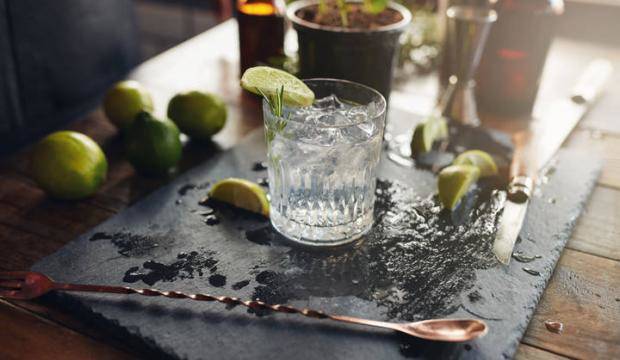
At last call, the Alaska Legislature saved a cocktail for you.
In the final hours of the 30th Alaska Legislature, Rep. Adam Wool, D-Fairbanks, offered an amendment that preserves the ability of the state’s craft distilleries to serve mixed drinks. Mixers must be nonalcoholic, but Wool’s amendment nullifies a legal ruling that would have canceled distilleries’ cocktails this summer.
“Honestly, this is an issue that we’ve been dealing with almost as long as we’ve had our doors open, and we’re excited to get back to business as usual,” said Brandon Howard of Amalga Distillery.
That wasn’t all: the Legislature also declined to cut serving sizes at breweries and distilleries across the state.
That decision came at a cost; the proposal to cut serving sizes died when a wider, broadly supported, reform of Alaska’s alcohol laws failed to pass before lawmakers adjourned early Sunday morning.
That reform, known as Senate Bill 76, was sponsored by Sen. Peter Micciche, R-Soldotna, and was the result of six years’ work by a group that includes people who serve alcohol and people who deal with the problems it causes.
“We hoped to see the bill pass. That was a little bit of a disappointment there at the end,” said Pete Hanson, director of the Alaska Cabaret, Hotel, Restaurant and Retailers Association.
At the start of the legislative session, SB 76 included a provision calling for alcohol manufacturers — breweries and distilleries — to sell 80 percent of their product wholesale. Breweries and distilleries vehemently protested. Most in the state make a significant proportion of their money from direct sales in “tasting rooms.”
“It was a dealbreaker for us. Not only would it harm current tasting rooms … it would be detrimental to the point of possibly shutting them down,” said Ryan MacKinster, director of the Brewers’ Guild of Alaska.
“We have about six breweries in planning, and all of them said that if this went through, it would limit their cash flow so much that they wouldn’t be able to open,” he said.
In response to those concerns, the Senate removed the 80/20 provision, but this started another problem.
Without the 80/20 provision, bar owners and liquor store owners felt the bill leaned too heavily away from their interests. In extensive testimony, they said tasting rooms as they exist today are blurring the line between what is a bar and what is a manufacturer. As they pointed out to lawmakers, most visitors to distilleries aren’t visiting tasting rooms with the intent of trying something and buying a bottle if they like it. They’re visiting to drink cocktails.
In response, the House Labor and Commerce Committee drafted an amendent to SB 76 that cut daily serving sizes by one-third. Instead of three 12-ounce glasses of beer per person, a brewery would be allowed to serve only two 12-ounce glasses. Instead of 3 ounces of liquor, a distillery would be able to pour 2 ounces of liquor. (Currently, a cocktail at a distillery contains 1.5 ounces of liquor, and there is a two-drink maximum.)
Distillers didn’t significantly protest the change, but brewers — and their fans — did. Legislators involved in the change said they received hundreds of emails and phone calls. It was more public comment, Wool said, than he received for proposed cuts to the Permanent Fund Dividend or a proposed increase to the budget of the University of Alaska.
Micciche heard the response as well, and on May 10, three days before the Legislature adjourned, he withdrew his request that SB 76 be considered by the House.
Hanson, MacKinster and Howard each said they agree with most of the ideas behind SB 76 and expect it to return next year.
In his May 10 press release, Micciche said that’s likely to be the case, though it may be broken into several smaller pieces of legislation instead of one, 112-page, document.
“SB 76 was never meant to be the last alcohol bill in the State of Alaska,” he wrote. “It is a critical starting point from which tougher conversations can be based on in separate, smaller, and more focused pieces of legislation in the future.”
The Legislature’s final hours also saw lawmakers grandfather the alcohol licenses of several small roadhouses and motels, and extend the operations of the Alcoholic Beverage Control Board through 2022.
• Contact reporter James Brooks at jbrooks@juneauempire.com or 523-2258.
