
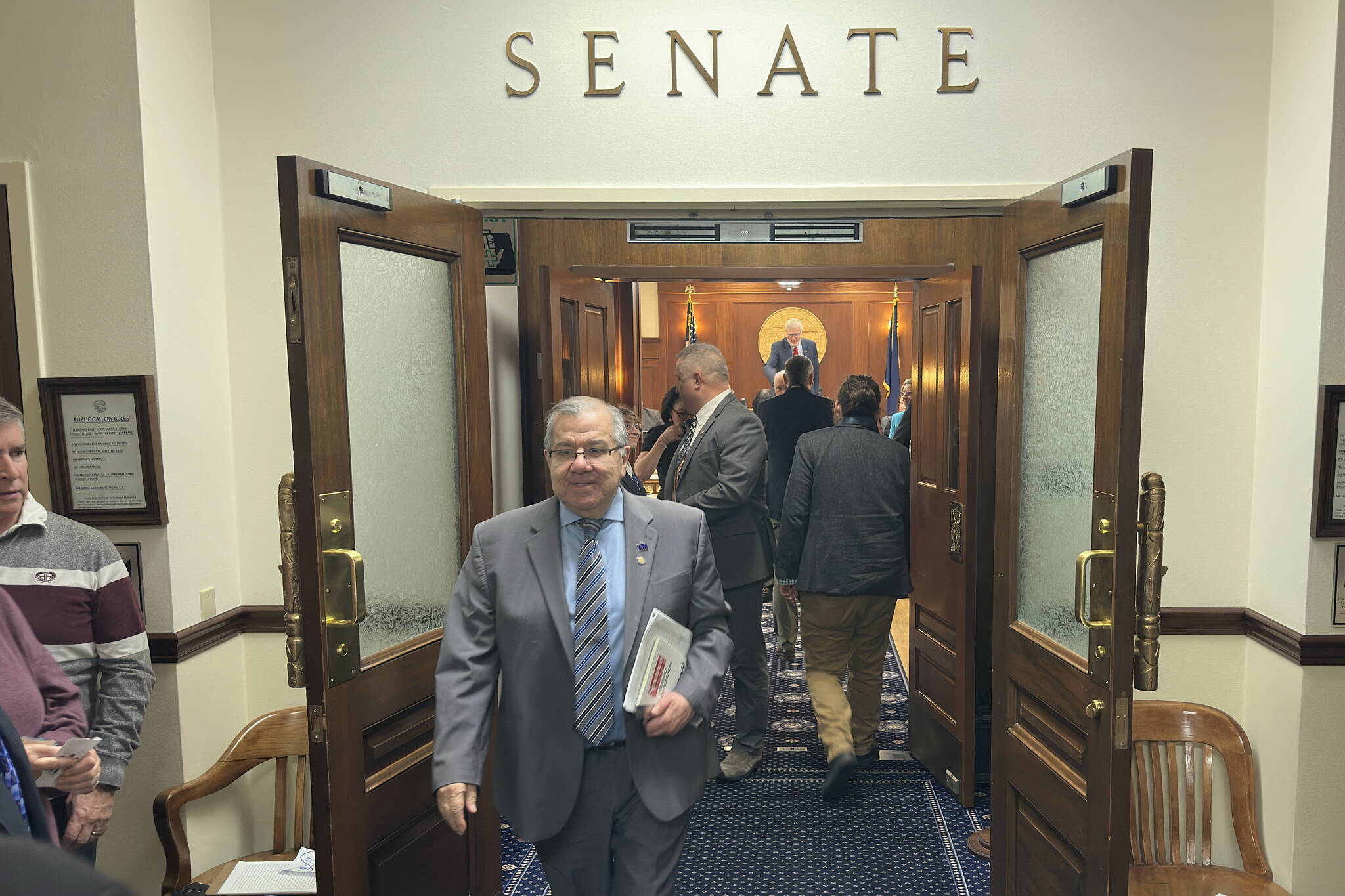
In what the Alaska Legislature’s longest-serving member called the “smoothest ending in 20 years” the Senate adjourned for the year at 1:20 p.m. Tuesday, followed by the House at 1:53 p.m. — nearly a day and a half before the mandatory deadline.
Sen. Lyman Hoffman (D-Bethel), first elected in 1987, characterized the final days at the Alaska State Capitol as a marked contrast to what he earlier called the most difficult year for balancing the budget he has experienced. Legislators on both sides of the aisle agreed that the state’s fiscal struggle actually ended up being responsible for the fast finish.
“There’s not much to talk about when you don’t have any money,” Senate President Gary Stevens (R-Kodiak) said during a post-adjournment press conference with other members of the bipartisan majority caucus. “If you look at the things we’ve accomplished — all the bills and all of the resolutions that we passed — they have a lot of resolutions here, I think more so than in past years. And you know it’s been in a tough spot where you can’t promise people projects. Nobody got a project in the capital budget.”
The total appropriations for next year’s capital improvement projects budget were cut by 48.5% compared to the current year, with none specifically for legislators’ individual districts.
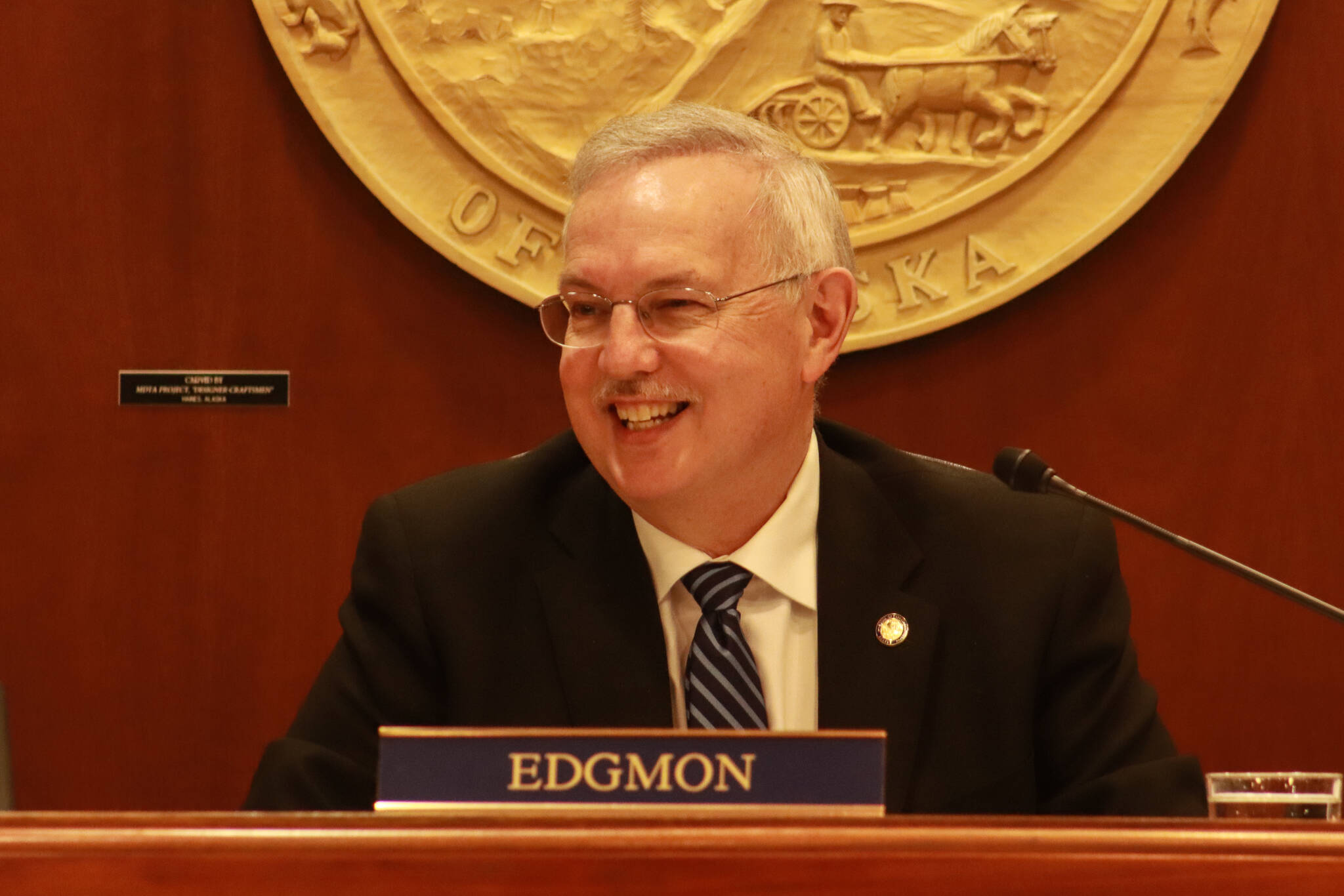
Rep. Bryce Edgmon (I-Dillingham) smiles before the adjournment of the Alaska Legislature on Tuesday, May 20, 2025. (Jasz Garrett / Juneau Empire)
Sen. Robert Myers (R-North Pole), part of the six-member Republican Senate minority, said, “we have set up our government for 50 years now to fight over the money. There’s no money to fight over.”
Key actions by lawmakers on the final day included a successful veto override of an education funding and policy bill, and passing a budget for next year that largely flat-funds agencies and provides a Permanent Fund dividend of $1,000.
Education was the top headline issue throughout most of the session and the override vote on House Bill 57 enacts — for now — a $700 increase in the $5,960 Base Student Allocation, the first major permanent hike since 2017. It also contains provisions such as more student transportation funding, easier authorization for new charter schools, and restrictions on students’ cell phone use.
“This is the largest single increase to education funding in state history,” said Rep. Andy Josephson (D-Anchorage), co-chair of the House Finance Committee, near the end of Tuesday’s House floor session. “The conference committee also passed a Permanent Fund dividend of $1,000. This amount is not variable based on the amount of eligible applicants or investment management fees, meaning that in October, every eligible Alaskan will receive exactly $1,000 as a PFD.”
However, Republican Gov. Mike Dunleavy stated he wanted additional policy provisions, such as allowing students to enroll in any district statewide. He told education leaders he will use a line-item veto for at least some of the extra BSA funds when he signs the bill for the state budget for the fiscal year that starts July 1.
That would leave districts without funds that many are already including in their budgets and legislators said a veto override vote on the budget bill — which would require 45 of 60 members to pass — is unlikely until the session reconvenes in January. Lawmakers also such a veto to funds in the statutory education funding formula would be unprecedented.
The budget battle got off to an audacious start when Dunleavy proposed a roughly $14 billion spending plan with a $1.5 billion deficit, due primarily to a so-called “full” PFD of about $3,800. It also contained no BSA increase, which meant districts would see a reduction next year due to a one-time $680 increase in effect this fiscal year.
The situation became bleaker due to a sharp drop in oil prices since January, which analysts have blamed largely on uncertainties created by Trump administration policies — resulting in lower revenue projections for the state this year and next. The House ended up trimming the PFD to an estimated $1,400 and a deficit of about $330 million (including a $79 million “unallocated cut” the governor was supposed to make to programs), and the Senate pared the budget back even further to the $1,000 dividend.
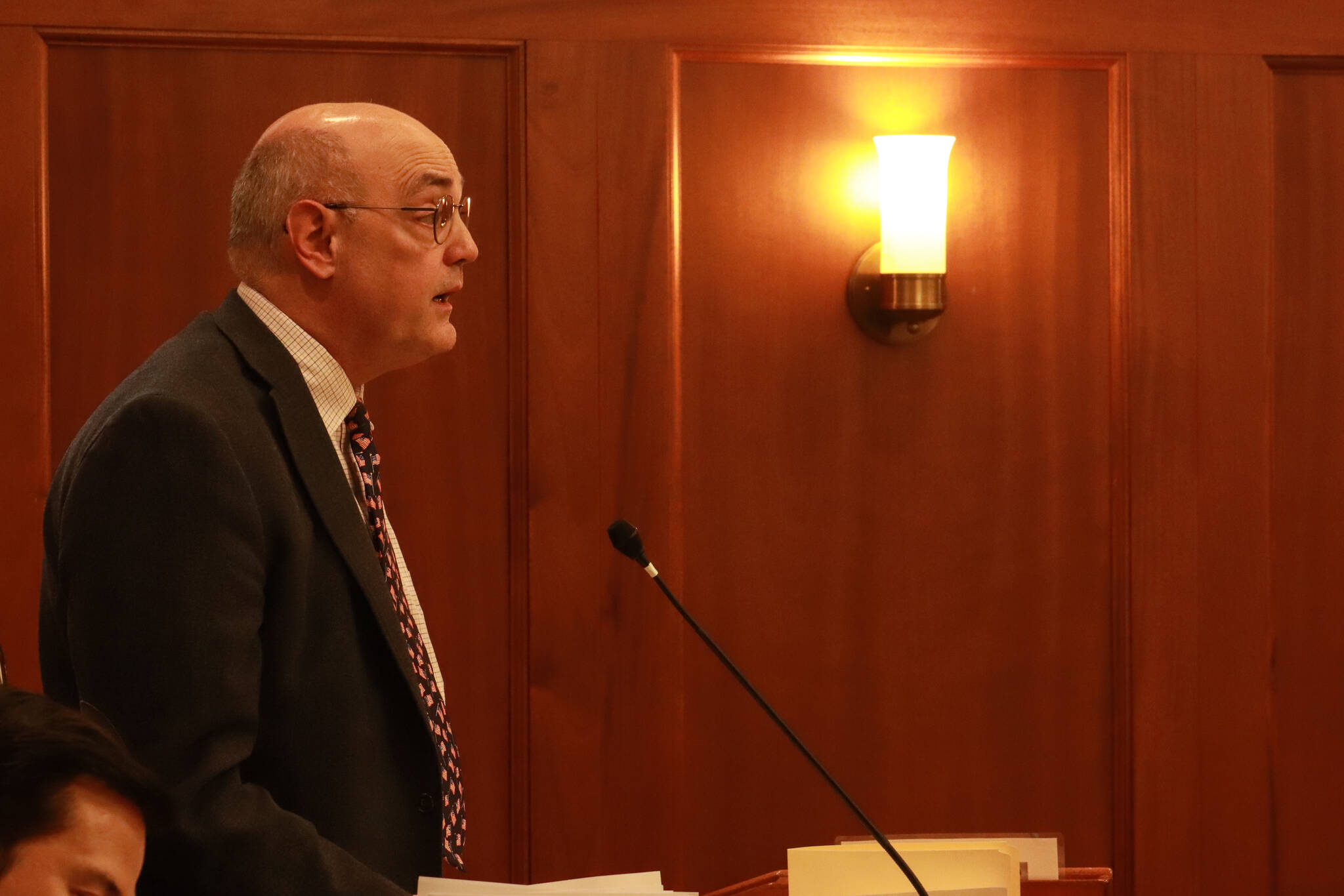
Rep. Andy Josephson (D-Anchorage) speaks about the budget on Tuesday, May 20, 2025. (Jasz Garrett / Juneau Empire)
The final compromise $12 billion budget passed Wednesday has an estimated surplus of $55 million if oil prices average their currently forecasted level of $68 a barrel, but will still break even if oil drops to $66.50 as some analysts have stated is possible.
Last year, the budget was balanced at $76 a barrel.
One issue that wasn’t resolved smoothly before passage on the final day was supplemental funding of about $200 million for the current year to cover extra and unanticipated costs. Among those costs are fire suppression, disaster relief, Medicaid federal match capture, ongoing litigation costs, supervisory standby pay, overtime costs for correctional officers, and interest earnings owed by the Division of Retiree and Benefits to retirees
The compromise budget called for tapping the $2.8 billion Constitutional Budget Reserve, which requires a three-fourths vote of the House and Senate. However, Republicans in the House minority failed to provide enough support, which triggered an alternate provision that uses $100 million from the Alaska Industrial Development and Export Authority — the state’s investment bank — and $100 million from the state’s higher education investment fund.
Other bills being sent to Dunleavy after final passage on Tuesday include:
• HB 174 expands the number of eligible grants from the Regional Education Attendance Area and Small Municipal School District (REAA) to provide more construction and maintenance funding for Mt. Edgecumbe High School in Sitka. The expansion would allow for major grants to build rural teacher housing.
• HB 31 exempts active commercial fishing vessels that have been documented by the U.S. Coast Guard from DMV registration. This bill also repeals the Derelict Prevention Program and transfers the funds to the general fund.
• HJR 31 is a joint resolution to urge the U.S. president and secretary of state to expedite visa approval and evacuation for Afghani citizens who assisted U.S. service members.
• SB 39 removes the exception for payday loans, subjecting them to the same 36% annual percentage rate cap as other small-dollar loans.
• SB 54 extends the term of the Board of Architects, Engineers, and Land Surveyors. The bill would give interior designers who work on public-use projects the option to register with the AELS, and updates language based on an internal audit.
• SB 137 extends the sunset date of the Boards of Direct-Entry Midwifery, Nursing, and Veterinary Examiners by six years and the Board of Parole by four years.
• SJR 17 recognizes the 50th anniversary of the Energy Council, a nonpartisan legislative energy policy forum.

Rep. Nellie Unangiq Jimmie (D-Toksook Bay) sings a Yup’ik prayer song to wish her colleagues safe travels home after the House adjourns on Tuesday, May 20, 2025. (Jasz Garrett / Juneau Empire)
The Legislature’s mandatory adjournment deadline was at the end of the day Wednesday. But legislators opted to postpone many contentious bills, such as election reform and reviving pensions for public employees, until the session reconvenes next January to continue the second half of the two-year session.
At the end of the House floor session, Rep. Nellie Unangiq Jimmie (D-Toksook Bay) sang a Yup’ik prayer song to wish her colleagues safe travels home. Rep. Genevieve Mina (D-Anchorage) recited a limerick for Rep. Ashley Carrick (D-Fairbanks), whose birthday is abou a week away.
In his concluding remarks, House Speaker Bryce Edgmon (I-Dillingham) offered thanks for what he called “just a simple day.”
“The Legislature very rarely gets its work done before the constitutionally mandated day — the 121st day of the session — and I want to thank all of you for a session well done, for several months of hard work, of good strong debate, but also civility and I hope we carry that into the next session. I wish you all the best summer (and) certainly a prosperous remainder of the year. And if I have my wish, I will not see you all until January — not here, that is.”
• Contact Mark Sabbatini at mark.sabbatini@juneauempire.com or (907) 957-2306. Contact Jasz Garrett at jasz.garrett@juneauempire.com or (907) 723-9356. Ellie Ruel can be contacted via editor@juneauempire.com.
