
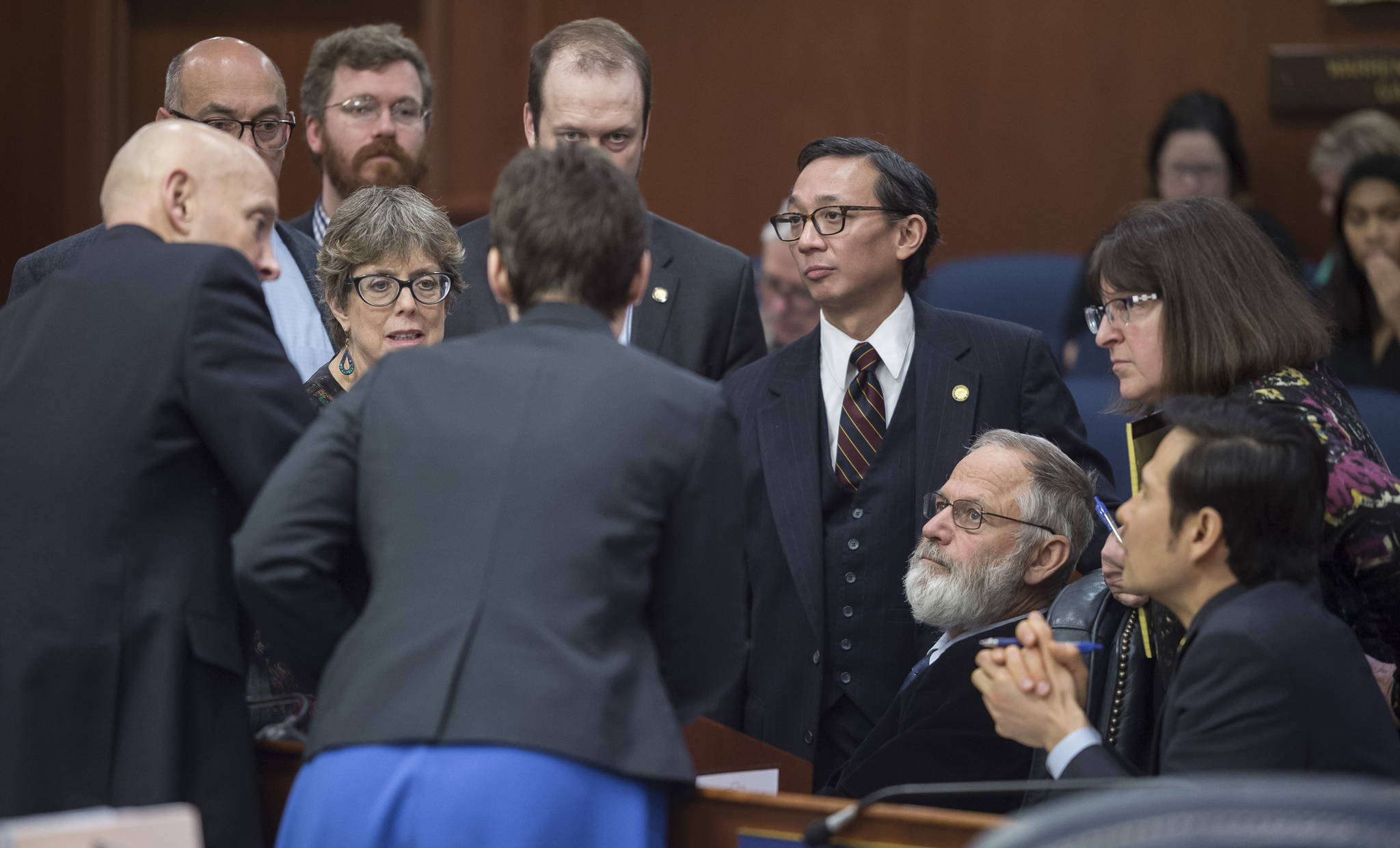
The Alaska House of Representatives has passed a bill to fund the state’s public schools in the next fiscal year but has failed to allocate the money to pay for it.
In a 20-16 vote, the House failed to reach the three-quarters supermajority needed to pull $1.2 billion from the state’s Constitutional Budget Reserve for schools in the next fiscal year. House Bill 287, the bill allocating the money, passed 33-3.
With that in mind, what can the bill do without money to spend?
“Not much,” said David Teal, director of the nonpartisan Legislative Finance Division. “Bottom line is, the failed CBR vote means that there’s no money appropriated.”
The votes on HB 287 came late Wednesday in a meeting of the House that started at 6 p.m.
Alaska has budget deficit of between $2.5 billion and $2.8 billion, depending on the estimates used to calculate the figure. The budget reserve is expected to contain only $2.2 billion when the new fiscal year starts July 1 and the new budget starts.
Had the supermajority approved spending from the budget reserve (and if the Senate and governor followed suit), the state’s education system would have been shielded from end-of-session debates about how to repair the deficit.
“We can address that situation now or we can wait and delay,” said Rep. Paul Seaton, R-Homer and the sponsor of the bill, as he urged a “yes” vote.
Seaton’s call was taken up by most of the members of the coalition that leads the House of Representatives, but minority Republicans opposed spending from the CBR, even as most approved of the idea behind the bill.
Because the reserve requires a supermajority of 30 votes in the 40-person house, it needs minority support. That makes it one of the few tools the minority can use to leverage support for other items.
“I believe this is a way to shut the minority voice out,” said Rep. Lora Reinbold, R-Eagle River.
“Are you willing to give up a political advantage to do right by our kids and right by our future?” asked Rep. Justin Parish, D-Juneau.
Rep. Sam Kito III, D-Juneau, was the only member of the House’s majority coalition to vote against spending from the budget reserve. Speaking after the vote, he said he believes the CBR has a role to play in a comprehensive budget solution for the state, and Wednesday’s decision isn’t a final action.
HB 287 was endorsed by school districts across the state as a means to avoid perennial struggles over their annual budgets. Most districts are required to submit their budgets to their local governments in March or April. In the past three years, the Legislature has failed to reach consensus on school funding in time for districts to set their budgets.
That has forced those districts to lowball their estimates as a precaution, leading to widespread temporary layoffs and uncertainty across the state.
HB 287 now goes to the Alaska Senate, which will decide its fate. If the Senate approves the bill and a funding source, it would return to the House. If the Senate fails to approve the bill, education funding would remain tied to the state’s omnibus budget bill, which is not expected to pass until the end of the Legislative session.
Senior benefits approved
In separate action Wednesday night, the Alaska House approved a bill extending the state’s senior benefits program until 2024.
House Bill 287, sponsored by Rep. Scott Kawasaki, D-Fairbanks, passed 39-1 with broad bipartisan support. The sole “no” vote came from Rep. David Eastman, R-Wasilla.
Without the bill, the program will end June 30.
The senior benefits program, which was enacted in 2007, has its roots in predecessor programs authorized by the Legislature as far back as 1972. Each month, it distributes cash payments to Alaskans older than 65 who earn up to 175 percent of the federal poverty line.
Payments are between $76 per month and $250 per month, based upon financial need. About 12,000 Alaskans receive money under the program, according to state figures.
“What this boils down to, really, is we want grandparents to be able to stay in Alaska,” Kawasaki said.
The bill advances to the Senate.
• Contact reporter James Brooks at james.k.brooks@juneauempire.com or call 523-2258.
