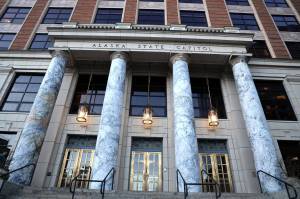
Airport-style security screening coming soon to Alaska State Capitol after Legislative Council’s OK
Published 9:30 pm Sunday, March 30, 2025
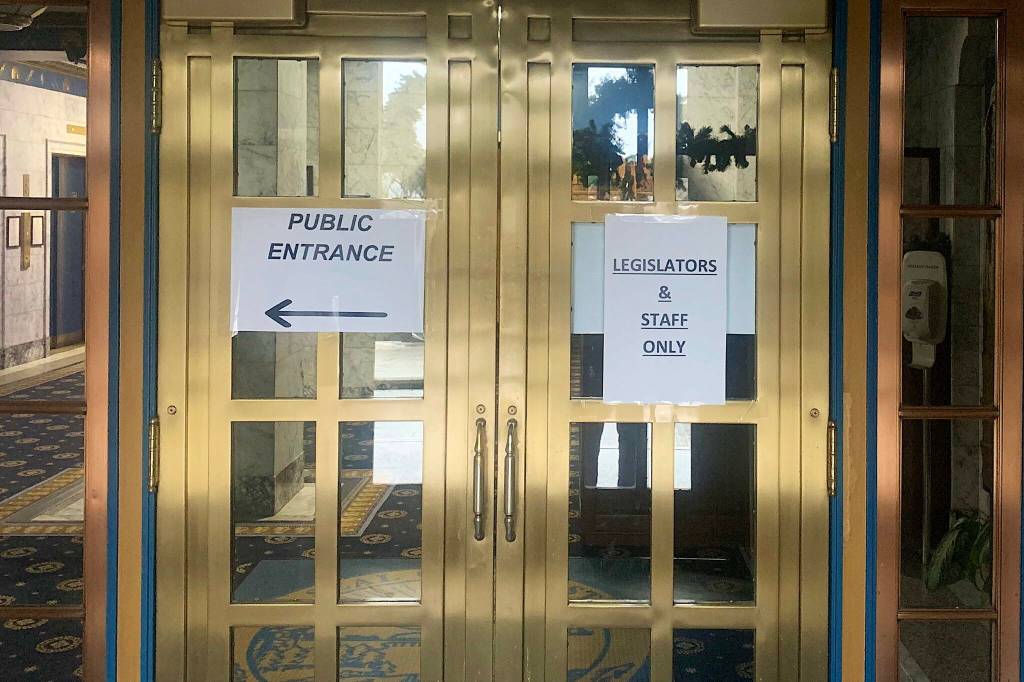
New airport-style security measures for the Alaska State Capitol when the Alaska Legislature is in session were approved Monday night by the Legislative Council, meaning most people other than legislators, family and their staff will need to be screened as they enter a designated door at the front of the building.
“We have to set up the equipment (and) we have to award a contract first,” Rep. Sara Hannan, a Juneau Democrat who chairs the council, said in an interview after the meeting. “It will probably be a couple weeks before it’s all in place.”
The policy will not be in place when the Legislature is not in session — a period stretching from May until January unless a special session is called, Hannan said.
Only seven states, including Alaska, weren’t using any security screening in their capitols as of February of 2024, according to the National Conference of State Legislatures. A series of security recommendations were made last year to lawmakers and the Legislative Affairs Agency following a security assessment by the U.S. Department of Homeland Security, which performs such assessments at facilities nationwide.
“I, as Legislative Council chair, have had increasing concerns shared with me from a variety of offices and staff about people in the building loitering, intimidating, creating an uncomfortable (and) perhaps threatening work environment,” Hannan said when asked why she voted in favor of the new screening procedures.
Hannan said the new measures are not related to protests and other political activity outside the Capitol. A higher-than-normal number of protests have occurred since President Donald Trump was sworn in one day before the beginning of this year’s session. Republican Gov. Mike Dunleavy has reintroduced a bill this session that would penalize unpermitted public protests as felonies.
The Legislative Council voted 9-4 to implement the policy as soon as practically feasible. Among those voting no was Sen. Jesse Kiehl, a Juneau Democrat who expressed concerns about the difficulties it will place on people such as groups of students and seniors trying to access the Capitol.
“I continue to think that if there was a need for more security there were measures short of a full-TSA that could have been an enhancement, but didn’t go overboard,” he said after the meeting. ” So that’s my thing. I remain concerned about big groups of Alaskans coming in (and) weather, but we took the vote and so we’ll get it implemented.”
However, Kiehl said, security screenings that check for weapons and explosives won’t keep people with potentially troublesome attitudes out of the Capitol.
“An x-ray and a metal detector do nothing about attitude,” he said. “They do nothing about about tone of voice or volume. They do nothing about discomfort, so the simple fact is that if people are going to behave badly we’re still going to call the well-trained human beings in Capitol security.”
Some conservative legislators immediately denounced the policy, with Rep. Kevin McCabe issuing a statement calling it “a disappointing turn of events” by a council “dominated by liberal Democrats.”
“It’s a real shame to see this historical treasure bow to a liberal agenda that priortizes control over community,” he said in the prepared statement.
Of the 13 council members voting, 12 were members of the bipartisan majorities in the House and Senate that each have a majority of Democrats in their coalitions. Of the nine votes to approve the policy, three were by Democrats, four by Republicans and two by independents — majority caucuses. The dissenting votes were cast by two Democrats and two Republicans, including the one minority caucus member participating in the vote.
The new policy states:
• Visitors must enter through the front doors of the Capitol Building.
• All visitors will be screened by a walk-through magnetometer. However, visitors may opt-out of the walk-through magnetometer and be screened by a handheld magnetometer or a physical pat-down performed by a legislative security officer or contracted security personnel.
• All carried items will be screened by an X-ray device.
• A person who escorts or allows a visitor in the Capitol through a door other than the main entrance must escort the visitor to the lobby of the Capitol Building for standard entry screening.
Increasing security measures at the Capitol has been discussed by legislators for the past couple of years and the Legislative Affairs Agency published a notice last October seeking unarmed security screening personnel in anticipation of enacting a screening policy. However, the Legislative Council tabled the proposal on Dec. 12 due to what Kiehl said at the time were “a lot of question marks” about the practical impacts and limits placed on access by the general public.
One key change from the previous policy that Kiehl said he favors is an amendment adopted during Monday’s meeting that eliminates a badge system with different colors for different types of people in the building such as legislators, lobbyists, media and staff.
Instead, the security screening exemptions are granted to people with electronic access to the building, generally with a key fob or similar device. People able to get such access besides legislators and staff members are family members of lawmakers and credentialed members of the media renting desks in the Capitol press room. Law enforcement officers and first responders are also exempt from screening.
• Contact Mark Sabbatini at mark.sabbatini@juneauempire.com or (907) 957-2306.