
With a piece of good luck, despite the forecast of yet more rain, blue skies appeared one morning in mid-September. That called for a walk in the sun, so a friend and I headed for the Boy Scout Beach trail to see what we could see. We were not disappointed.
Wrens flitted across the wooded trail and fossicked in the brush; one even ventured out into a thick stand of cow parsnip in the meadow. A bunch of thrushes hastened from the meadow edge into the trees. There were eagles of all ages everywhere — in the trees, on snags in the river, and overhead.
In the big flat meadow, shorebirds had left tracks in the mud of the trail. The sandy slough gave us clear, parallel footprints of an otter and a small bear looking as if they had walked side by side. A few plants of beach lovage had been dug up, presumably by a bear. We often see bear digs in this area, but I have to wonder if the lovage population can persist, if the bears keep taking the roots. Can it regenerate from fragments?
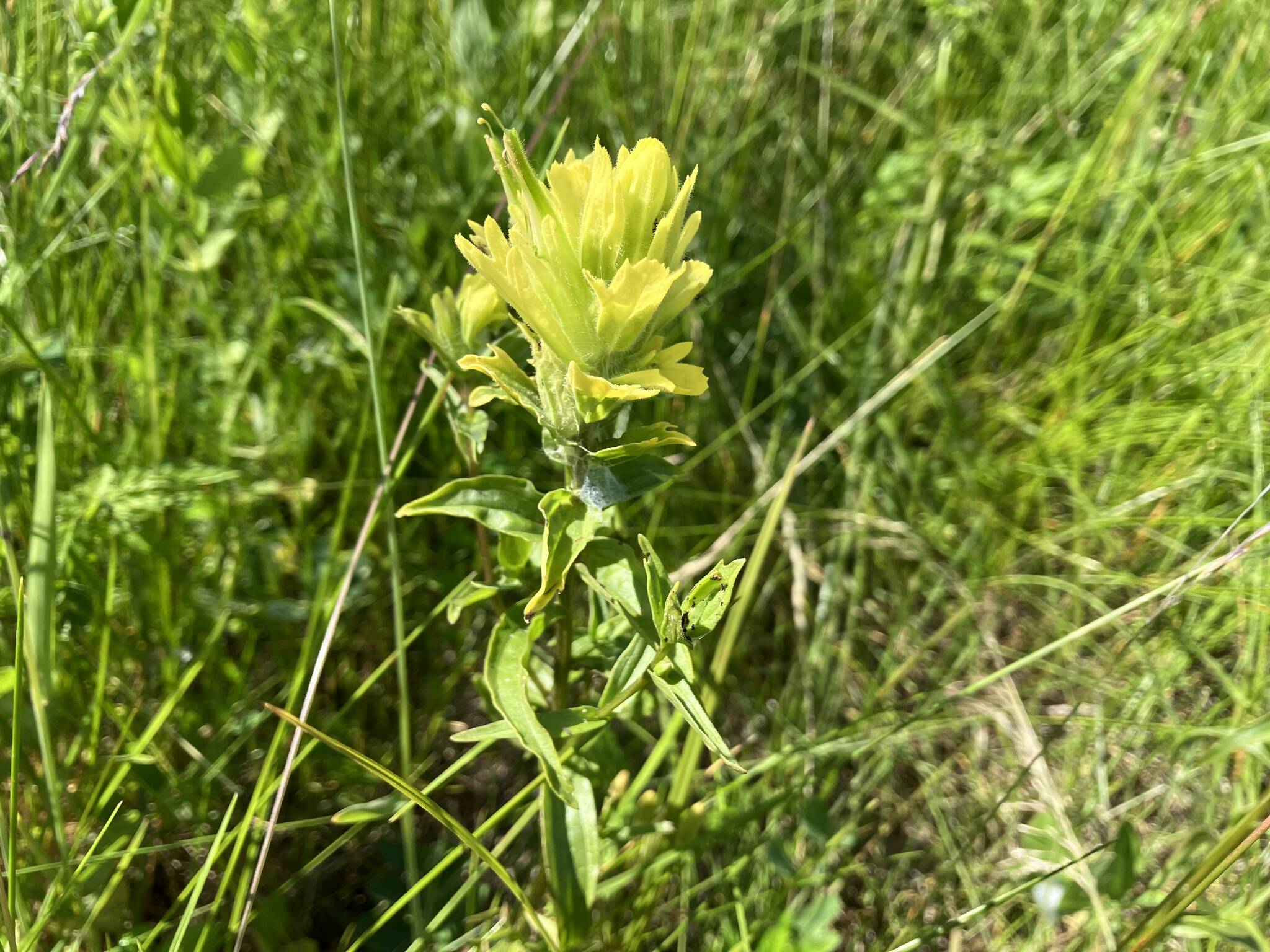
Yellow paintbrush flowers are among the late-blooming flowers in our meadows. (Photo by Mary F. Willson)
Past the iconic cottonwood tree, the offshore waters were occupied only by two marbled murrelets and a little bunch of horned grebes, all of which spent most of their time below the surface. Down along the beach, we paused for tea and a snack. Out at the tip of Gull Island, we spotted a humpback whale, cruising very slowly with an occasional breath. It crept along the island shore, sending up a spout or two. Eventually it dove, showing flukes that looked rather small. We hoped it was OK!
The tide had left plenty of fish carcasses strewn about on the flat meadows. All were in advanced stages of decomposition, unappealing to most vertebrate scavengers. But a group of crows had found something exciting at the lower end of the grassy slough before the point. We left them to it.
The flower season was almost over. Felwort was finished, but some yarrow held on and yellow paintbrush was the main decoration.
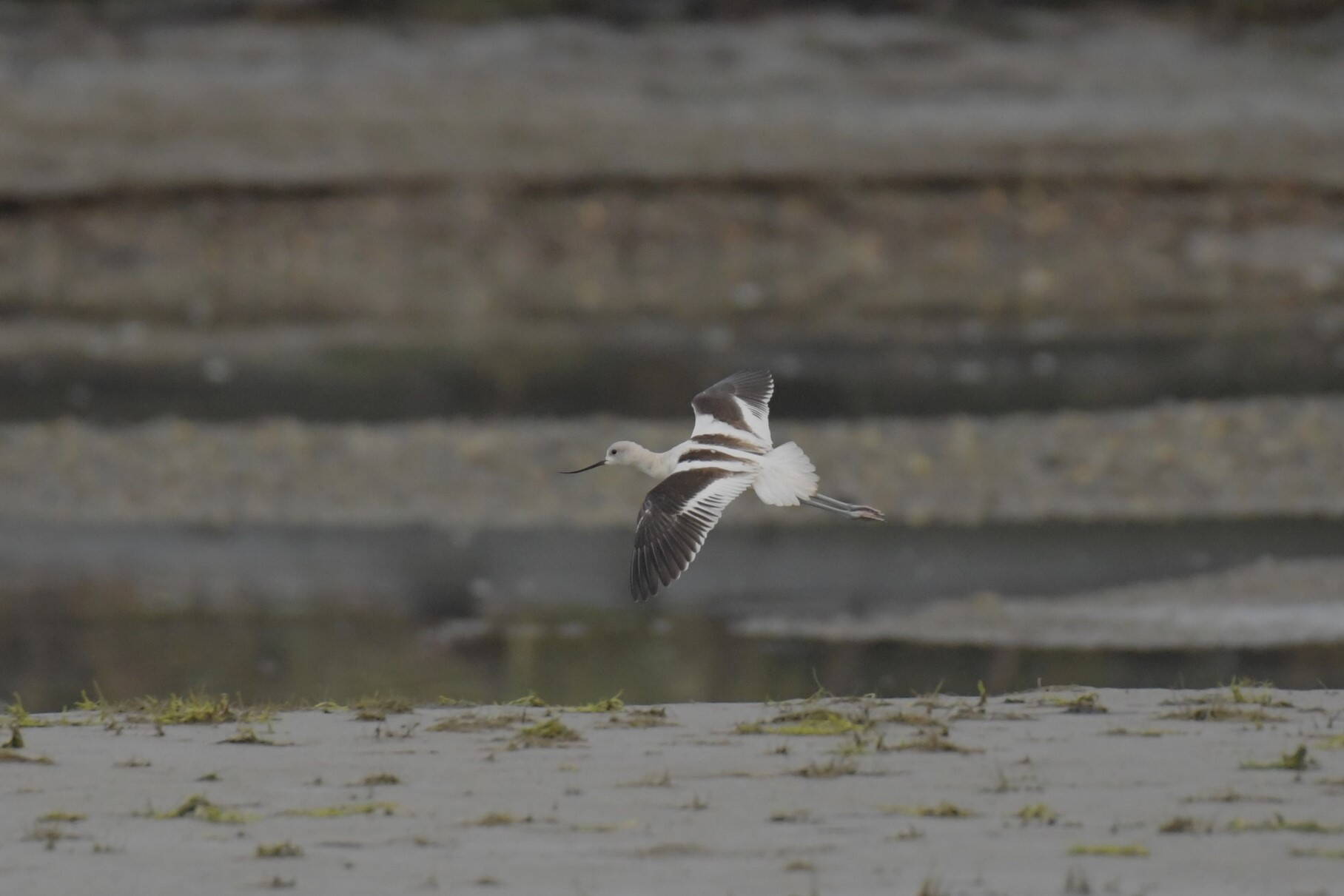
Later in the month, near the start of the dike trail, I was greeted with the news that an avocet had been seen in one of the ponds. That’s a shorebird almost never seen in Alaska; we are way out of its normal geographic range, and this was reported to me as just the fifth record of this bird in our state. That was exciting news — but, of course, the bird had vanished by the time I got to the place where it had been sighted; reportedly it was scared off by a free-ranging dog. Avocets are very distinctive, good-sized shorebirds with lots of white in the plumage and, in breeding season, rusty heads and necks. They commonly forage by swishing their re-curved bills sideways through the water and soft sediments to capture invertebrates, often by touch alone, although they also hunt visually, pecking and grabbing. Curiously, the bills of females are more curvy than those of males. But why???
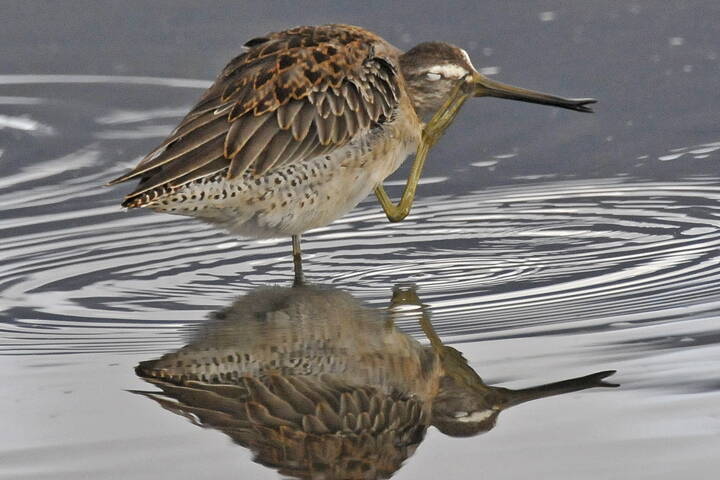
An unidentified dowitcher preens and shows its movable bill tip that is useful for probing for invertebrates in the mud. (Photo by Bob Armstrong)
Farther along the trail, there were several dowitchers foraging in ponds, probing the sediments with their very long bills, using the customary rapid up-and-down movements I call “stitching” — like the needle on a sewing machine. Two dowitcher species occur here and I can seldom remember how to tell them apart by subtle plumage traits, but an expert birder told me that the long-billed species chatters or twitters more that the so-called short-billed species (“short” is relative…in this case just meaning shorter than the other species).
At the very end of the trail is a big thicket of roses that flowers all season long, even at the end of September. The very prickly stems and some of the leaf characteristics lead me to suspect that this is a domestic cultivar originating from Asia, sometimes called the Sitka rose. Did it get to this spot with human help, maybe by those who collect the fruits, or could some seeds have been delivered from elsewhere in town by a bird that ate a fruit? The fruits (called “hips”) are substantial, about two centimeters in diameter. On this day, I saw that many of the ripe hips had split, peeling skin, as if the skin was too small and tight for the mature fruit. Maybe the very heavy September rains had caused more water-uptake than usual, more than the skin could accommodate?
• Mary F. Willson is a retired professor of ecology. “On The Trails” appears every Wednesday in the Juneau Empire.
