Living and Growing: An ancient history of meditation in the Christian tradition
Published 9:30 pm Tuesday, October 17, 2023
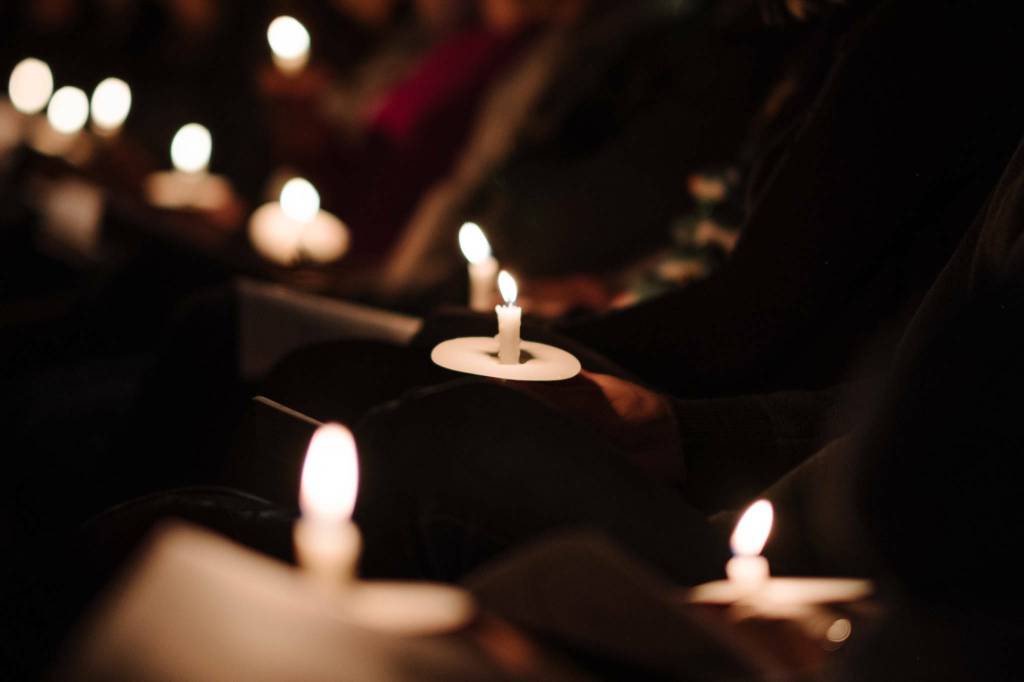
St. Paul encourages us to “not be anxious about anything.” But how to attain such peace in our world so filled with peril and strife, as it surely was in Paul’s day, and in every chapter of history? Centering prayer can be a wonderful practice as we seek to let go of anxiety.
The aim of centering prayer is to still the mind and when the inevitable thoughts come to gently let them go. What makes the practice a prayer is that one’s intentions are to consent to the love, presence and action of God within throughout the meditative sit.
When people think of meditation, they often think of practices from the Buddhist tradition, mindfulness, or Transcendental Meditation. What many do not realize is that there is an ancient history of meditation and contemplation (in this article these terms are used interchangeably) from the Christian tradition.
The Christian contemplative tradition, largely dormant for the last few centuries, has been reclaimed over the last 40 years or so and is primarily embodied in the practice of centering prayer. This “prayer of the heart” is practiced increasingly widely today by ordinary Christians — Catholic, Protestant, and Orthodox. There will be a free seminar series on the topic that begins Saturday, Oct. 28, details below.
Silent, imageless, contemplative prayer in the Christian tradition was practiced as early as the 3rd century by the Desert Mothers and Fathers — who were Christian hermits, ascetics, and monks who lived in the Egyptian desert.
In the 14th-century, an anonymous monk wrote The Cloud of Unknowing, which conveys the fathomless mystery of God and that the Divine can only be glimpsed by loving presence — contemplation. The Cloud has been a seminal book for Christian contemplatives and is an inspiration for the centering prayer movement. Other influences on Christian contemplation include John Cassian, Dame Julian of Norwich, St. Teresa of Avila and St. John of the Cross.
In the 1970s, Trappist monks, including Abbott Thomas Keating, seeking to reclaim Christianity’s contemplative roots, began developing the very simple method of centering prayer. These efforts culminated in 1986 with the publication of Father Keating’s book, “Open Mind, Open Heart,” in which he describes contemplative prayer — what it is and what it is not — as well as its history within the Christian church. The book also gives an in-depth and lucid explanation of the process of centering prayer.
As mentioned, the aim of centering prayer is to still the mind while consenting to God’s love, presence and action. To help with letting go of intrusive thoughts, practitioners of centering prayer interiorly utilize a sacred word such as “love,” “grace,” “peace,” or “Jesus,” as a symbol of the their intention to let the thoughts go and to rest in God. The word is not repeated continuously like a mantra, but used to “center” oneself in God when thoughts take hold.
One should not judge the efficacy of the practice by each individual sit — was it peaceful? was I assailed with thoughts the whole time? — but rather one gauges the fruits of centering prayer over time: have I become more patient, kind, peaceful, loving?
Starting Saturday, Oct. 28, Holy Trinity Episcopal Church (415 4th St.) will be hosting a free five-part contemplative prayer seminar. Each session will explore some aspect of centering prayer. The seminar will occur for five consecutive Saturdays, concluding Nov. 25. Sessions will be from 2-3:15 p.m. Participants do not need to commit to attending all sessions.
The seminar will feature highly experienced and nationally known contemplatives (who will join via Zoom), highlighted by Father Bill Sheehan, OMI, who will lead both the first and the last session. Father Bill was present at the first centering prayer retreat offered by Thomas Keating in 1983, and has been centering for over 40 years. For decades he has lead centering prayer retreats all across the country. Father Bill is beloved for his kindness, wisdom, humor and ecumenical outlook.
For more information please go to Holy Trinity’s website at www.trinityjuneau.org and view the seminar flier. Those in Juneau who wish to participate are encouraged to come to Holy Trinity for the event. If you prefer you can participate online via Zoom. To request a Zoom link email the church at HolyTrinity1895@gmail.com.
If you yearn to be still, to rest in God, I encourage you to try centering prayer.
• Tim Spengler is a parishioner at Holy Trinity Episcopal Church. He has a spiritual direction practice and is a hospice chaplain. “Living and Growing” is a weekly column written by different authors and submitted by local clergy and spiritual leaders. It appears every Saturday on the Juneau Empire’s Faith page.