
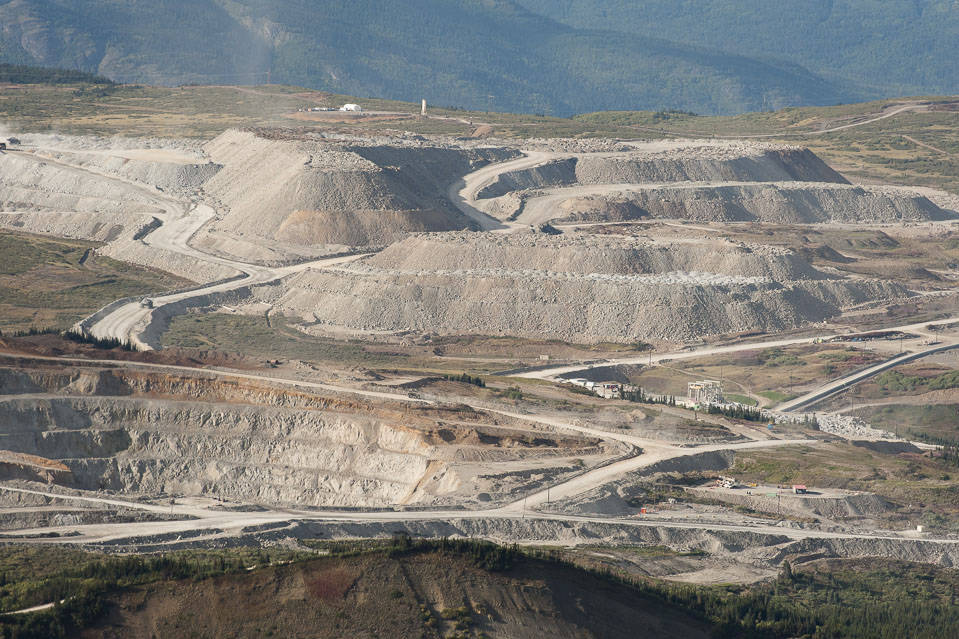
With a strike, falling copper prices and more than $554-million ($723 million Canadian) soon due to lenders, Canadian mine owner Imperial Metals, which operates the Red Chris Mine in the transboundary Stikine River watershed, is in dire financial straits.
The mine’s financial situation — and its lack of bond money for environmental reclamation at the site — has unearthed questions about what will be done to keep its tailings pit from leading pollution into the Stikine River, which supports an average annual run of about 40,000 adult Chinook salmon.
Cash crunch
Imperial’s woes have been widely reported, but Canadian magazine The Narwhal dove deep into the particulars in an August article.
Thomas Schneider is an expert in financial reporting of environmental liabilities and a professor at Ryerson University in Toronto. Schneider was a source in the Narwhal article and spoke to the Empire recently describing the situation.
On Oct. 1, Imperial Metals will have to renegotiate or pay a $153 million ($200 Canadian) credit facility — basically a loan from investors, Schneider said. That’s just the first of a series of credit facilities that mature between now and March, totaling $554 million.
“They have a big, big cash crunch ahead of them,” Schneider said.
Imperial Metals didn’t return requests for comment for this story. In their most recent quarterly report, they didn’t make any assurances that they’d be able to meet their debt obligations.
“There can be no assurance that the Company will be able to successfully extend or renegotiate this debt, and that adequate additional financing will be available on terms acceptable to the Company or at all, which creates a material uncertainty that could have an adverse impact on the Company’s financial condition and results of operations and may cast significant doubt on the Company’s ability to continue as a going concern,” the company wrote.
Translation: the debt threatens the Imperial Metals’ ability to function in its current state.
Schneider said he wouldn’t want to speculate whether the mine will go bankrupt, but financial indicators show that it faces an uphill battle to stay in operation.
A two-month strike this summer from a steelworkers union at Mount Polley Mine, which Imperial Metals also owns, cost the company about $28 million, according to media reports.
Imperial owes about $57 million a year ($75 million Canadian) in interest payments, Schneider said. Imperial doesn’t have the cash flow right now to pay that interest, and it’s been paying some of that interest in company shares, diluting its stock prices. It’s stock price has fallen from a high of $18.34 in 2014 to $1.14 at press time.
IMperial Mines 2018.Q2 FS by Kevin Gullufsen on Scribd
“It’s always a bad sign when you pay interest by issuing shares because they don’t have enough cash to pay interest,” Schneider said.
What would bankruptcy mean?
B.C. mine regulators estimate that the Red Chris is on the hook for $13.39 million ($17.6 million Canadian) in reclamation obligations, money that would be used to keep the mine site from leaching harmful chemicals like acid mine drainage in the event it closes.
But the Red Chris, like 43 other B.C. metal and coal mines, doesn’t have all of this money set aside. According to the most recent report, B.C. has collected $9.2 million ($12 million Canadian) in bonding for environmental liabilities for the Red Chris Mine.
A spokesperson for the Ministry of Energy, Mines and Petroleum Resources (MEM) explained via email that mining companies are liable for reclamation costs, even if they go bankrupt. Financial securities are used for mine reclamation and the protection of land, watercourses and cultural resources.
Sometimes “statutory decision-makers” determine the amount of security bonds required for each mine, and can authorize permits even when the full amount of liability isn’t paid. According to a report from February of last year, the Ministry of Energy, Mines and Petroleum Resources doesn’t have a formalized policy they’ve shared with the public explaining how they collect reclamation money. As of Dec. 31 2016, when the last figures were publicly available, B.C. mines were under bonded by more than $1.5 billion.
“As a condition of the Mines Act (Sections 10.4 and 10.5), a financial security is required for all or part of the outstanding costs associated with the mine reclamation and the protection of land, watercourses and cultural resources. Statutory decision-makers, not the minister, determine the amount of the security bonds required for each mine,” MEM wrote.
This differs from how things are done in Alaska, according to the Department of Natural Resources Kyle Moselle, the Associate Director for the Office of Project Management and Permitting. Alaska requires 100 percent of their estimated environmental liabilities to be secured before a project can advance. That money is inflation proofed for the five-year permit cycle.
Moselle works with B.C. officials to keep up to date on mines in the transboundary region. He said his contacts in B.C. are monitoring the situation closely and that, as of now, the Red Chris Mine is currently in compliance with their operating permits.
If it does fail to comply, he’s been told that B.C. officials will notify Alaska and open a dialogue about what to do, something that’s required per cooperation agreements between Alaska and B.C.
Clean water groups worried
All this has advocates for water quality worried that the Red Chris will fold, leaving some of the cost of reclamation up to the Canadian government. Imperial Metals is the same company responsible for the 2014 Mount Polley Mine disaster, when a mine tailings dam failed, sending in 850 million cubic feet of wastewater into Canadian waters.
“The danger Imperial Metals and its threatened bankruptcy pose to the Stikine River is a symptom of a bigger disease — the B.C. mining industry, which profits while B.C. taxpayers, the environment, and Alaskans bear the costs,” said Jill Weitz, of Juneau-based environmental advocacy group Salmon Beyond Borders.
Tis Peterman is coodinator of the Southeast Alaska Indigenous Transboundary Commission, formerly the United Tribal Transboundary Mining Work Group. She’s a life-long resident of Wrangell, a Southeast Alaska community of about 2,400 which lies near the mouth of the Stikine River.
She’s been following Imperial Metals and the Red Chris Mine closely, and for the past two years, she said her group has been pushing for more financial assurances at the mine.
“I’ve been watching their stock shares falling and falling and we heard that a major investor pulled out. I have no idea what’s going to happen next,” Peterman said.
Red Chris uses a mine tailings dam similar in design to the one that failed at Mount Polley. If the mine shutters, Peterman worries what will happen to that mines tailings dam.
“If that mine goes up there, we’re a dead zone down here,” Peterman said.
Peterman’s group has been pushing the state of Alaska and Alaska’s Congressional Delegation to demand more financial assurances for B.C.’s mines. So far, she said it’s been all talk and not a lot of action.
If something isn’t done soon, she feels a way of life in Wrangell could be on the line. She spoke to the Empire on the first day of an important moose hunt up the Stikine River. Wrangell locals are still putting up salmon for the winter.
She’d like to see federal intervention between the U.S. and Canada through what’s called the International Joint Commission, not just goodwill cooperation between the state of Alaska and B.C.
“I see no movement on this issue that could drastically change our way of life,” she said.
• Contact reporter Kevin Gullufsen at 523-2228 and kgullufsen@juneauempire.com. Follow him on Twitter at @KevinGullufsen.
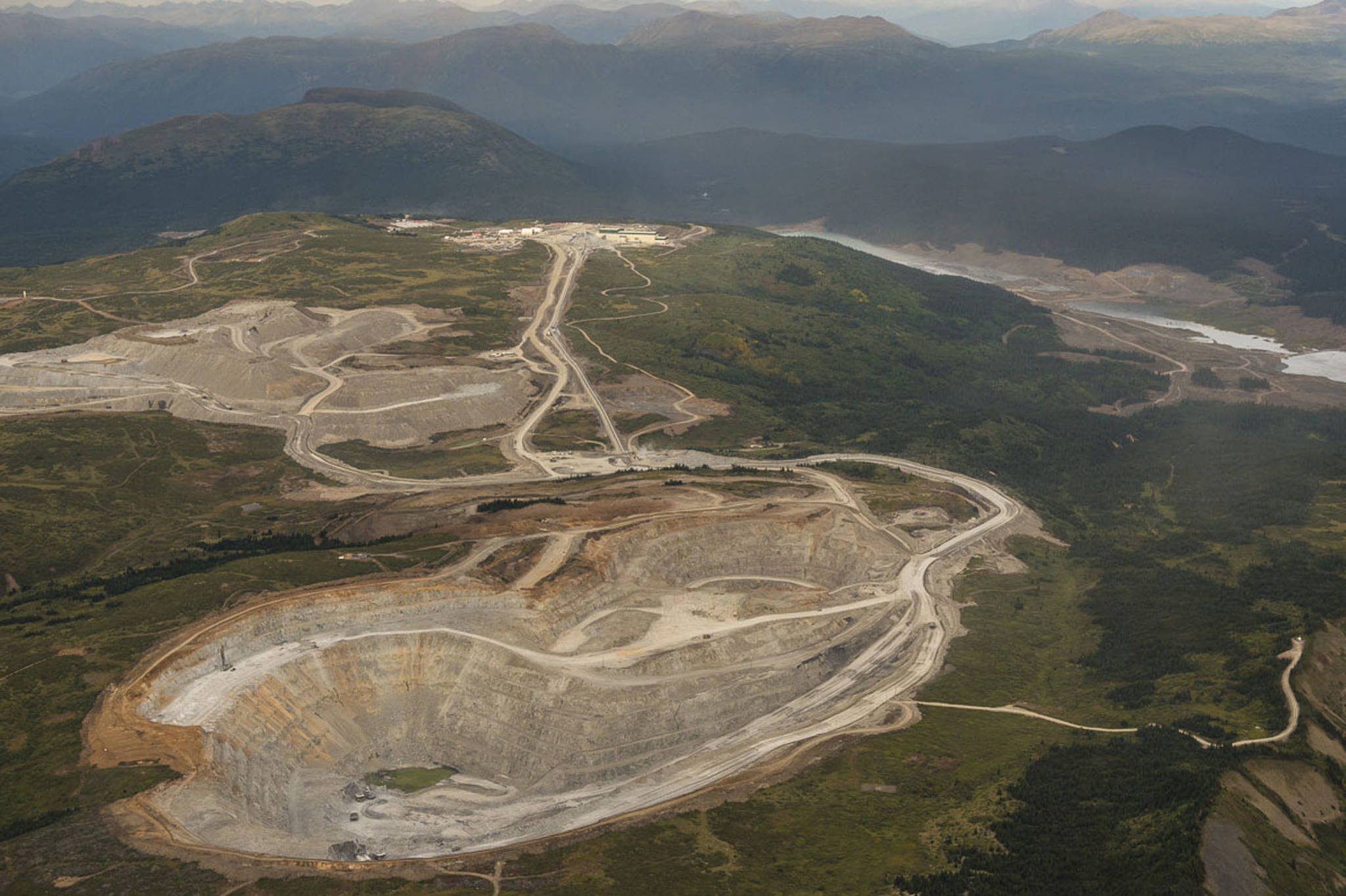
The Red Chris, a gold and copper mine, began to operate in late 2014, shortly after the Mount Polley tailings dam disaster. The same company, Imperial Metals, owns both mines. (Courtesy Photo | Garth Lenz via Salmon State)

The wall of the Red Chris tailings pond is a little less than 350 feet, or about the height of a 35-story building. It follows the same design as the Mount Polley tailings dam, which broke in 2014, sending 24 million cubic meters of toxic mine tailings into the Fraser River watershed. It is designed, however, to hold 305 million cubic meters of mine waste — seven times more than Mount Polley. Both mines are owned by Imperial Metals. (Courtesy Photo | Garth Lenz via Salmon State)
