
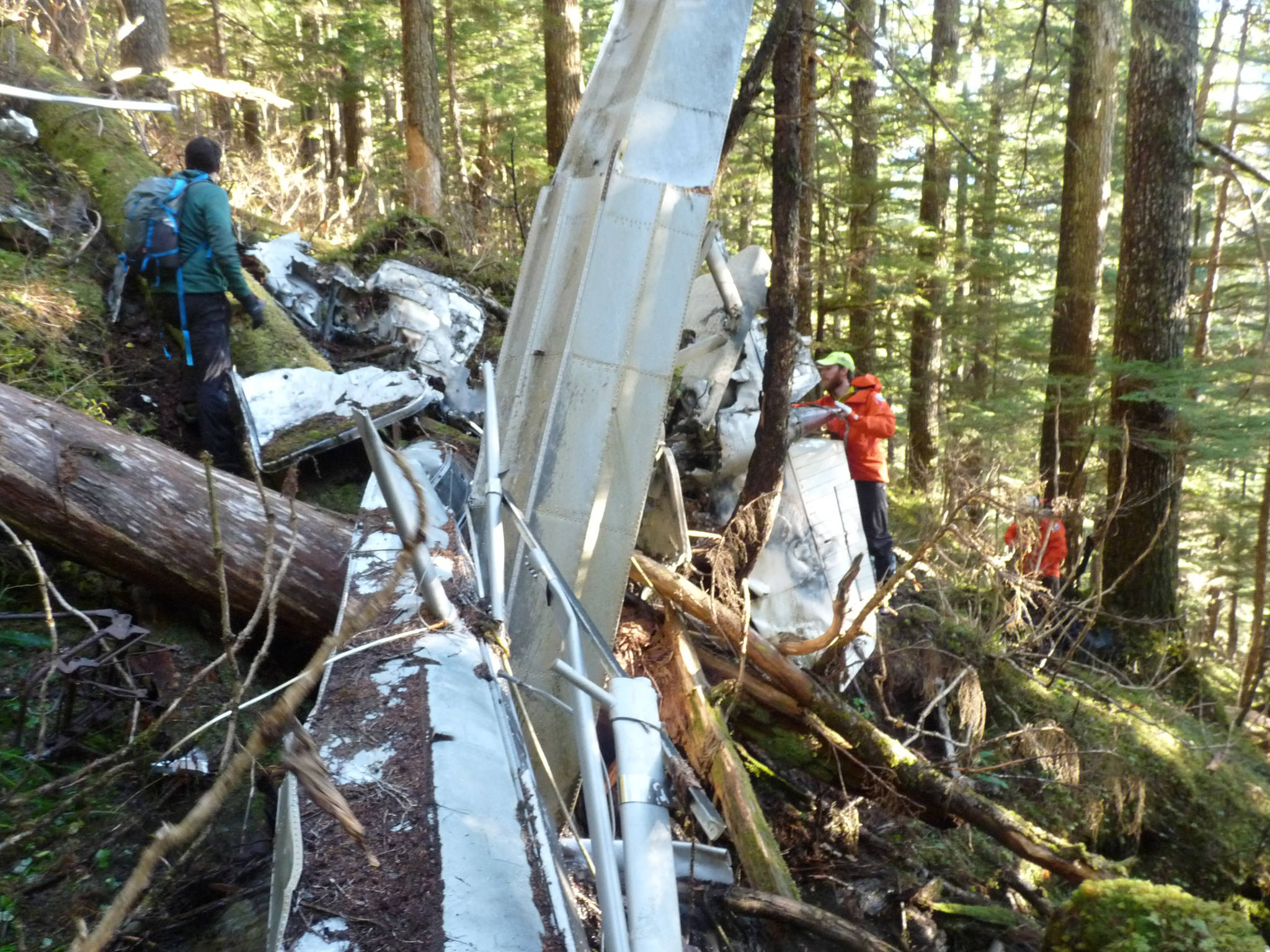
Federal investigators have closed their investigation into an Admiralty Island plane crash discovered last year, nine years after its pilot and his younger son went missing.
On Tuesday, the National Transportation Safety Board issued its final report in the accident that claimed the lives of Brian and Brandon Andrews. Investigator Michael Hodges concluded Brian Andrews, who at the time was Alaska’s deputy commissioner of revenue, accidentally flew his plane into a mountain amid worsening weather conditions.
“The pilot’s decision to continue visual flight into an area of instrument meteorological conditions … resulted in the pilot experiencing a loss of visual reference and subsequent controlled flight into terrain. Contributing to the accident was the pilot’s self-induced pressure to complete the flight,” the report concludes.
“Unfortunately, that’s a common safety issue we see here in Alaska — controlled flight into terrain and degrading weather conditions,” Hodges said by phone on Thursday. “The weather conditions in Southeast Alaska are very kinetic, for good or for worse.”
Hodges’ report concludes a decade-old mystery that began on Aug. 9, 2008 when Andrews was returning from a camping trip on Admiralty Island’s Young Lake. He had previously flown from the lake to Juneau International Airport’s seaplane base to deliver his older son, Brent (better known as B.J.), and some camping equipment. Brian flew back to the lake with his younger son Brandon for another load of gear, but the two never returned.
The U.S. Coast Guard, Juneau Mountain Rescue and other searchers combed a wide area of Admiralty Island, but they found no sign of the missing plane or the two men.
They were missing and presumed dead until October 2017, when a deer hunter found the wreckage of their aircraft on a heavily forested mountainside near the lake.
Alaska State Troopers Spokesperson Tim DeSpain said at the time that even though the plane was found somewhat close to its takeoff spot of Young Lake, the dense forest and undergrowth made it tough to find it.
“The trees and the ground vegetation are incredibly thick there,” DeSpain said last year. “There was no way someone could have seen that from the air.”
Brian and Brandon’s remains were found in the plane’s wreckage.
B.J. Andrews said by phone Thursday that he has not yet read the final report, but he has been generally pleased with the investigation and offered his thanks to the people involved.
“I also feel that we’ve gotten some closure out of the finding and being able to put down Brandon’s remains in the ground, which has given the family a place where we can go and find them,” he said.
According to figures released this month from the Federal Aviation Administration, the leading cause of fatal general aviation accidents in Alaska is controlled flight into terrain, usually caused by the combination of weather and pilots’ hurry to beat worsening conditions. Between October 2017 and September 2018, there were eight controlled flight-into-terrain accidents.
“The common theme is what we call get-home-itis,” Hodges said by phone.
In 2011, the FAA released a report examining the human causes of fatal Alaska plane crashes. The report concluded that pilots tended to use approaches that worked previously, even if conditions were different.
“So when faced with a problem (how do I make it through this weather?), humans tend to adopt a strategy that has been used successfully in the past, even if the current situation does not quite match previous events,” that report stated.
Hodges said he hopes the report offers some comfort to those affected by the crash.
“After almost 10 years, it provides closure not just for the Juneau community but also for the family and friends of those who perished in the accident,” he said.
• Contact reporter James Brooks at jbrooks@juneauempire.com or 523-2258.
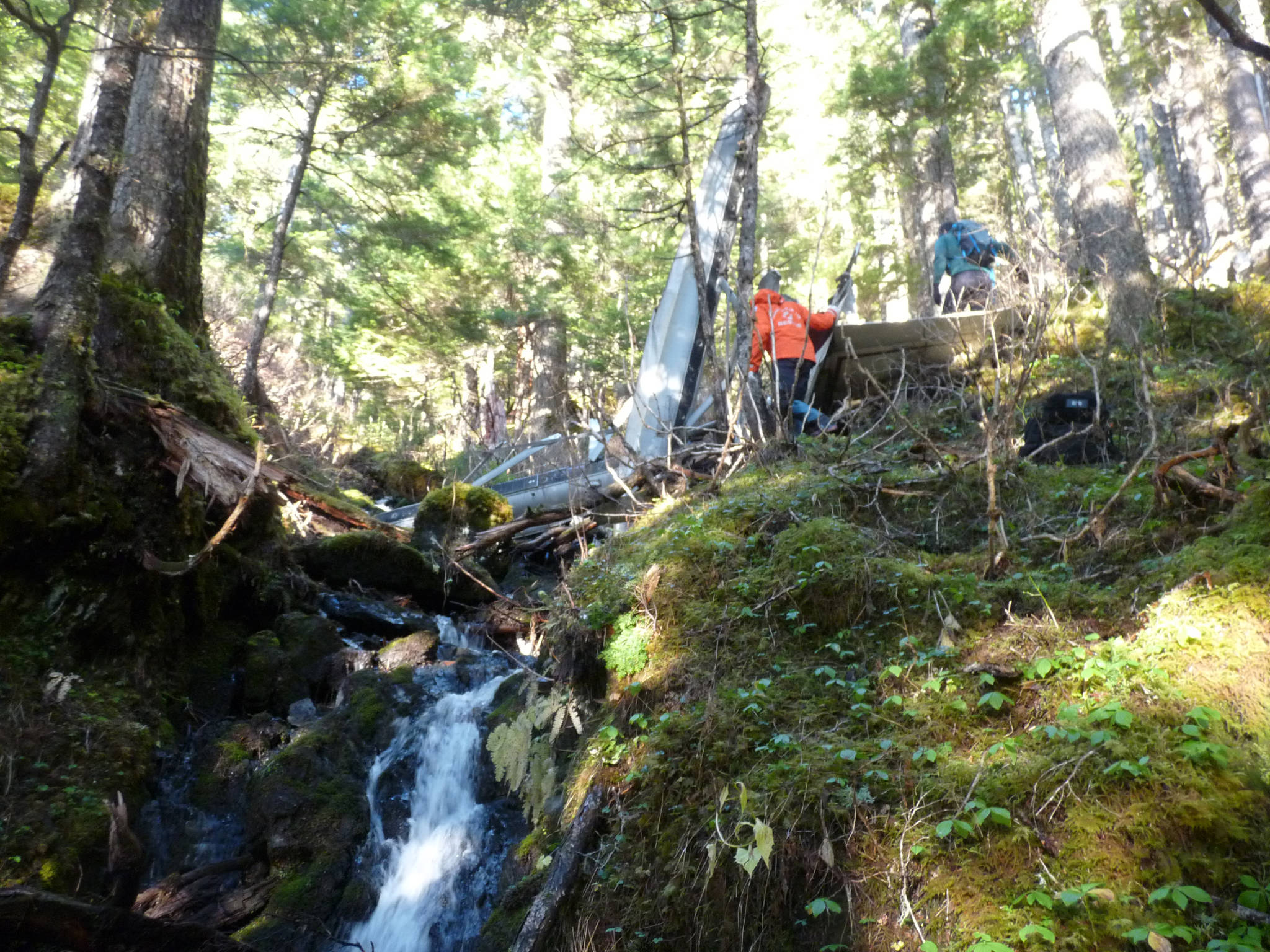
Investigators in October 2017 examine the wreckage of a Cessna 182 airplane that went missing just south of Juneau in 2008. The plane remained undiscovered until it was discovered by a deer hunter. (Alaska State Troopers | Courtesy photo)
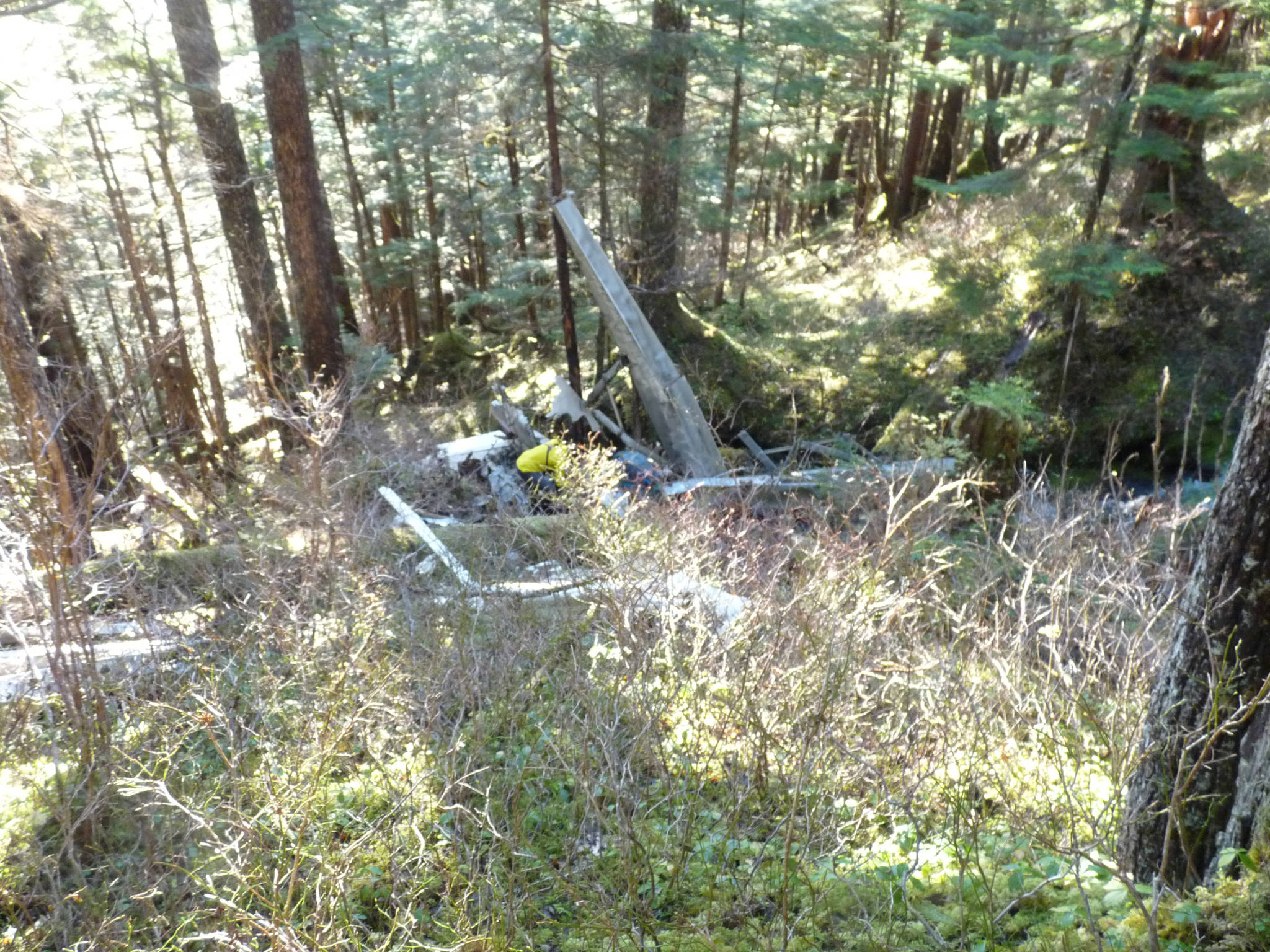
Investigators in October 2017 examine the wreckage of a Cessna 182 airplane that went missing just south of Juneau in 2008. The plane remained undiscovered until it was discovered by a deer hunter. (Alaska State Troopers | Courtesy photo)
