
On a slightly drippy day in late December, I wandered out to Point Louisa, right at a big high tide. Most of the folks I met on the trail remarked that it was a nice day — defined, by contrast with recent weather, as NOT blowing and NOT really raining. And, in contrast to several previous visits here, I saw quite a variety of birds scattered around on the water.
A little group of common goldeneyes looked nervous and swam farther off-shore. Two male hooded mergansers, with their big white crests fully expanded and showy, vied with each other for the attentions of a female. Two clusters of harlequin ducks perched on rocks at the edge of the tide. Far from any of its usual companions, a single scoter (maybe a white-winged) repeatedly dove and came up with something – probably a mussel — in its bill. A common loon floated quietly over deep water. Two horned grebes dove together, looking for small fish.
It’s not unusual to see this assortment of birds on the water in winter. When they are not nesting, they come to feast at the smorgasbord of invertebrates and fishes in salt water. But most of these species would seldom encounter each other during the nesting season. They then are spread far and wide over the landscape; harlequins favor nest sites near fast-moving streams, the other species typically nest near various kinds of freshwater ponds and lakes, many of them in the Interior.
Two days later, again on a high tide, I revisited Point Louisa. This time, I found a rather different bunch of water birds. The harlequins were still there, and some white-winged scoters. A group of Barrow’s goldeneyes swam around from place to place, and a pair of buffleheads foraged steadily. I saw a cormorant, too, all long black neck and thin bill; I’m guessing it was a pelagic cormorant. And there was a large grebe with a long white neck and face, surely a western grebe (not often seen around here).
Clearly, the marine smorgasbord draws a variable crowd. Presumably the composition of the prey shifts too, as the currents and winds change. The birds may have to take pot-luck when they choose to visit. I wonder how they decide where to test the waters…
On yet another drizzly day, this one in early January, I happened to look out my front windows and saw something dark, squirming around in the little bit of crusty snow remaining. An otter was taking an extended snow-bath and probably a good skin-scratch too. Belly, back, both sides, chin and cheeks — again and again. Then move to a new snow patch and do it all over again. It must have felt really good! Eventually, she slithered down the short bank into the pond and went exploring, nosing closely along the banks, then churning up clouds of sediment from the bottom, and roiling the waters. Maybe there was hope of a small fish or two; there are sticklebacks and sometimes coho fry in the pond. After that, the otter went loping off, up the other bank, and into the woods.
And here are a few nice sightings from early January:
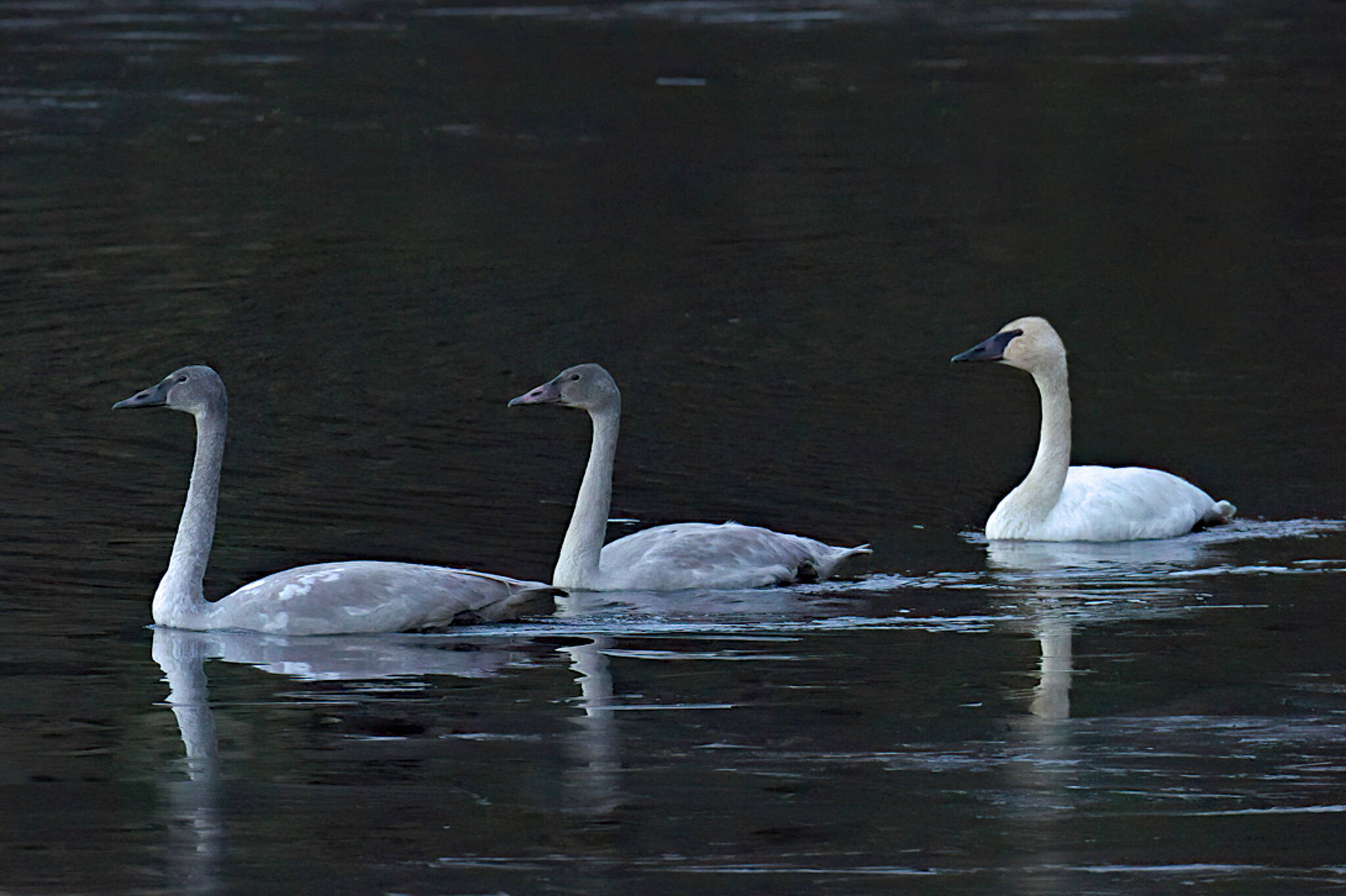
A family of trumpeter swans appeared on Auke Lake: two adults and two well-grown juveniles; later just one adult tended the young ones. These birds typically nest Up North, but sometimes winter in Southeast.
The freakishly warm fall and early winter meant that beavers busily tended their dams. So the Beaver Patrol was kept correspondingly busy, making careful slots in the dams to accommodate high waters at times and allow juvenile salmon to move about in Dredge Creek. One lucky day, we spotted a dipper poised on the railing of a little footbridge. A treat…because I had so seldom seen them this year. They nest along clear, fast streams here and elsewhere but often come down toward salt water in winter. I have the uncomfortable feeling that their numbers are considerably less than a few years ago, when we studied them intensively.
Out on the Dike Trail, a flock of little brown birds fossicked about on the ground, drawing hikers’ attention and their confident identification of redpolls. I was at first skeptical; I couldn’t pick out wing bars or throat patches or the reddish polls, and they looked too tawny-backed. Later, I got a better look and was persuaded. I reckon the group included a lot of juveniles, which might not show much red or clear throat patches. Days later, during the January cold snap followed by lots of snow, a solitary redpoll was a regular visitor at my seed feeder, keeping himself well-fed. Redpolls nest Up North in general but irrupt in numbers periodically, depending on the supply of birch seeds and other forage.
• Mary F. Willson is a retired professor of ecology. “On The Trails” appears every Wednesday in the Juneau Empire.
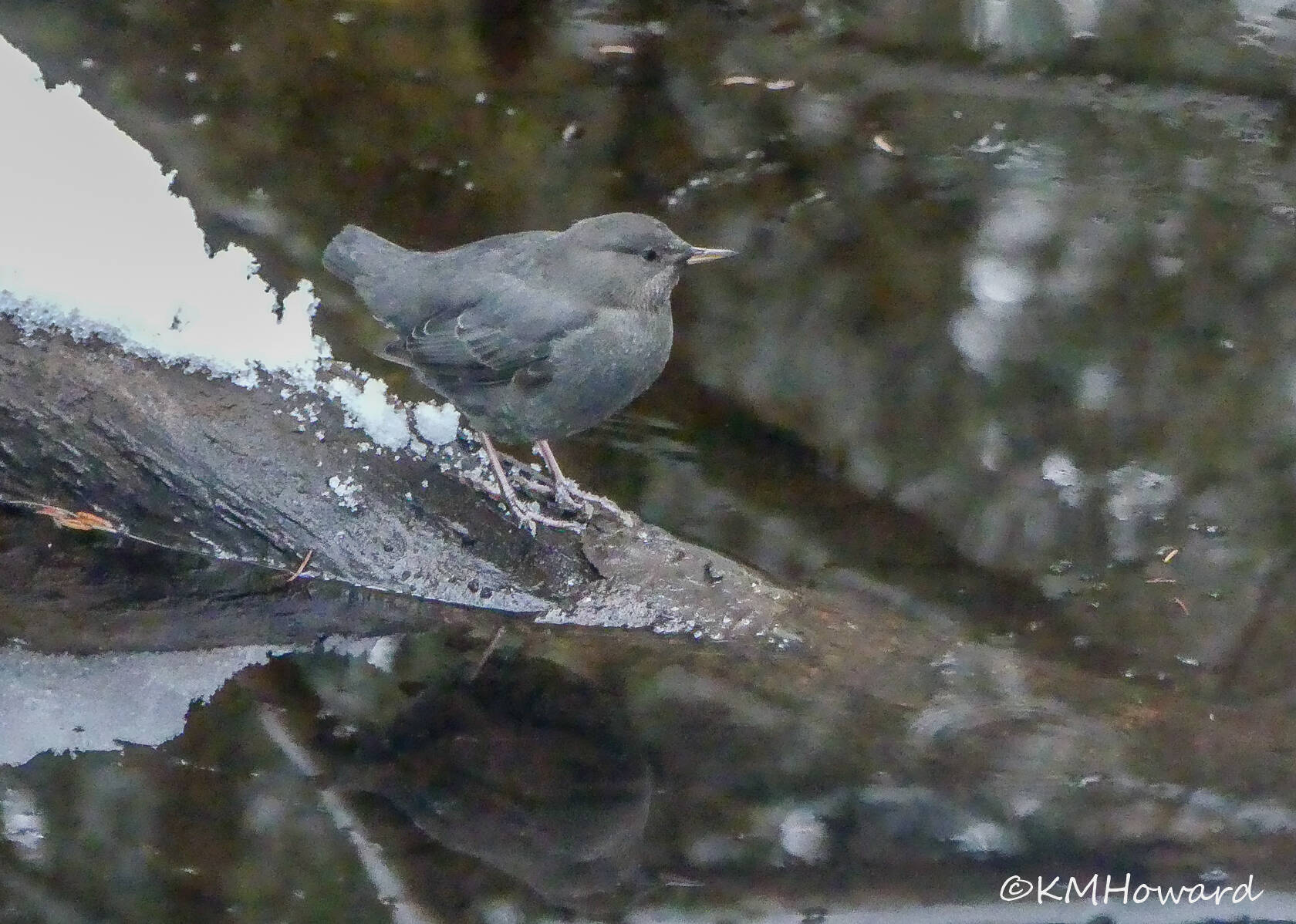
An American dipper perches beside a clear, cold creek. (Photo by Kerry Howard)
