
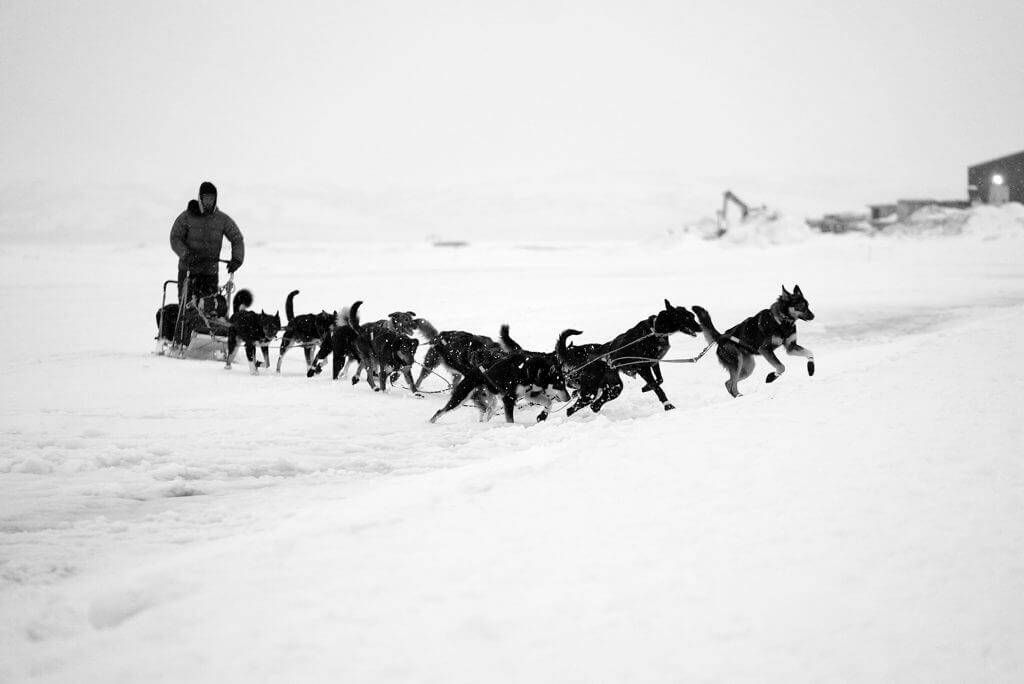
(Getty Images)

(Getty Images)

Jessie Holmes, former reality TV star, wins longest-ever Iditarod dog race: ‘It’s a magical feeling’

  • By Lauren Merola ©2025 The New York Times Company
  • Friday, March 14, 2025 9:48am
  • SportsIditarod

Jessie Holmes, a former reality television star on “Life Below Zero,” won the longest-ever Iditarod Trail Sled Dog Race early Friday morning, crossing under the burled arch in Nome, Alaska, around 2:55 a.m.

“It’s hard to put into words, but it’s a magical feeling,” Holmes said after reaching the finish line. “It’s not about this moment now, it’s about all the moments along the trail.”

The 53rd Iditarod began March 3 in Fairbanks, Alaska, after part of the traditional trail in Southcentral Alaska lacked enough snow to pass through. The Iditarod usually starts in Anchorage, alternating between the southern route during odd years (975 miles) and the northern route during even years (998 miles). Fairbanks is roughly 350 miles north of Anchorage, and the 2025 finish line was in its usual city of Nome.

The shift in trails upped the 2025 Iditarod mileage to 1,128. Holmes finished in 10 days, 14 hours, 55 minutes and 41 seconds, marking the longest time it has taken a winner to finish since 1993.

Holmes competed for the eighth time, having participated in every Iditarod since 2018. The 43-year-old musher owns five top-10 finishes, including third place in 2022 and 2024. In his first Iditarod, Holmes’ seventh-place finish earned him Rookie of the Year honors.

As this year’s winner, Holmes takes home the largest portion of the $500,000 prize pool. He was handed an oversized check for $57,200 at the finish line.

Holmes was born and raised in Alabama and resides in Nenana, Alaska, where he works as a carpenter and TV personality on “Life Below Zero,” a National Geographic docuseries about the daily lives of people living in remote Alaska.

This year, Holmes finished with 10 dogs on the line, led by Hercules and Polar. Holmes crossed the Kaltag 2 checkpoint with 13 dogs and the Unalakleet checkpoint with 11 dogs. He was the first musher to cross both checkpoints, earning the Bristol Bay Native Corporation Fish First Award — which partly includes 25 pounds of fresh Bristol Bay salmon filets as a reward — and Ryan Air Gold Coast Award — which partly includes one ounce of gold nuggets as a reward — respectively.

A musher is allowed to start the race with a maximum of 16 dogs and a minimum of 12, per race rules, and must finish with at least five dogs on the towline. Dogs are pulled from or die during the race for many reasons, including exhaustion, injury, illness or frostbite.

One dog, Ventana, died so far this year. Ventana collapsed and died on March 7, and the autopsy showed she was pregnant. Ventana was part of rookie musher Daniel Klein’s team, and Klein resigned from the race shortly thereafter. Iditarod rules require a musher to voluntarily drop out of the race if one of his or her dogs die, unless the dog dies due to an “unpreventable hazard,” like a run-in with a moose.

Last year, Dallas Seavey set the record for most wins by a musher in the race’s history by earning his sixth Iditarod victory. During that race, Seavey shot and killed a moose out of self-defense after the moose injured one of his dogs. He then attempted to gut the edible big game animal, as required by race rules, but was later hit with a two-hour penalty for insufficiently gutting the animal. His dog, Faloo, survived the moose attack and recovered.

The Iditarod is not yet over and ends when the last musher — there are 33 competing this year — crosses the finish line. The last musher to finish claims the Red Lantern — a physical lantern symbolizing perseverance. According to the race, the last-place prize started as a joke during the Fur Rendezvous Race in 1953 and was adopted by the Iditarod some 20 years later.

• This article originally appeared in The Athletic.

More in Sports

The Juneau-Douglas High School: Yadaa.at Kalé Crimson Bears won fourth place during the Division II Hockey State championships in Palmer last weekend. Photo courtesy of Rapi Sotoa
Juneau takes home fourth place during high school state hockey tournament

The Crimson Bears also received the Sportsmanship Award last weekend.

Senior Juneau-Douglas High School: Yadaa.at Kalé hockey players were recognized at the Treadwell Arena on Friday, Jan. 23, 2026 before the Crimson Bears faced the Homer High School Mariners. Head coach Matt Boline and assistant coaches Mike Bovitz, Luke Adams, Jason Kohlase and Dave Kovach honored 11 seniors. (Chloe Anderson / Juneau Empire)
JDHS celebrates hockey team’s senior night with sweeping victory over Homer

The Crimson Bears saw an 8-2 victory over the Mariners Friday night.

Photo by Ned Rozell
Golds and greens of aspens and birches adorn a hillside above the Angel Creek drainage east of Fairbanks.
Alaska Science Forum: The season of senescence is upon us

Trees and other plants are simply shedding what no longer suits them

Things you won’t find camping in Southeast Alaska. (Jeff Lund/Juneau Empire)
I Went to the Woods: Sodium and serenity

The terrain of interior Alaska is captivating in a way that Southeast isn’t

An albacore tuna is hooked on a bait pole on Oct. 9, 2012, in waters off Oregon. Tuna are normally found along the U.S. West Coast but occasionally stray into Alaska waters if temperatures are high enough. Sport anglers catch them with gear similar to that used to hook salmon. (Photo provided by the National Oceanic and Atmospheric Administration/West Coast Fisheries Management and Marine Life Protection)
Brief tuna bounty in Southeast Alaska spurs excitement about new fishing opportunity

Waters off Sitka were warm enough to lure fish from the south, and local anglers took advantage of conditions to harvest species that make rare appearances in Alaska

Isaac Updike breaks the tape at the Portland Track Festival. (Photo by Amanda Gehrich/pdxtrack)
Updike concludes historic season in steeplechase heats at World Championships

Representing Team USA, the 33-year-old from Ketchikan raced commendably in his second world championships

A whale breaches near Point Retreat on July 19. (Chloe Anderson/Juneau Empire)
Weekly Wonder: The whys of whale breaching

Why whales do the things they do remain largely a mystery to us land-bound mammals

Renee Boozer, Carlos Boozer Jr. and Carlos Boozer Sr. attend the enshrinement ceremony at the Naismith Basketball Hall of Fame in Sprinfield, Massachusetts, on Saturday, Sept. 6, 2025. As a member of the 2008 U.S. men's Olympic team, Boozer Jr. is a member of the 2025 class. (Photo provided by Carlos Boozer Sr.)
Boozer Jr. inducted into Naismith Hall of Fame with ‘Redeem Team’

Boozer Jr. is a 1999 graduate of Juneau-Douglas: Yadaa.at Kale

Photo by Martin Truffer
The 18,008-foot Mount St. Elias rises above Malaspina Glacier and Sitkagi Lagoon (water body center left) in 2021.
Alaska Science Forum: The long fade of Alaska’s largest glacier

SITKAGI BLUFFS — While paddling a glacial lake complete with icebergs and… Continue reading

Photo by Jeff Lund/Juneau Empire
The point of fishing is to catch fish, but there are other things to see and do while out on a trip.
I Went to the Woods: Fish of the summer

I was amped to be out on the polished ocean and was game for the necessary work of jigging

A female brown bear and her cub are pictured near Pack Creek on Admiralty Island on July 19, 2024. (Chloe Anderson for the Juneau Empire)
Bears: Beloved fuzzy Juneau residents — Part 2

Humor me for a moment and picture yourself next to a brown bear

Isaac Updike of Ketchikan finished 16th at the World Championships track and field meet in Budapest, Hungary, on Tuesday. (Alaska Sports Report)
Ketchikan steeplechaser makes Team USA for worlds

Worlds are from Sept. 13 to 21, with steeplechase prelims starting on the first day