
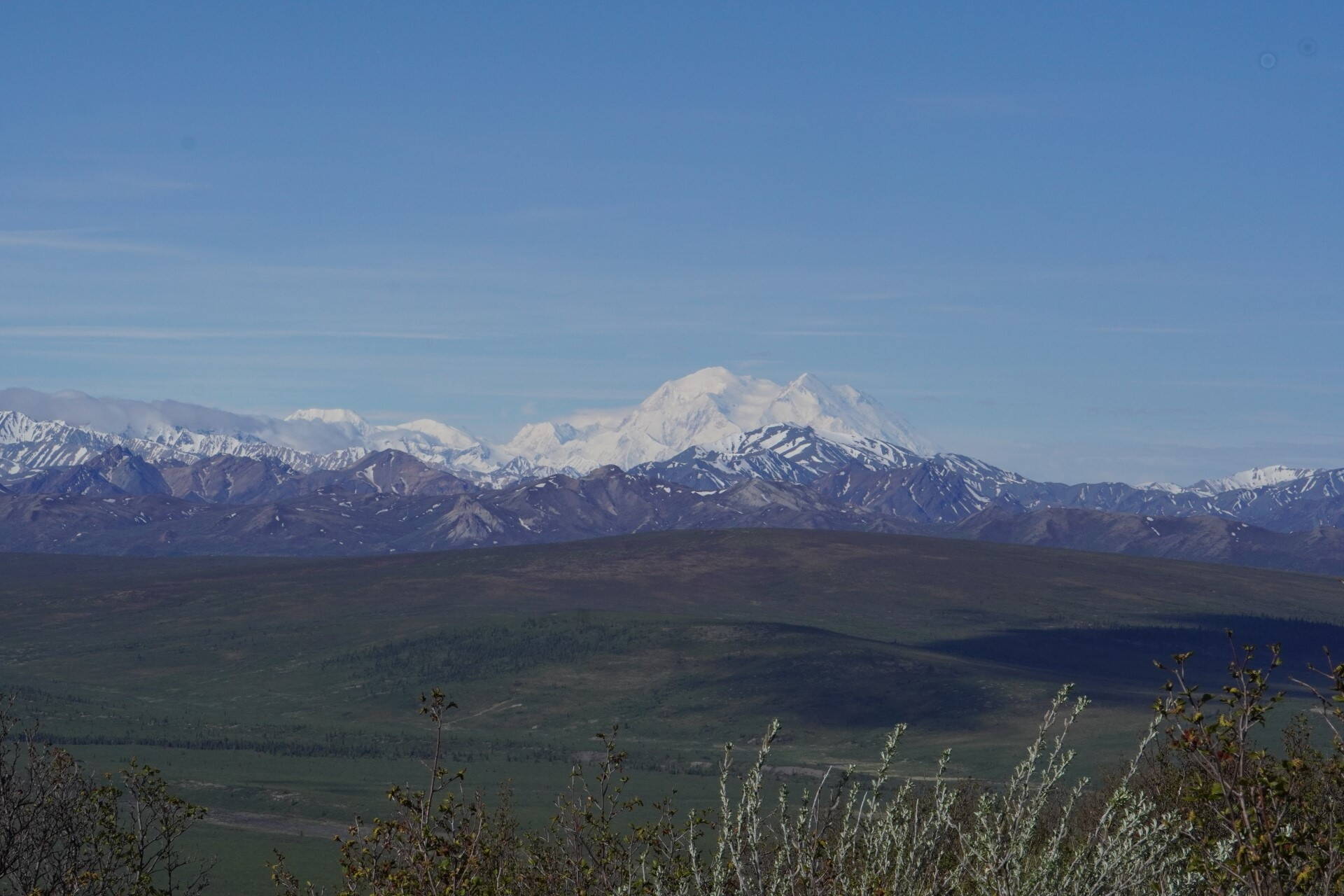
Areas like Denali National Park allow nature to be preserved which is great, so long as there are also areas that allow for the maximum benefit of Alaskans as stated in the state’s constitution. (Photo by Jeff Lund)

Areas like Denali National Park allow nature to be preserved which is great, so long as there are also areas that allow for the maximum benefit of Alaskans as stated in the state’s constitution. (Photo by Jeff Lund)

I Went to the Woods: The problem with caricatures

While people are usually up for a good fight, things seem to get particularly heated this time of year. It’s cold, it’s dark, our team’s out of the playoffs, so online we go to make anonymous posts on community Facebook pages lashing out or oversharing.

“Recognize this car? It was…by the…and I…”

Call out culture at its finest.

We show off our recently acquired PhDs in environmental science, history and economics — earned from the University of Facebook, TikTok College, Instagram State or all three.

Hunters and anglers are no exception. We argue about the latest attempt to close areas to non-federally qualified users. We debate whether or not the road to Ambler would be a significant detriment to habitat and wildlife populations, or if, like the Haul Road, it might end up being a tremendous opportunity to open up access to Alaskans.

As usual, I am conflicted. The world doesn’t work in clean Us vs. Them battles and that’s a good thing. Arguments are pitted as being Conservation vs. Preservation, but both philosophies are open to individual interpretation and vary based on geography. This is why so many people are noticeably quiet regarding certain issues. It’s not as easy to pick a side as some would make us think.

To non-hunters, hunting can very much look like antler bingo. All players checking off what they have, and comparing themselves to those who win the prizes, sponsorships and notoriety by having more.

This is the caricature that is created to influence people to join anti-hunting causes. But caricature creation is not limited to one group. The oblivious non-hunting caricature isn’t representative of the entire non-hunting population, neither is a non-resident stereotype.

Knowing this allows us to differentiate between reality and a catastrophized world in which everything and everyone is a threat unless their worldview aligns perfectly. It’s difficult to navigate at a time in which compromise is seen as weakness and people scrutinize words and phrases, ignoring intent, attempting to see if this person is friend or foe.

Listening is not a crime. You’re not a traitor for asking questions of your team and the other team. It allows us to find holes in our arguments and better articulate our own worldviews or change them if need be.

It also allows us to better recognize real threats from perceived threats. To be sure, there are both, and the ability to focus attention and meaningfully participate in productive advocacy better allows an environment of helpful change.

Many times the biggest threats end up being an inability to be flexible and feeling just in breaking the rules or prioritizing self without scrutiny. I get to circumvent the laws because I am right and I am helping us avoid an existential threat.

If we make everything an existential threat, then we start to justify breaking the same rules we feared the other side would. We become a reflection of what we hate.

There are people who will take advantage of people willing to engage in good faith. But not everyone, and it’s difficult to sniff out who is who when we create caricatures.

As we continue through the season of fish and game proposals, it’s instructive to read and ask questions. Some proposals are every bit as self-serving and bad as they seem, but some aren’t. And even if I think something is scienceless and unnecessary, doesn’t mean anyone has to agree.

We’re all Alaskans until people start talking about fishing and hunting. Then we subdivide ourselves. Commercial vs. subsistence. Local vs. non-local. Born here vs. not. If we want to get things done in a productive manner, we need to never forget we’re neighbors too.

More in Sports

Senior Juneau-Douglas High School: Yadaa.at Kalé hockey players were recognized at the Treadwell Arena on Friday, Jan. 23, 2026 before the Crimson Bears faced the Homer High School Mariners. Head coach Matt Boline and assistant coaches Mike Bovitz, Luke Adams, Jason Kohlase and Dave Kovach honored 11 seniors. (Chloe Anderson / Juneau Empire)
JDHS celebrates hockey team’s senior night with sweeping victory over Homer

The Crimson Bears saw an 8-2 victory over the Mariners Friday night.

Photo by Ned Rozell
Golds and greens of aspens and birches adorn a hillside above the Angel Creek drainage east of Fairbanks.
Alaska Science Forum: The season of senescence is upon us

Trees and other plants are simply shedding what no longer suits them

Things you won’t find camping in Southeast Alaska. (Jeff Lund/Juneau Empire)
I Went to the Woods: Sodium and serenity

The terrain of interior Alaska is captivating in a way that Southeast isn’t

An albacore tuna is hooked on a bait pole on Oct. 9, 2012, in waters off Oregon. Tuna are normally found along the U.S. West Coast but occasionally stray into Alaska waters if temperatures are high enough. Sport anglers catch them with gear similar to that used to hook salmon. (Photo provided by the National Oceanic and Atmospheric Administration/West Coast Fisheries Management and Marine Life Protection)
Brief tuna bounty in Southeast Alaska spurs excitement about new fishing opportunity

Waters off Sitka were warm enough to lure fish from the south, and local anglers took advantage of conditions to harvest species that make rare appearances in Alaska

Isaac Updike breaks the tape at the Portland Track Festival. (Photo by Amanda Gehrich/pdxtrack)
Updike concludes historic season in steeplechase heats at World Championships

Representing Team USA, the 33-year-old from Ketchikan raced commendably in his second world championships

A whale breaches near Point Retreat on July 19. (Chloe Anderson/Juneau Empire)
Weekly Wonder: The whys of whale breaching

Why whales do the things they do remain largely a mystery to us land-bound mammals

Renee Boozer, Carlos Boozer Jr. and Carlos Boozer Sr. attend the enshrinement ceremony at the Naismith Basketball Hall of Fame in Sprinfield, Massachusetts, on Saturday, Sept. 6, 2025. As a member of the 2008 U.S. men's Olympic team, Boozer Jr. is a member of the 2025 class. (Photo provided by Carlos Boozer Sr.)
Boozer Jr. inducted into Naismith Hall of Fame with ‘Redeem Team’

Boozer Jr. is a 1999 graduate of Juneau-Douglas: Yadaa.at Kale

Photo by Martin Truffer
The 18,008-foot Mount St. Elias rises above Malaspina Glacier and Sitkagi Lagoon (water body center left) in 2021.
Alaska Science Forum: The long fade of Alaska’s largest glacier

SITKAGI BLUFFS — While paddling a glacial lake complete with icebergs and… Continue reading

Photo by Jeff Lund/Juneau Empire
The point of fishing is to catch fish, but there are other things to see and do while out on a trip.
I Went to the Woods: Fish of the summer

I was amped to be out on the polished ocean and was game for the necessary work of jigging

A female brown bear and her cub are pictured near Pack Creek on Admiralty Island on July 19, 2024. (Chloe Anderson for the Juneau Empire)
Bears: Beloved fuzzy Juneau residents — Part 2

Humor me for a moment and picture yourself next to a brown bear

Isaac Updike of Ketchikan finished 16th at the World Championships track and field meet in Budapest, Hungary, on Tuesday. (Alaska Sports Report)
Ketchikan steeplechaser makes Team USA for worlds

Worlds are from Sept. 13 to 21, with steeplechase prelims starting on the first day

Old growth habitat is as impressive as it is spectacular. (Photo by Jeff Lund/Juneau Empire)
I Went to the Woods: The right investments

Engaged participation in restoration and meaningful investment in recreation can make the future of Southeast special