
I don’t have any detailed anecdotes as evidence, but I hated the three-hour trips from Hollis to Ketchikan on the M/V Chilkat. Maybe I was too young. Maybe I blocked them out. Maybe, as the Chilkat became lore, I adopted the collective memory of travelers who rolled, swayed and rocked on the Alaska Marine Highway’s smallest ship during its 30 years of service. She was sold as a scallop tender in 1988 and later capsized in a windstorm while moored in Washington.
I thought about that old beast when I looked at the print of the regionally iconic 25th anniversary poster of the AMH. The image depicts three strong ships and one that doesn’t quite fit — the Chilkat. It peaks out from behind the Columbia, the ship on which I saw the poster this summer.
I had plenty of time to scroll through my memories of nearly 40 years (Is that true? Am I that old?) of riding the ferries in Southeast Alaska. First it was cross-country, basketball, wrestling and music fest as a participant, then a coach and now as one of those people who walks slowly around the ship. I don’t feel trapped, I just like to meander with my thoughts. It also keeps the baby happy.
The ferry is charming. It demands patience. The forward lounge is peppered with people who sit and stare forward at a landscape that changes so slowly it would give Michael Bay nightmares. You’re fed visual inputs in messy angles as our ancestors did. Granted it wasn’t from a ship like this.
Over the course of your laps or during your pleasant visits with other travelers, the ocean turns a different shade of blue, a new set of peaks comes into view, or the rain clouds obscure the view and the drops themselves put you to sleep.
The food is exceptional for the price and the burgers aren’t $18 before tip. In fact, you can’t tip. It’s wonderful to be in a world in which you’re not expected to tip 18% even though you waited in line, ordered at the counter, picked up your food and bused your own table.
The hours between ports are a throwback to a time when we weren’t dragged through our days by nonstop dopamine hits on social media or YouTube. The endless scrolling wears out our brains and makes ordinary life seem boring. The tech designers who sell our attention to advertisers want us to think that the eastern coast of Admiralty Island is boring and monotonous rather than intensely wild and unforgiving. In their eyes, curiosity and imagination must be replaced with distraction that can be monetized.
I often romanticize the past, but I think it’s important to keep that perspective alive.
The ferry isn’t what it was. The heyday is gone for good. But that doesn’t mean the ferries themselves should be. They provide a critical service to rural communities in Southeast Alaska and opportunities for students interested in the myriad careers in maritime. The AMH is a cost, not a financial liability that needs to be squeezed off the books by people who would rather increase tourist traffic than fix roads, add more docks and bridges then pass the maintenance cost on to locals than prioritize local schools.
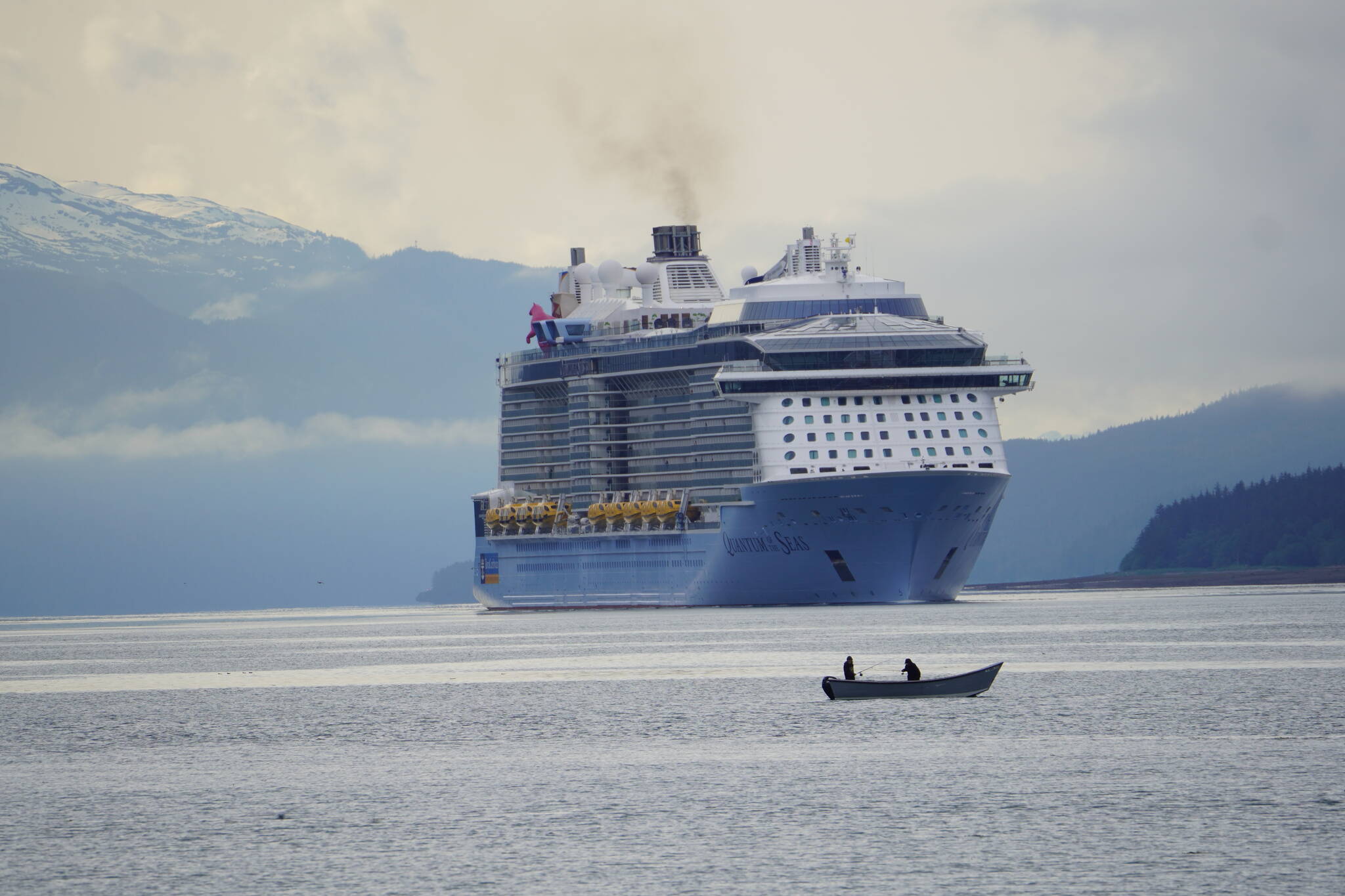
We need ships, the cruise ones and the state ones, and the duty of the government is to facilitate some semblance of balance. This is extremely difficult because of varying needs, personal philosophies and those tech people only make money when we’re engaged and arguing.
But this is a time for creativity and imagination, not repeatedly prioritizing one group at the expense of the others.
• Jeff Lund is a freelance writer based in Ketchikan. His book, “A Miserable Paradise: Life in Southeast Alaska,” is available in local bookstores and at Amazon.com. “I Went to the Woods” appears twice per month in the Sports & Outdoors section of the Juneau Empire.
