
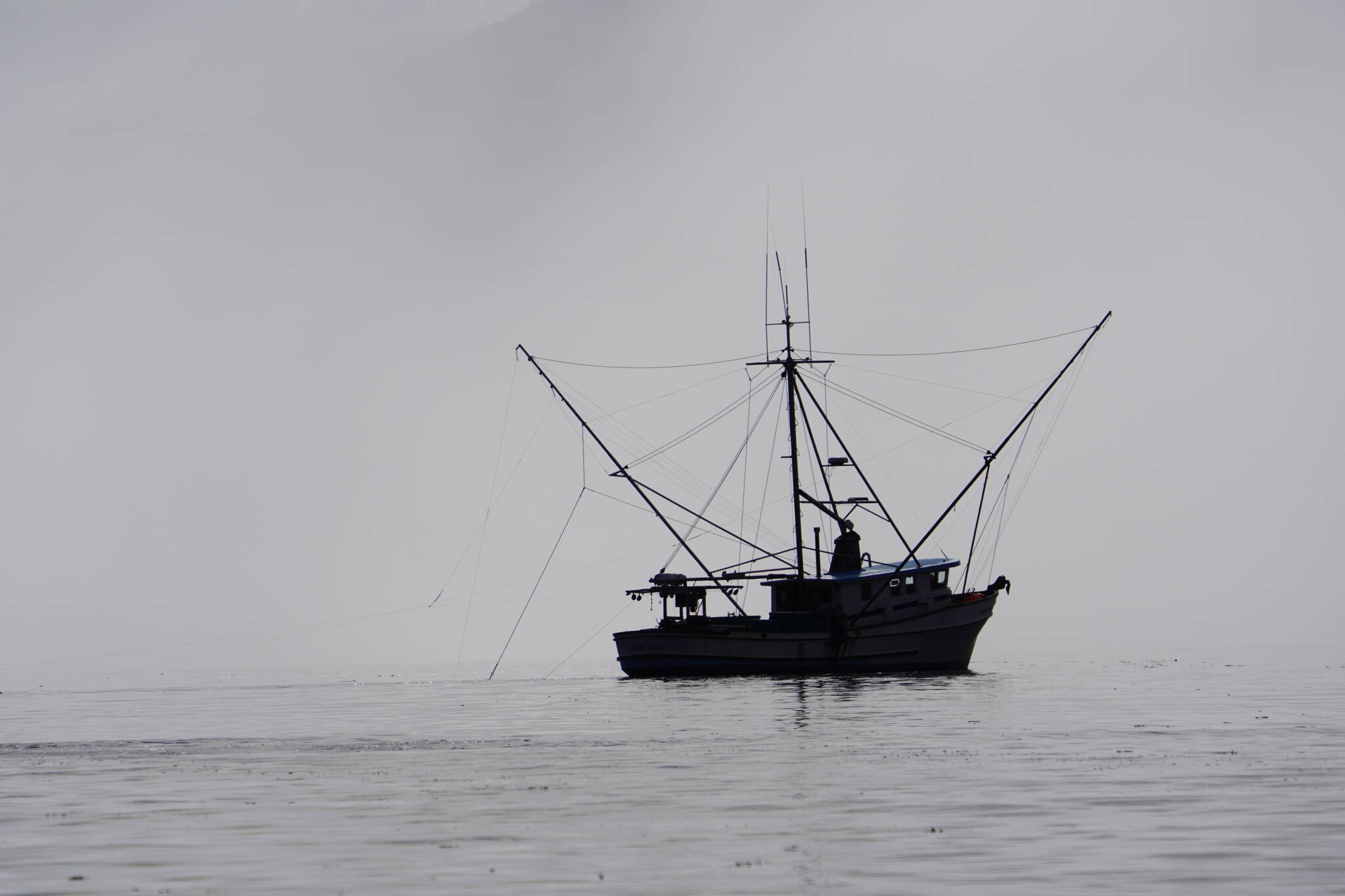
A troller fishes near Ketchikan last summer. (Photo by Jeff Lund)

A troller fishes near Ketchikan last summer. (Photo by Jeff Lund)

I Went to the Woods: Fish farm fiasco

I’ve spent almost all of my life searching for and evaluating fish.

As a boy, I rode home from the river with wild silver salmon dangling from my handlebars. My first full-time summer job was at the fish hatchery outside of Klawock.

The hatchery not only provided me with a job, but supplemented returns so more silvers were available for dinner. Humans helping nature! Win!

But that was longer ago than I would like to admit, and in that time, wild salmon populations have continued to decline while my understanding of the complexities of fisheries has increased.

Hatcheries were not a revolutionary idea to complement nature, they were built out of necessity to counter mismanagement. Hatcheries are now so spliced into the industry that eliminating them to allow wild salmon to proliferate and maintain their DNA would likely cause a crash of the industry.

The current reality was made worse by Gov. Dunleavy opening the door to closed-system fish farming. Even if it’s not farming salmon in pens floating in the ocean, it makes me uncomfortable, especially as commercial trawling continues to wipe out massive stocks of ground fish — the key ingredient in most fishmeal fed to farmed fish — and bycatch.

There is a profound difference between hatchery fish and farmed fish, and there is definitely a difference between open-system and closed-system fish farming.

Open-system farmed salmon live in stationary ocean pens. Their lives are not wild and robust, they are a manipulated species that exist exclusively for human consumption, similar to that of our beef and chicken. In some areas of the world, parts of Scotland for example, the farmed fish populations outnumber the wild stocks.

I didn’t live through the transition from eating game meat to industrialized cattle and poultry. By the time my parents moved us to Southeast Alaska in 1986, free range practices used by farmers were squeezed out by the high-yield facilities that prioritized weight and profits over nutrient density and living conditions. “Free range” became a euphemistic marketing term that meant the opportunity to increase the price while providing their chickens or cows ambiguous amounts of time outside of concentrated confines.

There is no danger in a chicken escaping from an industrial growing facility to infect the natural stock. Same with beef. We are long past that point. The mice used for testing in labs are not taken against their will from the wild.

Fish remain wild, and the suggestion that manipulation and supplementation is an answer is disheartening.

In 1992, only a single male sockeye returned to spawn in the Salmon River near Stanley, Idaho, down from 25,000 historically. Idaho is now gaining notoriety for having some of the most sustainable closed-system inland fish farms in the world. Strict and sustainable models make inland farming a viable option for urban areas far removed from where fish are harvested.

But here? In Alaska?

I have a bumper sticker that says, Friends Don’t Let Friends Eat Farmed Salmon but farmed trout is fine?

Fish farming is a perversion of nature. But it’s hard to dip my chicken wings in BBQ sauce while a rack of beef ribs smoke and maintain that attitude. I’ll never knowingly eat farmed fish and thankfully I live in a place where wild salmon endure so I won’t have to. I want wild — shrimp, salmon, crab, game meat and the occasional trout. It’s a matter of pride, not arrogance or delusion.

But it’s hard not to see dark waters ahead.

• Jeff Lund is a freelance writer based in Ketchikan. His book, “A Miserable Paradise: Life in Southeast Alaska,” is available in local bookstores and at Amazon.com. “I Went to the Woods” appears twice per month in the Sports & Outdoors section of the Juneau Empire.

More in Sports

Senior Juneau-Douglas High School: Yadaa.at Kalé hockey players were recognized at the Treadwell Arena on Friday, Jan. 23, 2026 before the Crimson Bears faced the Homer High School Mariners. Head coach Matt Boline and assistant coaches Mike Bovitz, Luke Adams, Jason Kohlase and Dave Kovach honored 11 seniors. (Chloe Anderson / Juneau Empire)
JDHS celebrates hockey team’s senior night with sweeping victory over Homer

The Crimson Bears saw an 8-2 victory over the Mariners Friday night.

Photo by Ned Rozell
Golds and greens of aspens and birches adorn a hillside above the Angel Creek drainage east of Fairbanks.
Alaska Science Forum: The season of senescence is upon us

Trees and other plants are simply shedding what no longer suits them

Things you won’t find camping in Southeast Alaska. (Jeff Lund/Juneau Empire)
I Went to the Woods: Sodium and serenity

The terrain of interior Alaska is captivating in a way that Southeast isn’t

An albacore tuna is hooked on a bait pole on Oct. 9, 2012, in waters off Oregon. Tuna are normally found along the U.S. West Coast but occasionally stray into Alaska waters if temperatures are high enough. Sport anglers catch them with gear similar to that used to hook salmon. (Photo provided by the National Oceanic and Atmospheric Administration/West Coast Fisheries Management and Marine Life Protection)
Brief tuna bounty in Southeast Alaska spurs excitement about new fishing opportunity

Waters off Sitka were warm enough to lure fish from the south, and local anglers took advantage of conditions to harvest species that make rare appearances in Alaska

Isaac Updike breaks the tape at the Portland Track Festival. (Photo by Amanda Gehrich/pdxtrack)
Updike concludes historic season in steeplechase heats at World Championships

Representing Team USA, the 33-year-old from Ketchikan raced commendably in his second world championships

A whale breaches near Point Retreat on July 19. (Chloe Anderson/Juneau Empire)
Weekly Wonder: The whys of whale breaching

Why whales do the things they do remain largely a mystery to us land-bound mammals

Renee Boozer, Carlos Boozer Jr. and Carlos Boozer Sr. attend the enshrinement ceremony at the Naismith Basketball Hall of Fame in Sprinfield, Massachusetts, on Saturday, Sept. 6, 2025. As a member of the 2008 U.S. men's Olympic team, Boozer Jr. is a member of the 2025 class. (Photo provided by Carlos Boozer Sr.)
Boozer Jr. inducted into Naismith Hall of Fame with ‘Redeem Team’

Boozer Jr. is a 1999 graduate of Juneau-Douglas: Yadaa.at Kale

Photo by Martin Truffer
The 18,008-foot Mount St. Elias rises above Malaspina Glacier and Sitkagi Lagoon (water body center left) in 2021.
Alaska Science Forum: The long fade of Alaska’s largest glacier

SITKAGI BLUFFS — While paddling a glacial lake complete with icebergs and… Continue reading

Photo by Jeff Lund/Juneau Empire
The point of fishing is to catch fish, but there are other things to see and do while out on a trip.
I Went to the Woods: Fish of the summer

I was amped to be out on the polished ocean and was game for the necessary work of jigging

A female brown bear and her cub are pictured near Pack Creek on Admiralty Island on July 19, 2024. (Chloe Anderson for the Juneau Empire)
Bears: Beloved fuzzy Juneau residents — Part 2

Humor me for a moment and picture yourself next to a brown bear

Isaac Updike of Ketchikan finished 16th at the World Championships track and field meet in Budapest, Hungary, on Tuesday. (Alaska Sports Report)
Ketchikan steeplechaser makes Team USA for worlds

Worlds are from Sept. 13 to 21, with steeplechase prelims starting on the first day

Old growth habitat is as impressive as it is spectacular. (Photo by Jeff Lund/Juneau Empire)
I Went to the Woods: The right investments

Engaged participation in restoration and meaningful investment in recreation can make the future of Southeast special