
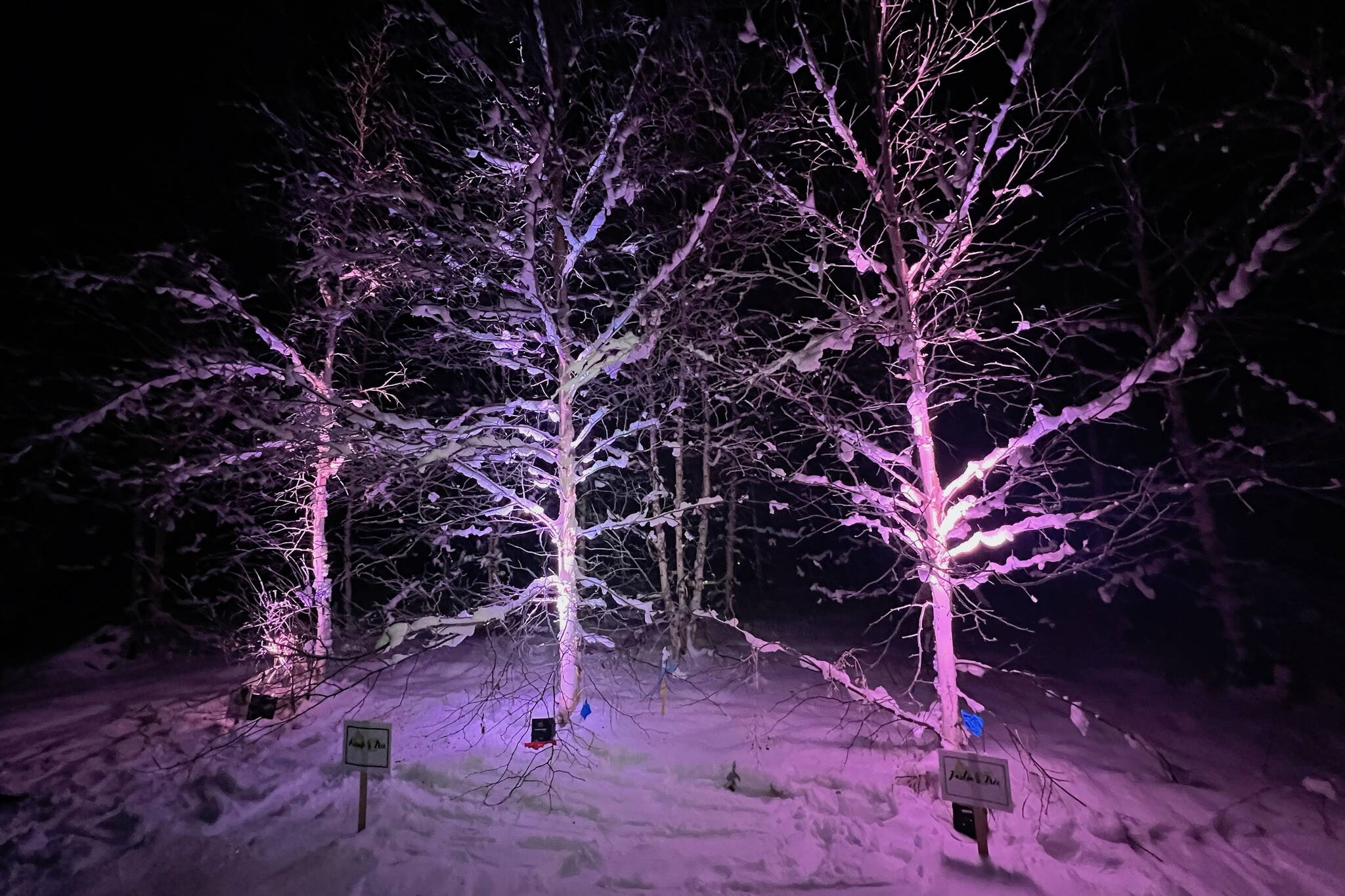
On a recent afternoon, middle Alaska slipped into darkness.
But a few hours after the 3:17 p.m. sunset, a golden light appeared in a field cleared of trees by a farmer more than a century ago.
People had gathered there with candle lanterns on the quiet acreage of the University of Alaska Fairbanks campus to remember souls lost in July 2023. That’s when a helicopter crash in far-north Alaska took the lives of pilot Tony Higdon and the scientists accompanying him: Justin Germann, Tori Moore and Ronnie Daanen.
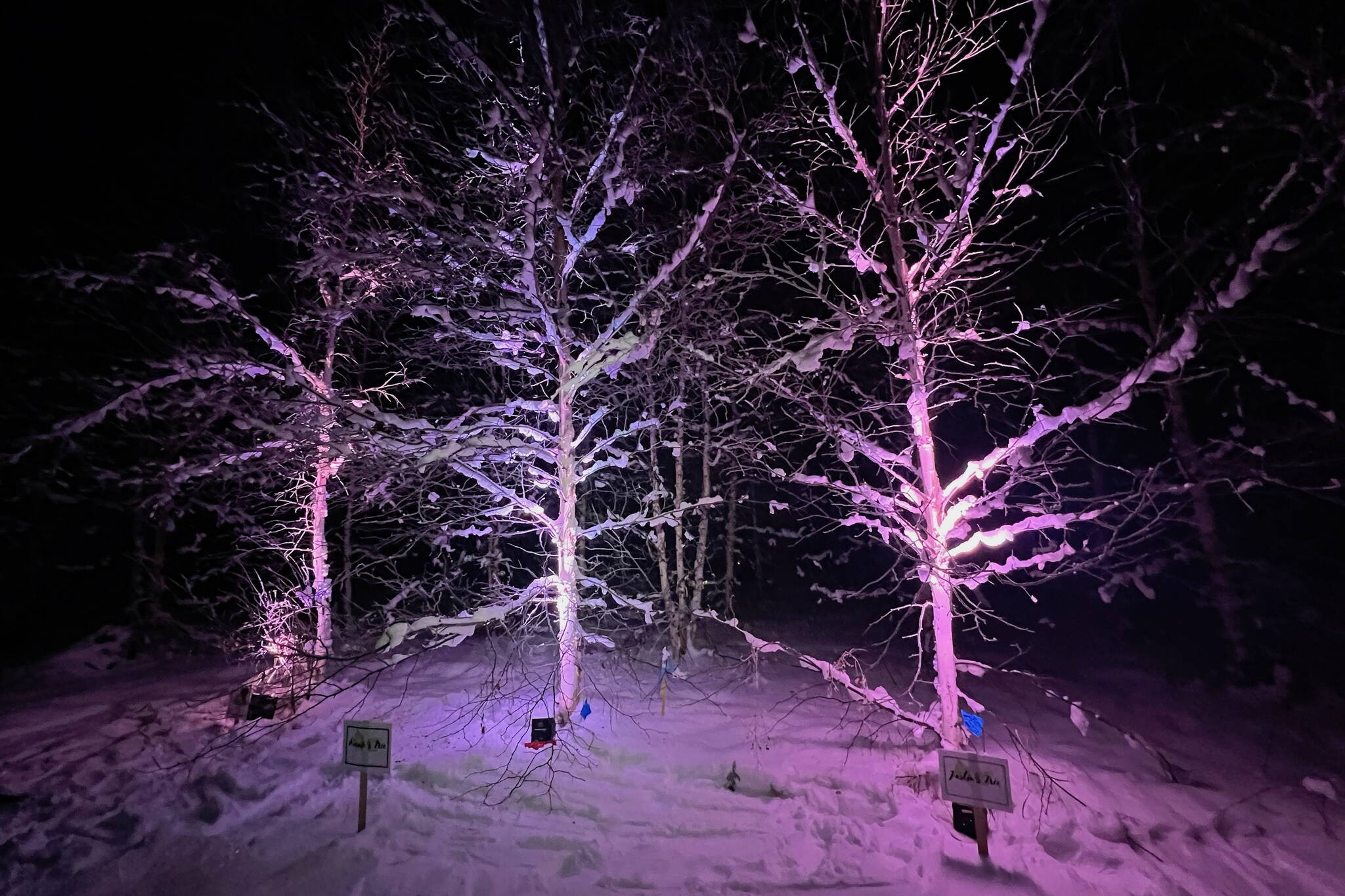
Three birch trees stand in a field at the University of Alaska Fairbanks during a recent celebration for three scientists killed in a helicopter crash in July. From left, the trees honor Tori Moore, Ronnie Daanen and Justin Germann. (Photo by Alyssa Enriquez)
Inside a plot of poplar and birch trees on the old farm field was a young woman. She wore mukluks, a quilted black skirt, a red jacket and a red hat. Her name is Annemarie Timling. Ronnie Daanen was her father.
Annemarie was standing on the snow that evening with her twin brother Tane and her mother Ina Timling, as well as a few dozen others who lost friends or family members on that July day.
Ronnie (Ronald) Daanen was born in the Netherlands. With his wife and young twins, he moved to Alaska in 2004.
Here, he became intrigued with — among many other things — giant blobs of earth and trees and rock that flow downhill toward the Dalton Highway. He starred in goofy rap videos about those mysterious “frozen debris lobes” of the Brooks Range with his UAF colleague Margaret Darrow. She remembers driving more than 30,000 cumulative miles together to their far-north field sites over the years. Darrow misses her friend and cherishes the memories of them “laughing at ourselves so hard that we cried.”
Back at the candlelit remembrance beneath the branches, Daanen’s 24-year-old daughter Annemarie helped choose a tree there in memory of her father, who stood well over 6 feet tall.
“I gravitated to this tree very quickly, because it is one of the tallest trees in the plot,” she said.
She gestured to a tree that — somewhat unusual for a birch here — has branches that extend straight outward from the trunk.
“I kind of felt like I was walking into a hug.”
That sentence hit this observer right in the heart.
She pointed out that the birch tree representing her father stands between trees chosen for Moore and Germann.
“We were like, ‘Oh, how fitting is that?’ The branches are reaching into the other two trees,” Annemarie said. “My dad took a lot of pride in his mentorship of Justin and Tori.”
Daanen, 51, Germann, 27, and Moore, 26, all worked for the State of Alaska Division of Geological and Geophysical Surveys.
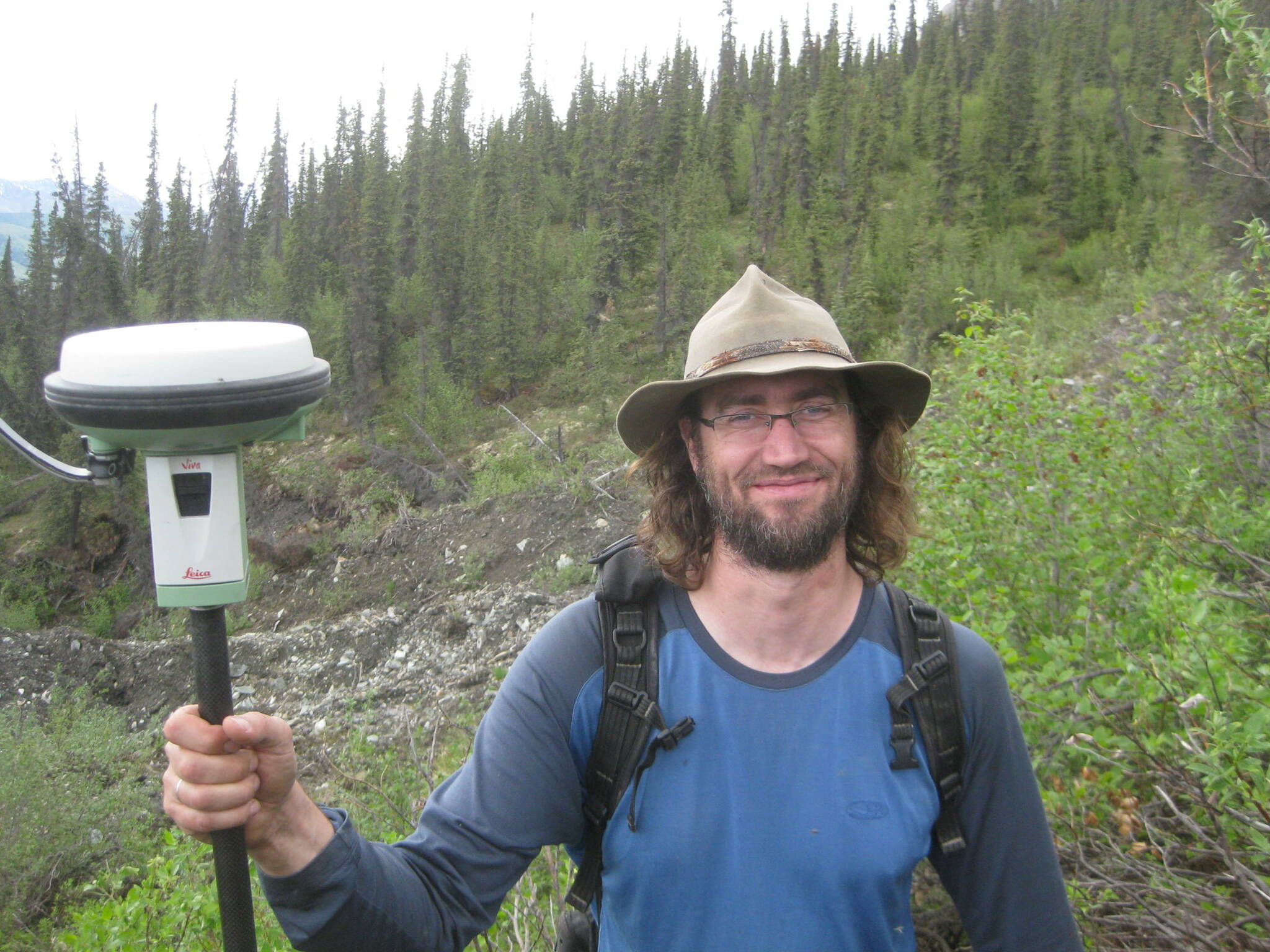
Ronnie Daanen measures the movement of a frozen debris lobe off the Dalton Highway north of Coldfoot in 2014. (Photo by Margaret Darrow)
The birch trees chosen in their memory are “boundary trees.” UAF’s Jan Dawe and others planted them on the old UAF hay field — now part of the university’s Agricultural and Forestry Experiment Station — to protect other birch trees that are part of a long-term experiment.
There are 130 birch trees in the one-third acre study plot, part of the OneTree Alaska project that Dawe oversees. Researchers are using the trees to see how a longer growing season is affecting Interior Alaska birch trees.
Long before he journeyed across the Atlantic and into the Arctic to study permafrost, Daanen studied arboriculture, or as he fondly called it, being a tree nurse.
“I really like the idea of my dad kind of being a guardian to the future of science, to the trees inside,” Annemarie said.
Annemarie said that while her twin brother Tane excels in the creative realm, she enjoys the sciences.
After graduating this summer from Gallaudet University in Washington, D.C., Annemarie entered a summer research program with Woodwell Climate Research Center in Massachusetts.
With them, she visited the Yukon-Kuskokwim river delta and became intrigued by the different colors of some of the more than 100,000 lakes in the region. Some are bright green, some brown, some white and some blue. She wants to find out why they are different.
But first, she said, she is taking time just to be with her mother and brother. A pause before making any big life decisions.
When the time comes for Annemarie to perhaps become a scientist like both her father and mother (who studies soil microbes in the Arctic), she will know what to wear.
Her father often sported a wide-brimmed hat. As a child, to Annemarie the hat represented her dad’s wisdom, strength, lighthearted humor and an “understated coolness.”
When she was 12, Annemarie begged her father to find her a similar hat. He did.
Someday, when she is ready, Annemarie will step onto squishy wet Alaska carrying a curiosity similar to her father’s. She will wear rubber boots and her own wide-brimmed hat.
• Since the late 1970s, the University of Alaska Fairbanks’ Geophysical Institute has provided this column free in cooperation with the UAF research community. Ned Rozell is a science writer for the Geophysical Institute.
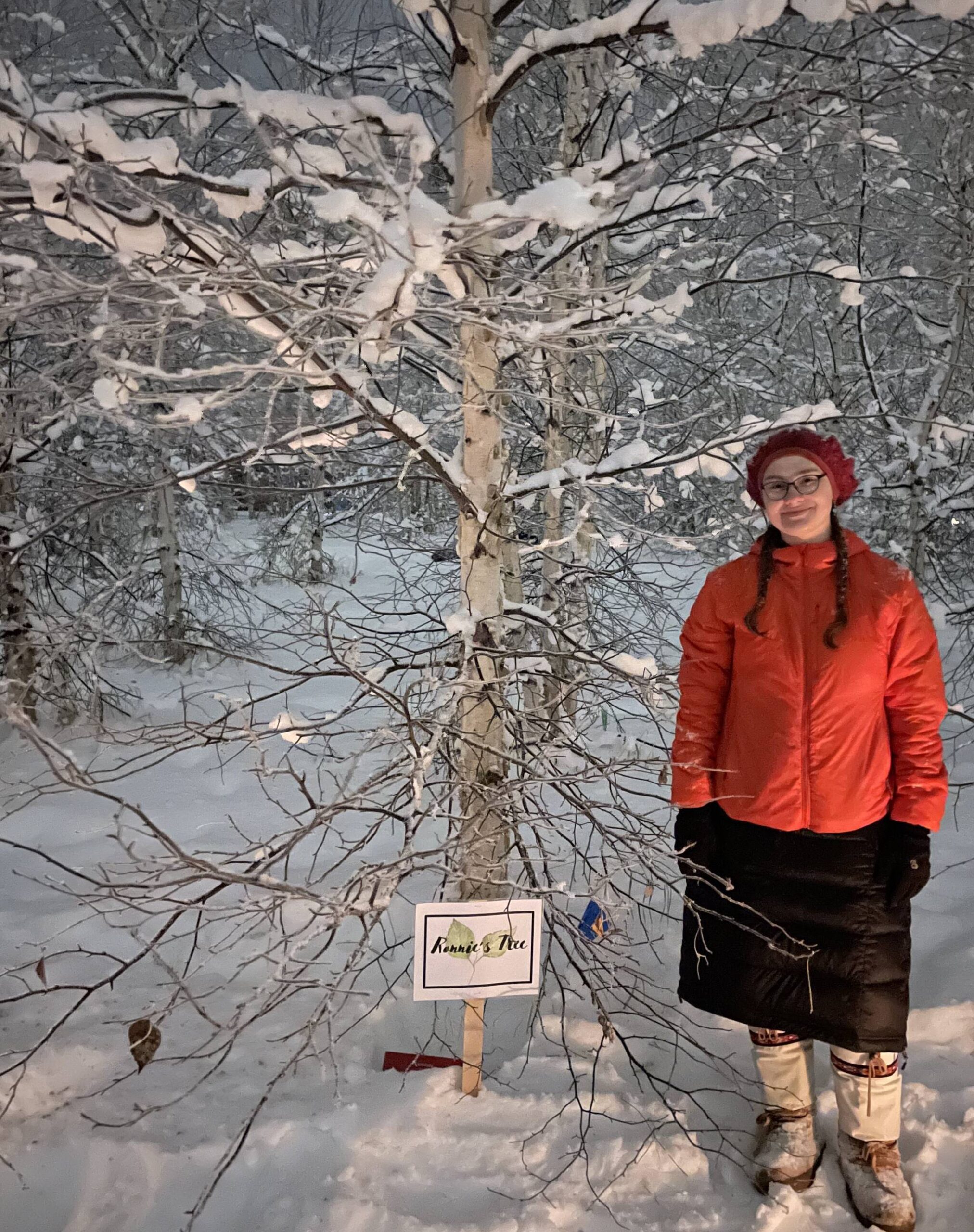
Annemarie Timling stands near a birch tree she helped choose to honor her father Ronnie Daanen, who died in a helicopter crash in July. (Photo by Ned Rozell)
