
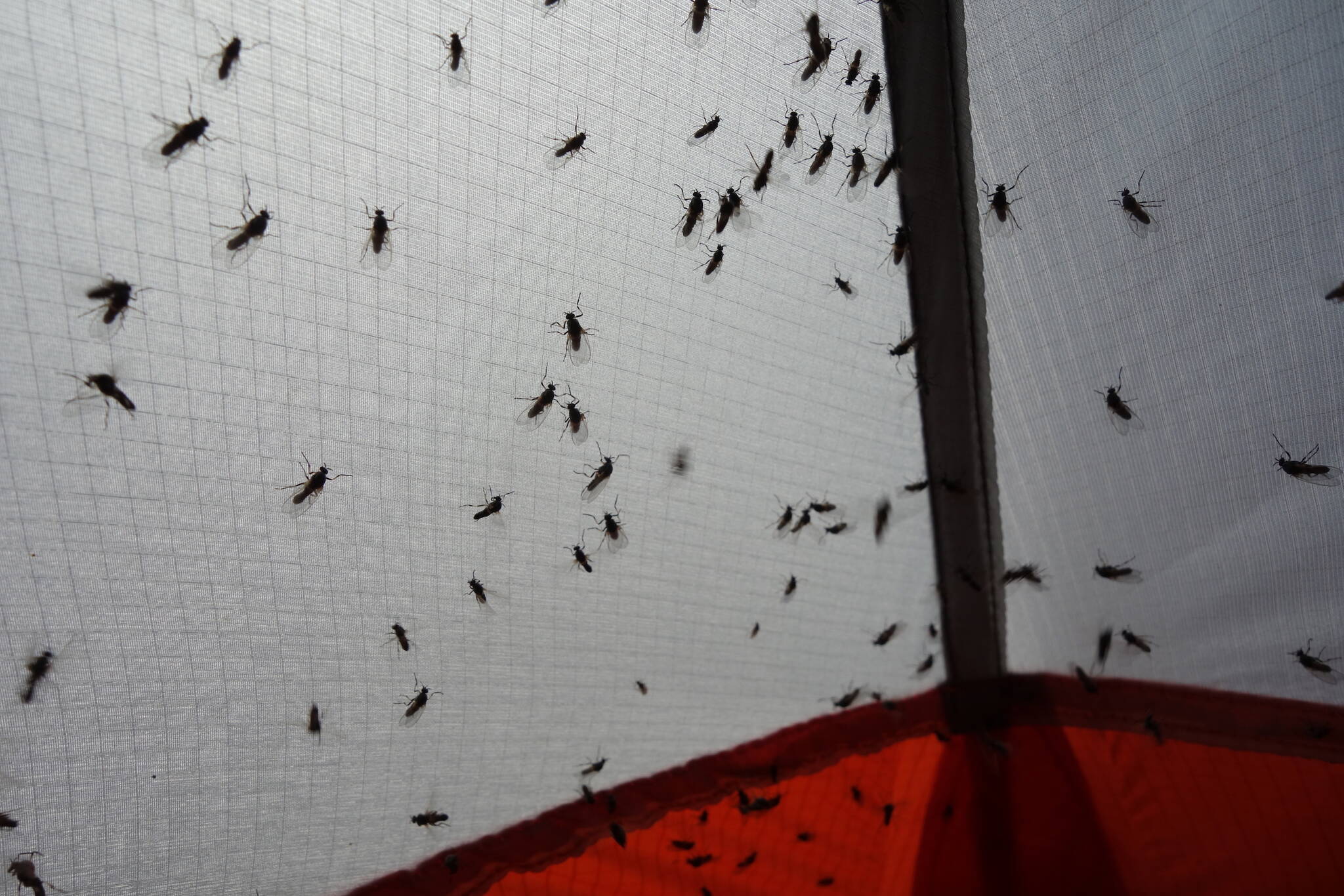
Insects like these flies clinging to a tent seem to be in ample supply in Alaska’s boreal forest. (Photo by Ned Rozell)

Insects like these flies clinging to a tent seem to be in ample supply in Alaska’s boreal forest. (Photo by Ned Rozell)

Alaska Science Forum: Insects of Alaska forest humming along

Recent long-term studies revealed a three-quarters reduction of insects in parts of Germany and an 80 percent decline of pollinating flies at a field site in Greenland.

What’s going on with numbers of Alaska insects?

Two scientists recently completed a study on the abundance and variety of insects in the spruce forests of Alaska. If the study is duplicated in the future, researchers will be able to see whether Alaska is changing and how it compares to what is happening elsewhere on the planet.

“There are lots of disturbing reports coming from a lot of places,” said Derek Sikes, curator of the Insect Collection at the University of Alaska Museum of the North in Fairbanks.

Sikes is co-author of a new study of insects sampled in three areas of Alaska’s boreal forest. Blanketing land masses of the north from Alaska to the easternmost provinces in Canada, the boreal forest also covers parts of Scandinavia, Russia and Asia.
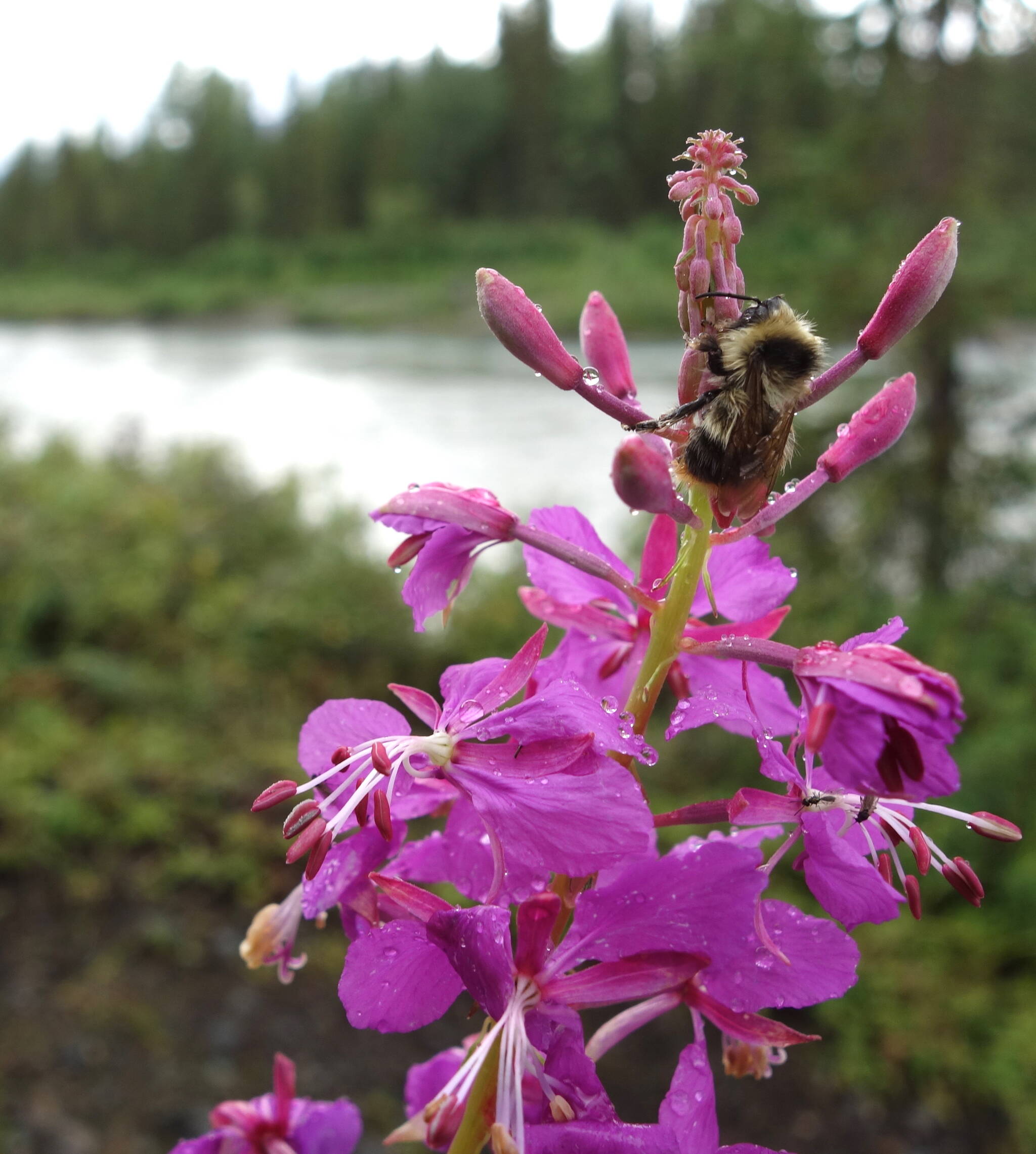
Insects like this bee clinging to a fireweed blossom seem to be in ample supply in Alaska’s boreal forest. (Photo by Ned Rozell)

Insects like this bee clinging to a fireweed blossom seem to be in ample supply in Alaska’s boreal forest. (Photo by Ned Rozell)

Sikes teamed up with Julie Hagelin of the Alaska Department of Fish and Game in Fairbanks on the study.

Hagelin is researching the olive-sided flycatcher, a songbird that winters as far as South America and flies north to Alaska each summer to nest and raise chicks.

Olive-sided flycatchers — birds with a 78 percent drop in global population since 1970 — eat flying insects like dragonflies, yellowjackets, butterflies and mayflies. Coming and going from a prominent perch like the top of a dead tree, they zoom about to pluck everything they eat from the air.

As part of her study, Hagelin sampled flying insects to see what flycatchers might eat. Her study sites were in Anchorage, Fairbanks and the Tetlin National Wildlife Refuge near Tok. During three recent years, she, Sikes and their colleagues retrieved more than 115,000 insect specimens from tent-like traps suspended in trees and others on the ground.

Sikes and students at the UA Museum of the North identified those insects and the timing with which they were available to birds. Overall, they found a strong midsummer pulse of insect biomass driven in part by temperature (warmer meant more insects). They also found 49 new state beetle records and 10 beetles not only new to Alaska but “new to the universe.”

Those discoveries add to a long list of species Sikes has documented in Alaska. He has been everywhere from the Aleutians to the North Slope to Southeast in his 18 years as the lead entomologist at the museum. Working with Hagelin allowed him a detailed look into the boreal forest in which Fairbanks sits.

“This was my first deep dive into the insect fauna of my backyard,” he said.
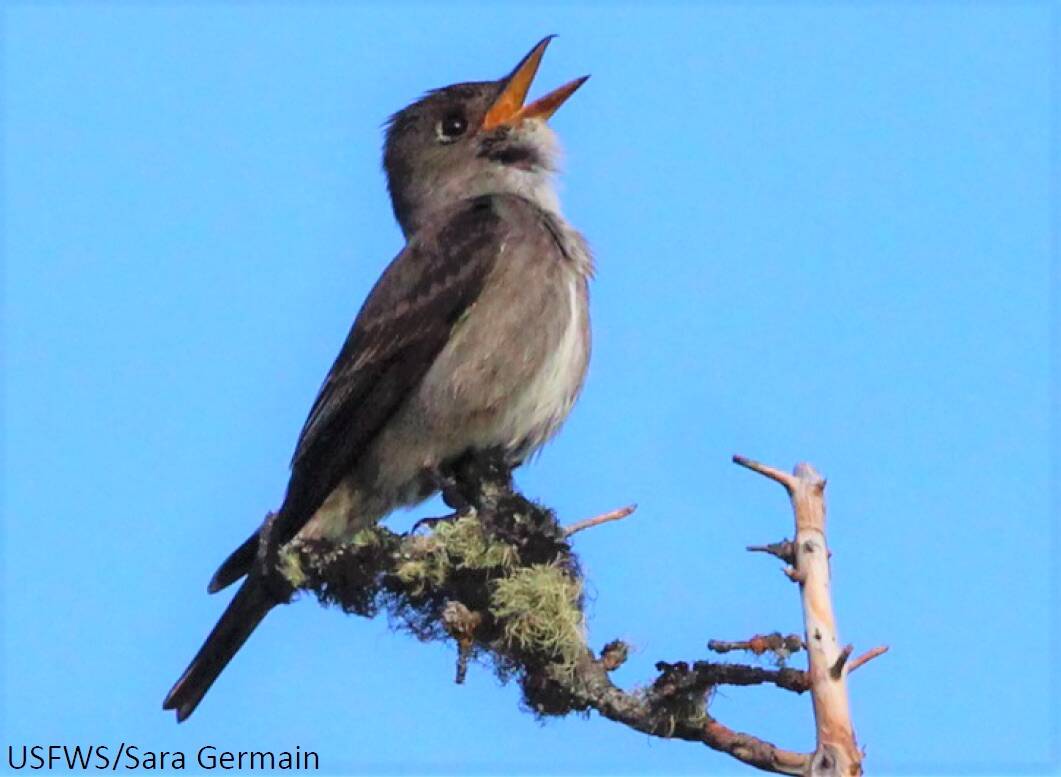
Birds like this singing olive-sided flycatcher are dependent upon the many insects now buzzing over and on Alaska. (Photo by Sara Germain)

Birds like this singing olive-sided flycatcher are dependent upon the many insects now buzzing over and on Alaska. (Photo by Sara Germain)

In identifying all those boreal-forest insects, Sikes found that moths were the most numerous type of insect in Fairbanks and Tetlin, while flies were the most numerous type around Anchorage.

In analyzing those thousands of insects — which altogether weighed about as much as an iPhone — Sikes and Hagelin found that Alaska’s boreal forest is rich in insect life.

Besides their ability to feed birds, why should anyone care about insects?

“Insects are like a glue that holds ecosystems together,” Sikes said.

Insects flit from plant to plant carrying pollen grains on their bodies, spreading reproductive material and enabling new plants. Those plants are food sources for us and creatures that we eat.

Alaska has abundant space for those uncounted billions of insects, with fewer miles of road than Vermont.

“Unlike the problems we see in the Lower 48 with habitat fragmentation, degradation and bird decline, we have intact ecosystems and thriving populations here,” Hagelin said.

“Alaska’s almost 200 years behind the Lower 48 and the Tropics in regards to (habitat) degradation,” Sikes said.

• Since the late 1970s, the University of Alaska Fairbanks’ Geophysical Institute has provided this column free in cooperation with the UAF research community. Ned Rozell ned.rozell@alaska.edu is a science writer for the Geophysical Institute.

More in Sports

The Juneau-Douglas High School: Yadaa.at Kalé Crimson Bears won fourth place during the Division II Hockey State championships in Palmer last weekend. Photo courtesy of Rapi Sotoa
Juneau takes home fourth place during high school state hockey tournament

The Crimson Bears also received the Sportsmanship Award last weekend.

Senior Juneau-Douglas High School: Yadaa.at Kalé hockey players were recognized at the Treadwell Arena on Friday, Jan. 23, 2026 before the Crimson Bears faced the Homer High School Mariners. Head coach Matt Boline and assistant coaches Mike Bovitz, Luke Adams, Jason Kohlase and Dave Kovach honored 11 seniors. (Chloe Anderson / Juneau Empire)
JDHS celebrates hockey team’s senior night with sweeping victory over Homer

The Crimson Bears saw an 8-2 victory over the Mariners Friday night.

Photo by Ned Rozell
Golds and greens of aspens and birches adorn a hillside above the Angel Creek drainage east of Fairbanks.
Alaska Science Forum: The season of senescence is upon us

Trees and other plants are simply shedding what no longer suits them

Things you won’t find camping in Southeast Alaska. (Jeff Lund/Juneau Empire)
I Went to the Woods: Sodium and serenity

The terrain of interior Alaska is captivating in a way that Southeast isn’t

An albacore tuna is hooked on a bait pole on Oct. 9, 2012, in waters off Oregon. Tuna are normally found along the U.S. West Coast but occasionally stray into Alaska waters if temperatures are high enough. Sport anglers catch them with gear similar to that used to hook salmon. (Photo provided by the National Oceanic and Atmospheric Administration/West Coast Fisheries Management and Marine Life Protection)
Brief tuna bounty in Southeast Alaska spurs excitement about new fishing opportunity

Waters off Sitka were warm enough to lure fish from the south, and local anglers took advantage of conditions to harvest species that make rare appearances in Alaska

Isaac Updike breaks the tape at the Portland Track Festival. (Photo by Amanda Gehrich/pdxtrack)
Updike concludes historic season in steeplechase heats at World Championships

Representing Team USA, the 33-year-old from Ketchikan raced commendably in his second world championships

A whale breaches near Point Retreat on July 19. (Chloe Anderson/Juneau Empire)
Weekly Wonder: The whys of whale breaching

Why whales do the things they do remain largely a mystery to us land-bound mammals

Renee Boozer, Carlos Boozer Jr. and Carlos Boozer Sr. attend the enshrinement ceremony at the Naismith Basketball Hall of Fame in Sprinfield, Massachusetts, on Saturday, Sept. 6, 2025. As a member of the 2008 U.S. men's Olympic team, Boozer Jr. is a member of the 2025 class. (Photo provided by Carlos Boozer Sr.)
Boozer Jr. inducted into Naismith Hall of Fame with ‘Redeem Team’

Boozer Jr. is a 1999 graduate of Juneau-Douglas: Yadaa.at Kale

Photo by Martin Truffer
The 18,008-foot Mount St. Elias rises above Malaspina Glacier and Sitkagi Lagoon (water body center left) in 2021.
Alaska Science Forum: The long fade of Alaska’s largest glacier

SITKAGI BLUFFS — While paddling a glacial lake complete with icebergs and… Continue reading

Photo by Jeff Lund/Juneau Empire
The point of fishing is to catch fish, but there are other things to see and do while out on a trip.
I Went to the Woods: Fish of the summer

I was amped to be out on the polished ocean and was game for the necessary work of jigging

A female brown bear and her cub are pictured near Pack Creek on Admiralty Island on July 19, 2024. (Chloe Anderson for the Juneau Empire)
Bears: Beloved fuzzy Juneau residents — Part 2

Humor me for a moment and picture yourself next to a brown bear

Isaac Updike of Ketchikan finished 16th at the World Championships track and field meet in Budapest, Hungary, on Tuesday. (Alaska Sports Report)
Ketchikan steeplechaser makes Team USA for worlds

Worlds are from Sept. 13 to 21, with steeplechase prelims starting on the first day