
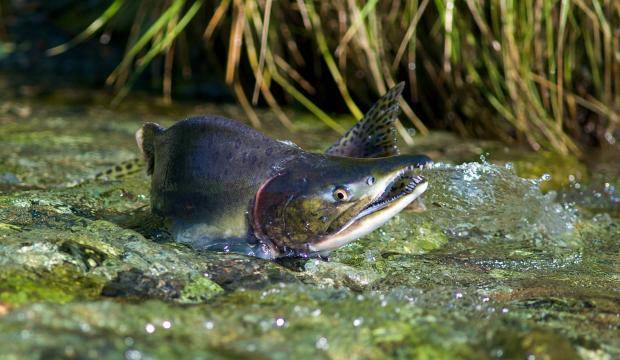
Fifteen years ago when I researched and wrote the book “King of Fish: The Thousand Year Run of Salmon,” I spent a lot of time looking at where societies got it wrong on salmon. That has made it all the more refreshing every time I have come to Alaska to enjoy a place that has gotten it right — so far. More than anywhere else in the world, Alaska has enabled its people to enjoy the rich and varied benefits that come with healthy salmon runs.
But it’s also clear to me that Alaska is at a crossroads in its salmon history. While many Alaskans can still depend on strong fisheries, the first serious signs of decline in locales across the state raise critical questions about the long-term health of Alaskan salmon. And if there’s anything to learn from the history of places where people have lived with salmon, it is to beware another “death by a thousand cuts” playing out in a blind march toward degraded habitat and dwindling runs.
Over the last 1,000 years, humans inadvertently conducted several full-scale experiments on how salmon fare when people make big changes to rivers, streams, lakes and ponds. The takeaway? A slow-motion train wreck with grim results for salmon in Great Britain and across Europe, then New England, and finally California and the Pacific Northwest.
In all three instances, we’ve learned that a lot of little changes across the land can add up to big changes that undermine the natural systems salmon depend on. And these small, incremental losses that seem so harmless one-by-one — here a tributary stream blocked by a culvert, there a pond filled in to make way for some other use — are insidious because each domino falls with little notice. Yet add them all up and they become difficult to remedy.
The sad, ongoing story of Pacific Northwest salmon is all too familiar. Salmon remain central to the region’s identity, but most salmon served up in Seattle restaurants comes from Alaskan waters. Declining habitat for spawning and rearing was and remains one of the most important factors depressing runs in the Pacific Northwest. While a few are coming back from the brink at great taxpayer expense, many teeter on the edge of extinction. We’re a long way from the days captured in old black-and-white photographs of boats and docks loaded with giant kings.
It makes you wonder why earlier generations in Great Britain, New England and the Pacific Northwest chose to throw it all away, doesn’t it? Except they didn’t. No one set out to destroy once mighty salmon runs. Nor were the fish unappreciated. Salmon were revered much as Alaskans love them today. But good intentions were never enough to save salmon as the damage unfolded project by project, one river at a time.
As for Alaska, what will your future hold? How will the state cope with the pressure to permit gradual losses of lake, river and wetland habitat across the landscape from adding up to large impacts? It would be tragic to lose salmon anywhere in Alaska because we failed to learn the lessons of history.
Fortunately, there’s a chance for Alaska to get it right on habitat and address some unfinished business. While it adopted one of the most progressive fisheries management approaches in the world and reserved fish, game and waterways for the people at statehood, Alaska has never fully articulated the methods of protecting wild fish habitat. Meanwhile, foreign mining companies rushing to use the legal vacuum and subsume habitat with open-pit mines illustrate the importance of a pro-active habitat protection movement now taking hold in Alaska. Given salmon’s history, it’s not a moment too soon. What started out as conversations among fishermen and the state Board of Fish has materialized in the state house in a proposed law.
Given how fundamental salmon are to Alaska, state leaders need to pass meaningful salmon habitat protections. By defining proper protections for salmon habitat now, Alaska will live up to its legacy as the last and greatest bastion for wild salmon. Seize the chance to break the sorry cycle of historical loss for the king of fish. The people of Alaska — and their descendants — will not regret it.
• David R. Montgomery is a professor at the University of Washington and the author of King of Fish: The Thousand-Year Run of Salmon and, most recently, Growing A Revolution: Bringing Our Soil Back to Life.
