
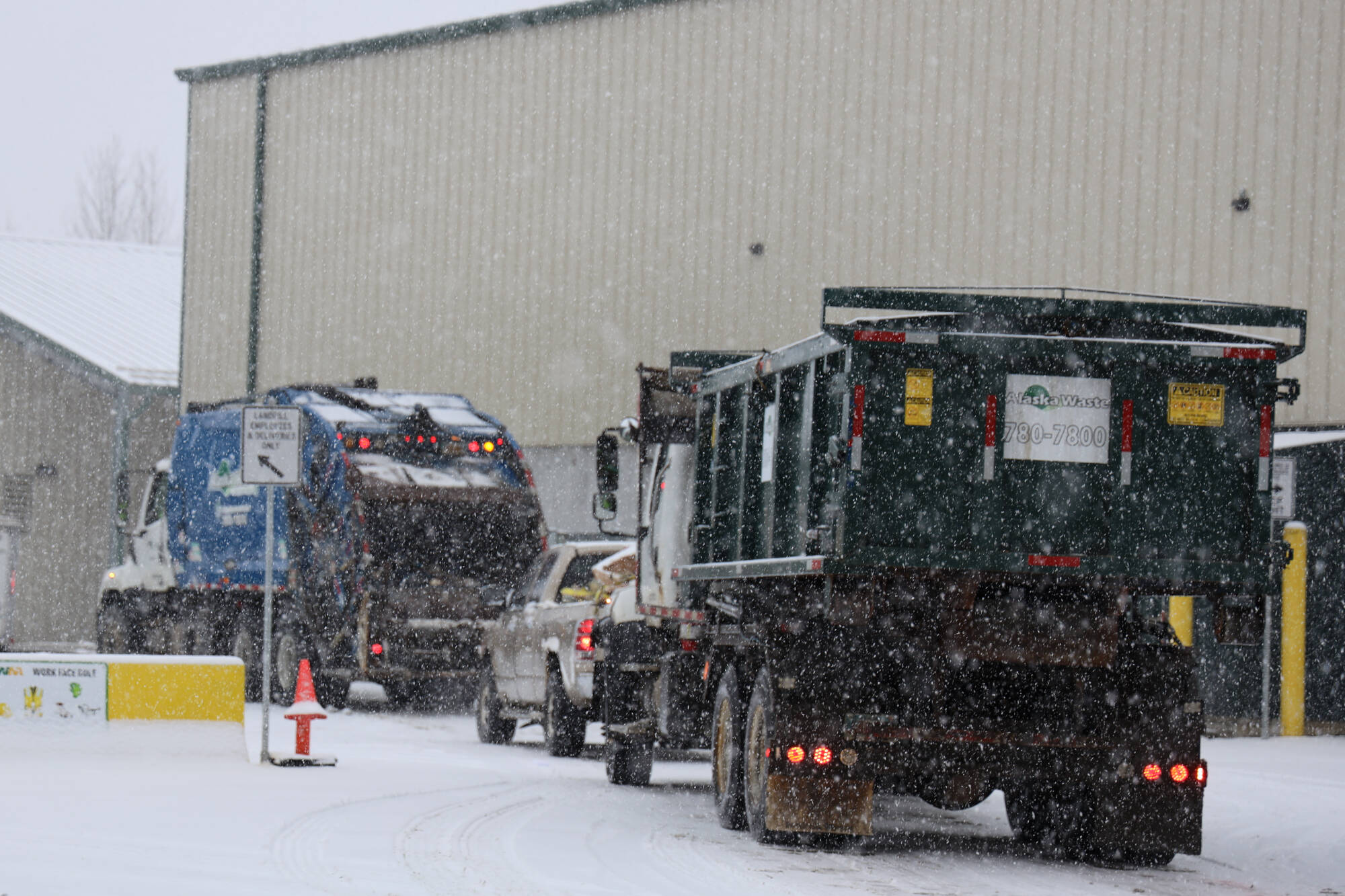
This week, Waste Management, the Texas based company that owns and operates the landfill, nearly tripled the charge for residents who chose to dump their waste there. If Juneau’s assembly had similarly decided to raise fees for wastewater collection and treatment, the community would rightfully be up in arms.
WM is not accountable to the public though because it’s a private business. They’re able to conceal the accounting that justifies raising dump fees by 185 percent. And because they have a near monopoly on waste disposal, there’s no competitive pressure preventing them from doing it.
But they shouldn’t expect anyone to believe their decision had anything to do with “helping the community achieve greater sustainability.”
That’s a line they used after announcing the immediate rate hike. It was prefaced by the idea that “if everyone signed up for curbside collection,” then there would be “one truck going to that landfill rather than 50 cars,” thereby reducing the community’s carbon footprint.
That’s a badly flawed argument. People who don’t generate enough waste for weekly curbside collection up aren’t making weekly trips to the dump. If the periodic cost of dumping their waste is less than the monthly curbside collection fee, than it’s a simple economic decision not to pay for a service that’s not regularly being used.
If WM really wanted to prolong the service life of their landfill, they’d consider offering bi-weekly and monthly curbside collection plans at a lower cost. Not only would dump users be more inclined to switch to curbside collection. Other households would have an incentive to reduce the waste they send to the landfill.
Many residents are already doing that by paying $20 per month for WM’s bi-weekly curbside recycling. Others are taking advantage of RecycleWorks, the city’s cost-free recycling program. For those who bring waste to the landfill, RecycleWorks helps stretch the time between dump runs.
Another waste disposal option is Juneau Composts! It’s a private business that charges for curbside or drop off collection of food scraps and yard waste. They turn that into compost and sell it for local gardening.
However, Juneau Compost! isn’t s a serious competitor for WM. About 98% of the food scraps generated by Juneau residents is going into the landfill. Most people are choosing the cheaper and easier alternative of mixing that waste with the rest of the trash picked up by WM. They simply aren’t interested in resource conservation unless it’s accompanied by substantial cost savings.
Perhaps the best story to illustrate that truth is Juneau’s 2008 power emergency.
After avalanches destroyed transmission towers about three miles from the Snettisham powerhouse, our average electricity usage was quickly reduced by more than 30 percent. But it wasn’t about taking action for a greater cause. It was a pocketbook concern. Almost overnight AEL&P was forced to raise rates from about 11 cents to 50 cents per kilowatt hour. And most of the efforts to conserve electricity ended after the power lines were repaired.
What makes AEL&P’s power distribution relevant to WM’s trash collection and landfill operations is they’re both privately owned businesses that provide essential public services.
However, AEL&P can’t raise rates without approval of the Regulatory Commission of Alaska (RCA). That was true even for the 2009 avalanche caused emergency. We may not know the details, but we trusted the RCA thoroughly examined them before approving rate increases.
Last year, AEL&P requested a rate increase of 4.5 percent. But in 2018, they reduced it 6.7 percent. That was intended to be a customer rebate based on the tax reductions AEL&P realized after the Tax Cuts and Jobs Act of 2017 was signed into law.
Like most other private businesses, WM shareholders probably pocketed that windfall.
Now, WM has shown Juneau residents the hollowness of their professed commitment “to being accountable, honest, trustworthy” while placing “our customers at the center of what we do and aspire to delight them every day.”
And if WM was really using “every tool” at their “disposal to make sustainability an integral part of everyday life,” they’d help all the Americans they serve understand the full life cycle costs of the waste we generate. And provide us with economic incentives to put less trash out on the curb every week.
• Rich Moniak is a Juneau resident and retired civil engineer with more than 25 years of experience working in the public sector. Columns, My Turns and Letters to the Editor represent the view of the author, not the view of the Juneau Empire. Have something to say? Here’s how to submit a My Turn or letter.
